Filters

419 filtered results

Clear all filters
Favorites
With answer key
Interactive

419 filtered results

Difficulty Level

Grade


Check out this FREE Trial Lesson on Addition & Subtraction for age 3-4!

Subtracting with 5's

Favorites
With answer key
Interactive
  • 3-4
  • Number Recognition
  • Addition & Subtraction
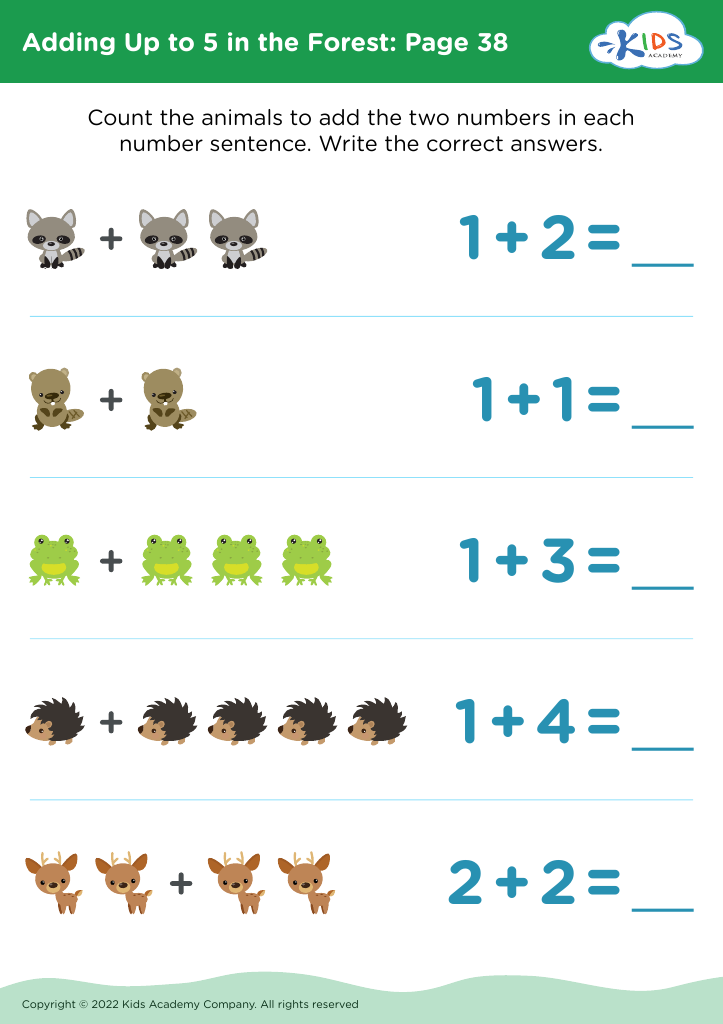
Adding Up to 5 in the Forest: Page 38
Worksheet
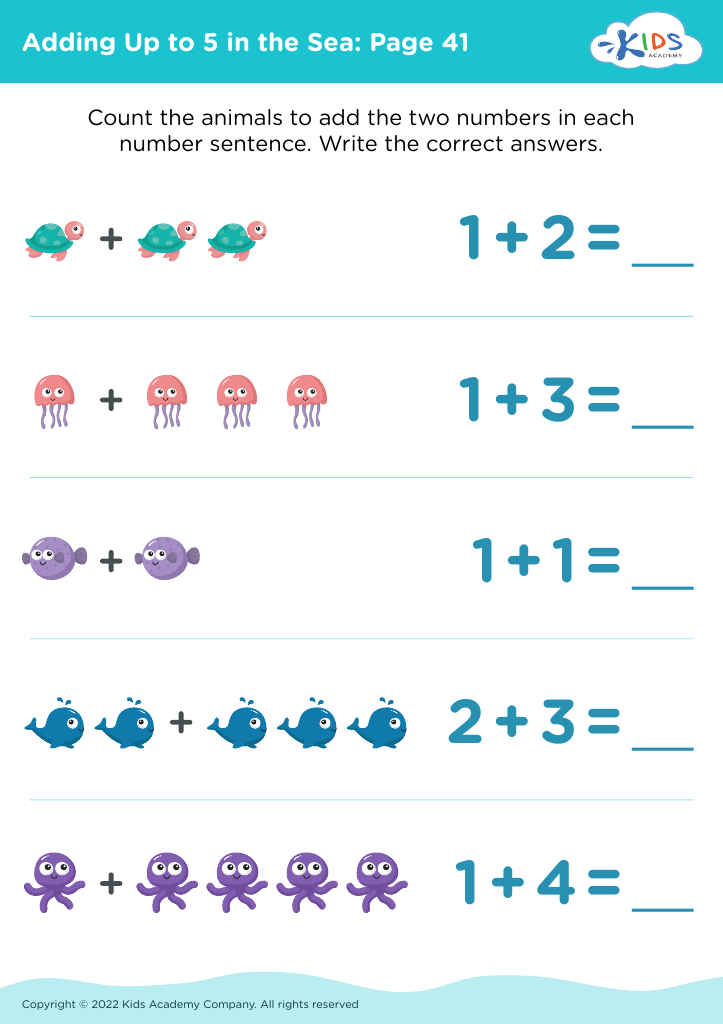
Adding Up to 5 in the Sea: Page 41
Worksheet
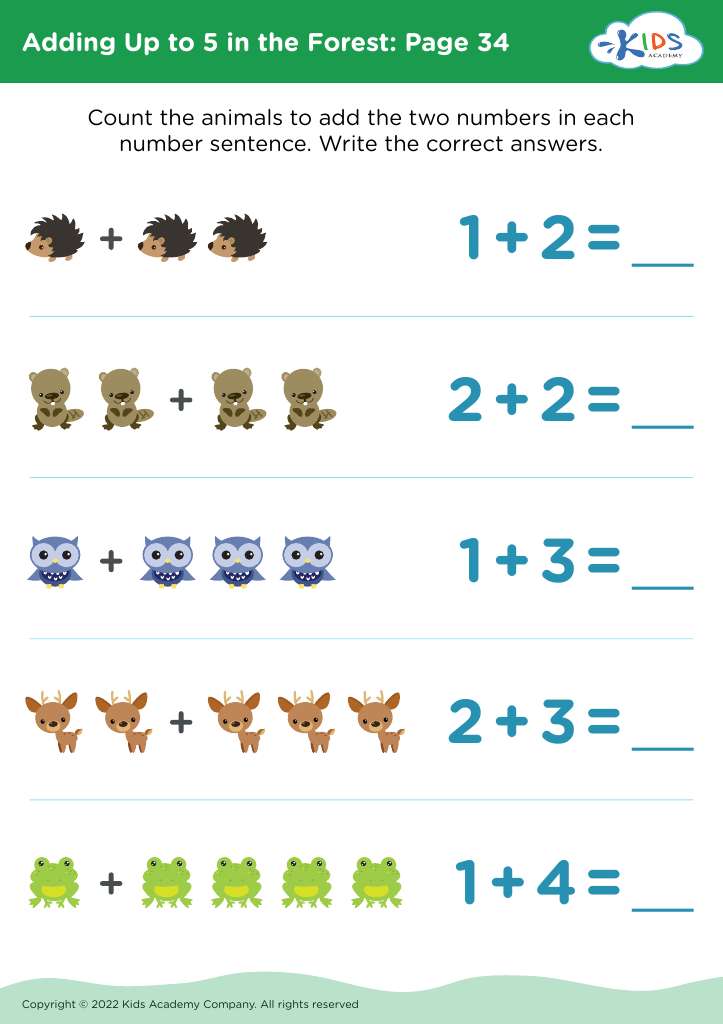
Adding Up to 5 in the Forest: Page 34
Worksheet
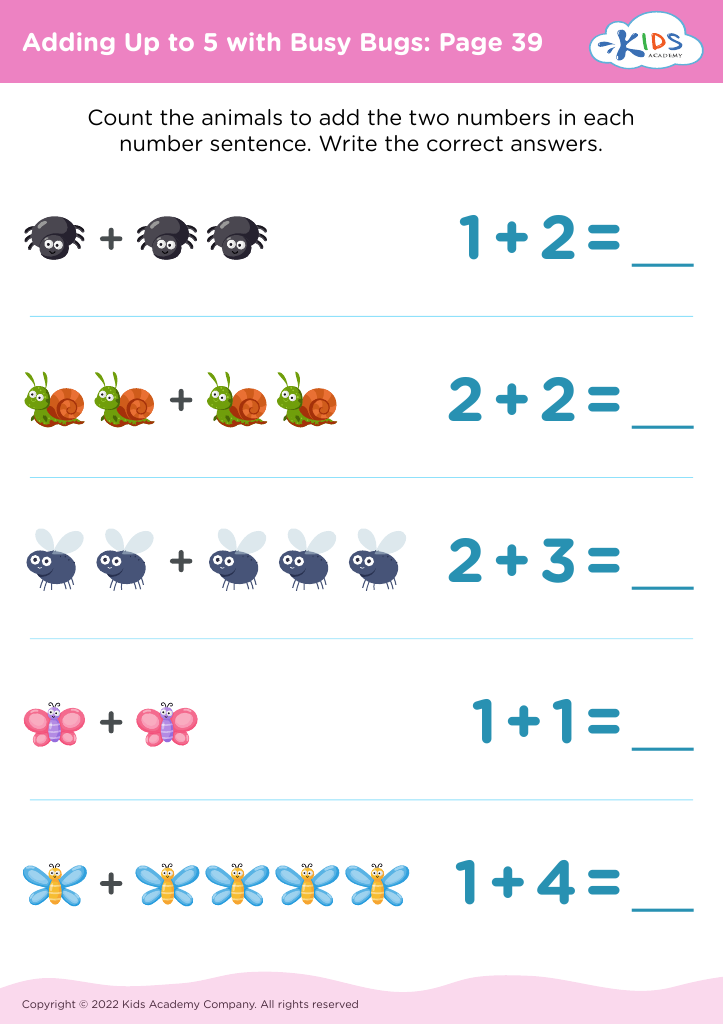
Adding Up to 5 with Busy Bugs: Page 39
Worksheet
Magic Fives Worksheet

Magic Fives Worksheet

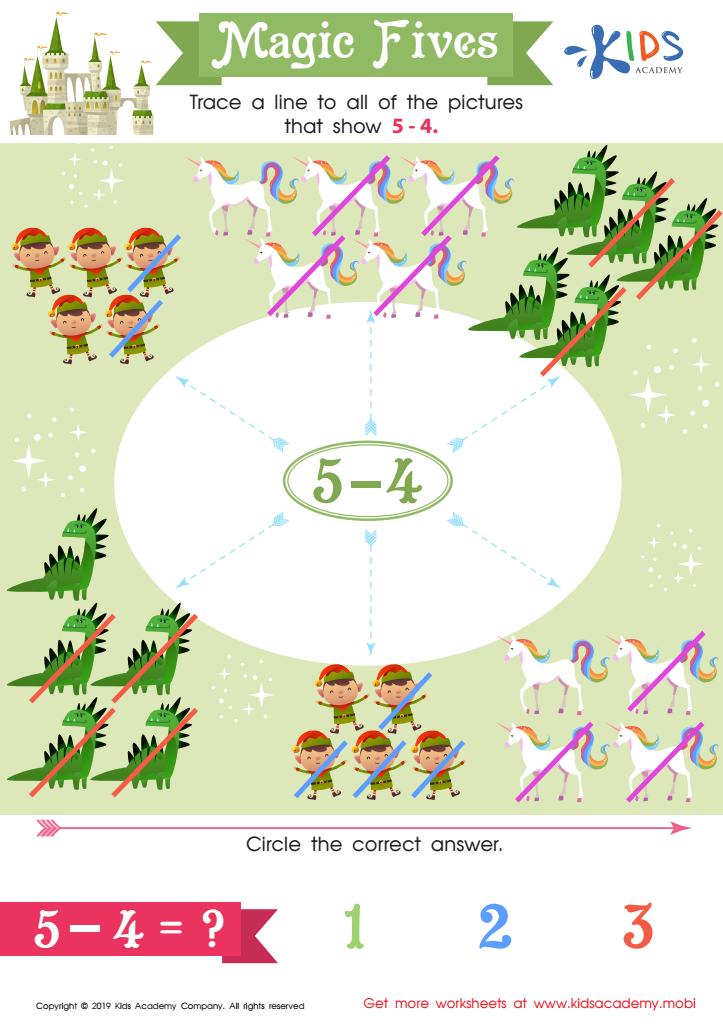
Help your students identify the objects & people in the worksheet. Point to the equation 5 -4 in the center, then get them to count the items and trace a line connecting those that add up to 5 - 4.
Magic Fives Worksheet
Worksheet
Adding Up to 5 with Busy Bugs: Page 73
Worksheet
Adding Up to 5 in the Forest: Page 17
Worksheet
Adding Up to 5 with Busy Bugs: Page 58
Worksheet
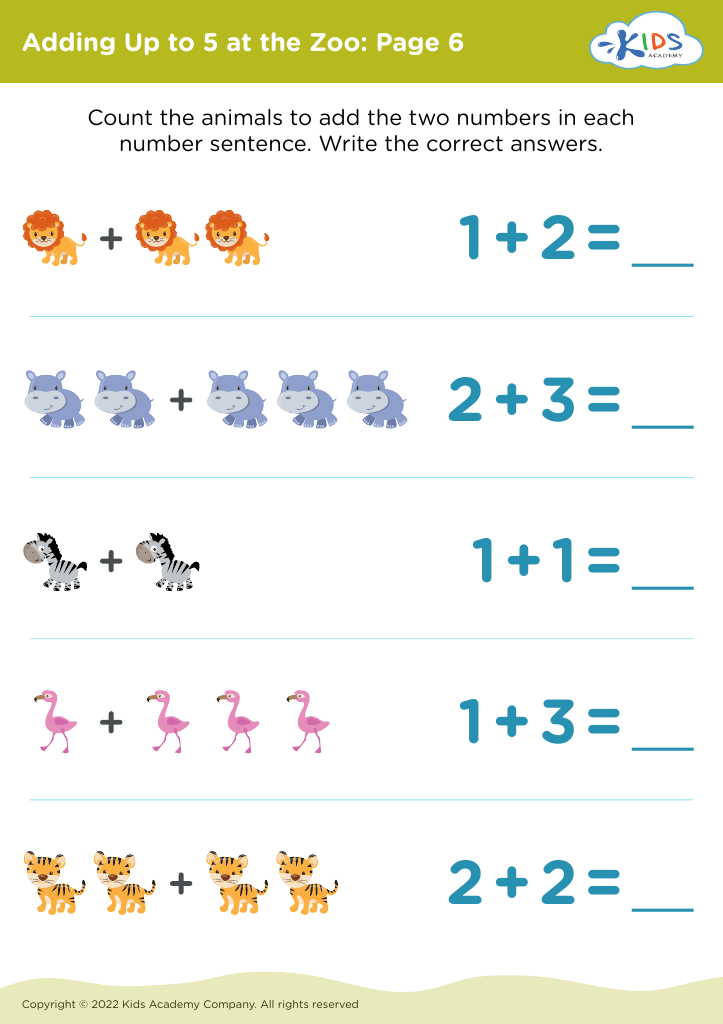
Adding Up to 5 at the Zoo: Page 6

Adding Up to 5 at the Zoo: Page 6

Adding Up to 5 at the Zoo: Page 6
Worksheet
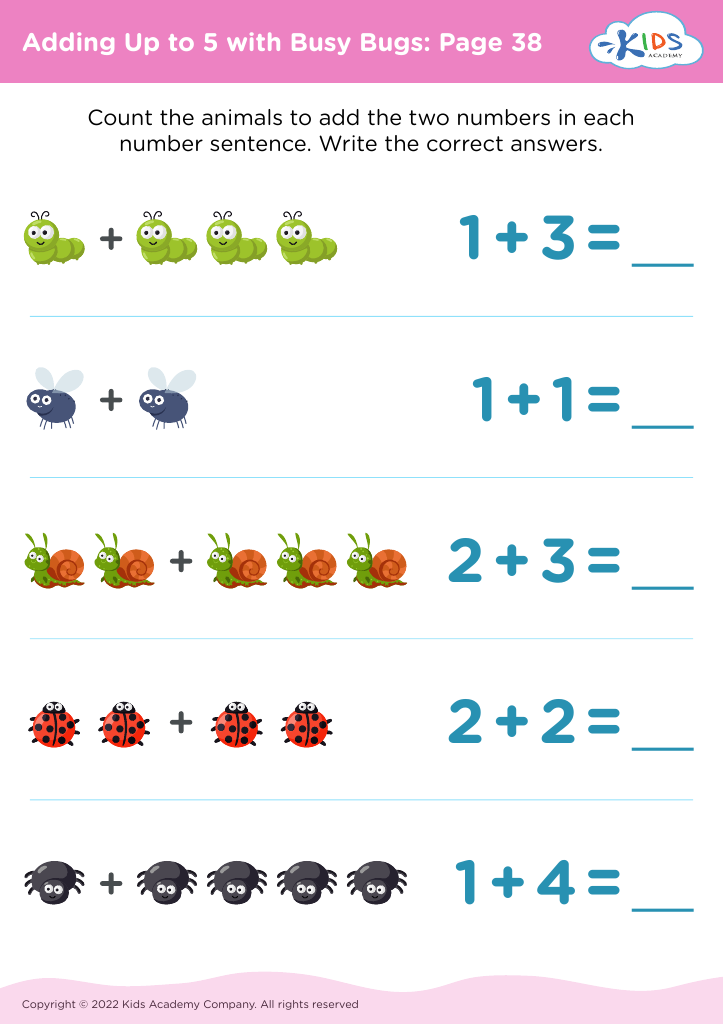
Adding Up to 5 with Busy Bugs: Page 38
Worksheet
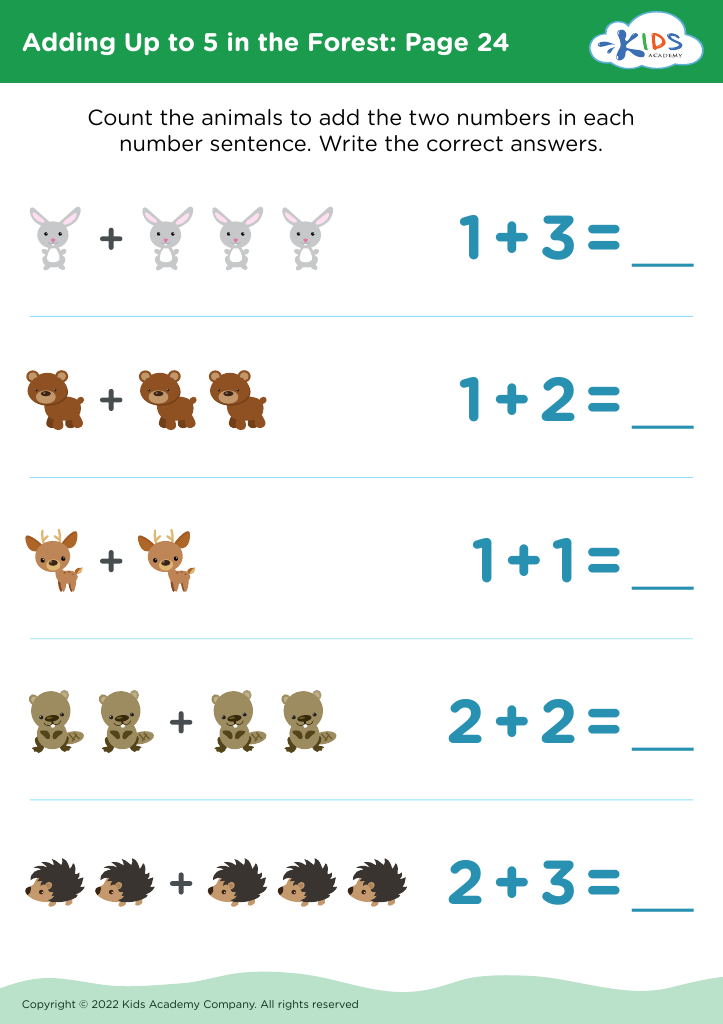
Adding Up to 5 in the Forest: Page 24
Worksheet
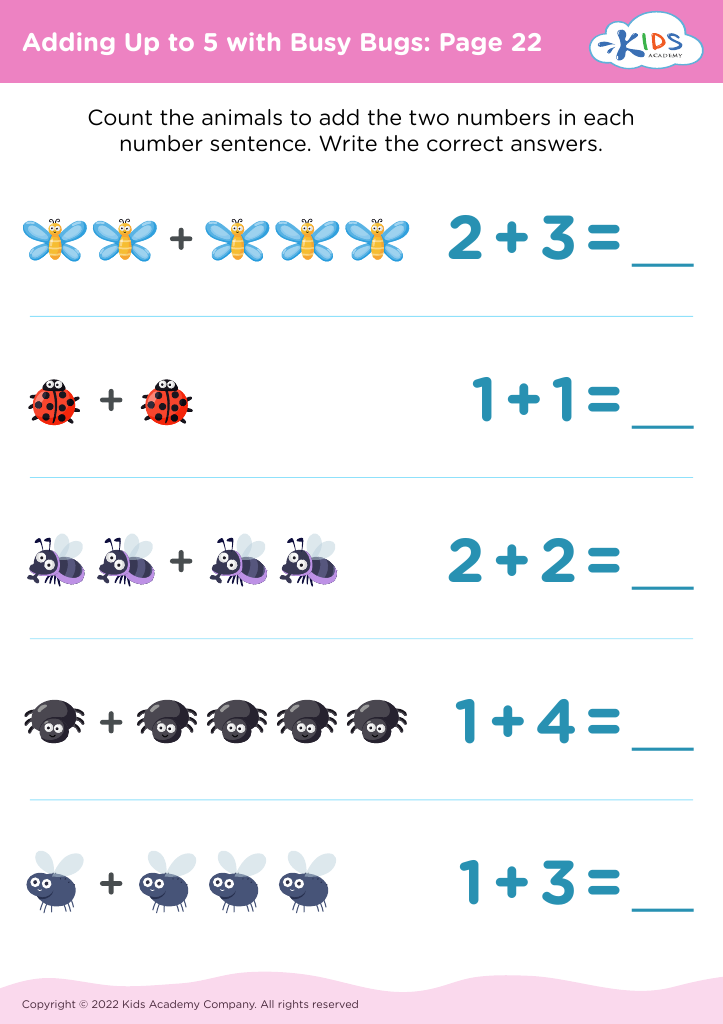
Adding Up to 5 with Busy Bugs: Page 22
Worksheet
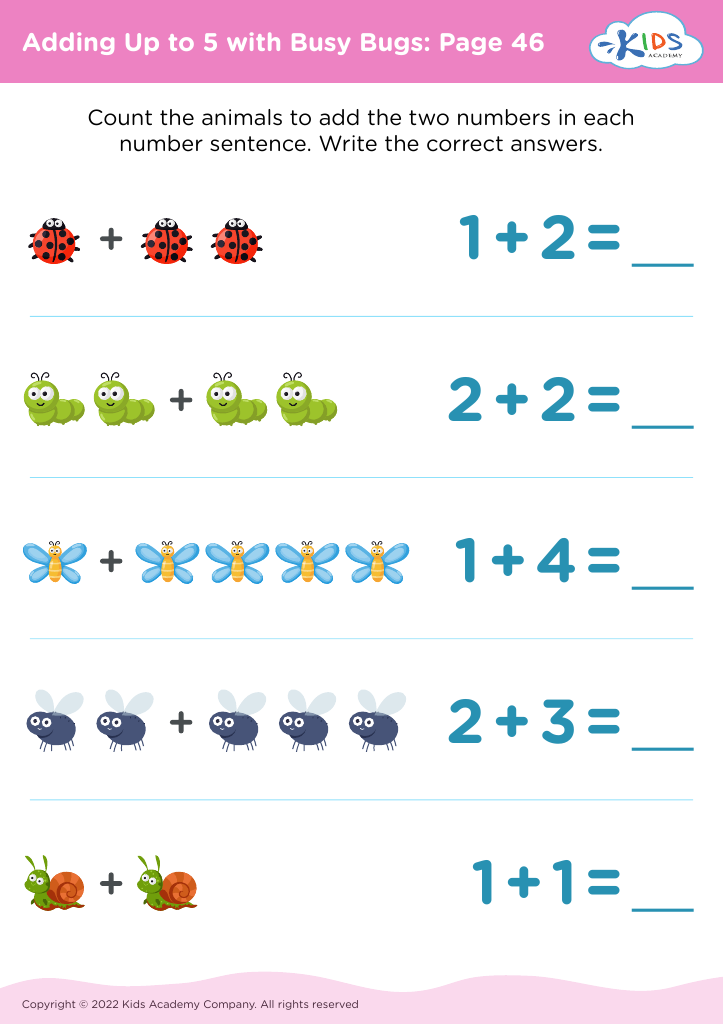
Adding Up to 5 with Busy Bugs: Page 46
Worksheet
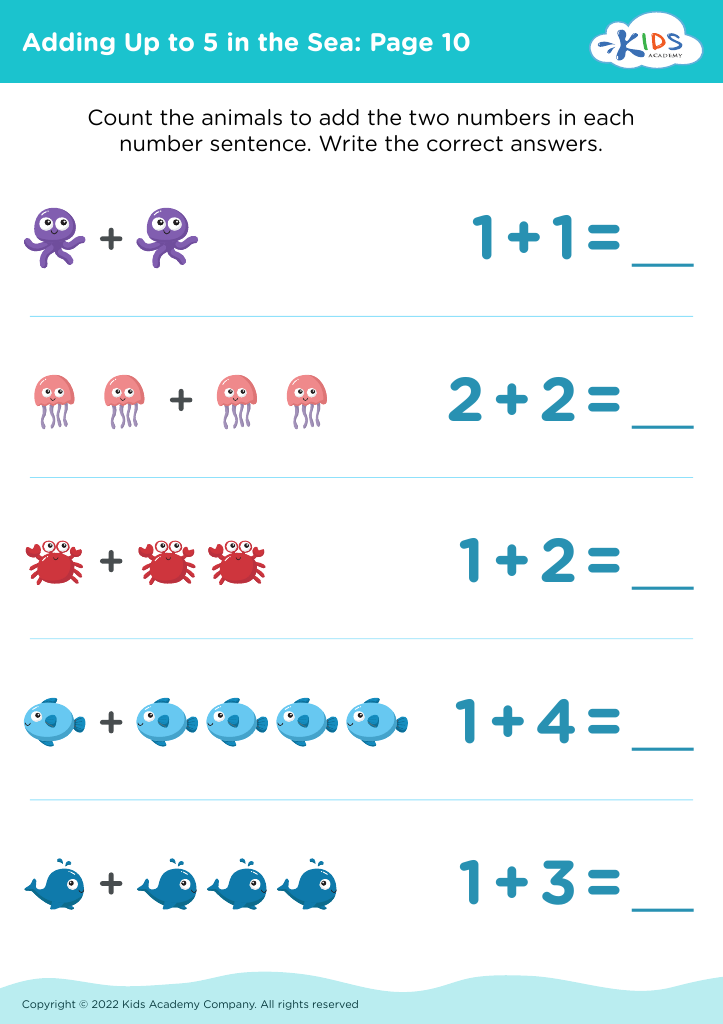
Adding Up to 5 in the Sea: Page 10
Worksheet
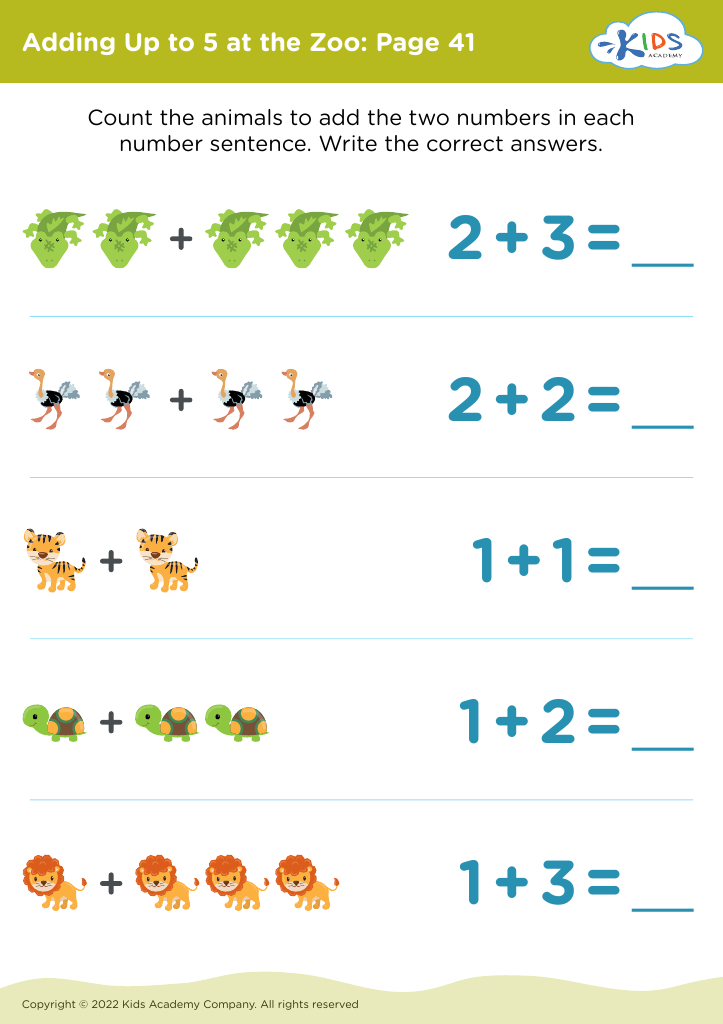
Adding Up to 5 at the Zoo: Page 41
Worksheet
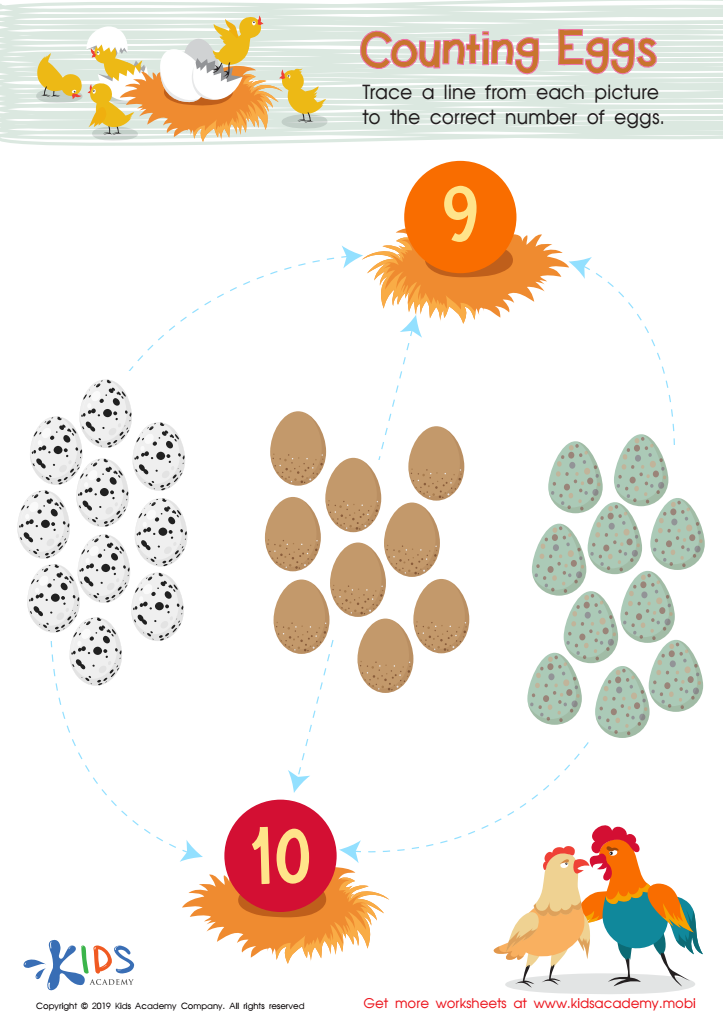
Counting Eggs Worksheet
Counting Eggs Worksheet
This worksheet is great for teaching kindergarteners to count and add numbers. It includes colorful pictures of eggs with numbers to trace. Help students count the eggs and draw a line to the right number. This will make learning fun and easy!
Counting Eggs Worksheet
Worksheet
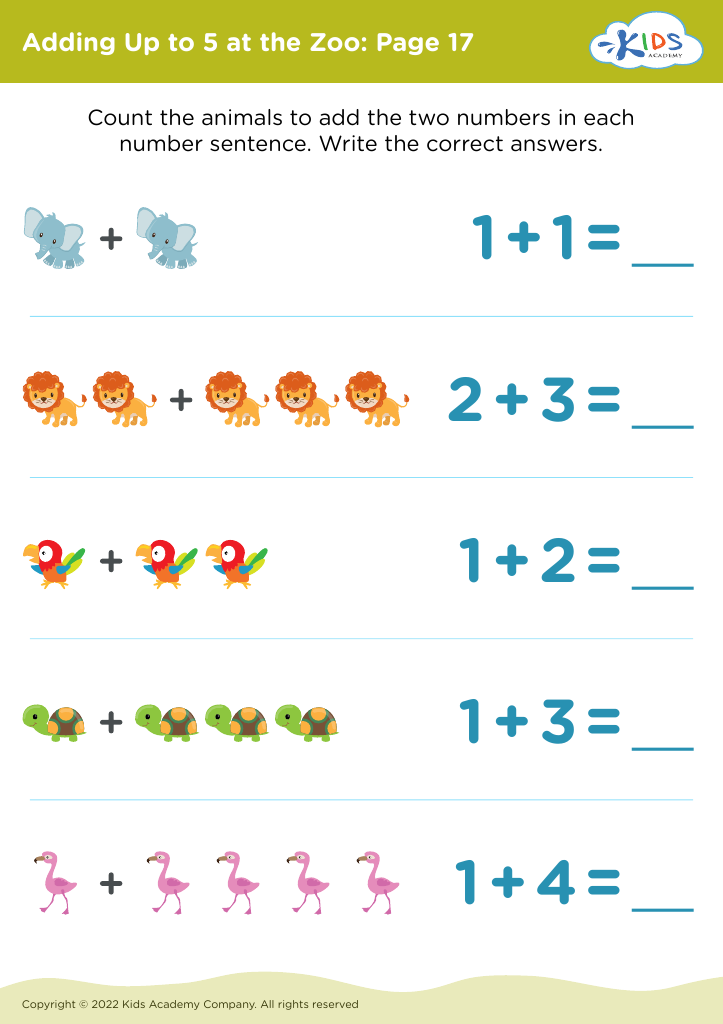
Adding Up to 5 at the Zoo: Page 17
Worksheet
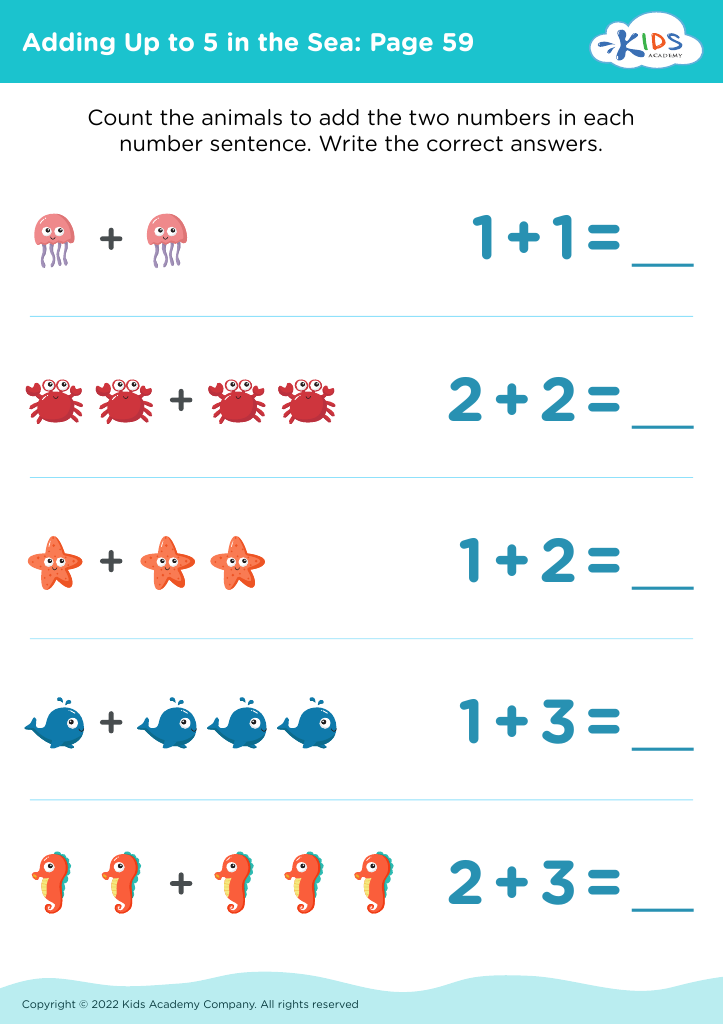
Adding Up to 5 in the Sea: Page 59
Worksheet
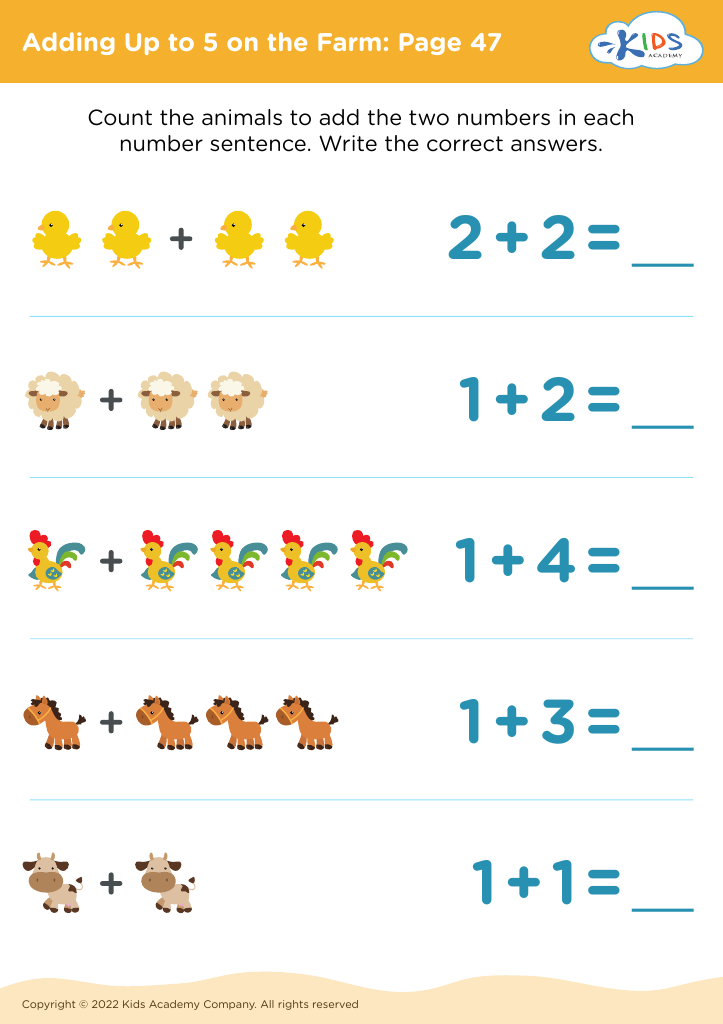
Adding Up to 5 on the Farm: Page 47
Worksheet
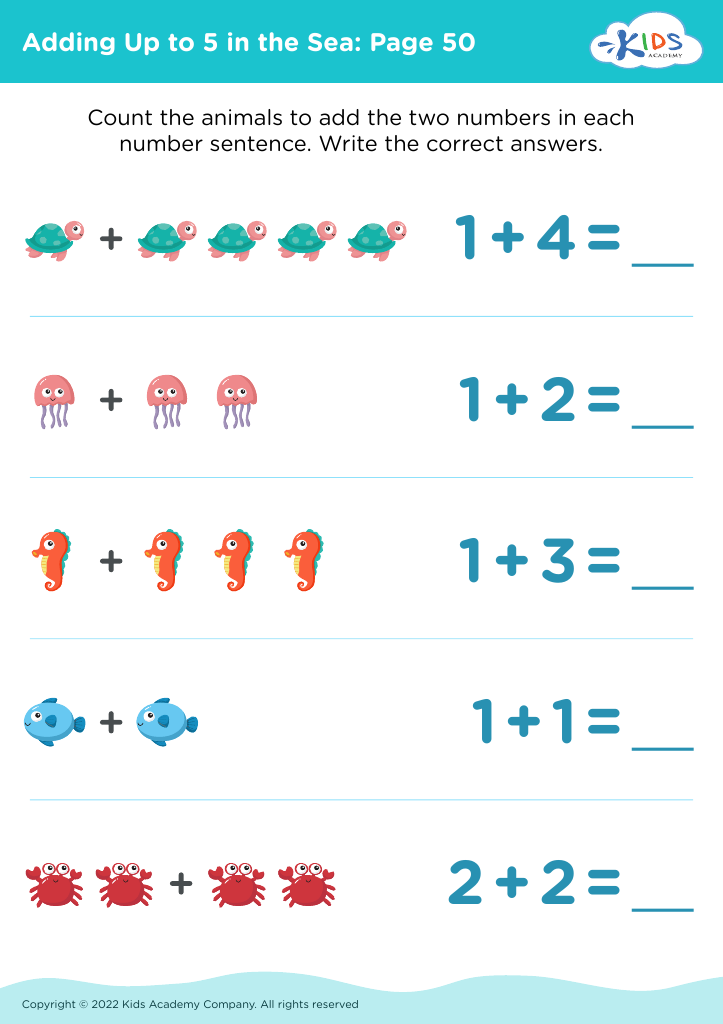
Adding Up to 5 in the Sea: Page 50
Worksheet
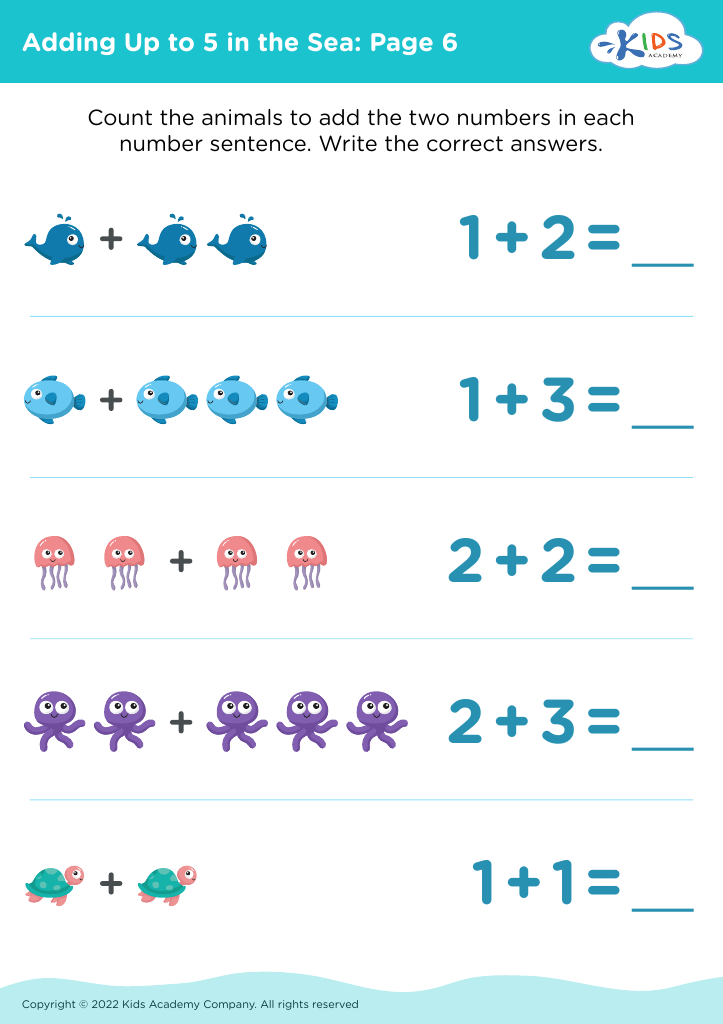
Adding Up to 5 in the Sea: Page 6

Adding Up to 5 in the Sea: Page 6

Adding Up to 5 in the Sea: Page 6
Worksheet
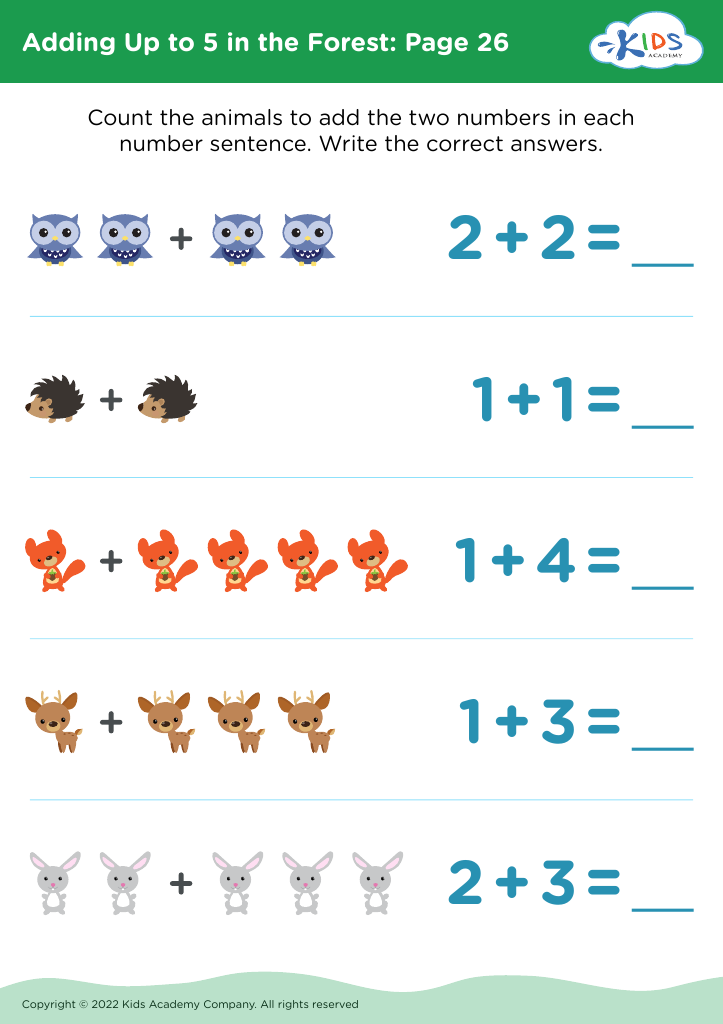
Adding Up to 5 in the Forest: Page 26
Worksheet
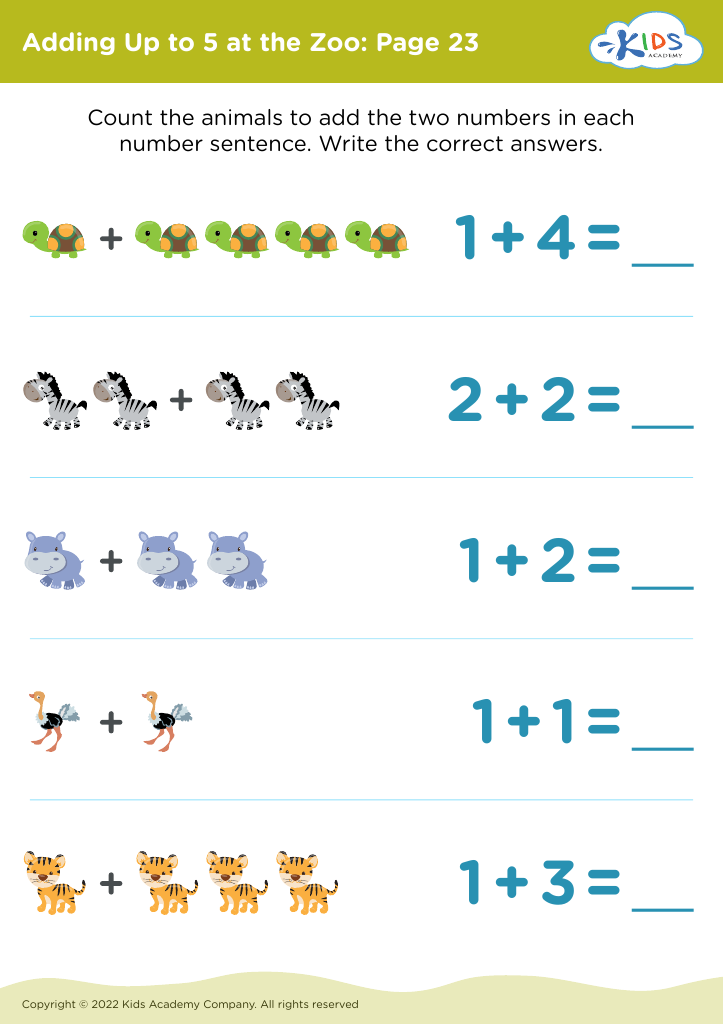
Adding Up to 5 at the Zoo: Page 23
Worksheet
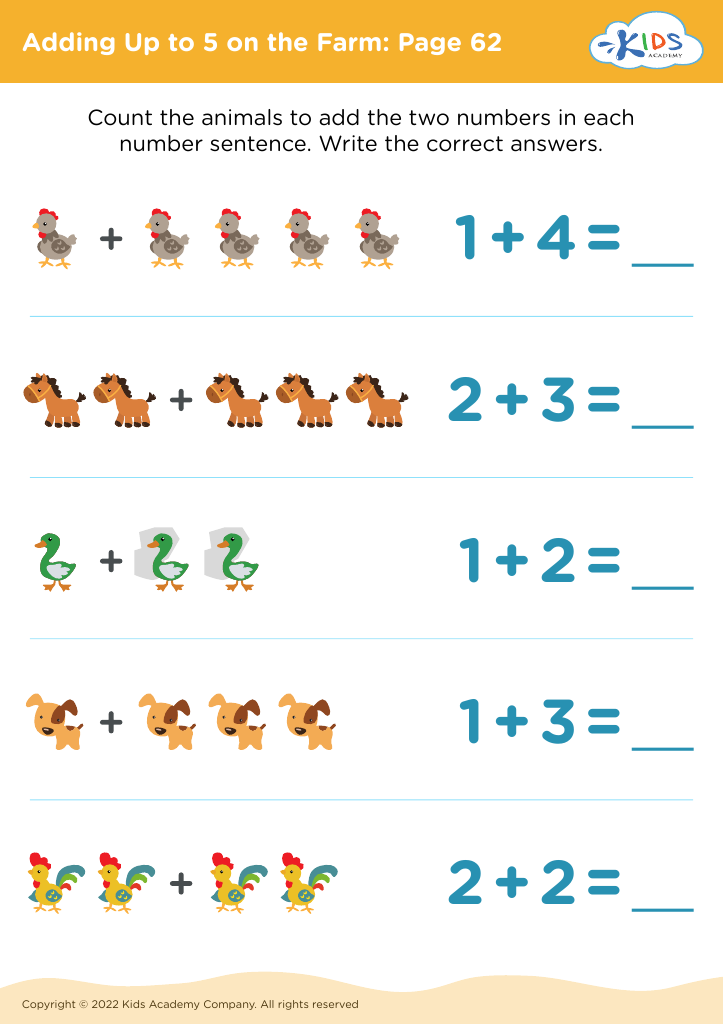
Adding Up to 5 on the Farm: Page 62
Worksheet


Number recognition, addition, and subtraction are foundational skills critical for early childhood development, particularly for children ages 3 to 4. At this age, children are naturally curious and are eager to explore the world around them, making it an ideal time to introduce mathematical concepts. Parents and teachers should encourage number recognition as it enhances cognitive development, helps with problem-solving skills, and fosters logical thinking.

Understanding basic addition and subtraction lays the groundwork for future math proficiency. These skills aid in developing critical thinking, as children learn to compare quantities and understand simple relationships. Engaging children with counting activities, songs, and games makes learning enjoyable and promotes confidence in their abilities.

Moreover, early exposure to these concepts can be linked to improved academic performance later on. For parents and teachers, nurturing a positive attitude toward math at this age can help combat math anxiety in the future. Establishing a strong numerical foundation in early childhood not only supports literacy skills but also contributes to a well-rounded education that encourages curiosity and exploration, both vital for lifelong learning. By fostering a love for numbers and problem-solving, we equip children with essential tools for their educational journey ahead.