Underwater animal identification Addition & Subtraction Worksheets for Ages 3-4
3 filtered results
-
From - To
Dive into learning with our "Underwater Animal Identification Addition & Subtraction Worksheets for Ages 3-4"! These engaging and educational worksheets seamlessly blend math practice with captivating illustrations of underwater creatures. Ideal for young learners, they help develop essential addition and subtraction skills while nurturing curiosity about marine life. Designed by experienced educators, these activities are perfect for both classroom and at-home use, offering a fun way to build early math confidence. Download today and transform your child’s learning journey into an exciting underwater adventure with colorful fish, playful dolphins, and more!
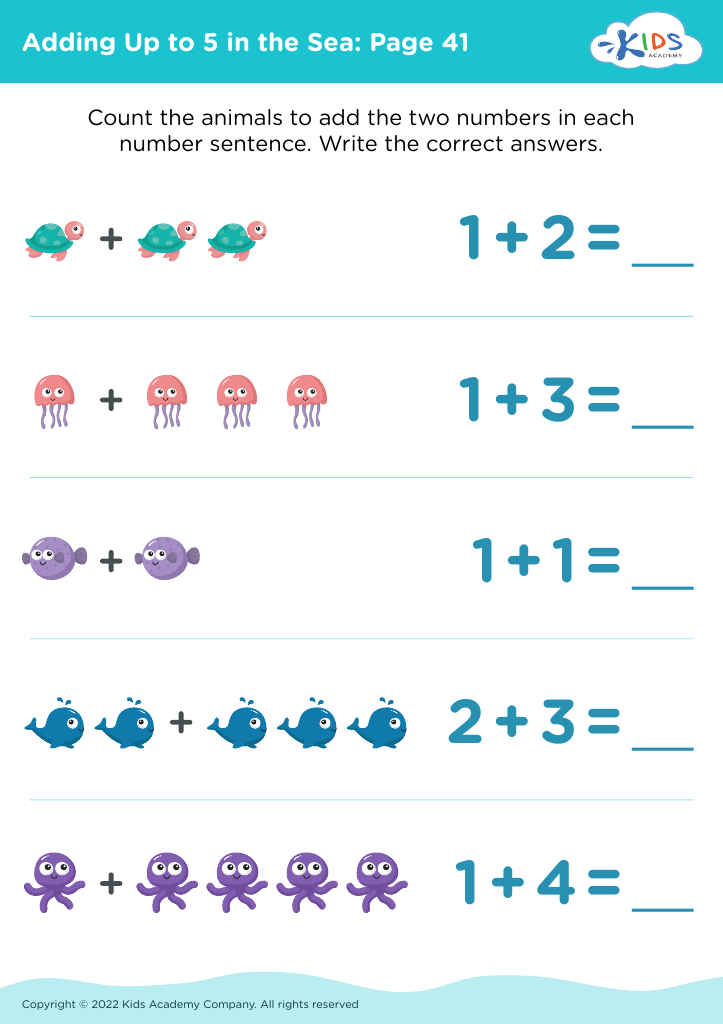
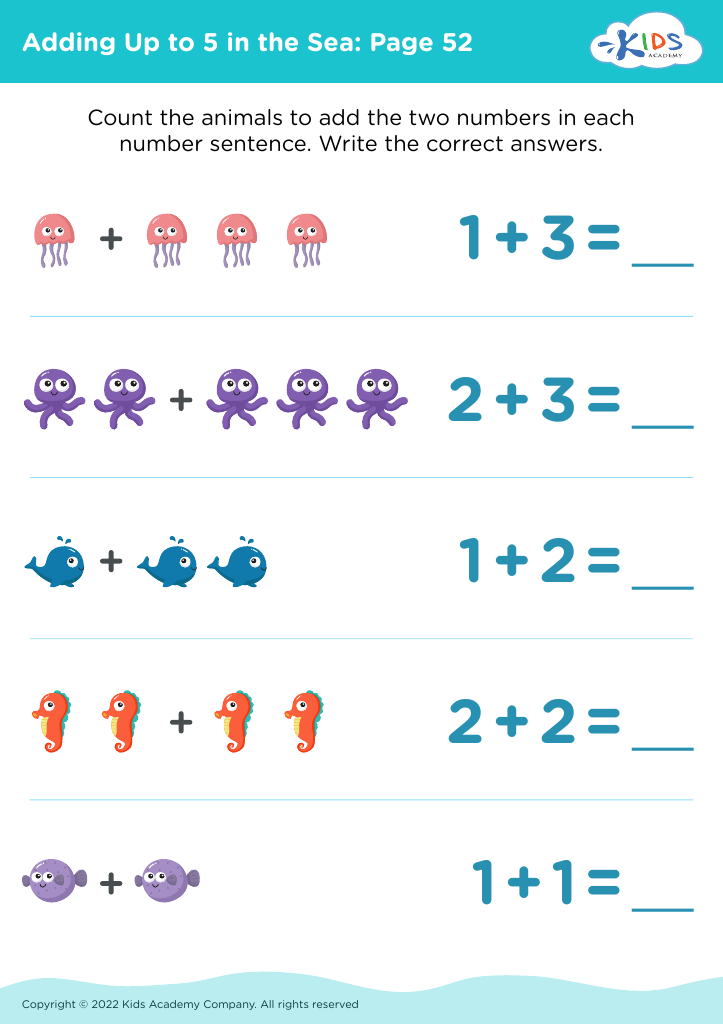
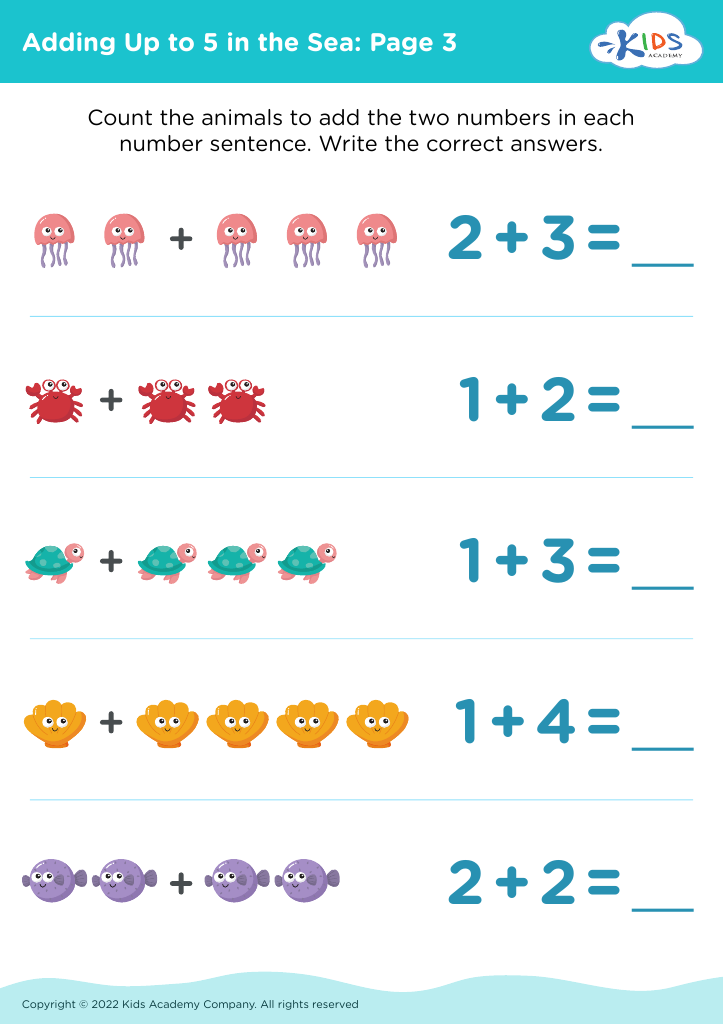








Parents and teachers should care about underwater animal identification along with addition and subtraction activities for ages 3-4 because these activities foster early cognitive development in an engaging and enjoyable manner. Introducing young children to the fascinating world of underwater animals stimulates their curiosity and interest in science, promoting observational skills and understanding of biodiversity.
Simultaneously, incorporating basic addition and subtraction exercises aids in developing essential math skills early on. These foundational math skills lay the groundwork for future complex problem-solving and critical thinking abilities. The use of colorful, engaging illustrations of underwater animals helps to maintain the children’s interest, turning learning into an exciting adventure rather than a chore.
Additionally, these combined activities support fine motor skills as children manipulate counters or use drawing utensils to add or subtract in their learning activities. The integration also encourages language development by introducing new vocabulary words related to the underwater theme while explaining concepts in math.
Furthermore, children from diverse backgrounds can equally benefit because the approach transcends cultural and linguistic barriers. For parents and caregivers, it provides an excellent opportunity to bond over playful educational time, reinforcing the importance of learning through everyday experiences. Ultimately, it's an age-appropriate, holistic educational strategy that nurtarily assin-minded littlong eager bo learn.








