Visual Perception Skills Addition & Subtraction Worksheets for Ages 3-4
5 filtered results
-
From - To
Discover our engaging Visual Perception Skills Addition and Subtraction Worksheets tailored specifically for children ages 3-4. These worksheets are designed to enhance critical visual skills while introducing basic math concepts. Each activity promotes number recognition, counting, and problem-solving abilities through vibrant illustrations and interactive exercises. By focusing on visual perception, children will develop essential cognitive skills that lay a solid foundation for future learning. Our worksheets make math fun and accessible, helping to prepare young learners for success in school. Explore our collection today and support your child's development in a playful, educational way!
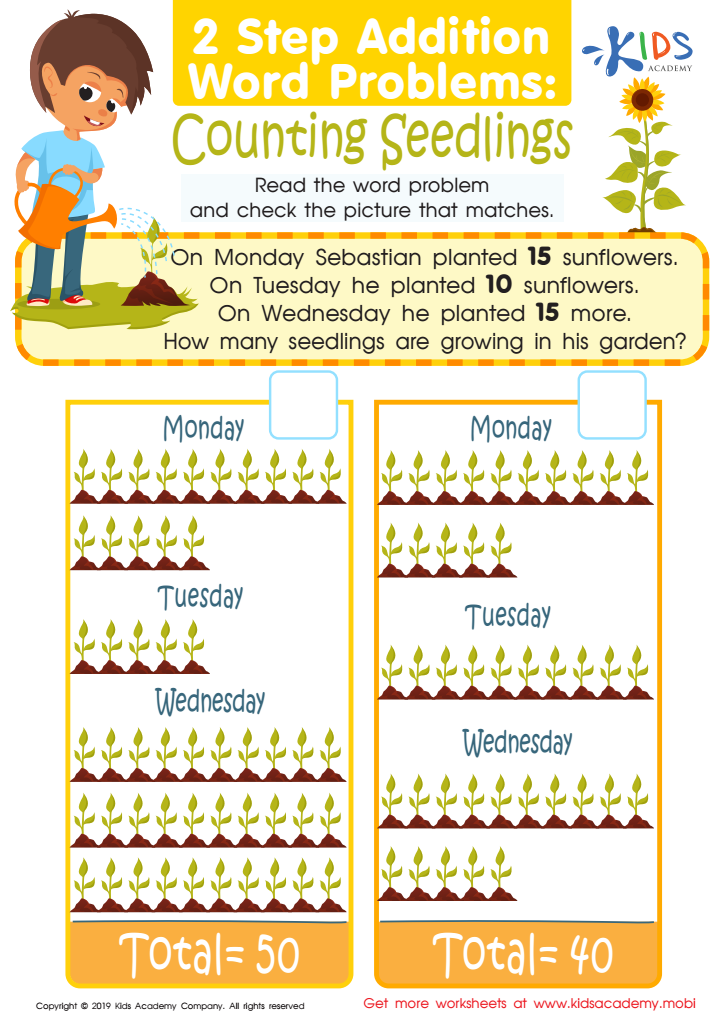
Counting Seedlings Worksheet
 Assign to My Students
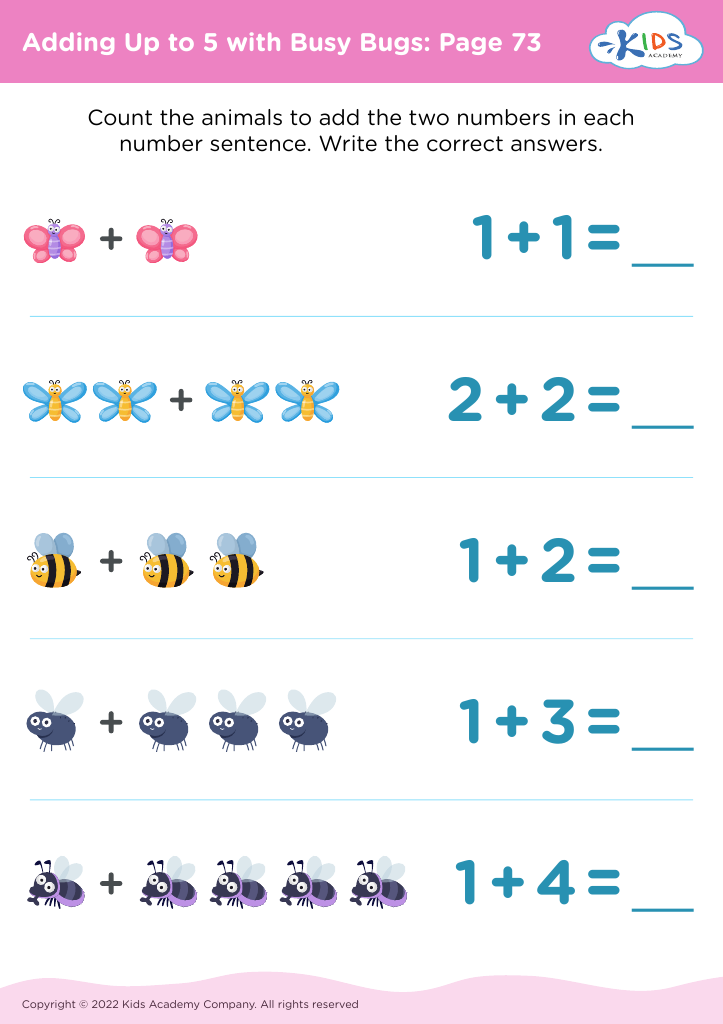
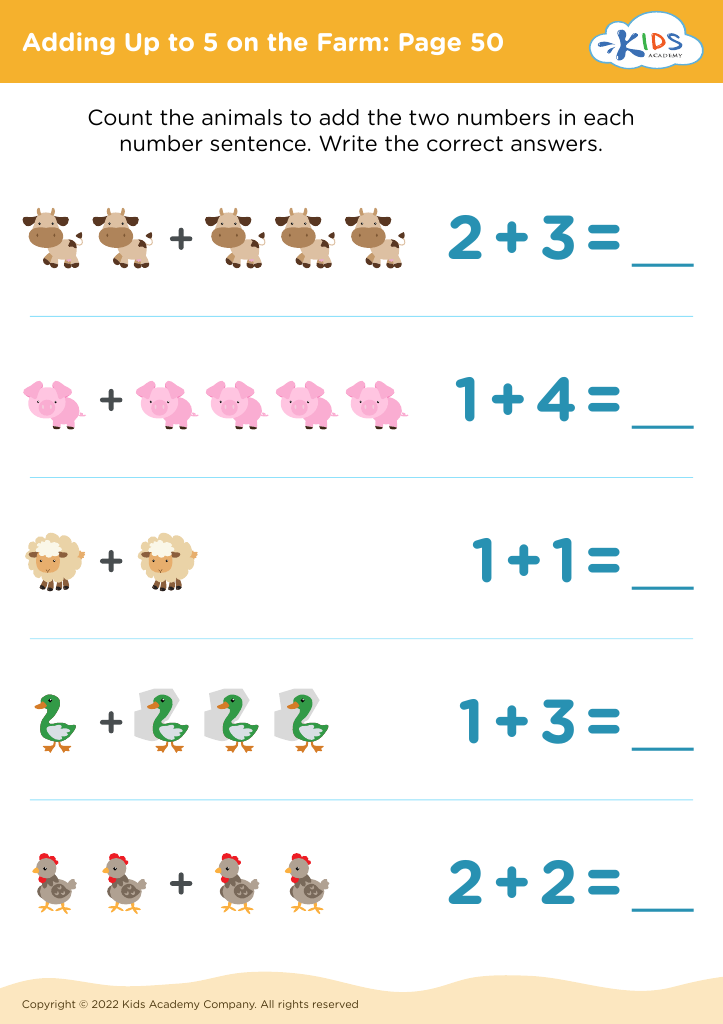
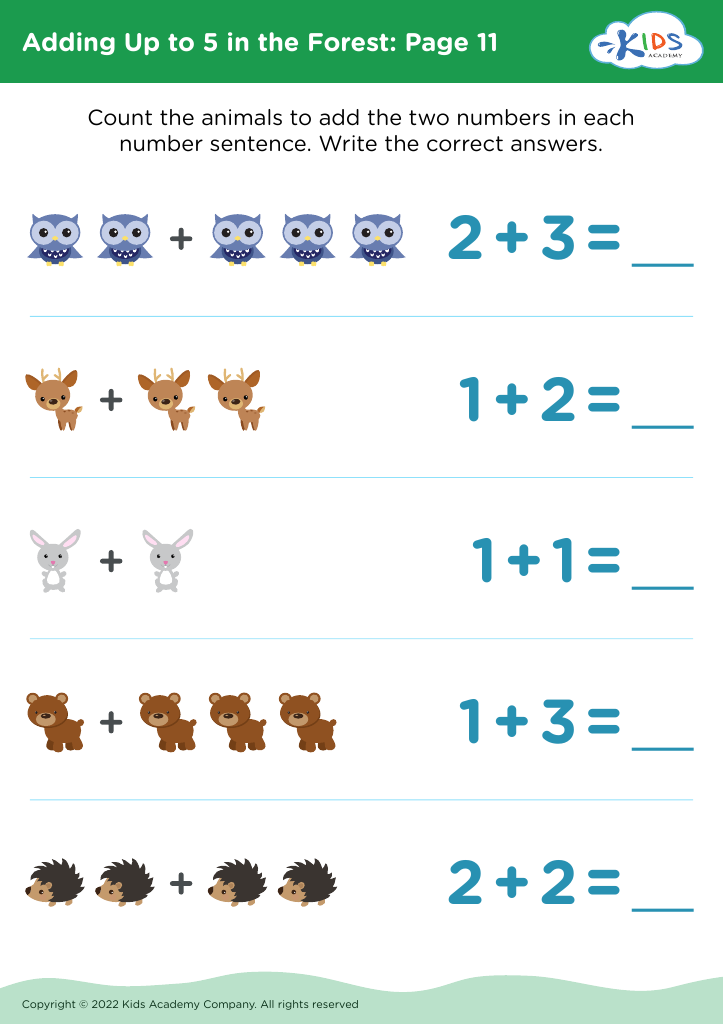
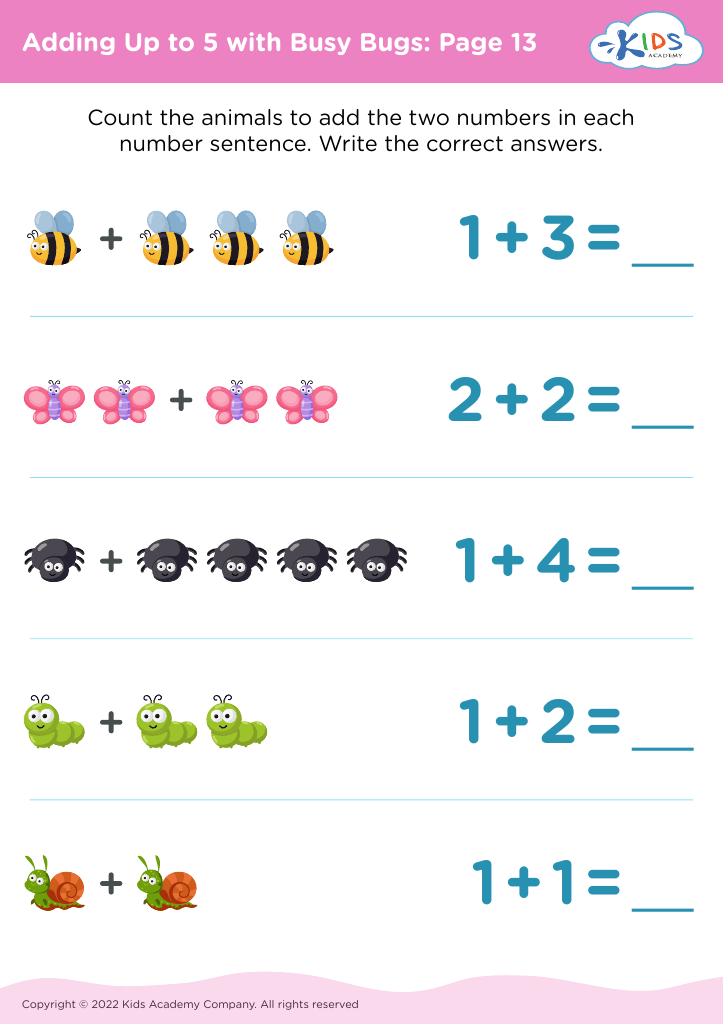








Visual perception skills are crucial for children aged 3-4 as they lay the groundwork for mathematical understanding, particularly in addition and subtraction. These skills enable children to interpret and process visual information effectively, helping them recognize numbers, shapes, and patterns. When children develop strong visual perception skills, they can better understand the concepts of quantity and number relations, which are essential for mastering basic math operations.
Moreover, early experiences with visual learning can enhance spatial awareness and critical thinking abilities. Through engaging activities that promote visual perception—such as sorting games or pattern recognition—children gain the foundational skills needed not just for math, but for learning across subjects. When teachers and parents focus on these skills, they also contribute to a child’s overall cognitive development, promoting confidence and a positive attitude toward learning.
Lastly, incorporating fun and interactive methods to practice these skills can foster a love for math early on. By doing so, parents and teachers can better prepare young learners for future academic challenges, making visual perception an essential element in early education and ensuring that children are well-equipped for their educational journeys ahead.








