Visualization skills Addition & Subtraction Worksheets for Ages 3-4
3 filtered results
-
From - To
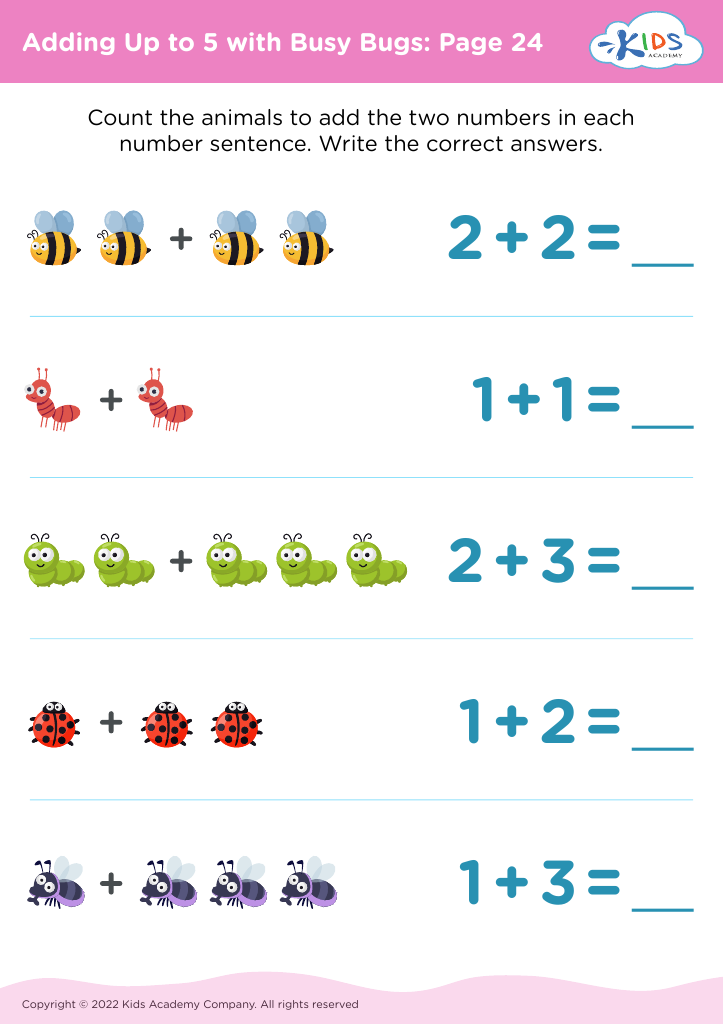
Enhance your child's early math journey with our engaging Visualization Skills Addition & Subtraction Worksheets for ages 3-4! These carefully designed activities help young learners develop essential visualization techniques, enabling them to picture math problems in their minds. By visualizing numbers and operations, children build a strong foundation for understanding addition and subtraction concepts. Our colorful and interactive worksheets make learning fun, capturing attention while fostering critical thinking and problem-solving abilities. Ideal for both home and classroom use, these resources support early development and readiness for future math skills. Boost your child's confidence in math with our dynamic visualization worksheets today!
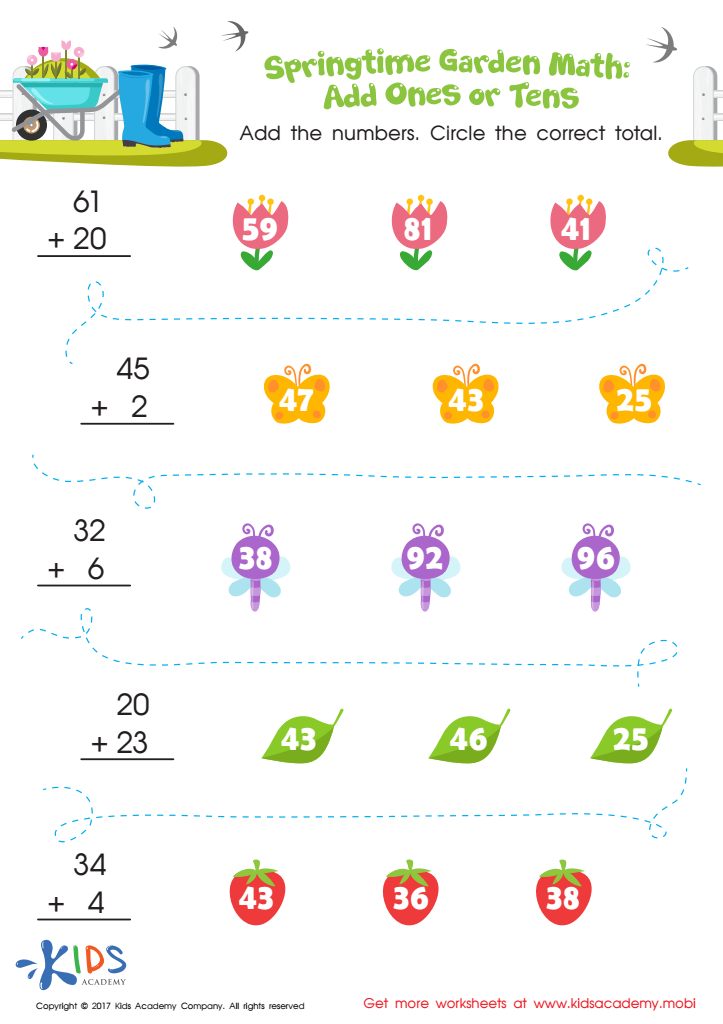
Springtime Garden Math Worksheet
 Assign to My Students
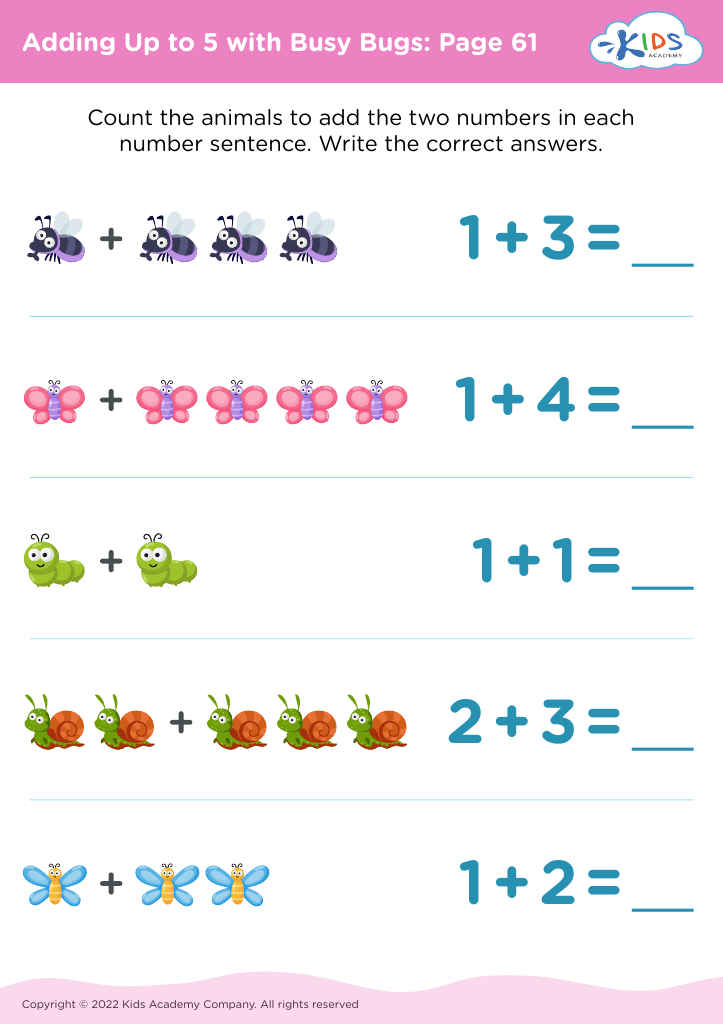








Visualization skills in addition and subtraction are foundational for young children aged 3-4 and significantly enhance their learning experience in mathematics. These skills allow children to form mental images of numbers and quantities, fostering a deeper understanding of basic arithmetic concepts.
For parents and teachers, nurturing these skills is vital as they lay the groundwork for future mathematical proficiency. Visualization helps young learners grasp abstract concepts of addition and subtraction by translating them into concrete images they can relate to, like blocks or fingers. This approach not only aids in comprehension but also boosts confidence in tackling math problems.
Engaging children in activities that promote visualization—such as using counters, drawing pictures, or employing visual aids—encourages active participation and exploration. It transforms learning into a fun experience, making children more motivated and curious about mathematics.
Furthermore, developing visualization skills contributes to cognitive development, fostering problem-solving skills and logical thinking. As children visualize mathematical operations, they learn to break down problems and reason through them effectively.
In essence, caring about and cultivating visualization skills in young learners equips them with essential tools for success in math and enhances their overall cognitive growth, painting a bright future for their educational journeys.








