Filters

94 filtered results

Clear all filters
Favorites
With answer key
Interactive

94 filtered results

Difficulty Level

Grade


Check out this FREE Trial Lesson on Addition for age 3-4!

D

Favorites
With answer key
Interactive
  • 3-4
  • Animal recognition
  • Addition
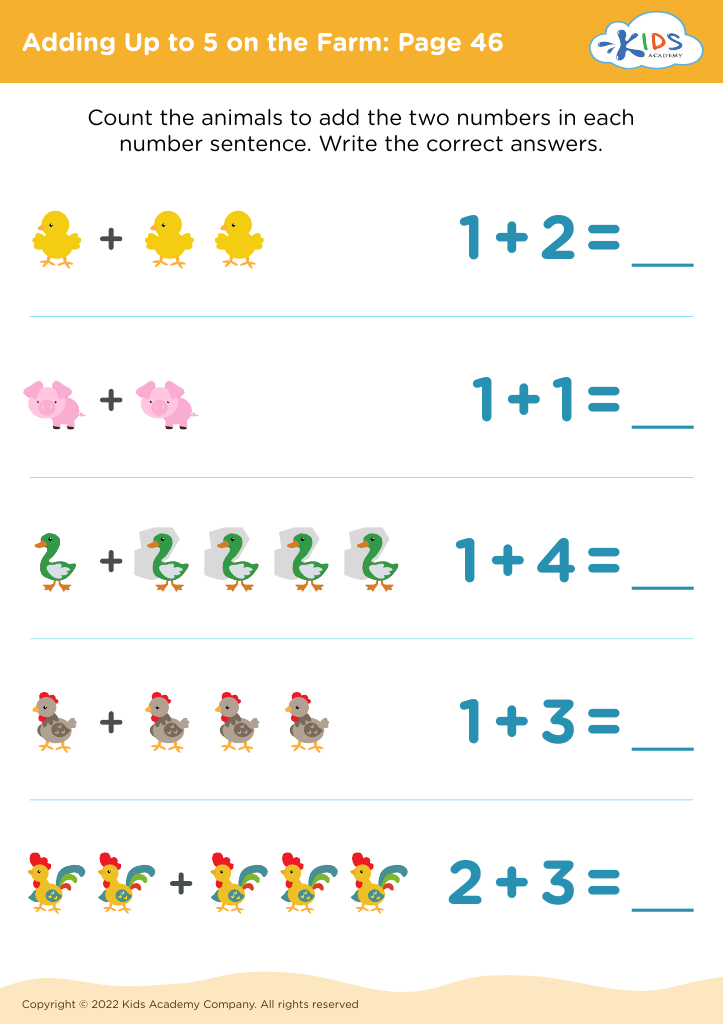
Adding Up to 5 on the Farm: Page 46
Worksheet
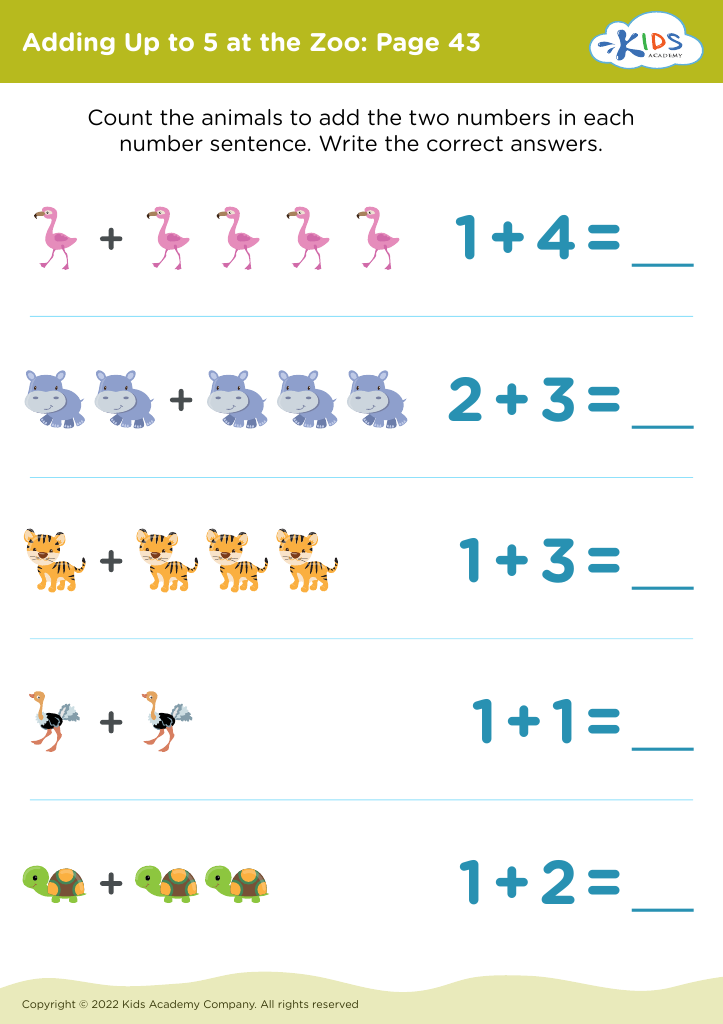
Adding Up to 5 at the Zoo: Page 43
Worksheet
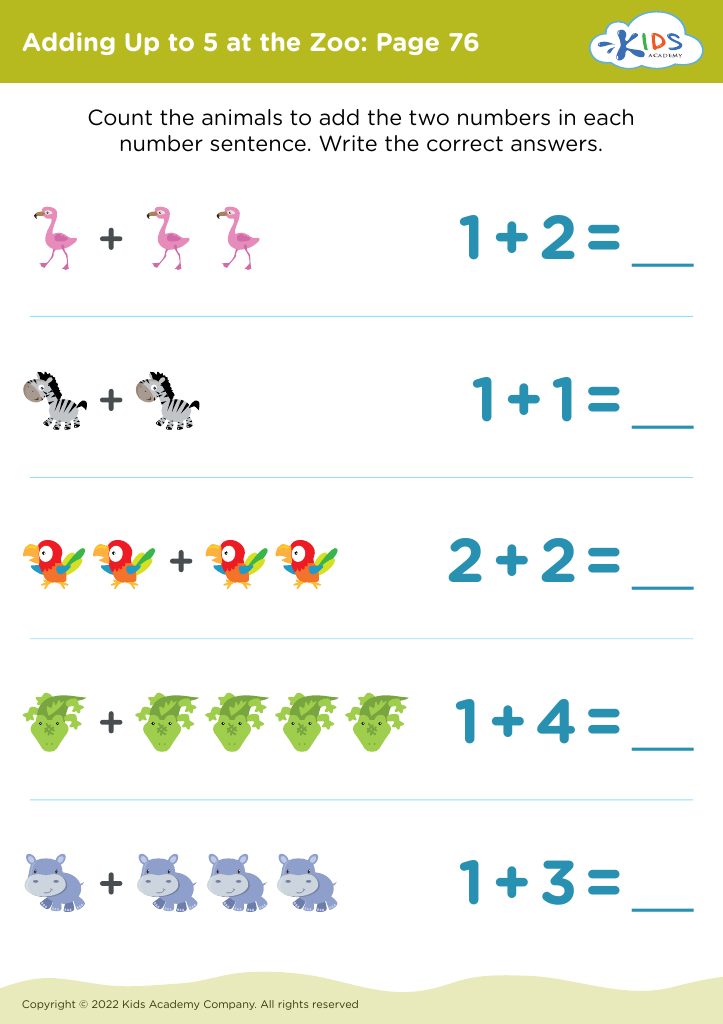
Adding Up to 5 at the Zoo: Page 76
Worksheet
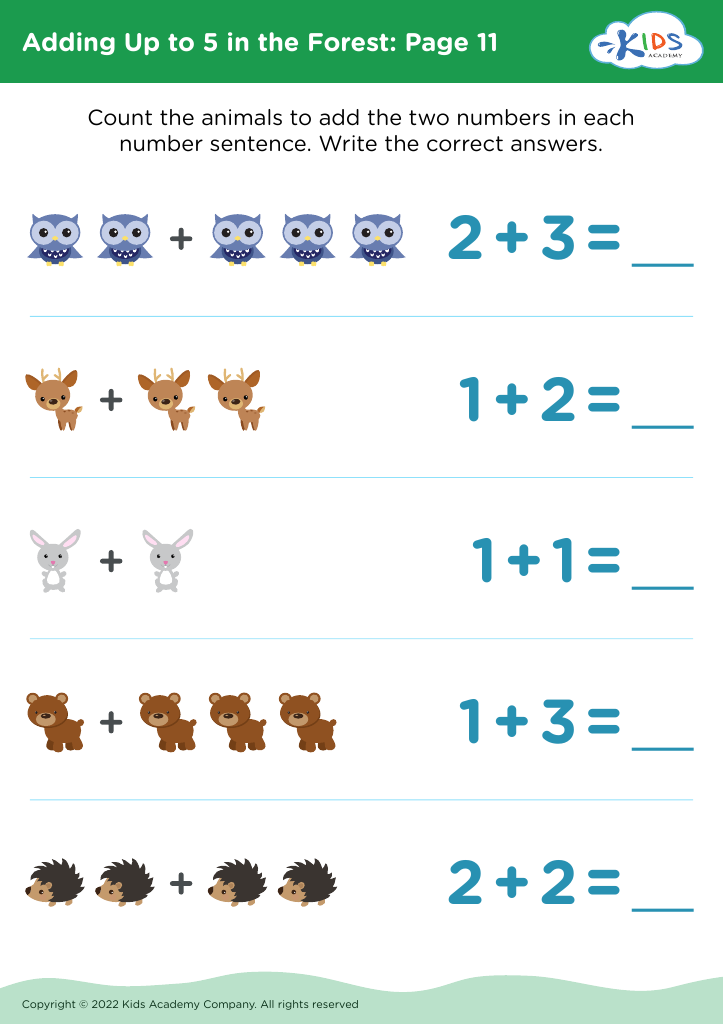
Adding Up to 5 in the Forest: Page 11
Worksheet
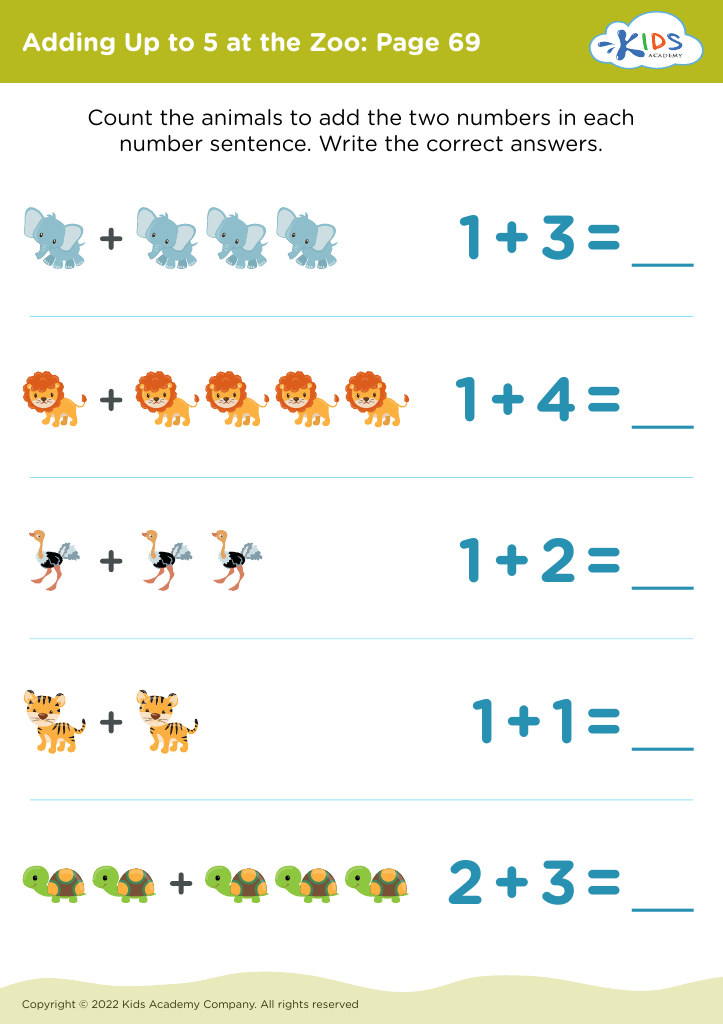
Adding Up to 5 at the Zoo: Page 69
Worksheet
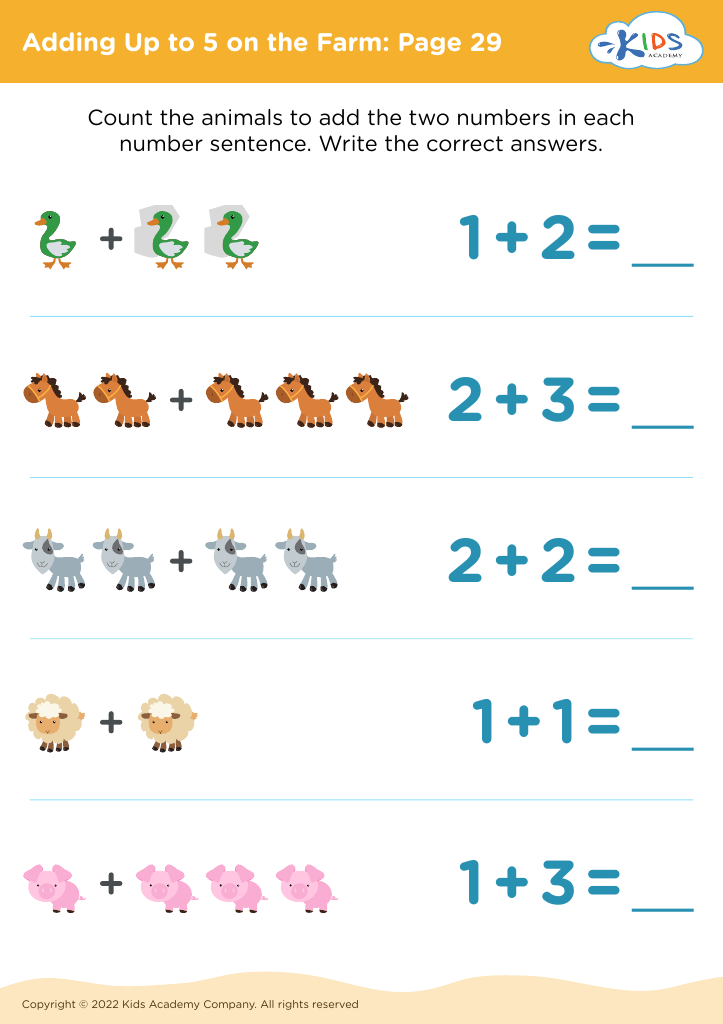
Adding Up to 5 on the Farm: Page 29
Worksheet
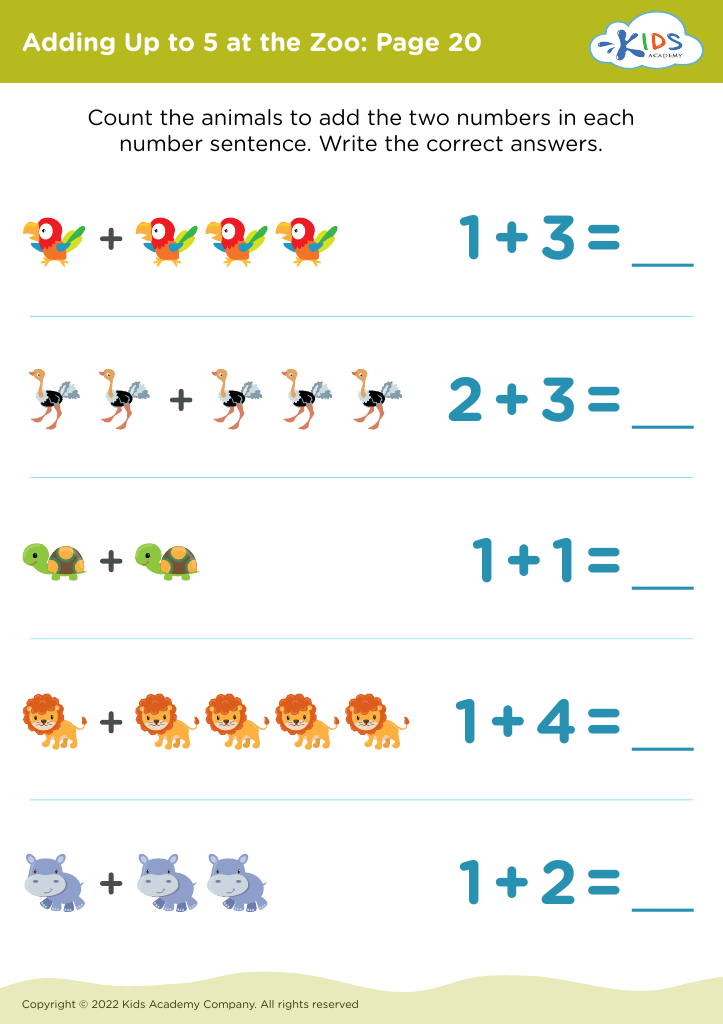
Adding Up to 5 at the Zoo: Page 20
Worksheet
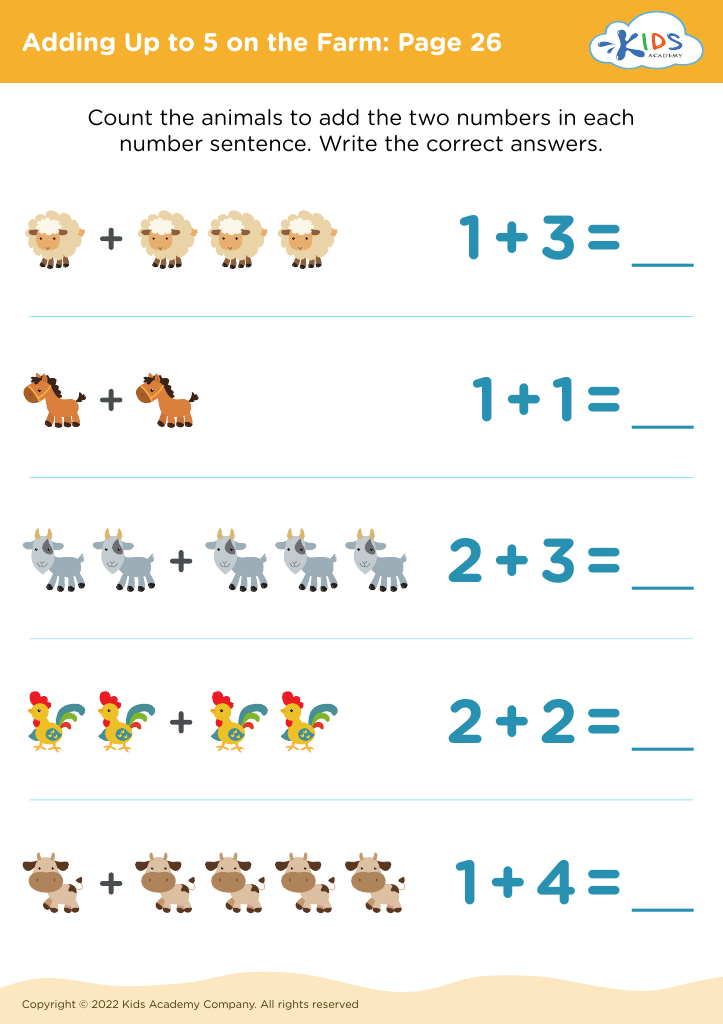
Adding Up to 5 on the Farm: Page 26
Worksheet
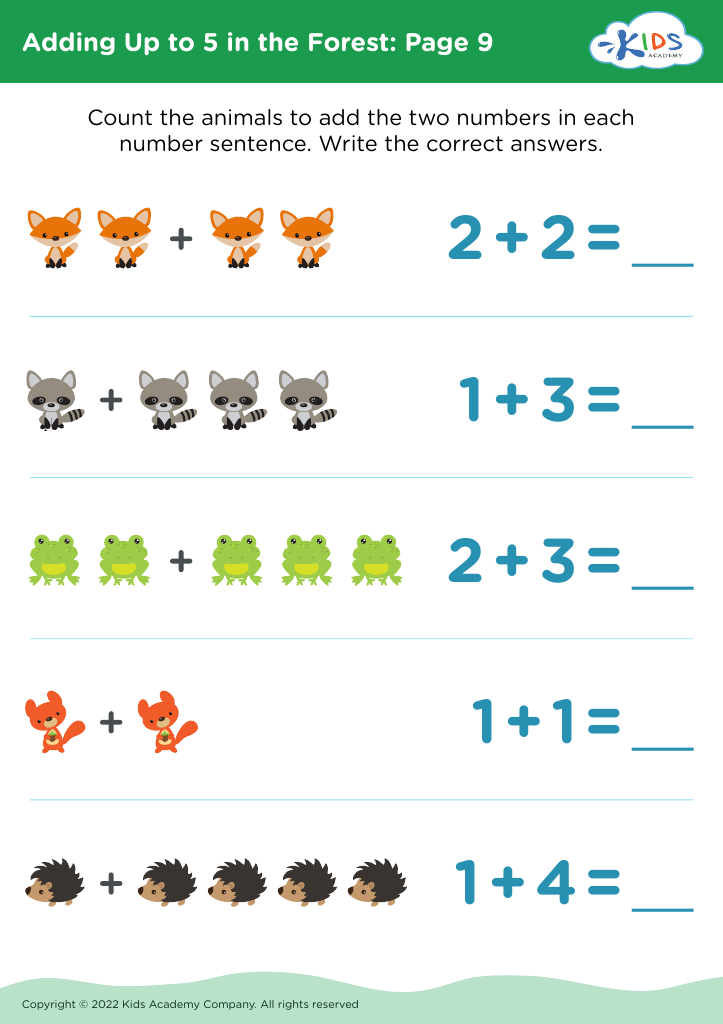
Adding Up to 5 in the Forest: Page 9
Worksheet
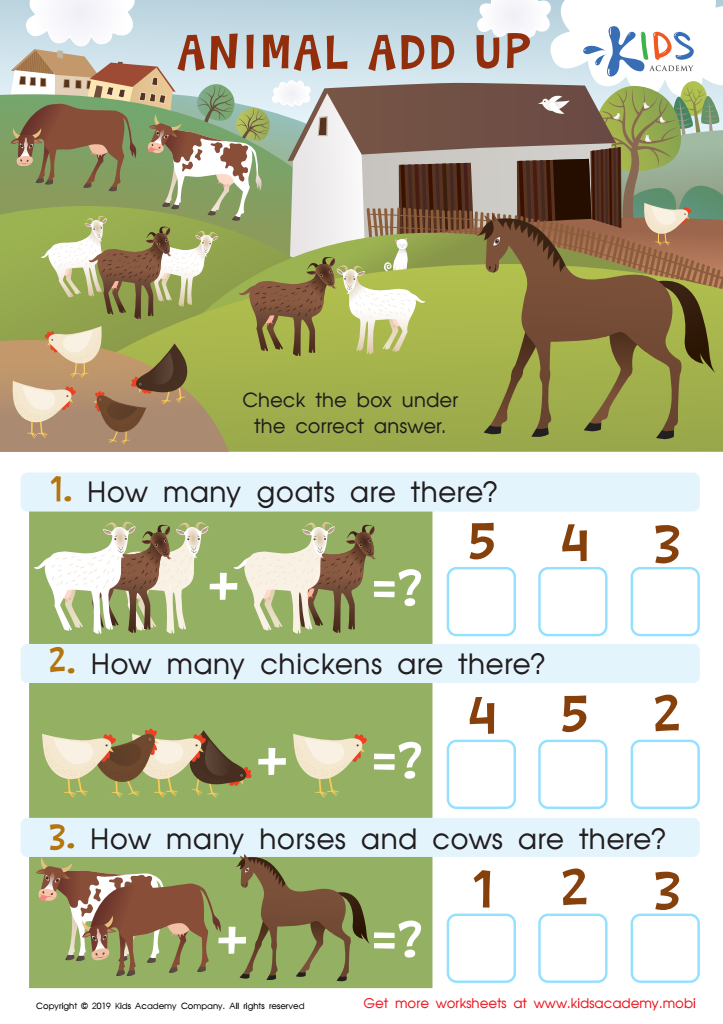
Animal Add Up Worksheet

Animal Add Up Worksheet

Animals are fun to observe and interact with. They can be seen at the zoo, parks, farms and in homes with pets. This worksheet helps kids identify animals, and build addition skills. Look at the picture with them and help name each animal. After that, add the animals up and check the box for the correct answer. 80 words.
Animal Add Up Worksheet
Worksheet
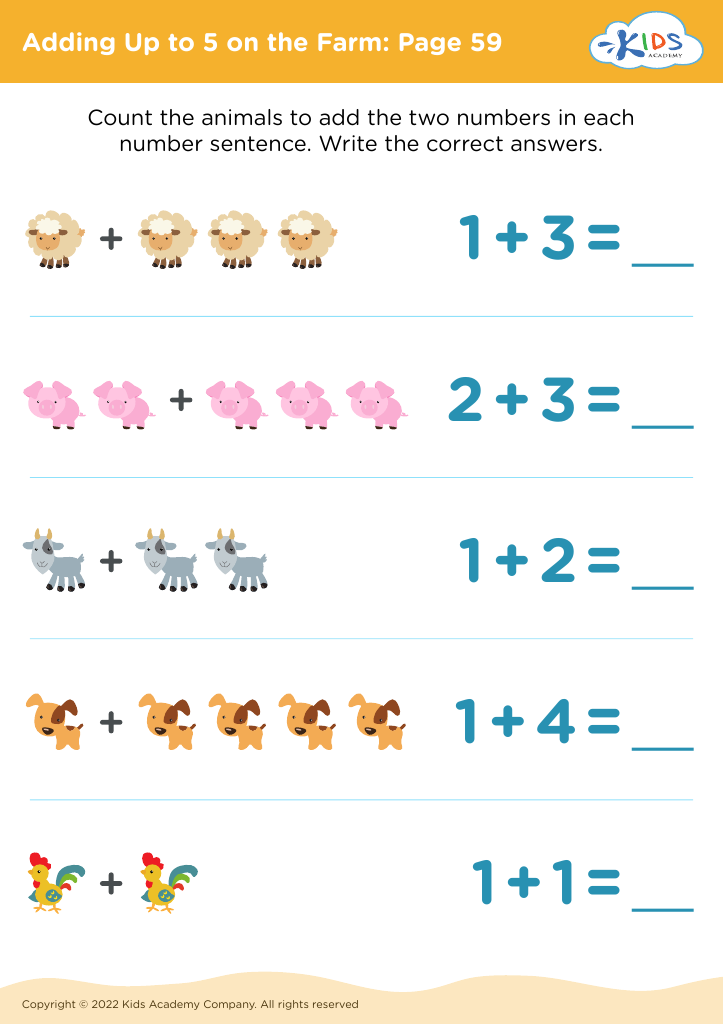
Adding Up to 5 on the Farm: Page 59
Worksheet
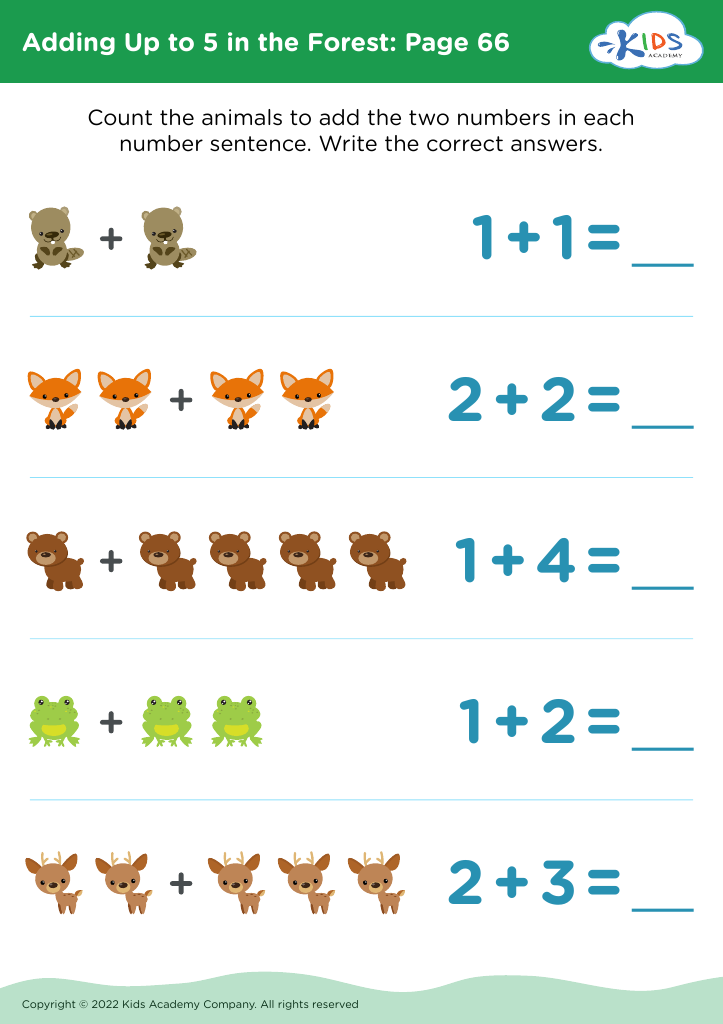
Adding Up to 5 in the Forest: Page 66
Worksheet
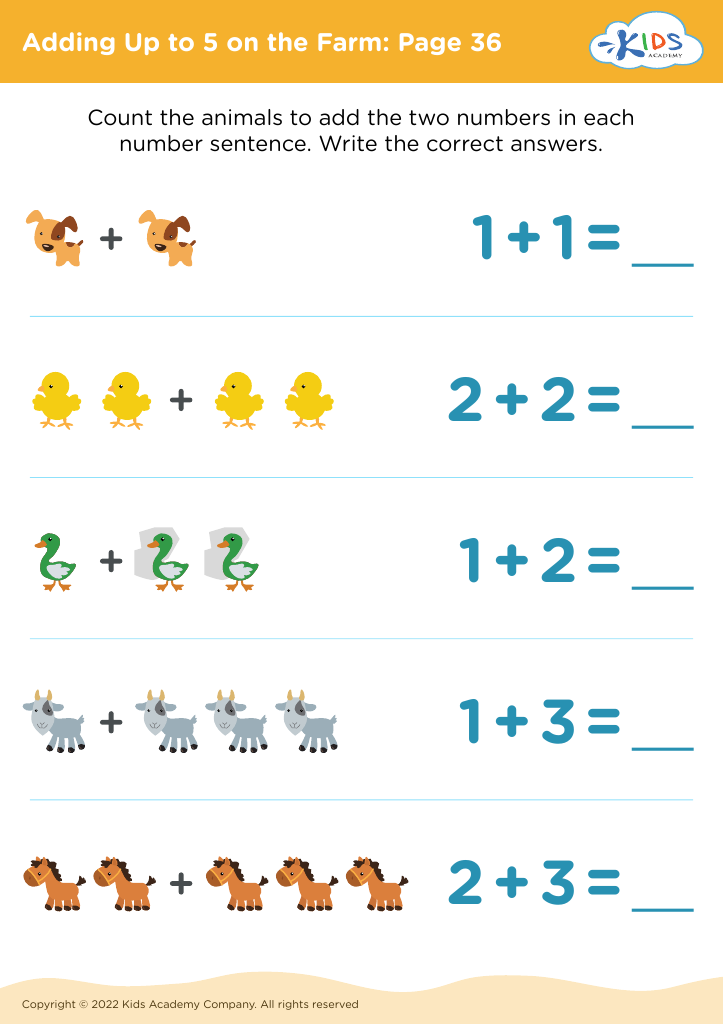
Adding Up to 5 on the Farm: Page 36
Worksheet
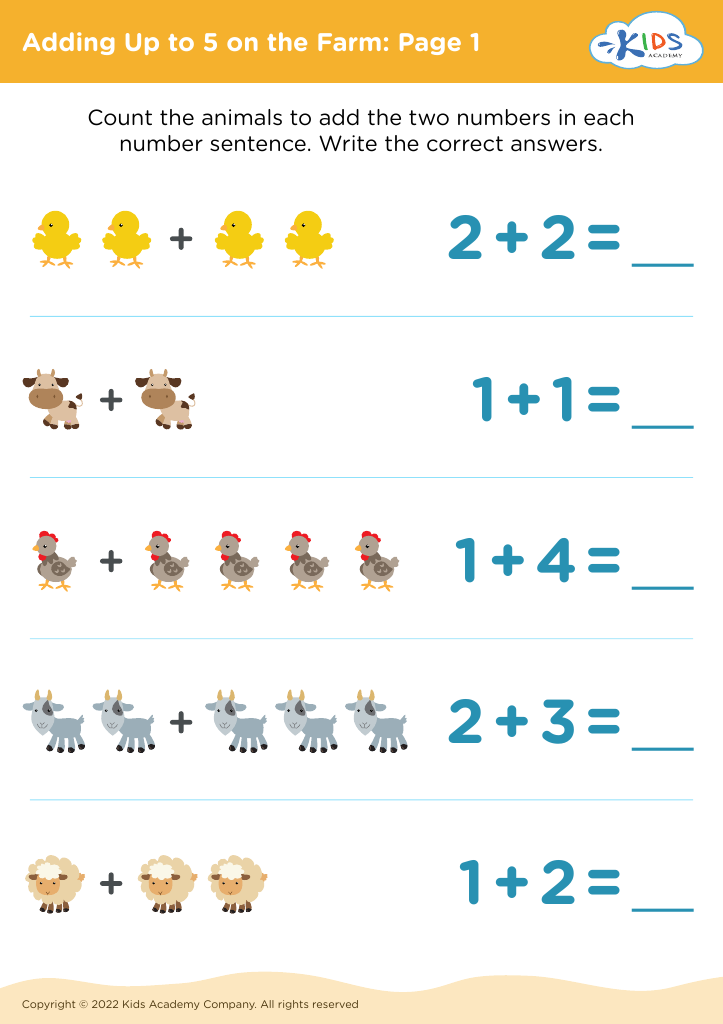
Adding Up to 5 on the Farm: Page 1
Worksheet
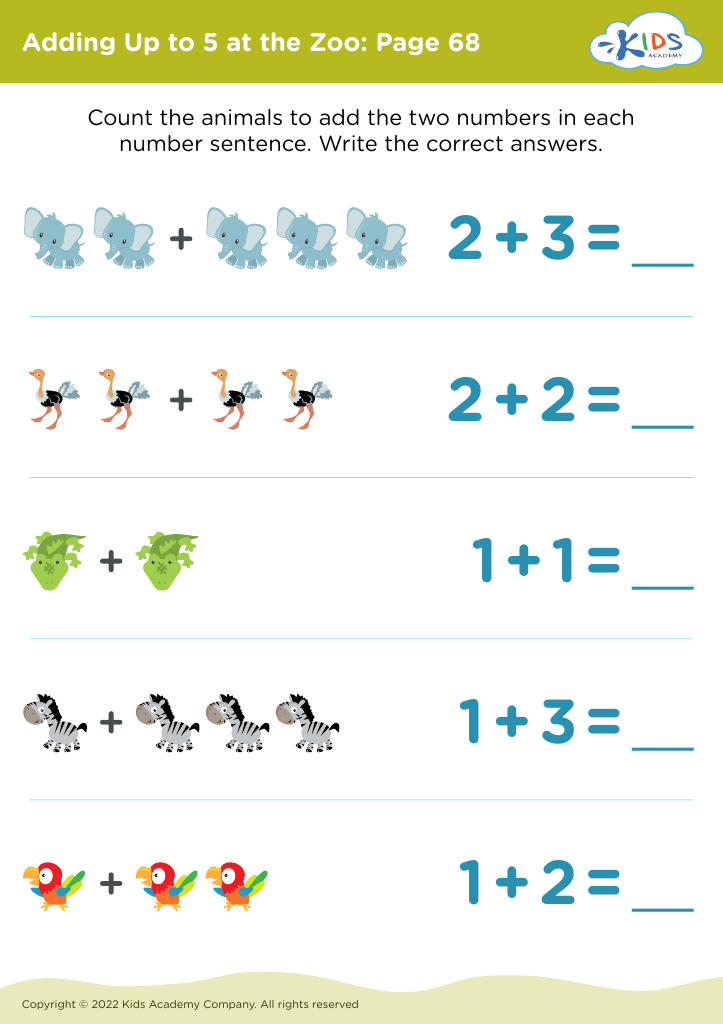
Adding Up to 5 at the Zoo: Page 68
Worksheet
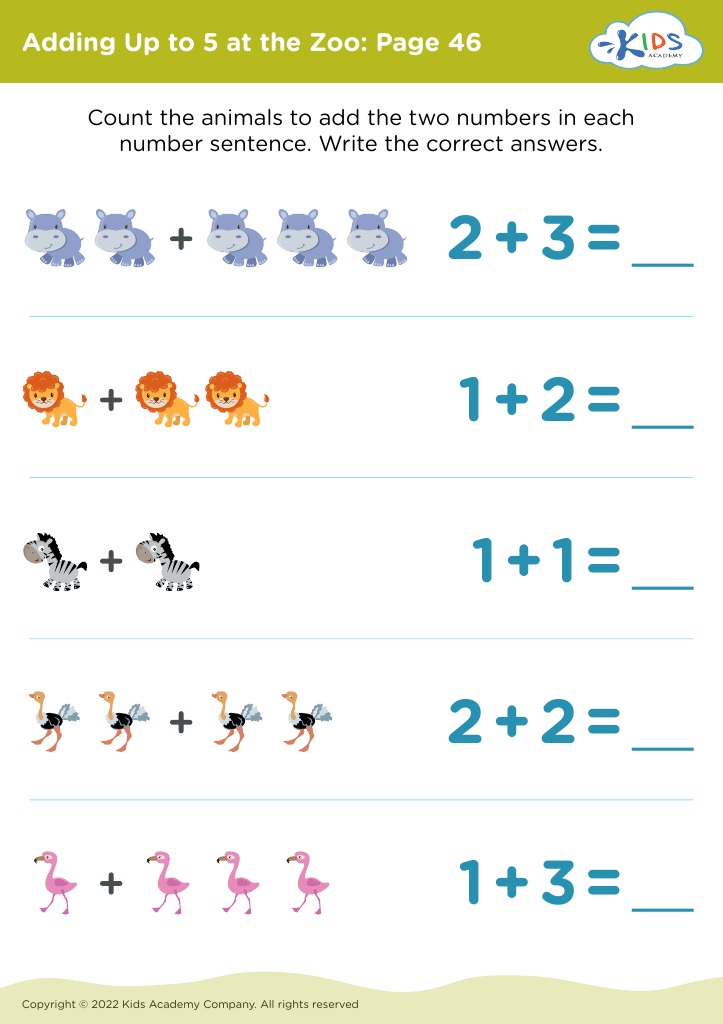
Adding Up to 5 at the Zoo: Page 46
Worksheet
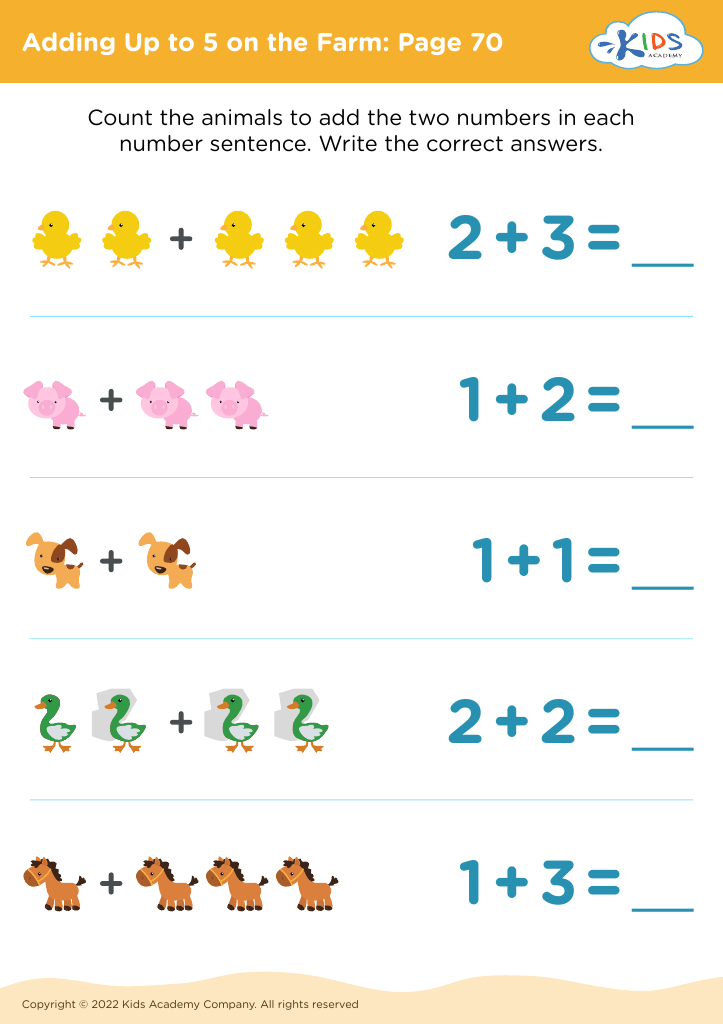
Adding Up to 5 on the Farm: Page 70
Worksheet
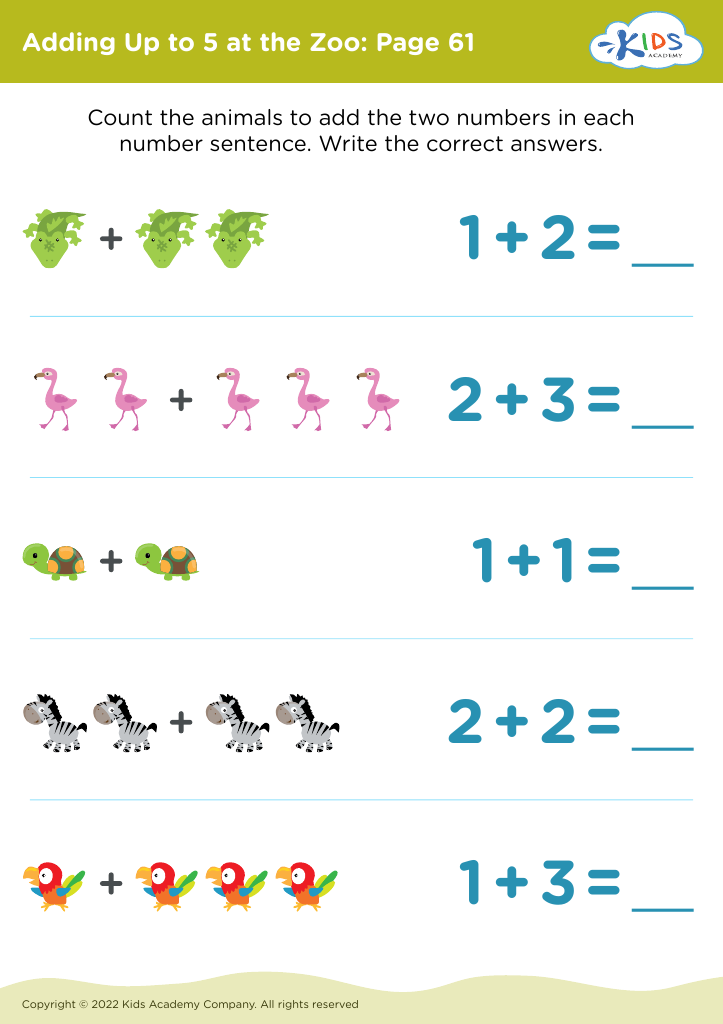
Adding Up to 5 at the Zoo: Page 61
Worksheet
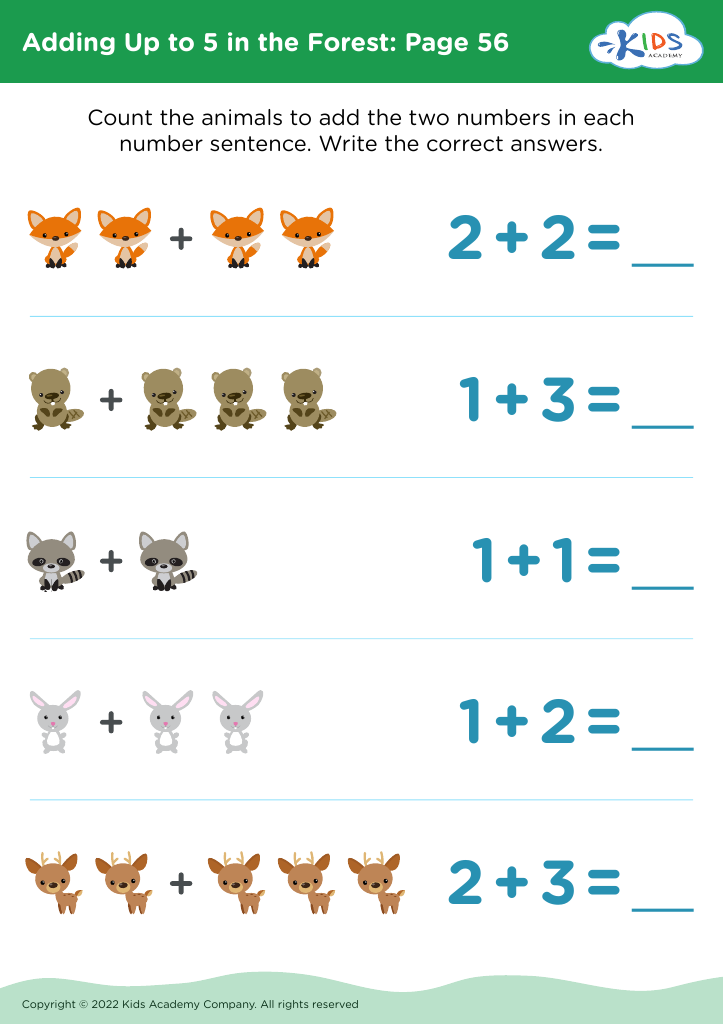
Adding Up to 5 in the Forest: Page 56
Worksheet
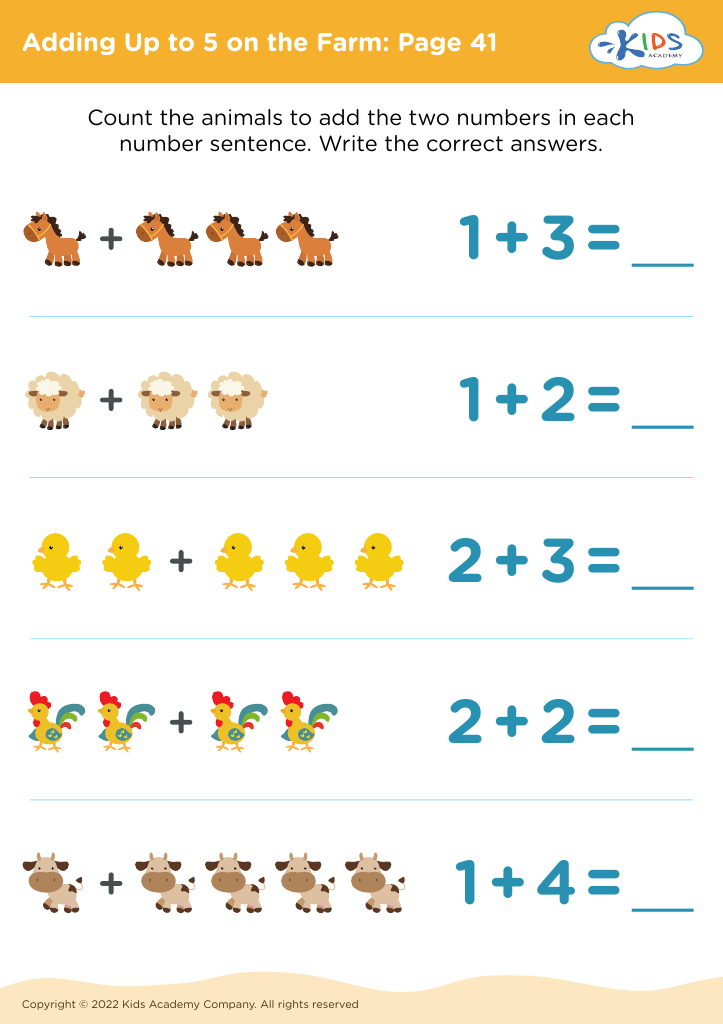
Adding Up to 5 on the Farm: Page 41
Worksheet
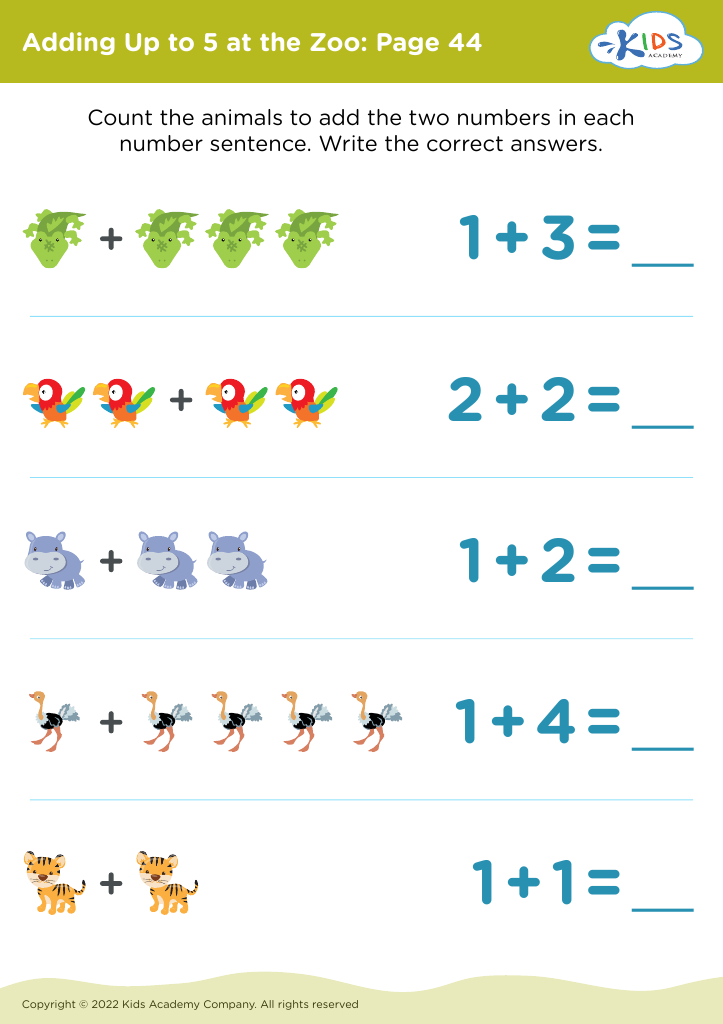
Adding Up to 5 at the Zoo: Page 44
Worksheet
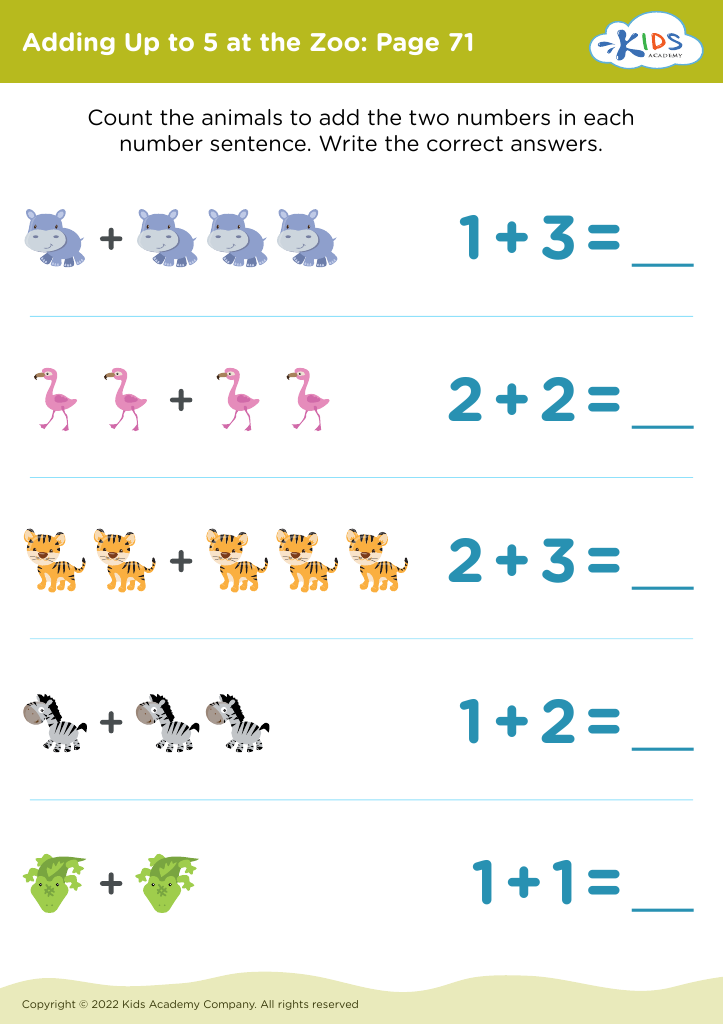
Adding Up to 5 at the Zoo: Page 71
Worksheet
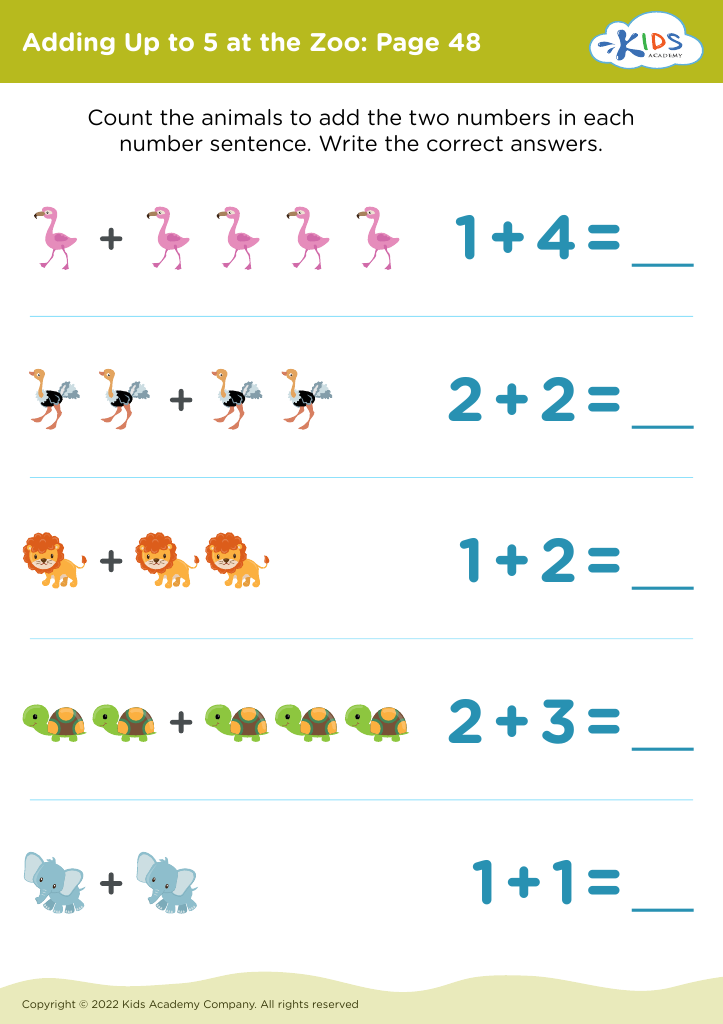
Adding Up to 5 at the Zoo: Page 48
Worksheet
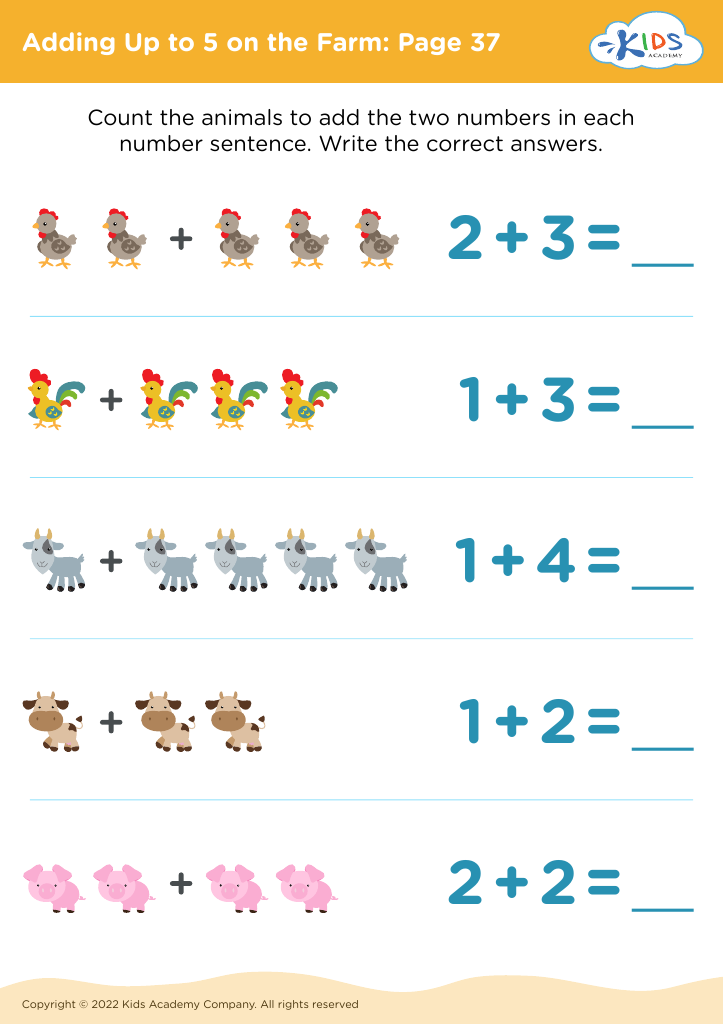
Adding Up to 5 on the Farm: Page 37
Worksheet


Animal recognition addition for ages 3-4 is a vital educational activity that combines foundational math skills with engaging learning. At this age, children are naturally curious, and incorporating animals makes the learning process exciting. This activity not only fosters counting and basic addition but also develops cognitive skills through visual and tactile interaction.

By exploring different animals while practicing addition, children improve their ability to recognize numbers, understand quantities, and relate them to real-world objects. This combination of visual learning with a familiar context—animals—provides a dual benefit. Parents and teachers should care because it sparks interest and promotes engagement, essential for effective learning at this early stage.

Moreover, activities that integrate multi-sensory learning help reinforce knowledge by making it more relatable and memorable. Encouraging conversations about animals also nurtures language skills and creates opportunities for social interaction. Lastly, emphasizing fun in learning establishes a positive attitude towards education, setting the stage for more complex learning in the future. By incorporating animal recognition addition, parents and teachers can support holistic development in early childhood, ensuring children build essential skills in a playful and enriching environment.