Filters

94 filtered results

Clear all filters
Favorites
With answer key
Interactive

94 filtered results

Difficulty Level

Grade


Check out this FREE Trial Lesson on Addition for age 3-4!

P

Favorites
With answer key
Interactive
  • 3-4
  • Animal recognition
  • Addition
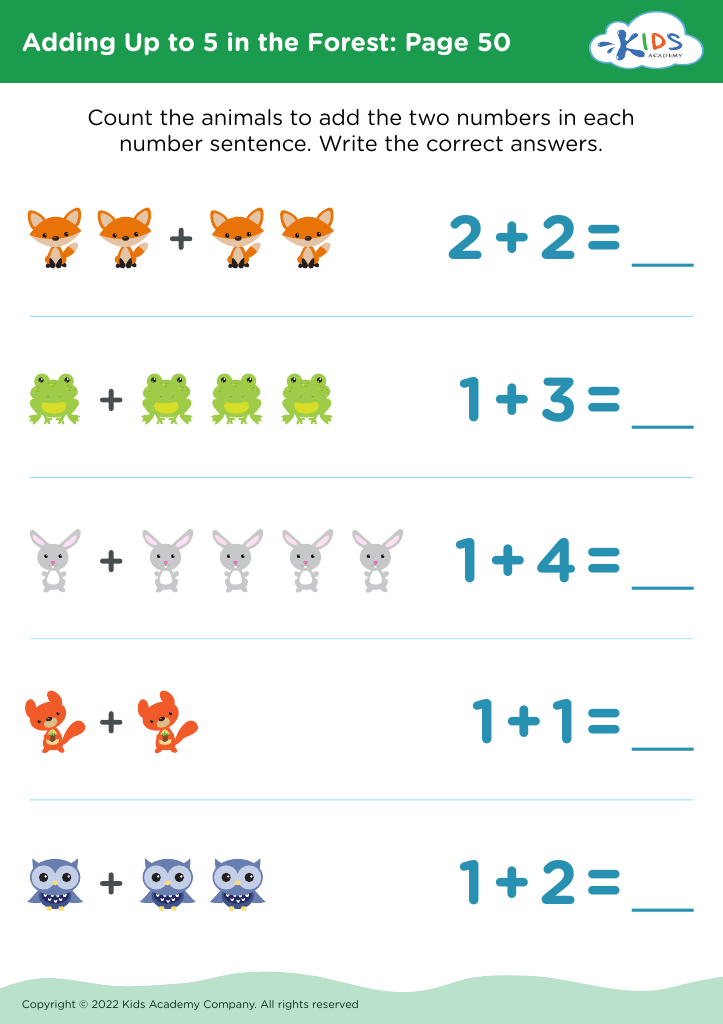
Adding Up to 5 in the Forest: Page 50
Worksheet
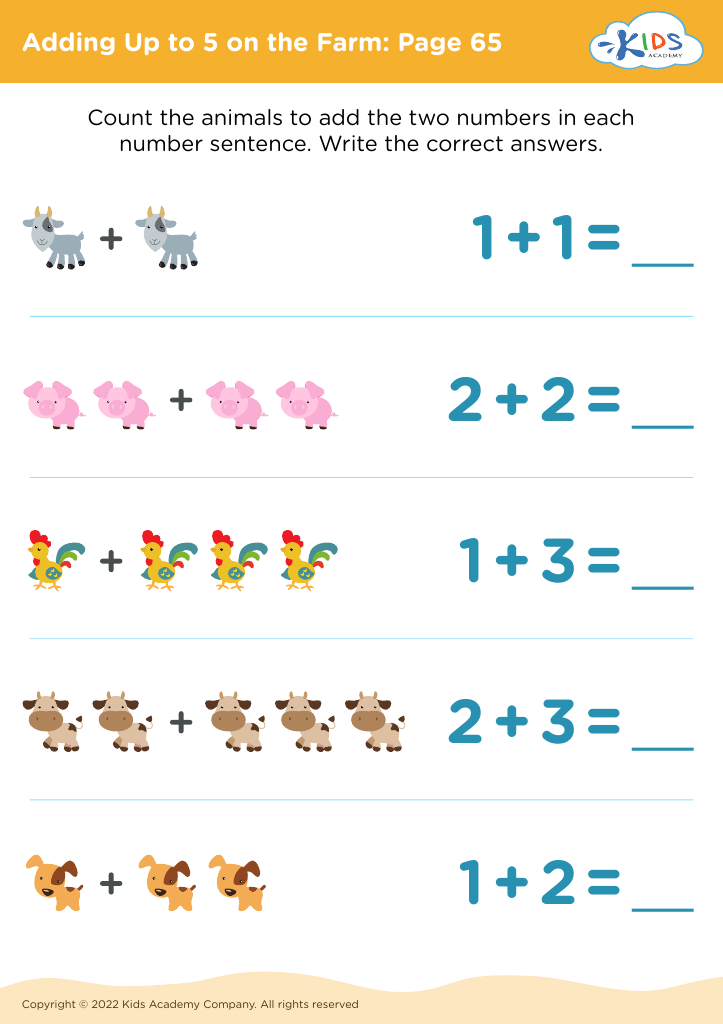
Adding Up to 5 on the Farm: Page 65
Worksheet
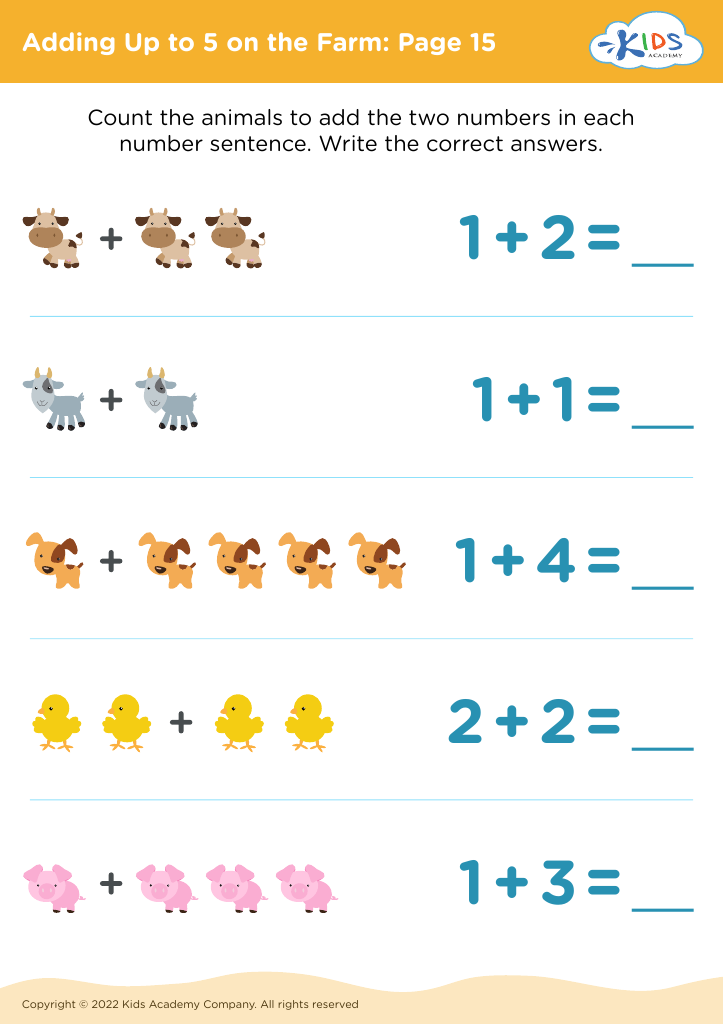
Adding Up to 5 on the Farm: Page 15
Worksheet
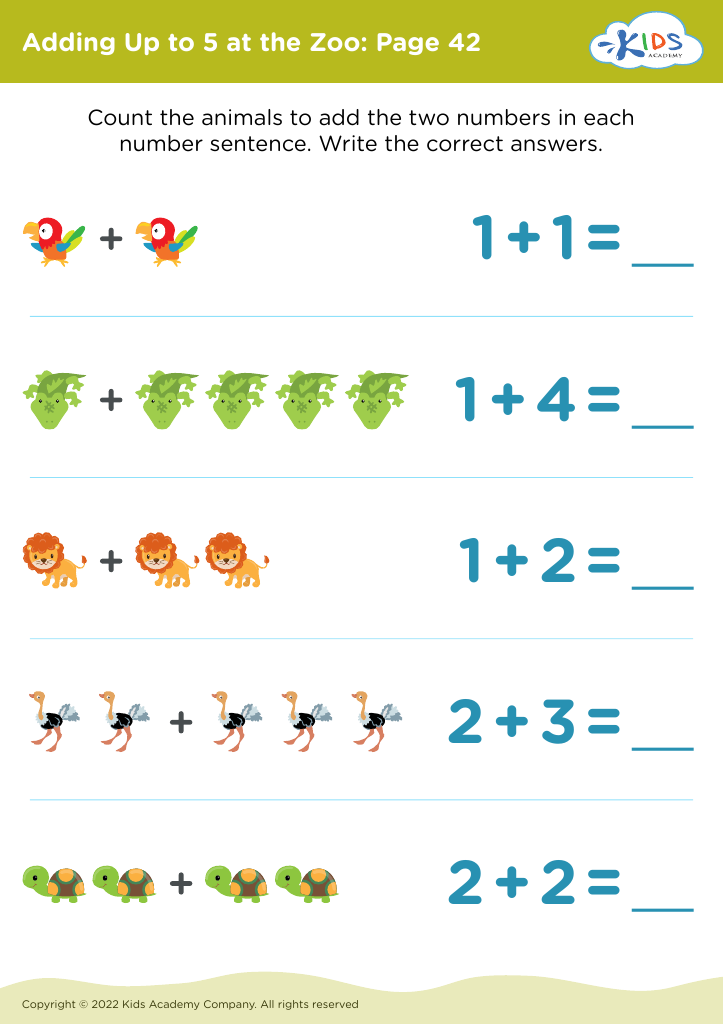
Adding Up to 5 at the Zoo: Page 42
Worksheet
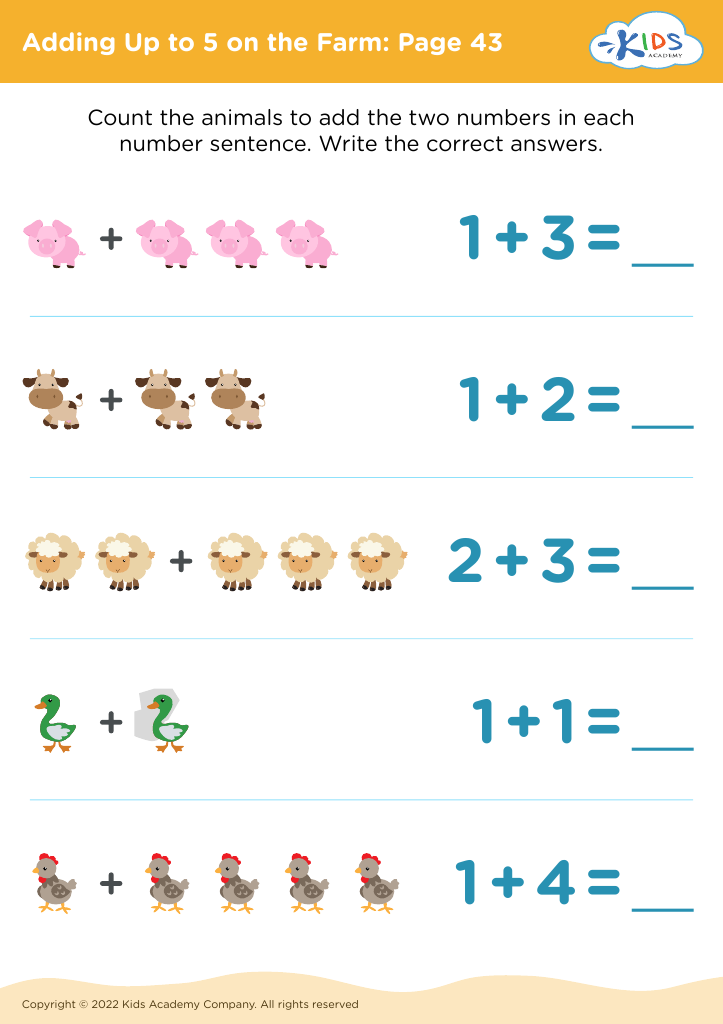
Adding Up to 5 on the Farm: Page 43
Worksheet
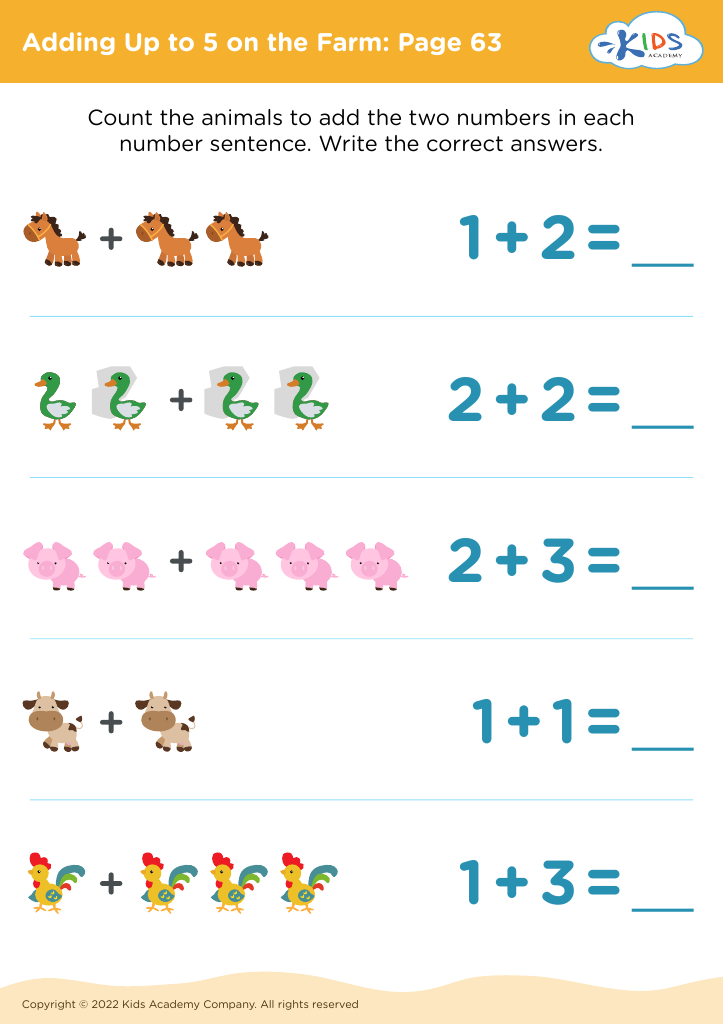
Adding Up to 5 on the Farm: Page 63
Worksheet
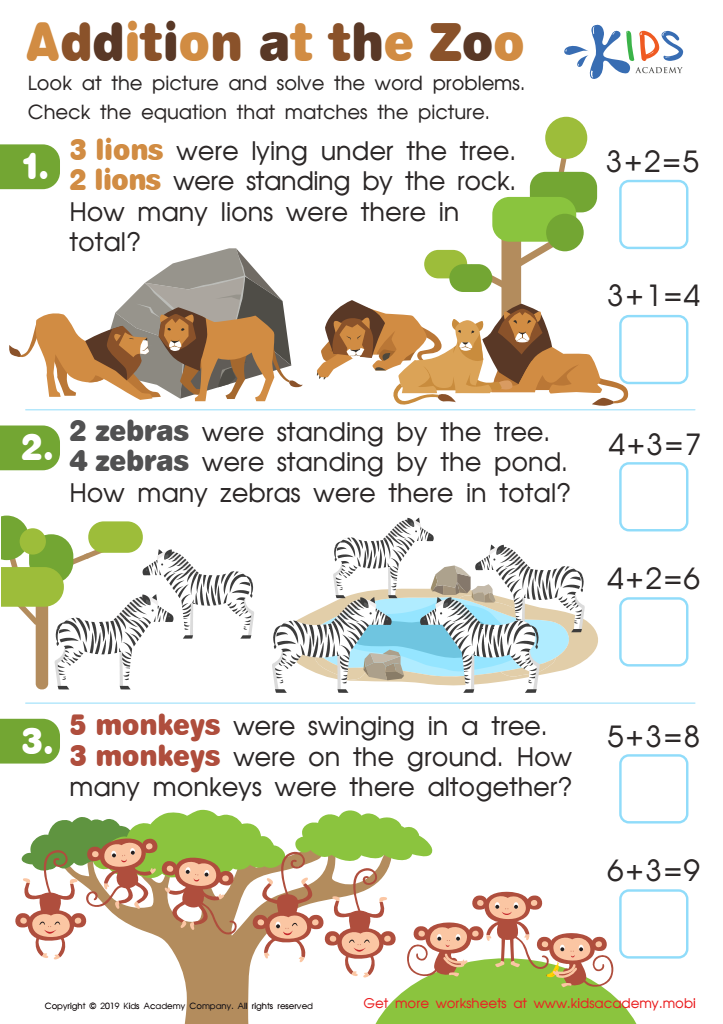
Addition at the Zoo Worksheet

Addition at the Zoo Worksheet

Visit the zoo with your kids and point out all the different animals. Ask them to name their favorites and identify animals on a worksheet. Challenge them to solve word problems related to the pictures. Ask them for the equation that fits the picture and check the answer.
Addition at the Zoo Worksheet
Worksheet
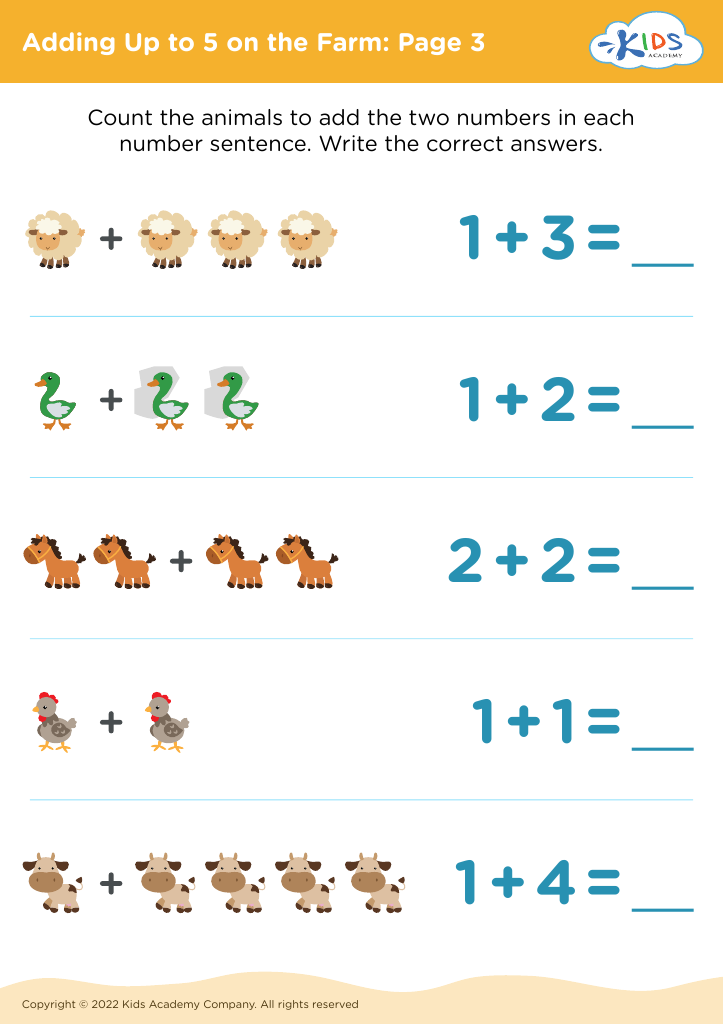
Adding Up to 5 on the Farm: Page 3
Worksheet
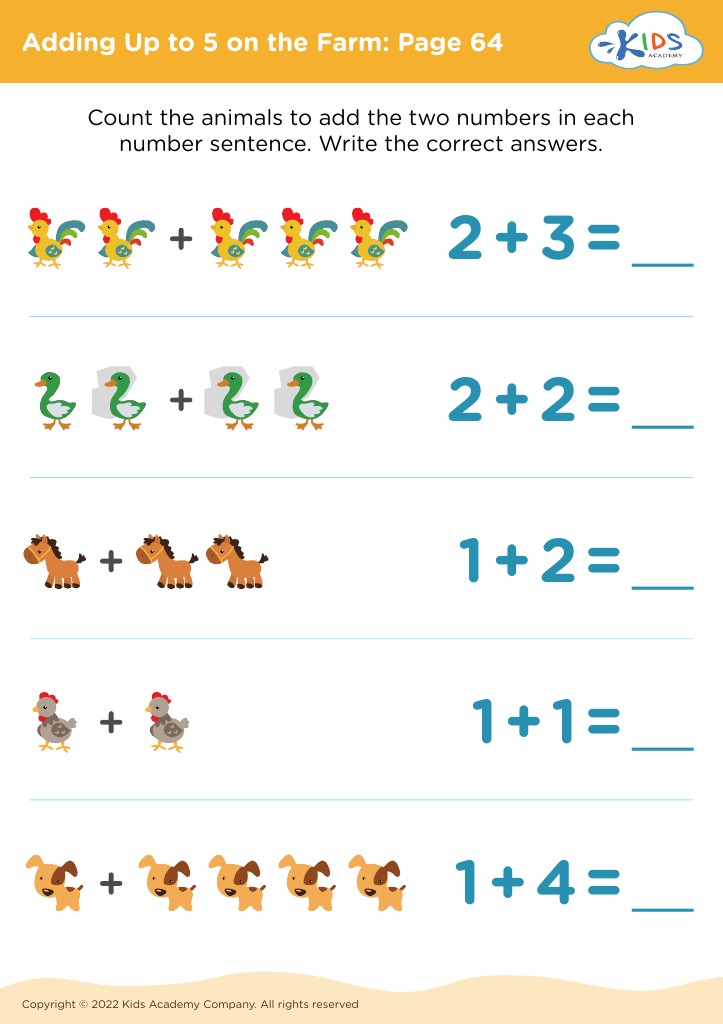
Adding Up to 5 on the Farm: Page 64
Worksheet
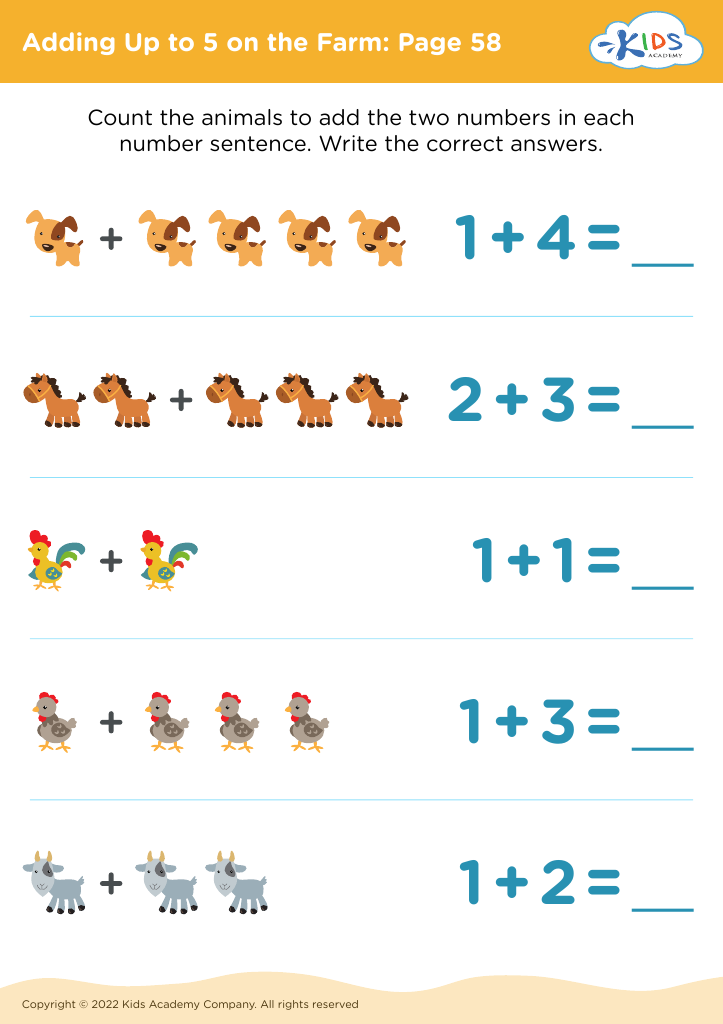
Adding Up to 5 on the Farm: Page 58
Worksheet
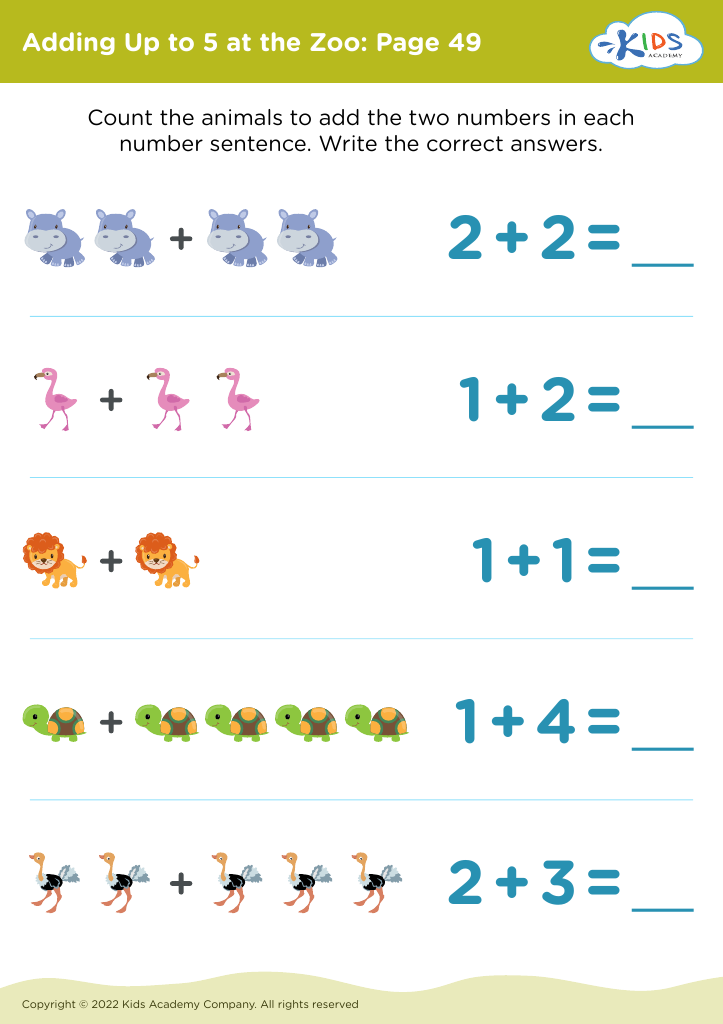
Adding Up to 5 at the Zoo: Page 49
Worksheet
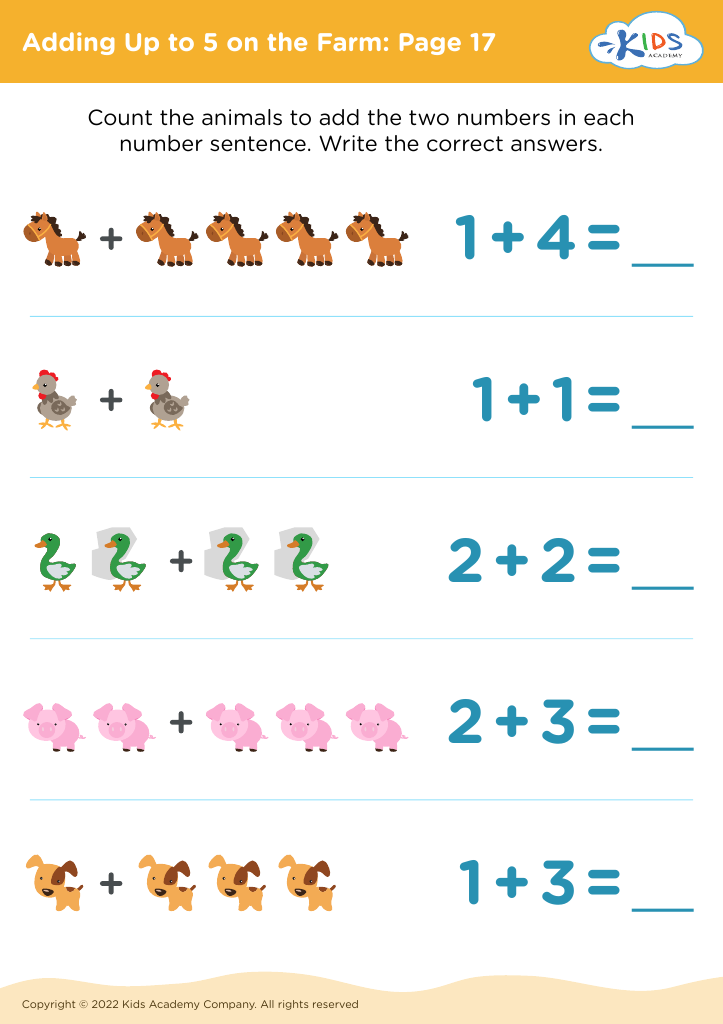
Adding Up to 5 on the Farm: Page 17
Worksheet
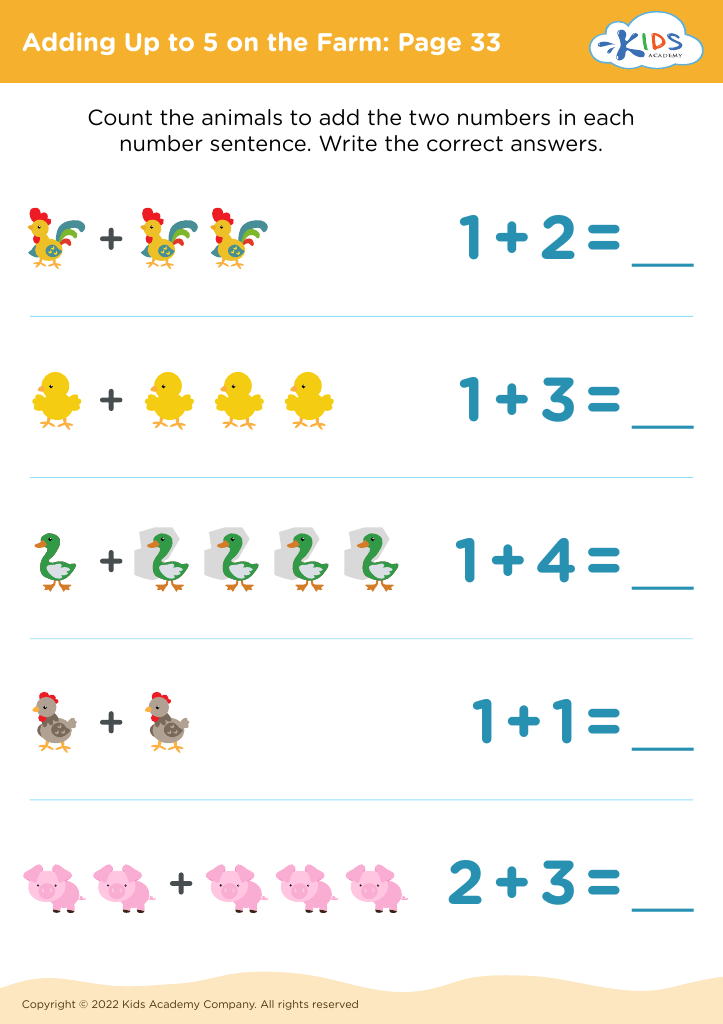
Adding Up to 5 on the Farm: Page 33
Worksheet
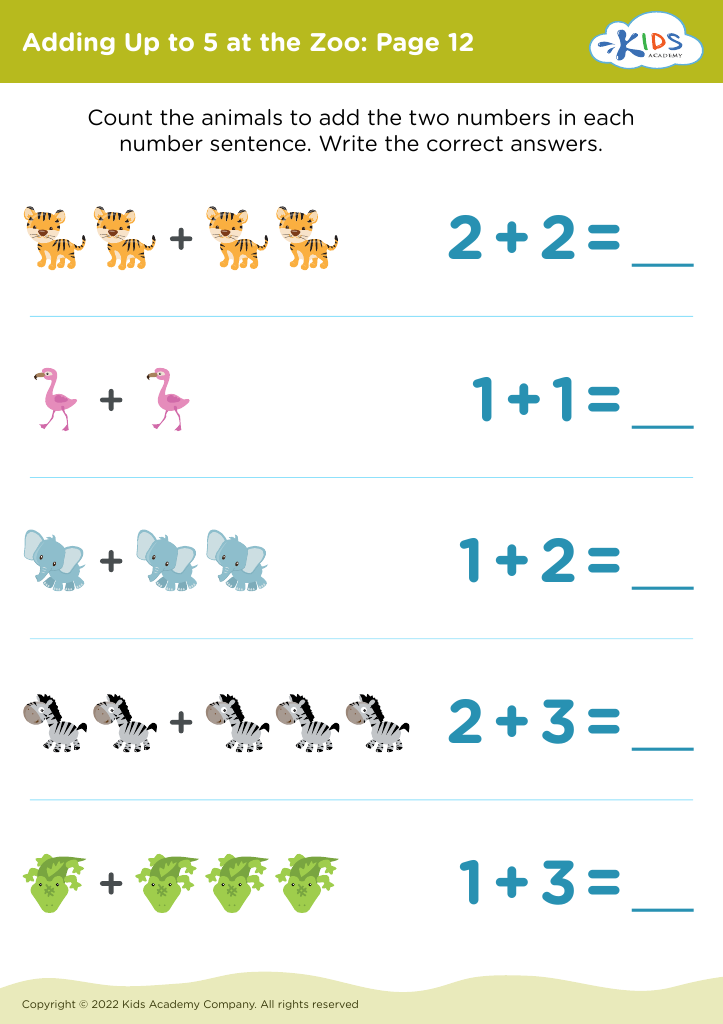
Adding Up to 5 at the Zoo: Page 12
Worksheet
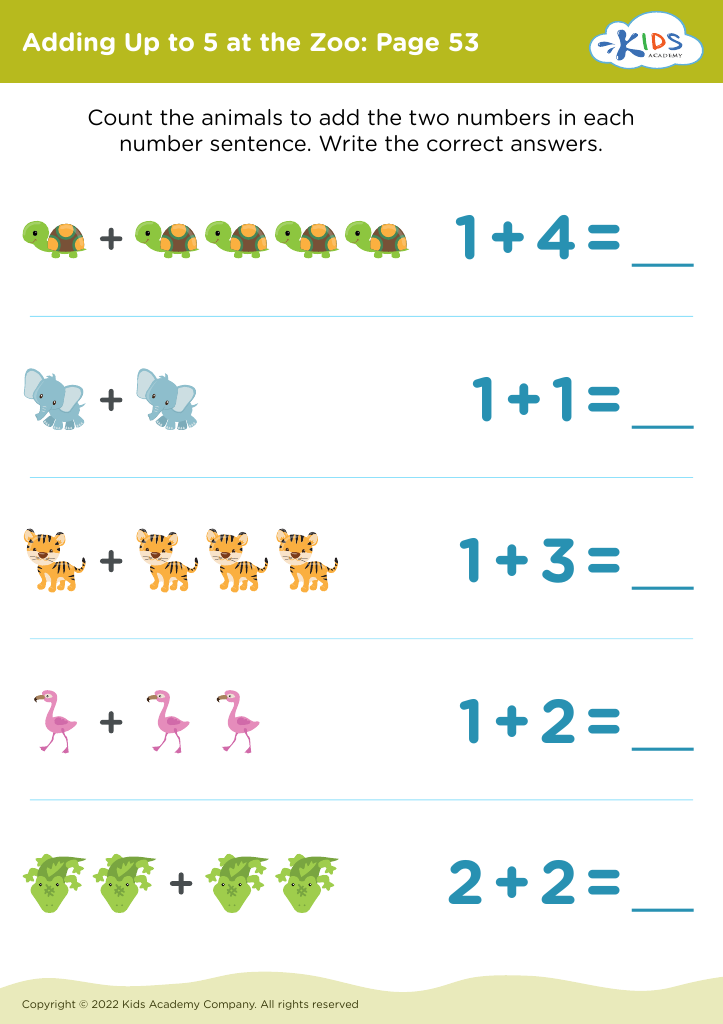
Adding Up to 5 at the Zoo: Page 53
Worksheet
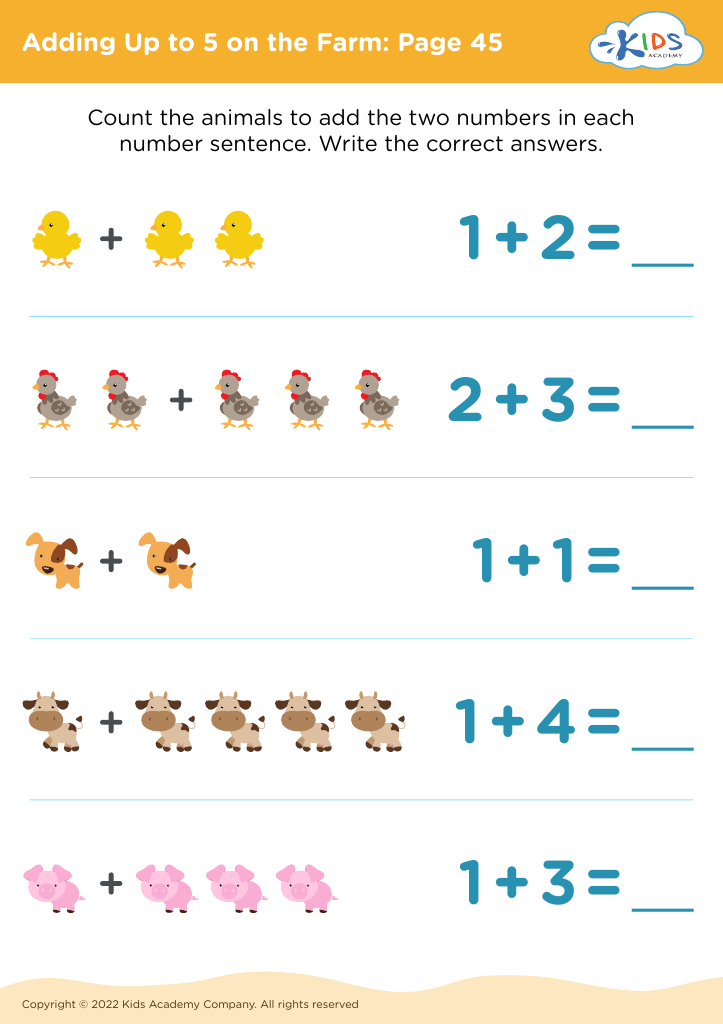
Adding Up to 5 on the Farm: Page 45
Worksheet
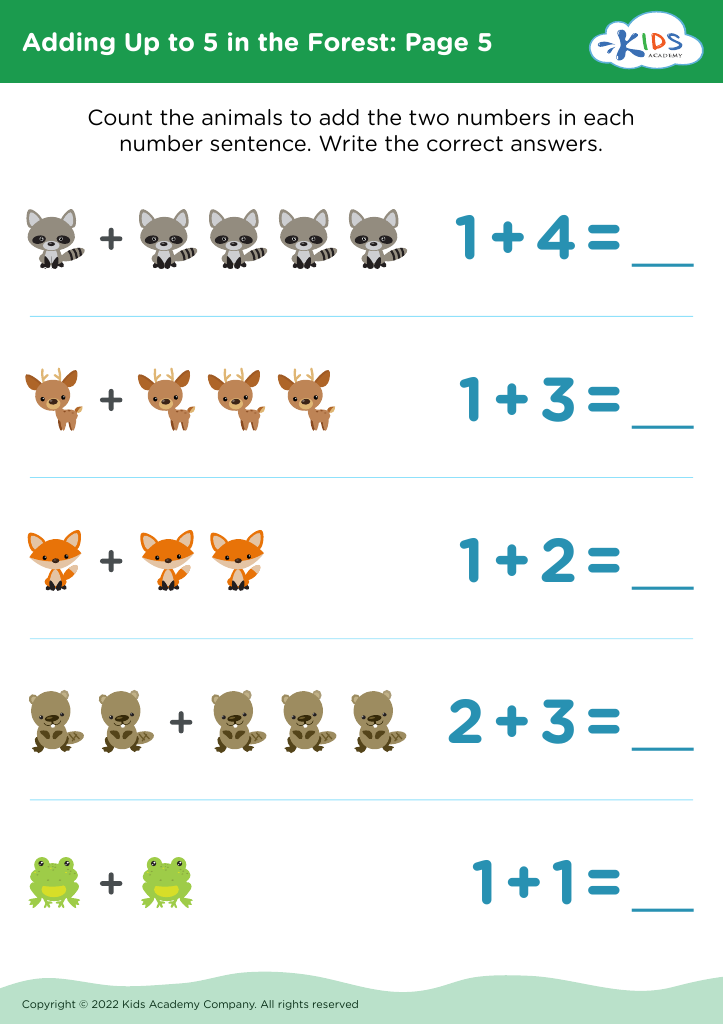
Adding Up to 5 in the Forest: Page 5
Worksheet
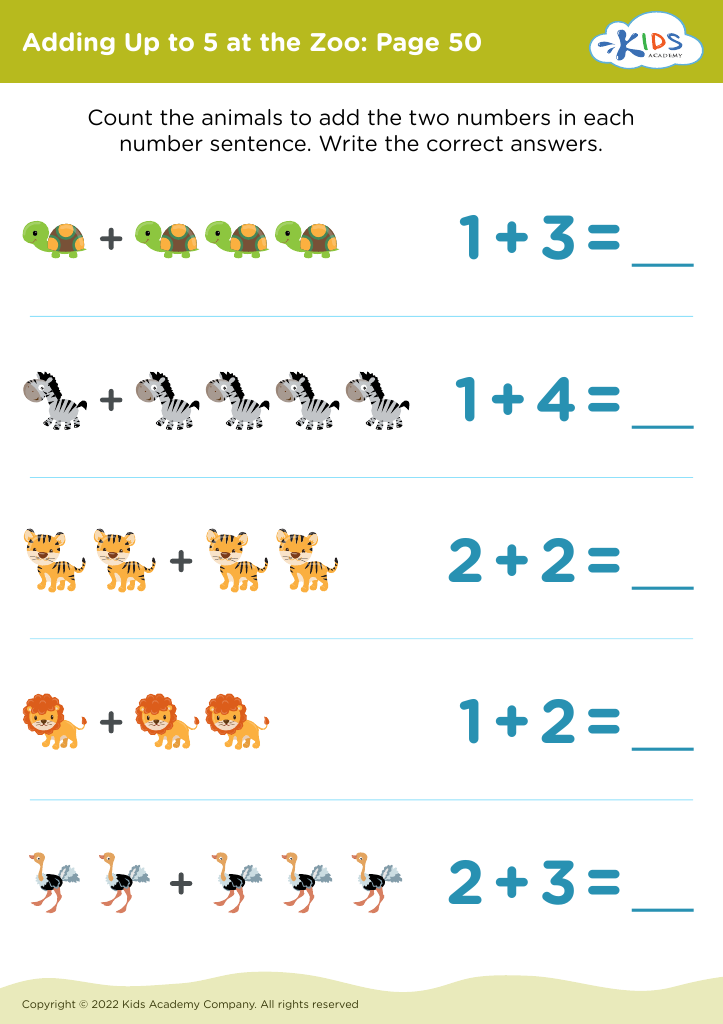
Adding Up to 5 at the Zoo: Page 50
Worksheet
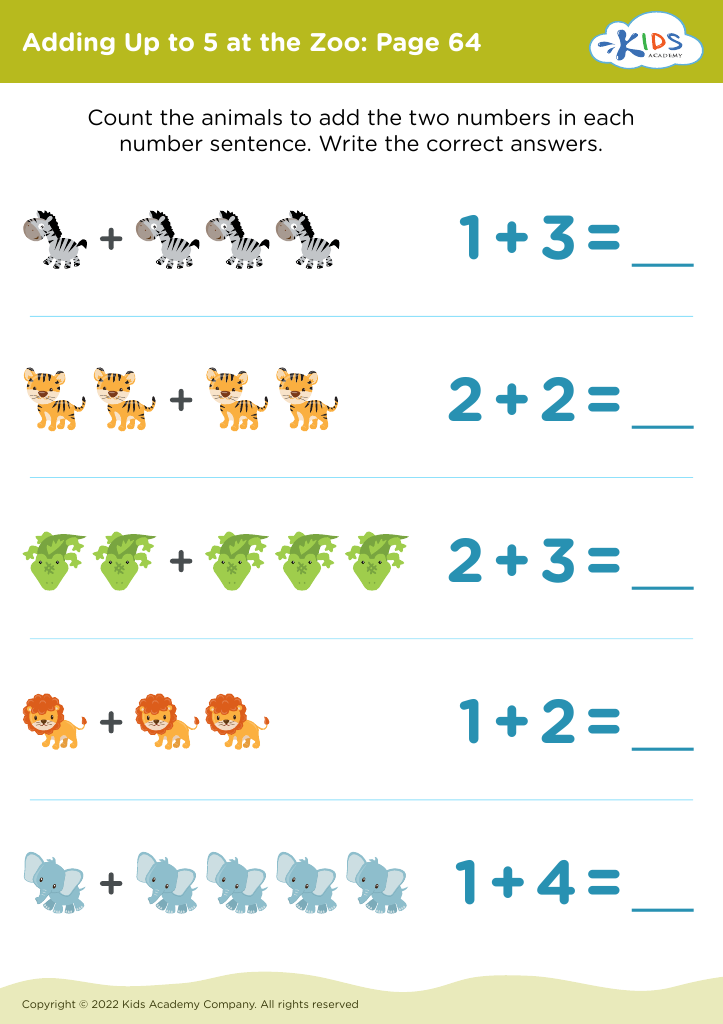
Adding Up to 5 at the Zoo: Page 64
Worksheet
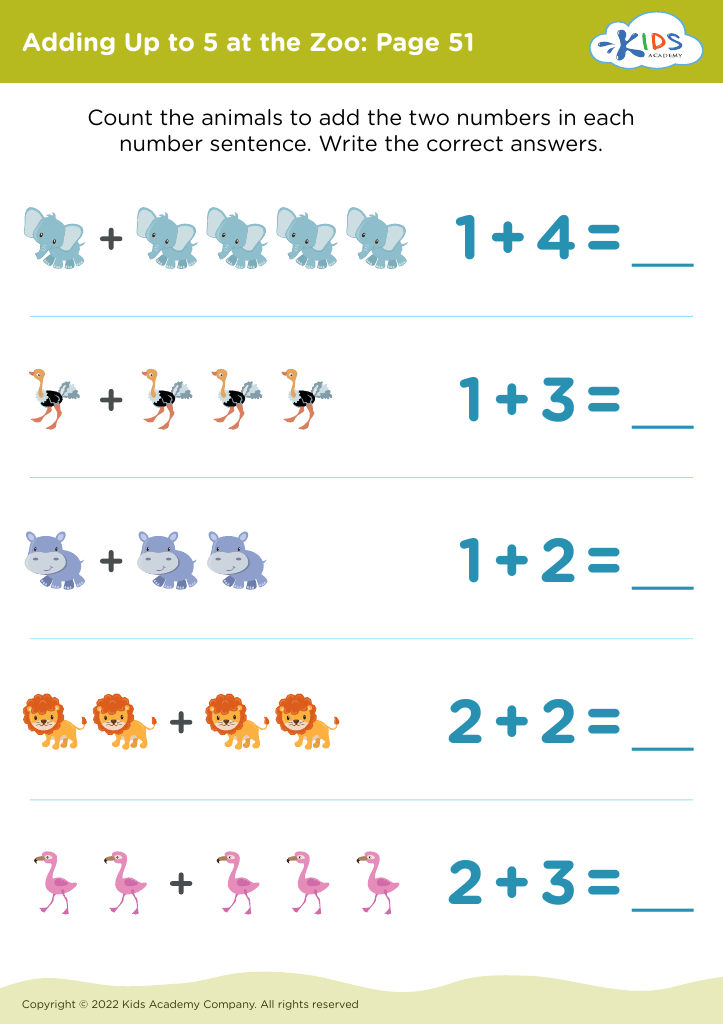
Adding Up to 5 at the Zoo: Page 51
Worksheet
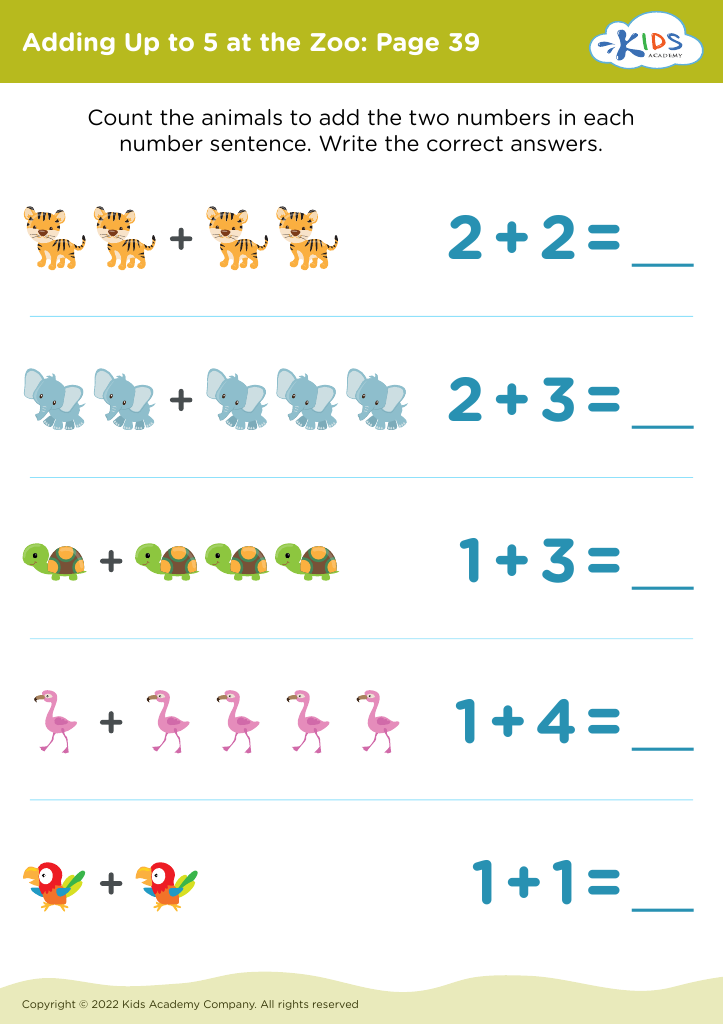
Adding Up to 5 at the Zoo: Page 39
Worksheet
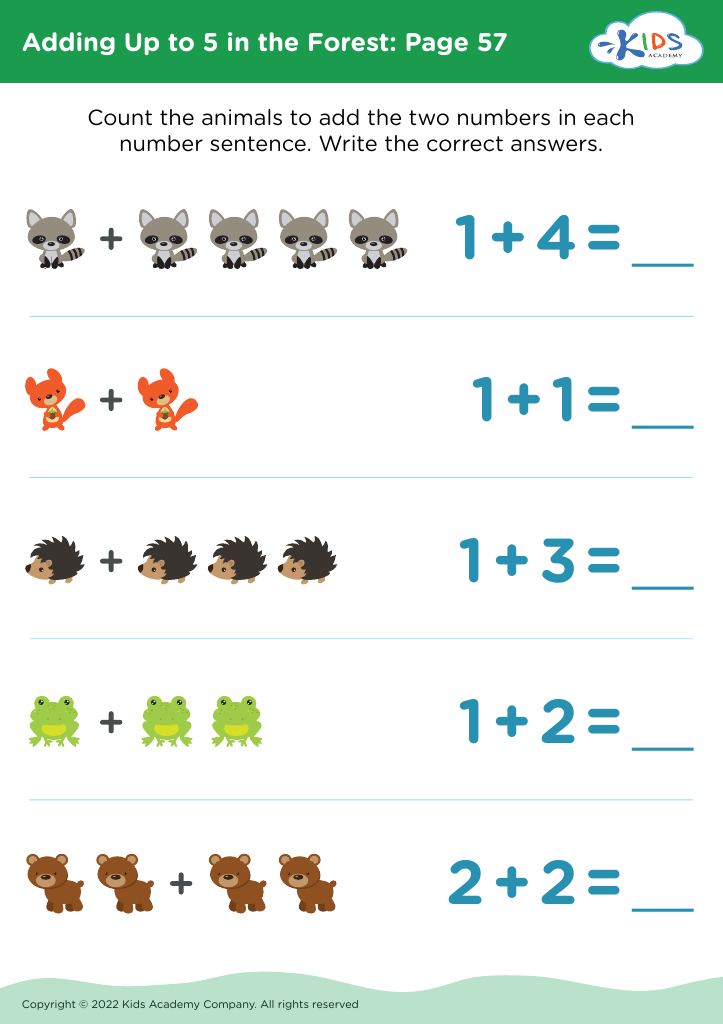
Adding Up to 5 in the Forest: Page 57
Worksheet


... 3 4

Animal recognition addition for ages 3-4 is a vital educational activity that combines foundational math skills with engaging learning. At this age, children are naturally curious, and incorporating animals makes the learning process exciting. This activity not only fosters counting and basic addition but also develops cognitive skills through visual and tactile interaction.

By exploring different animals while practicing addition, children improve their ability to recognize numbers, understand quantities, and relate them to real-world objects. This combination of visual learning with a familiar context—animals—provides a dual benefit. Parents and teachers should care because it sparks interest and promotes engagement, essential for effective learning at this early stage.

Moreover, activities that integrate multi-sensory learning help reinforce knowledge by making it more relatable and memorable. Encouraging conversations about animals also nurtures language skills and creates opportunities for social interaction. Lastly, emphasizing fun in learning establishes a positive attitude towards education, setting the stage for more complex learning in the future. By incorporating animal recognition addition, parents and teachers can support holistic development in early childhood, ensuring children build essential skills in a playful and enriching environment.