Check out this FREE Trial Lesson on Addition for age 3-4!

Match Objects that Fit Together

Favorites
With answer key
Interactive
  • 3-4
  • Basic Addition Skills
  • Addition
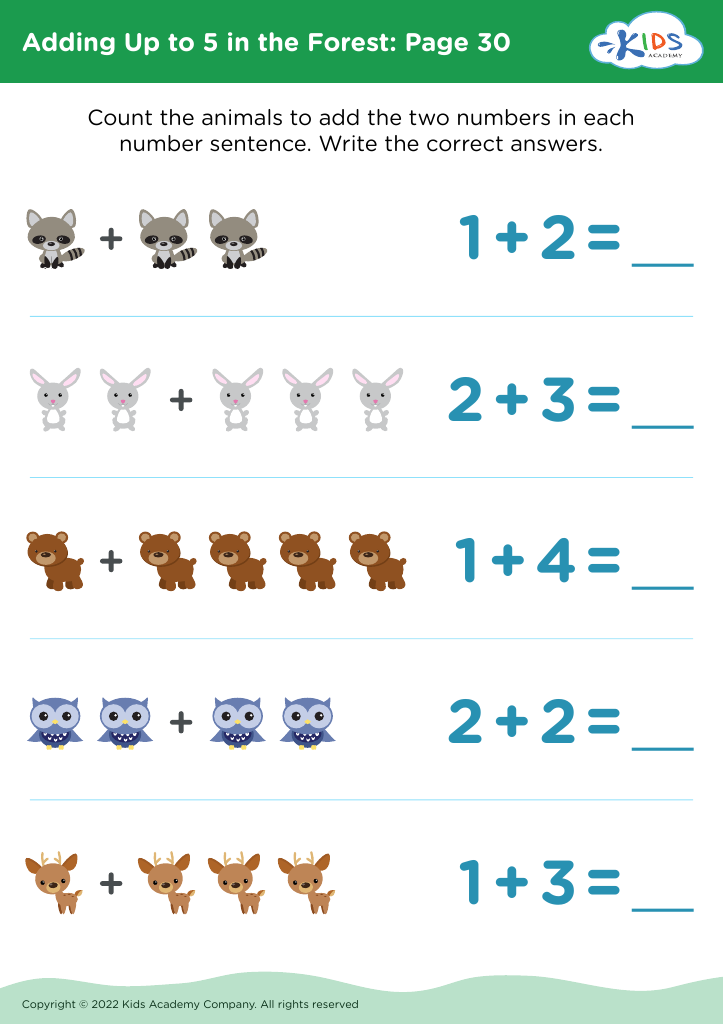
Adding Up to 5 in the Forest: Page 30
Worksheet
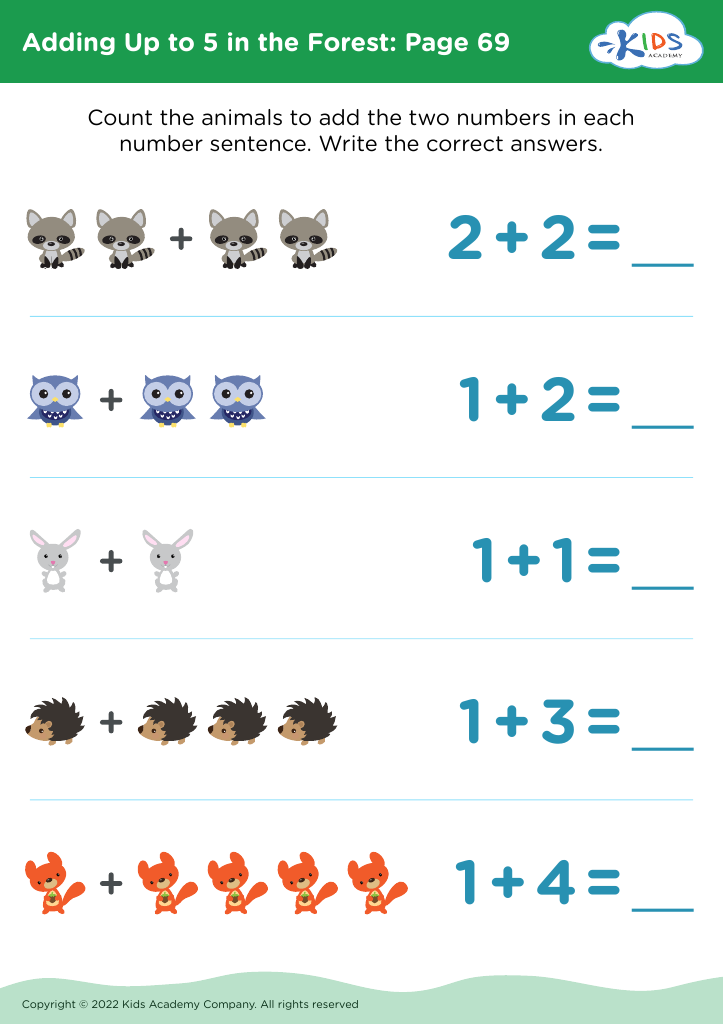
Adding Up to 5 in the Forest: Page 69
Worksheet
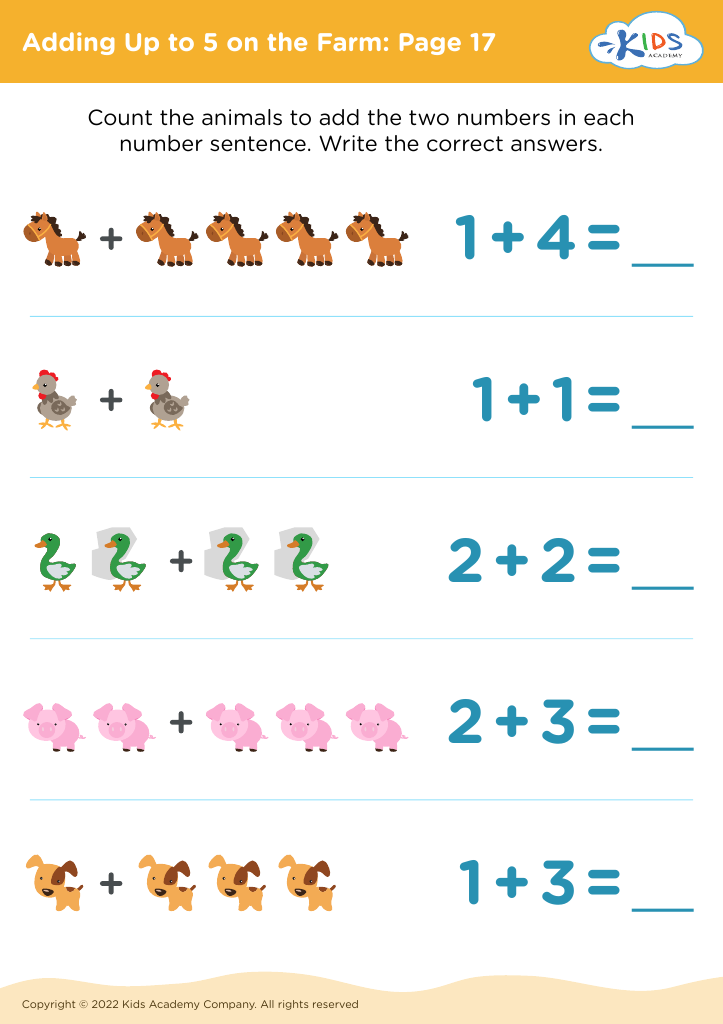
Adding Up to 5 on the Farm: Page 17
Worksheet
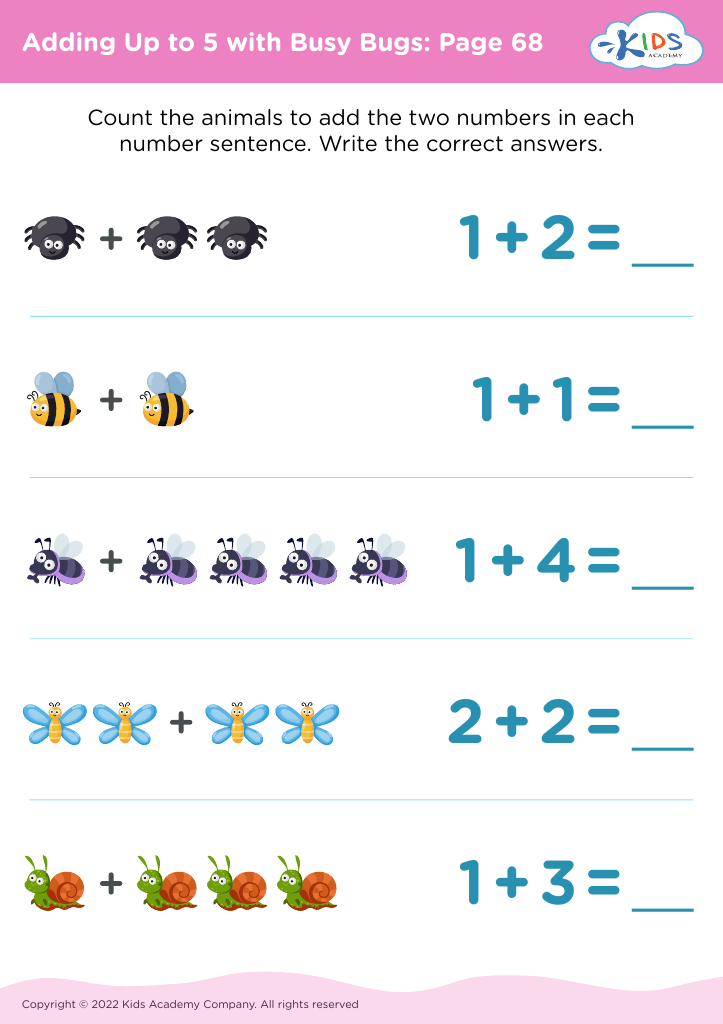
Adding Up to 5 with Busy Bugs: Page 68
Worksheet
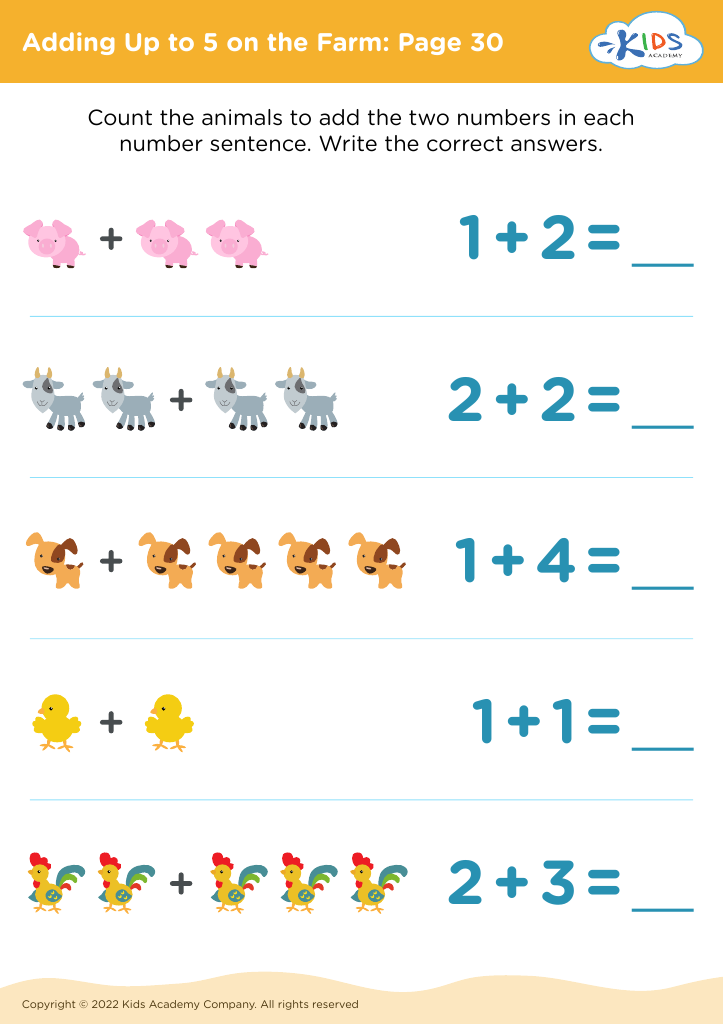
Adding Up to 5 on the Farm: Page 30
Worksheet
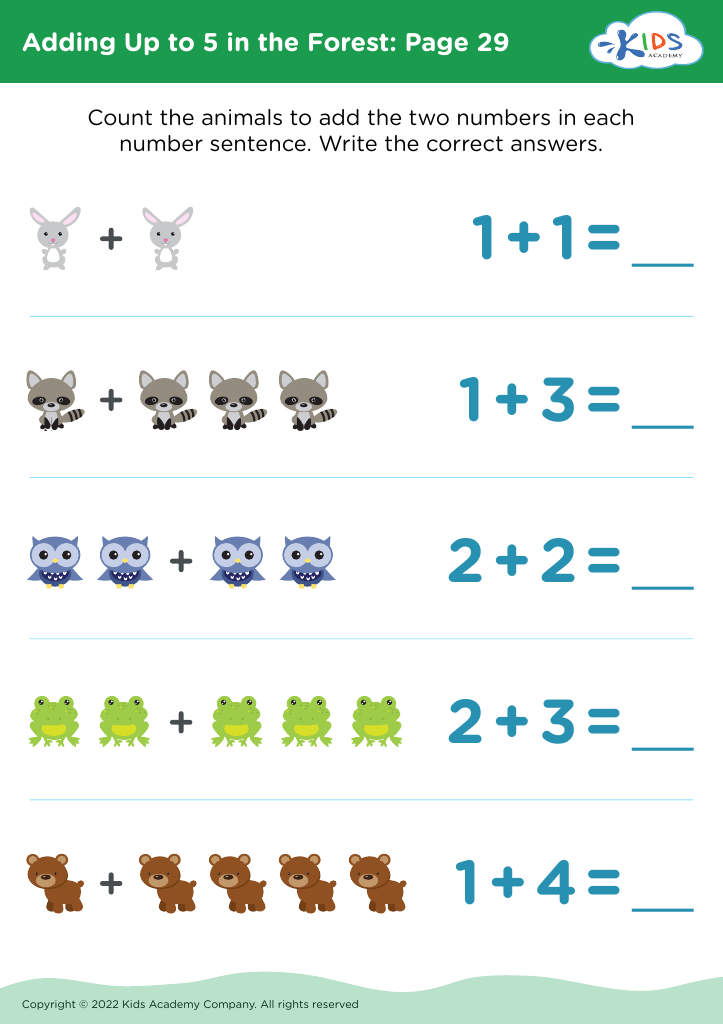
Adding Up to 5 in the Forest: Page 29
Worksheet
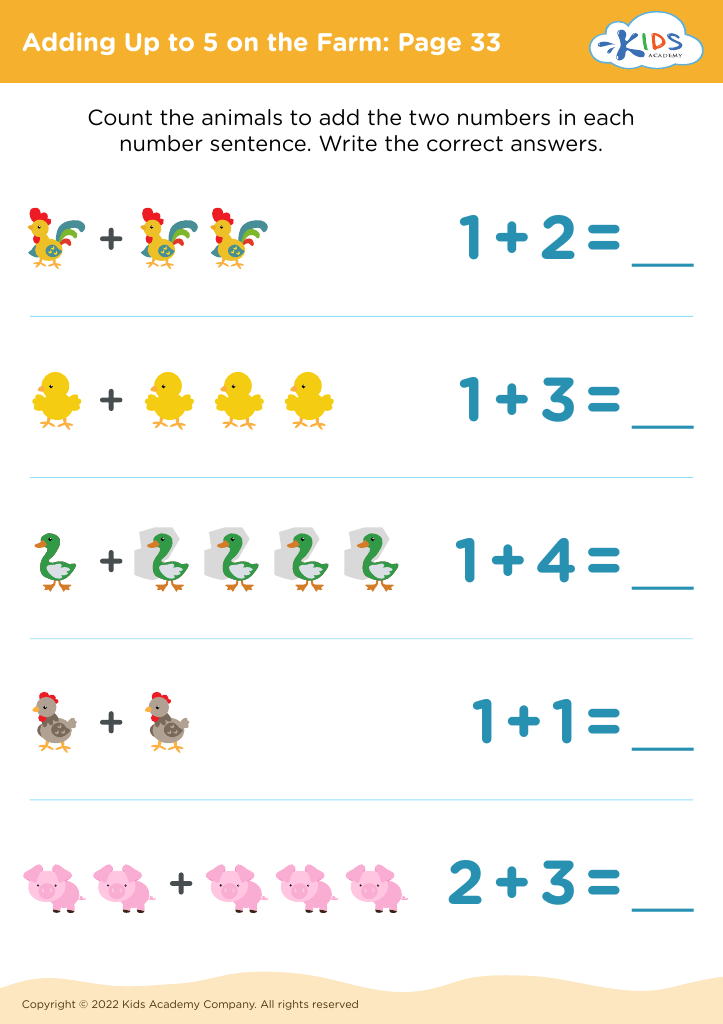
Adding Up to 5 on the Farm: Page 33
Worksheet
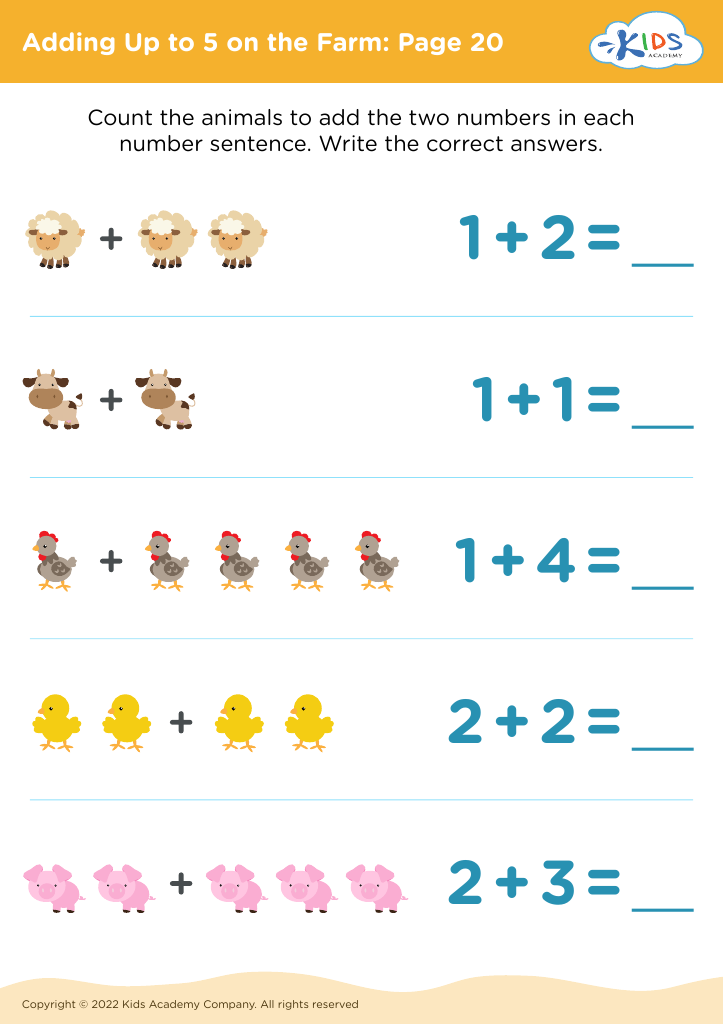
Adding Up to 5 on the Farm: Page 20
Worksheet
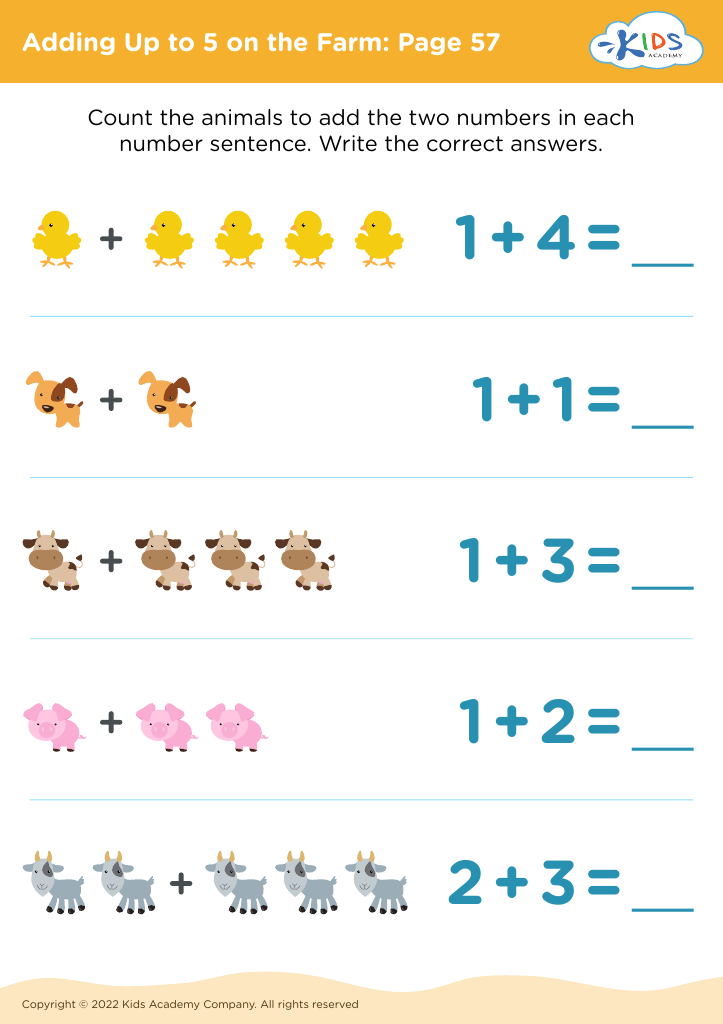
Adding Up to 5 on the Farm: Page 57
Worksheet
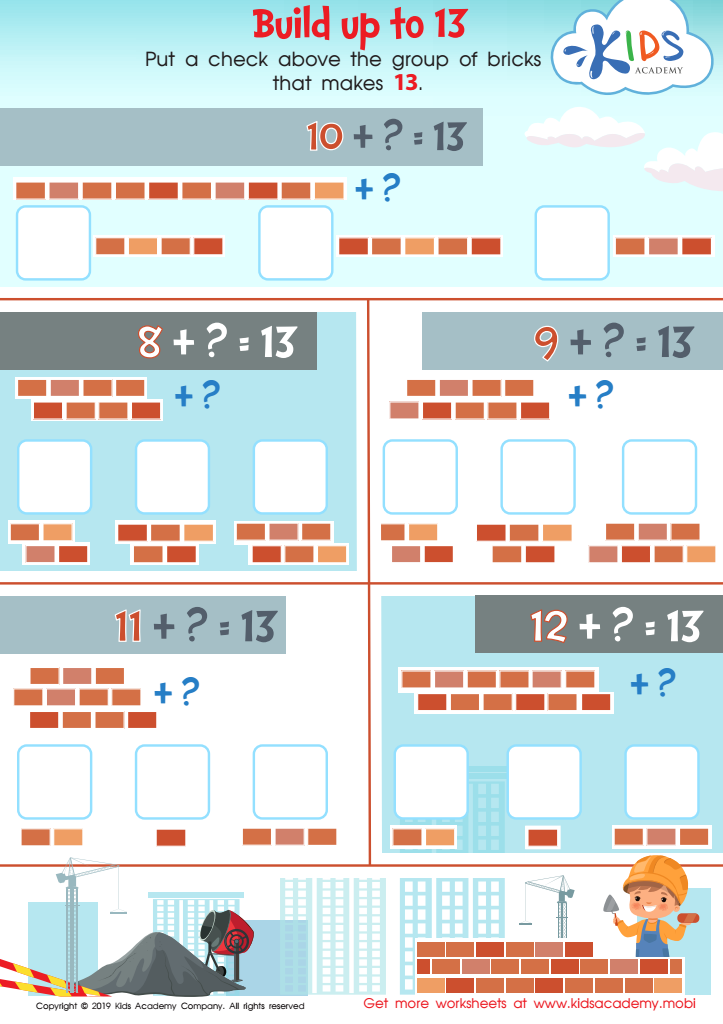
Build up to 13 Worksheet

Build up to 13 Worksheet

Help your kids master addition and subtraction with this worksheet! It'll help clear up any confusion they may have with adding different numbers. Have them add up the simple equations and mark the group of bricks that makes 13. It's a great way for them to get familiar with the basics.
Build up to 13 Worksheet
Worksheet
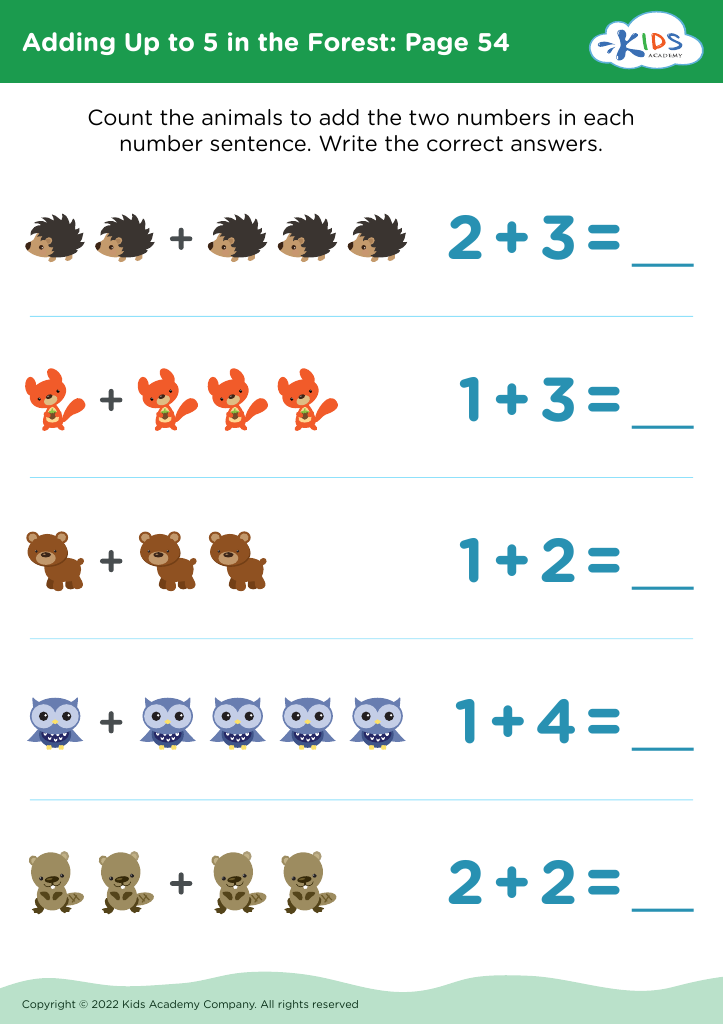
Adding Up to 5 in the Forest: Page 54
Worksheet
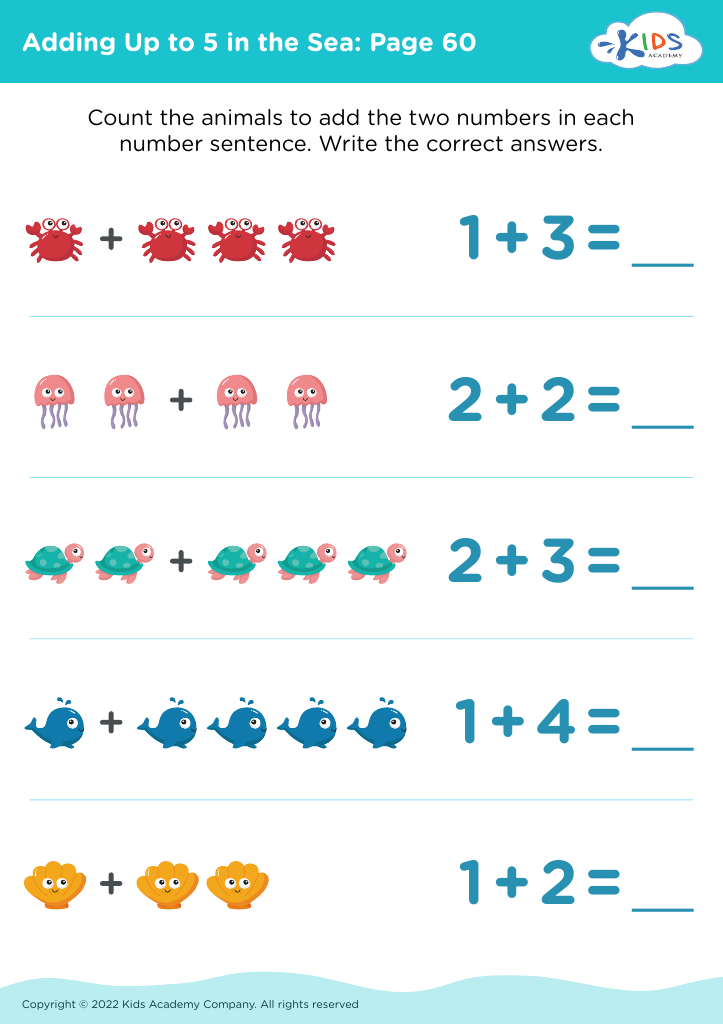
Adding Up to 5 in the Sea: Page 60
Worksheet
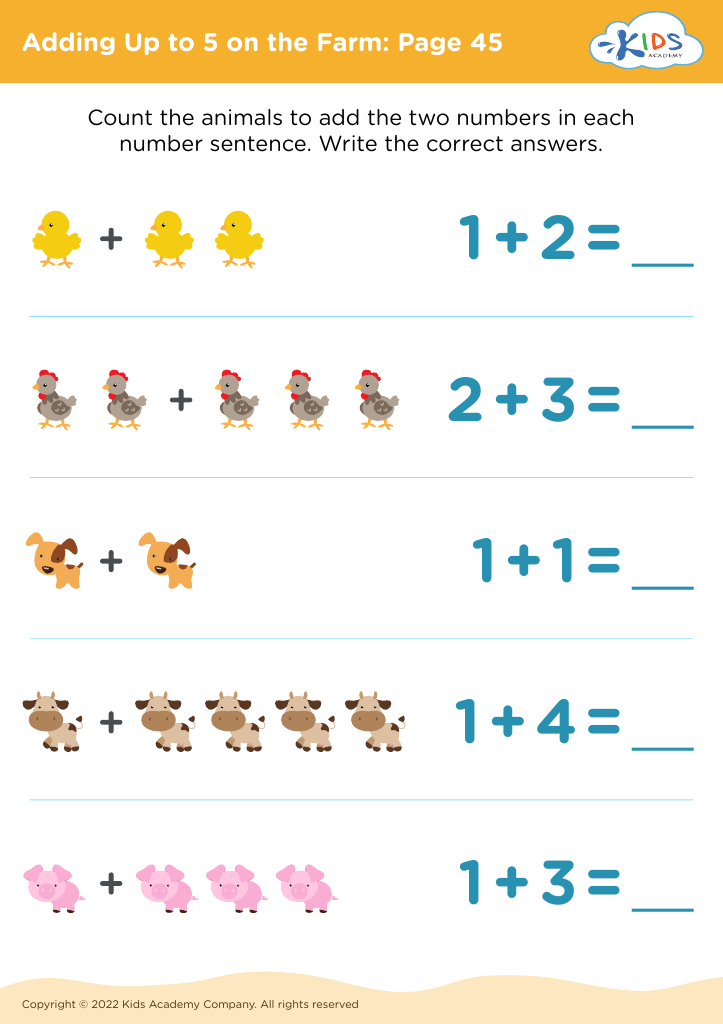
Adding Up to 5 on the Farm: Page 45
Worksheet
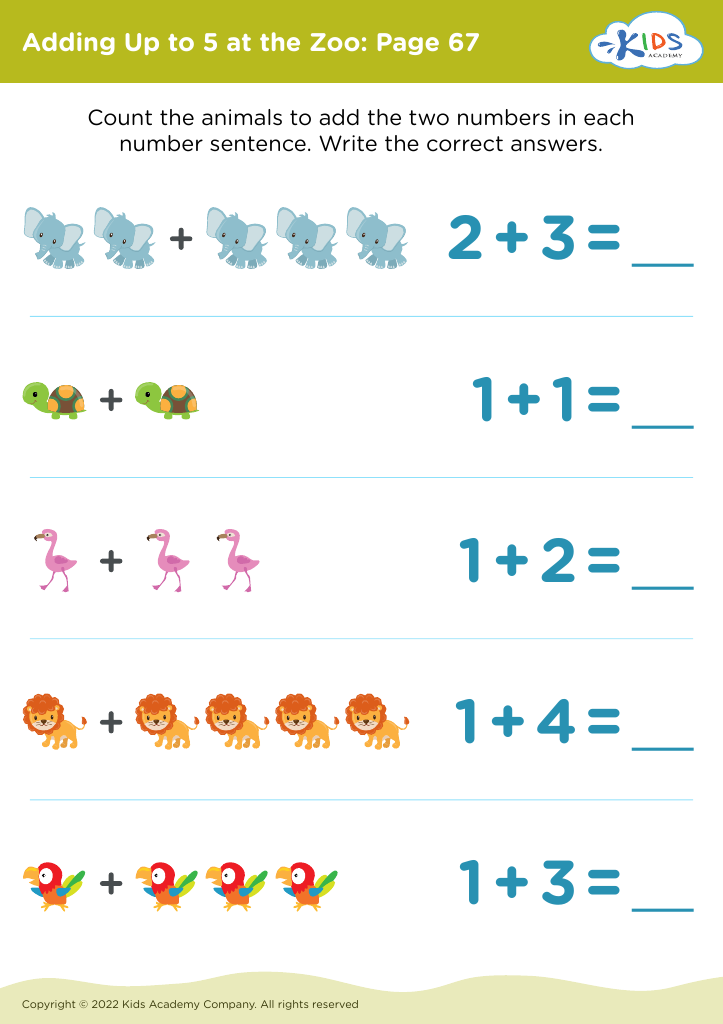
Adding Up to 5 at the Zoo: Page 67
Worksheet
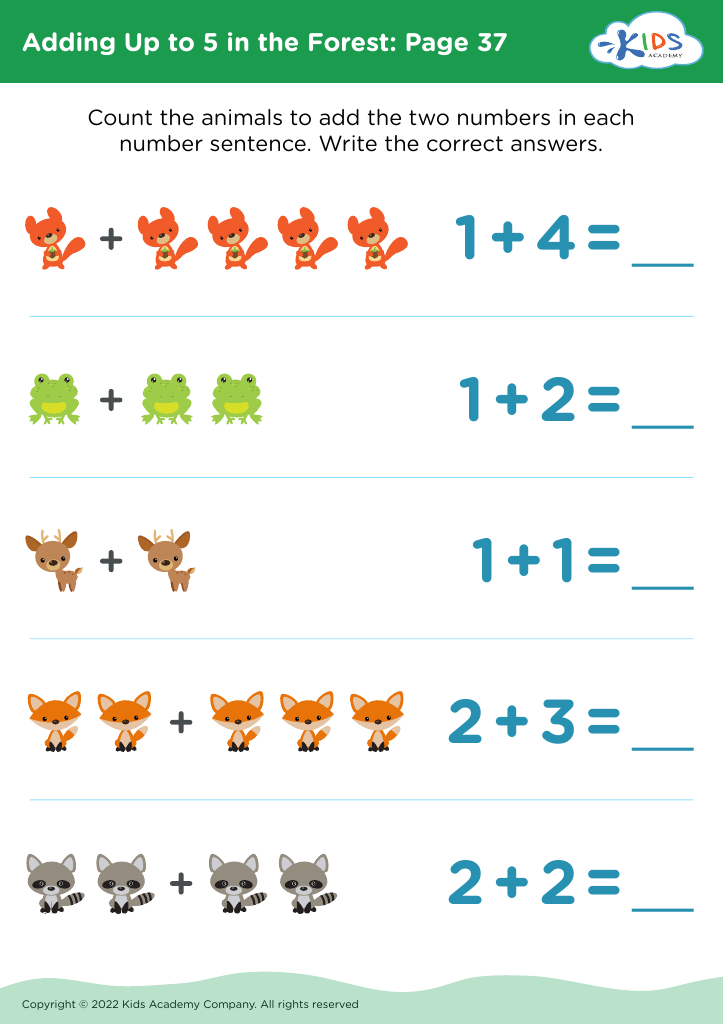
Adding Up to 5 in the Forest: Page 37
Worksheet
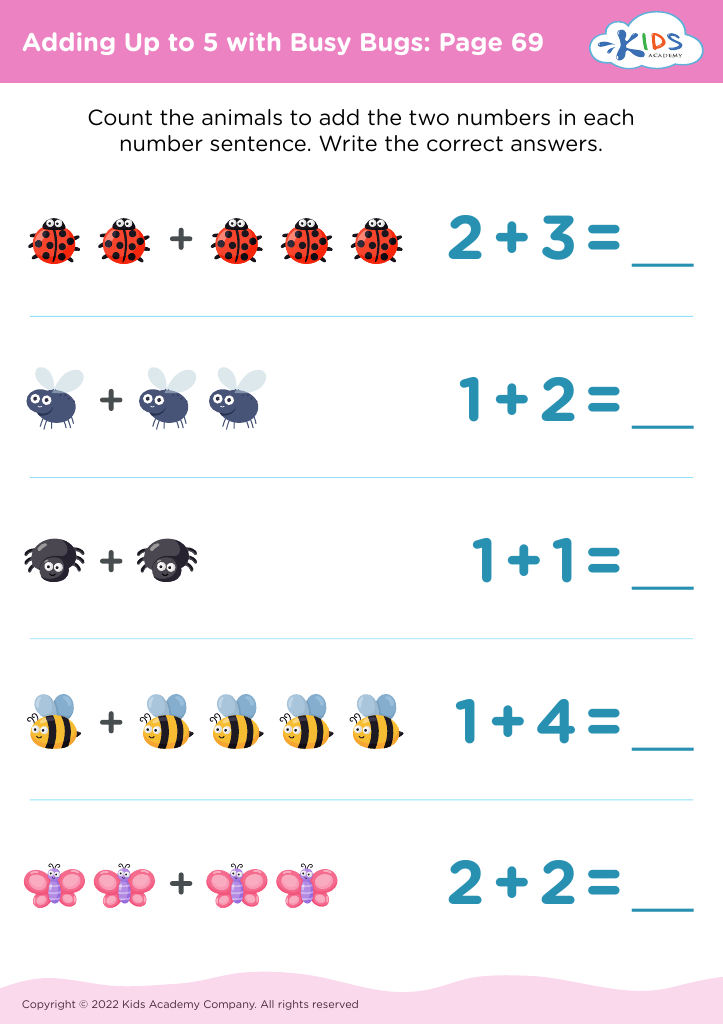
Adding Up to 5 with Busy Bugs: Page 69
Worksheet
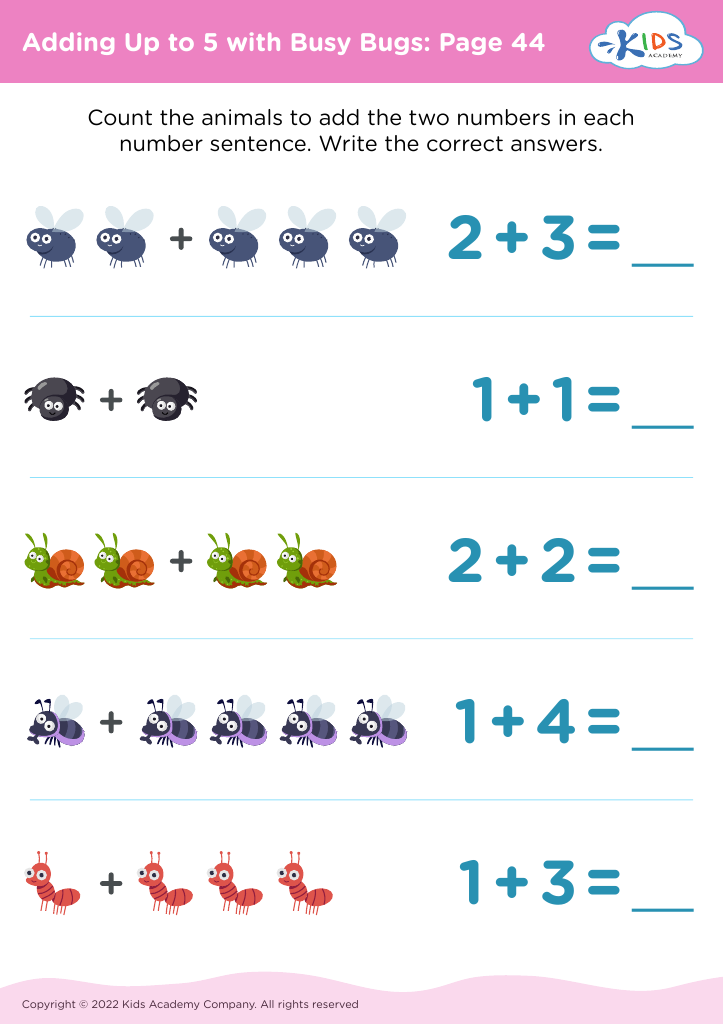
Adding Up to 5 with Busy Bugs: Page 44
Worksheet
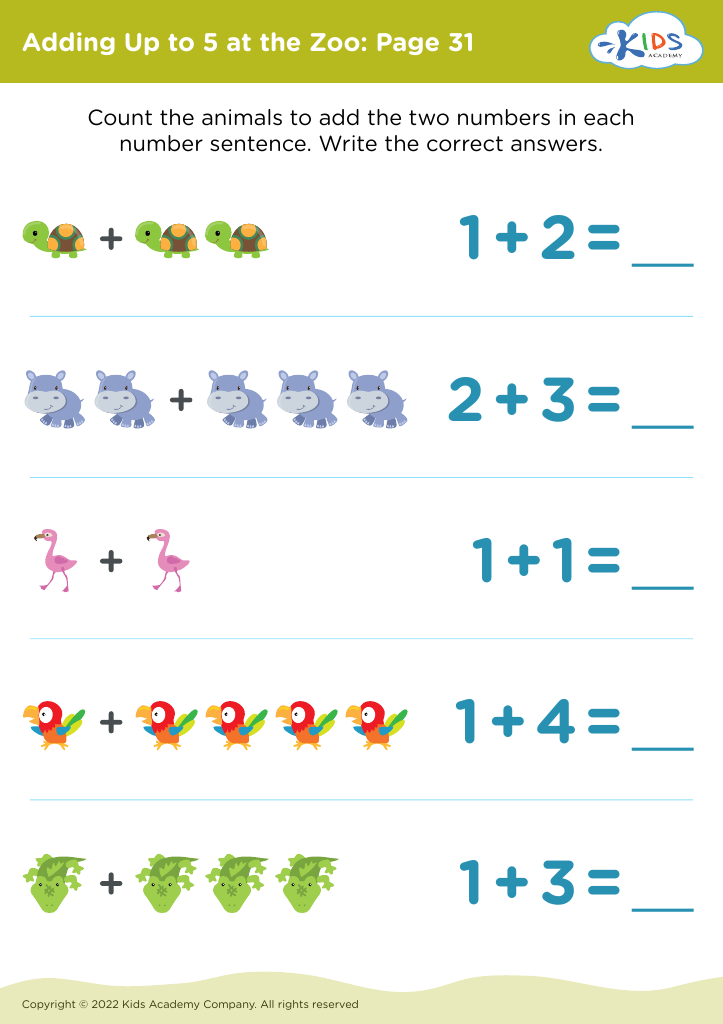
Adding Up to 5 at the Zoo: Page 31
Worksheet
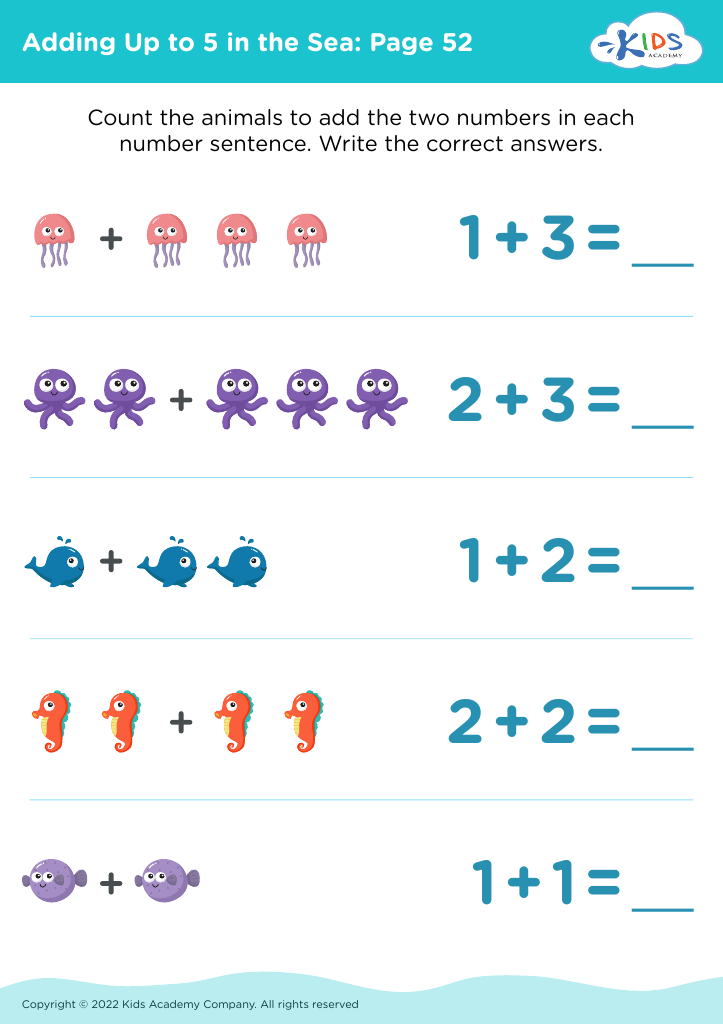
Adding Up to 5 in the Sea: Page 52
Worksheet
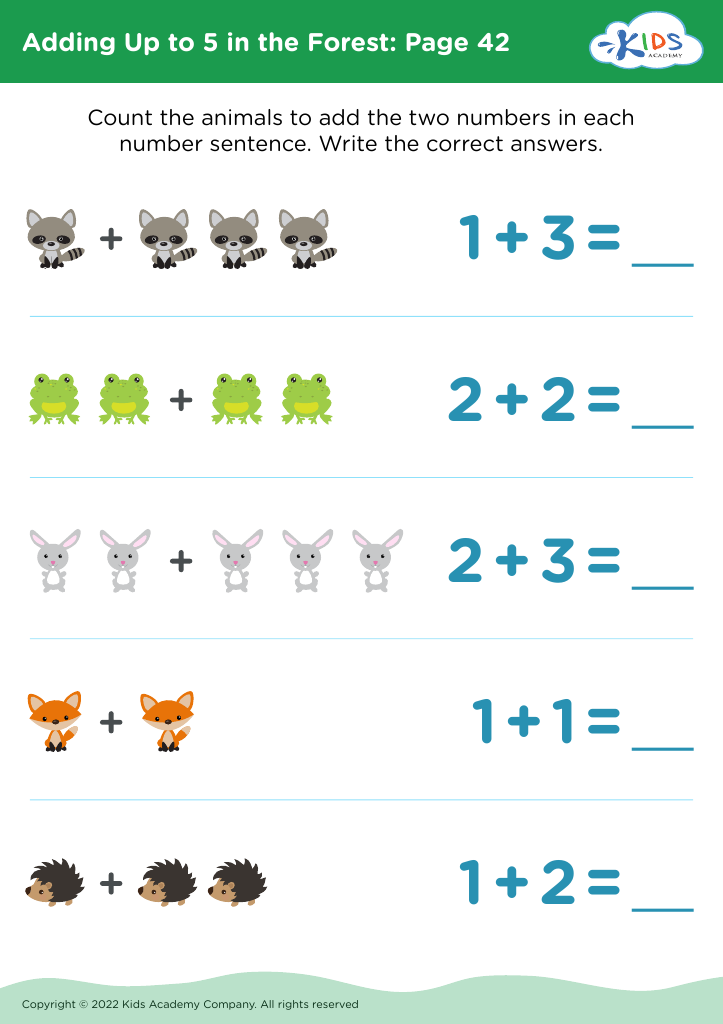
Adding Up to 5 in the Forest: Page 42
Worksheet
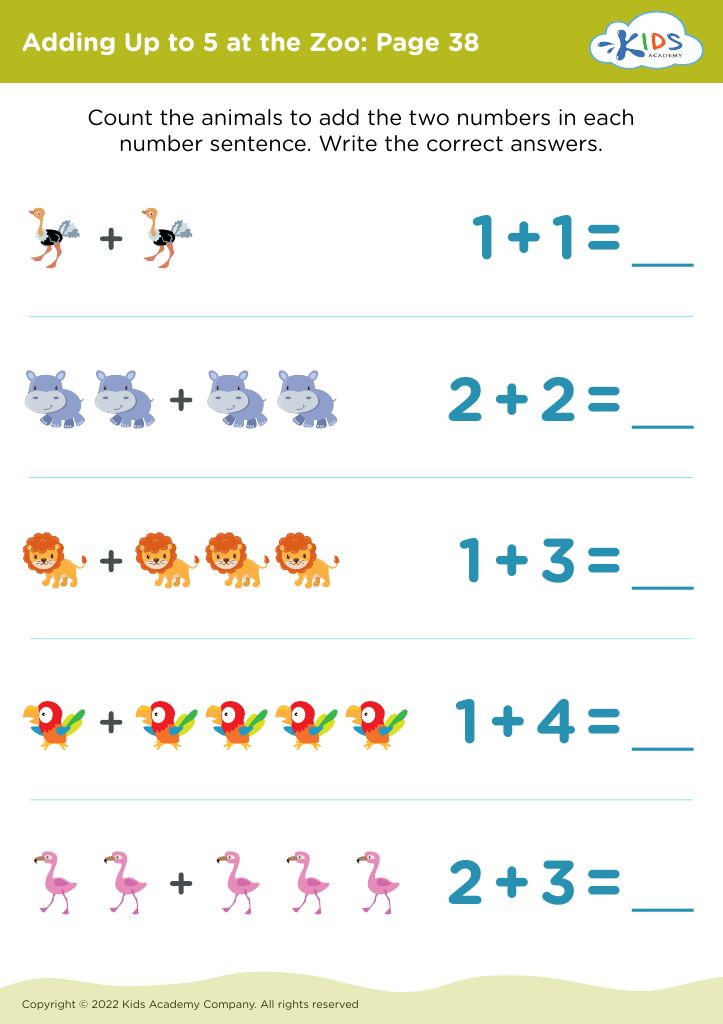
Adding Up to 5 at the Zoo: Page 38
Worksheet
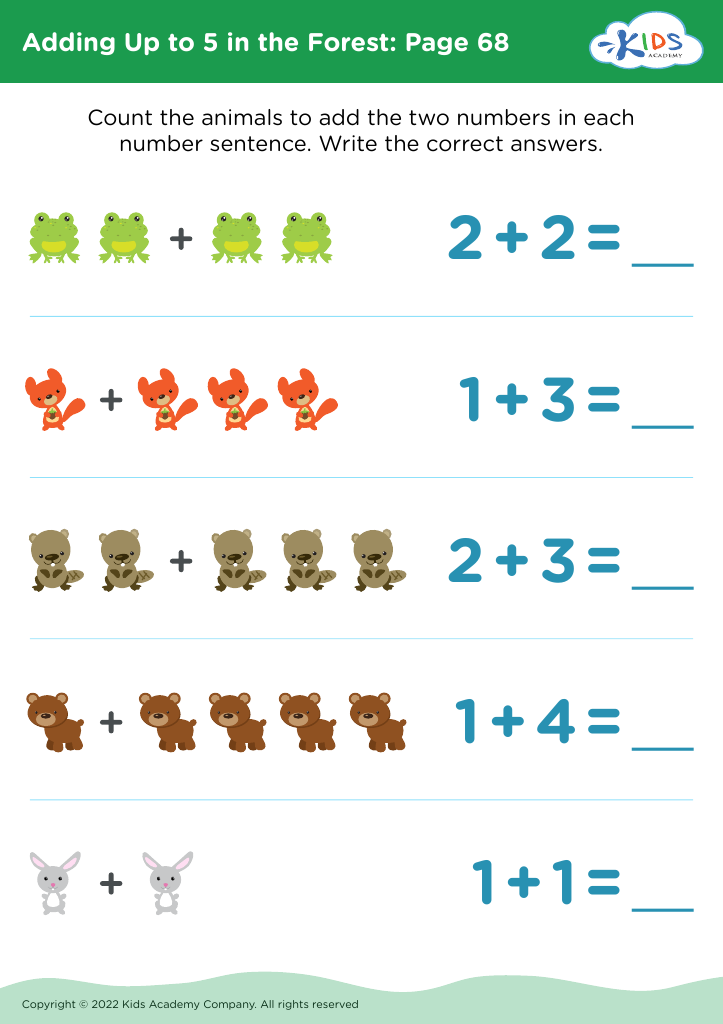
Adding Up to 5 in the Forest: Page 68
Worksheet
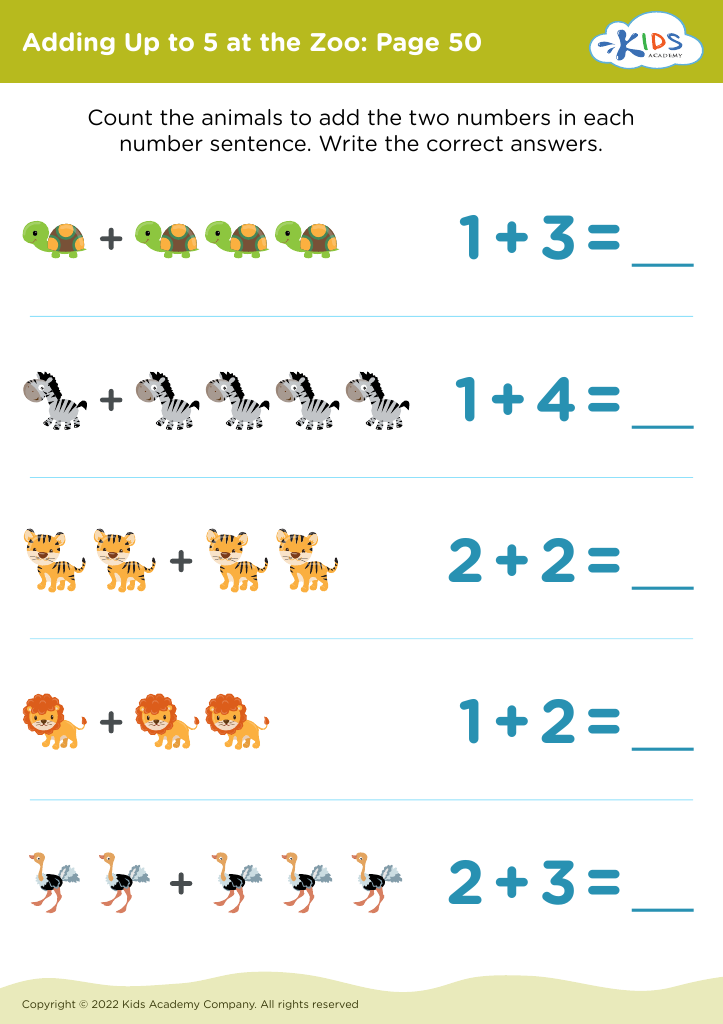
Adding Up to 5 at the Zoo: Page 50
Worksheet
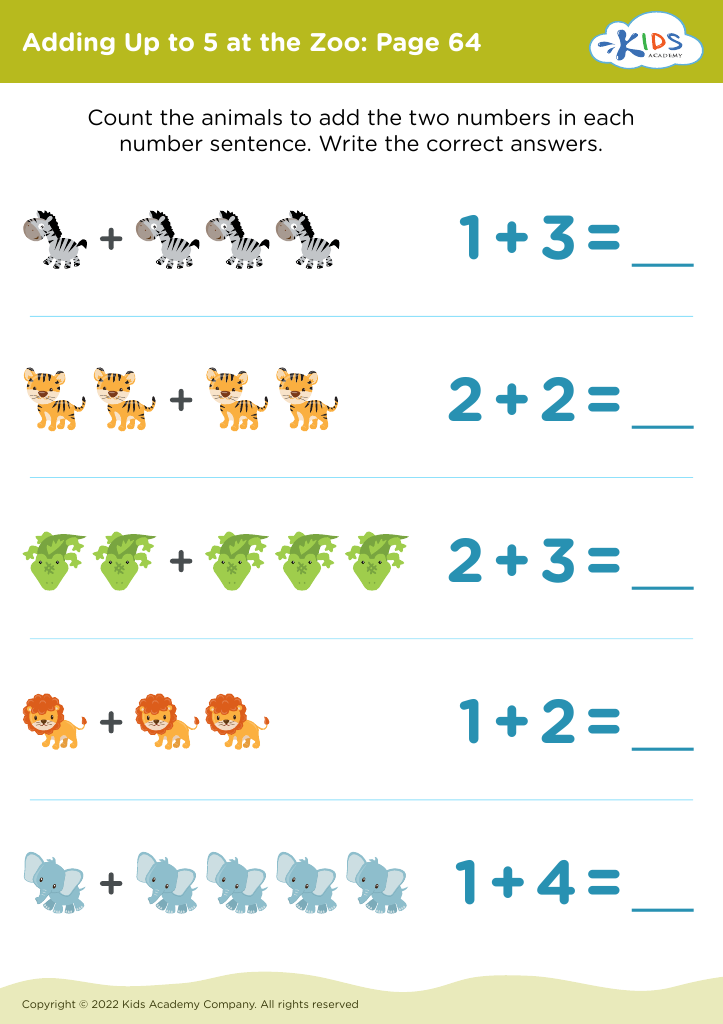
Adding Up to 5 at the Zoo: Page 64
Worksheet


Parents and teachers play a crucial role in nurturing a child’s foundational skills, and basic addition for ages 3-4 is pivotal among them. Early exposure to addition lays the groundwork for numeracy, a core component of cognitive development. At this age, children’s brains are highly receptive and developing rapidly, making it an ideal time to introduce simple mathematical concepts.

Basic addtion teaches kids how to recognize numbers and comprehend the concepts of quantity and increase. This hands-on experience with numbers enhances their problem-solving skills and logical thinking, which are crucial for future academic success. Developing these skills early can boost a child's confidence and interest in mathematics, setting a positive trajectory for later learning.

Moreover, engaging in basic addition can improve a child's fine motor skills and memory. Using tangible objects like blocks or visual aids helps make abstract concepts more concrete, fostering better retention and understanding.

By caring about and actively engaging in a child's early addition skills, parents and teachers help create a strong foundational approach to learning. This not only sets the stage for future mathematical concepts but also encourages a lifelong curiosity and enthusiasm for learning. So, nurturing these skills early can have profound, lasting effects on a child's educational journey.