Basic Math Skills Addition Worksheets for Ages 3-4 - Page 2
27 filtered results
-
From - To
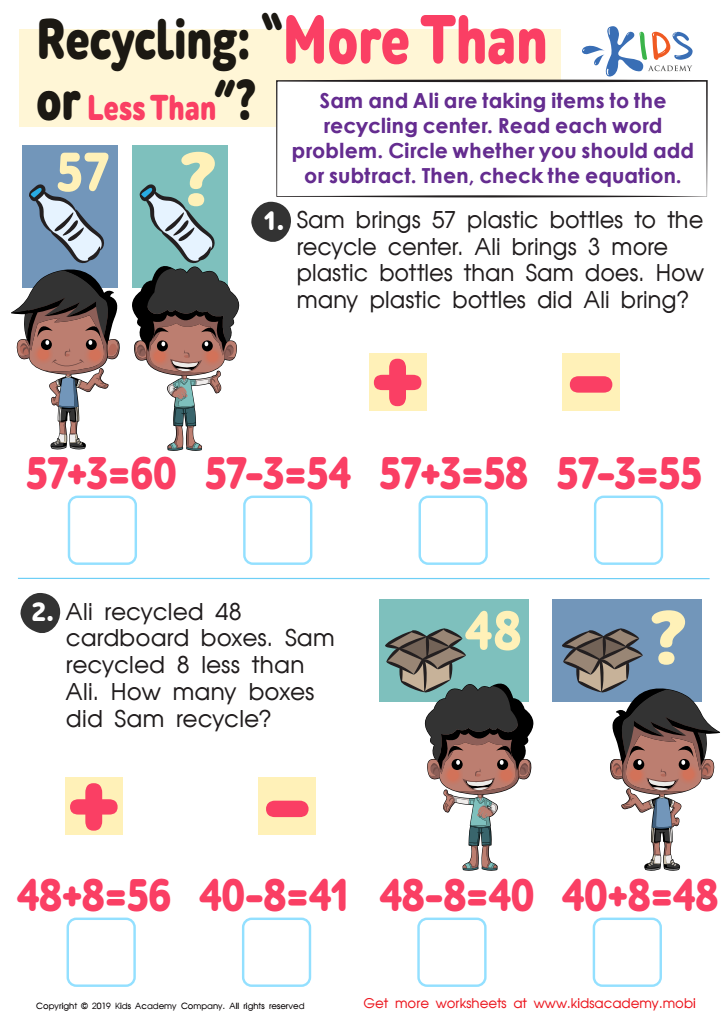
Recycling - More or Less Worksheet
 Assign to My Students
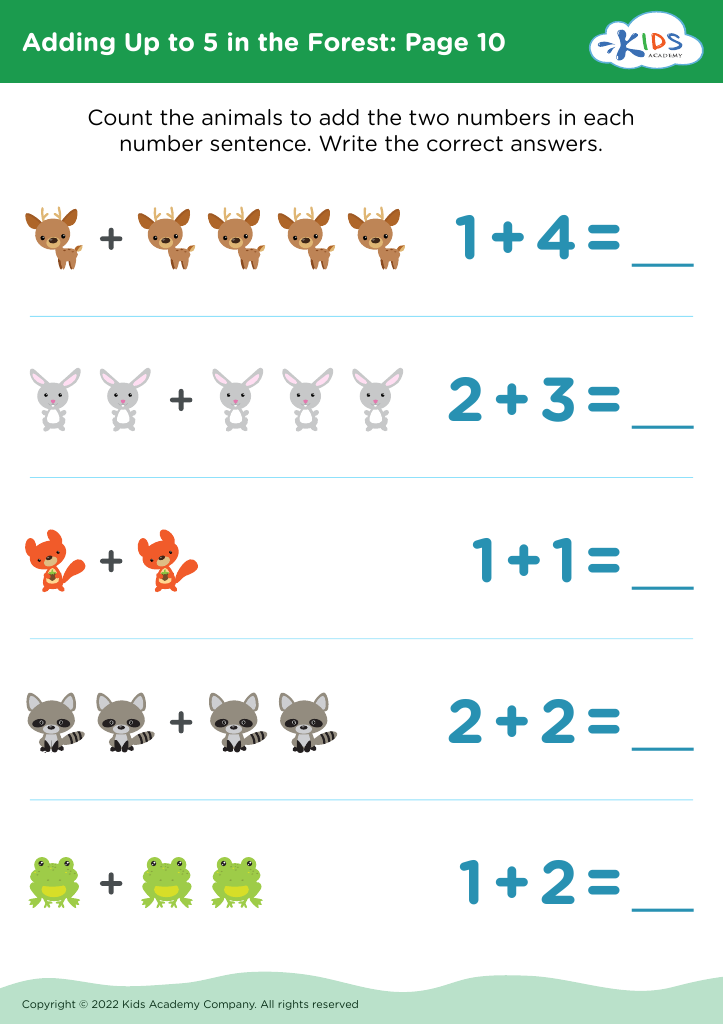
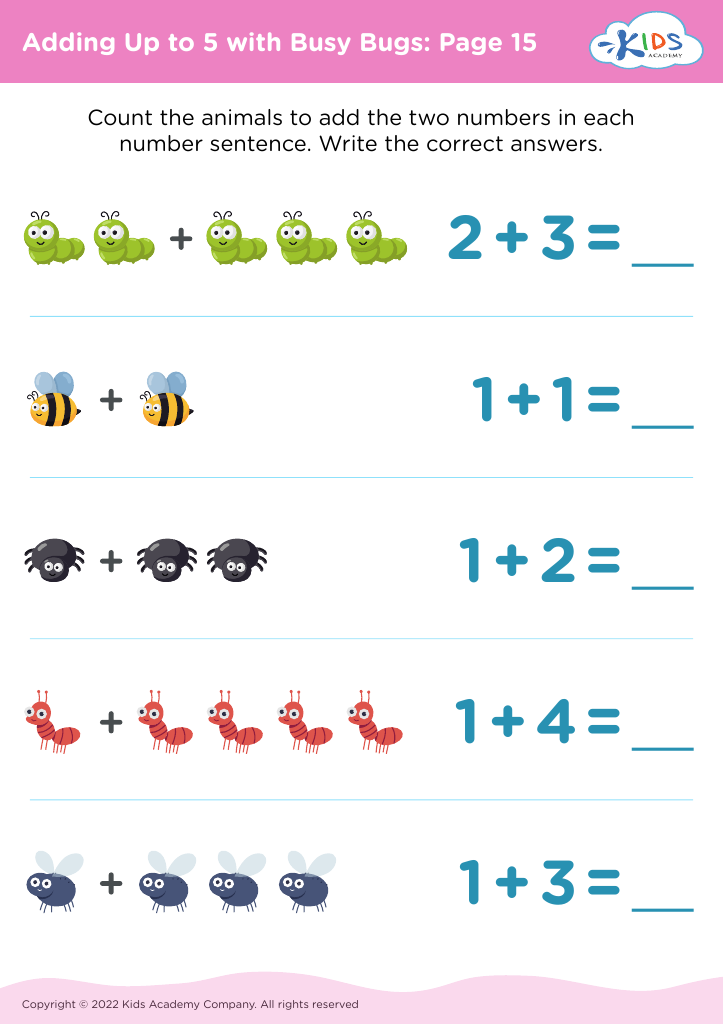








Basic math skills, particularly addition, are crucial for children aged 3-4 as they lay the foundation for future academic success. At this stage, children's cognitive abilities are rapidly developing, and introducing simple addition concepts helps them make sense of the world around them. Engaging with addition through playful activities enhances critical thinking, problem-solving, and logical reasoning skills.
Parents and teachers should prioritize fostering early math skills because research shows that a strong mathematical foundation in preschool leads to improved performance in later grades. Incorporating addition into everyday activities—such as counting fruits during snack time or adding blocks in play—makes the learning process enjoyable and relevant, encouraging children to build a positive attitude toward math.
Moreover, early exposure to addition enhances language development as children learn to articulate numbers and basic equations, reinforcing their communication skills. Building a strong understanding of basic addition also promotes confidence and self-esteem; children gain a sense of accomplishment as they grasp these concepts. Ultimately, nurturing math skills in early childhood not only prepares children for academic challenges but also helps them develop lifelong skills essential for daily decision-making and real-world applications.








