Filters

240 filtered results

Clear all filters
Favorites
With answer key
Interactive

240 filtered results

Difficulty Level

Grade


Check out this FREE Trial Lesson on Addition for age 3-4!

My Family

Favorites
With answer key
Interactive
  • 3-4
  • Counting practice
  • Addition
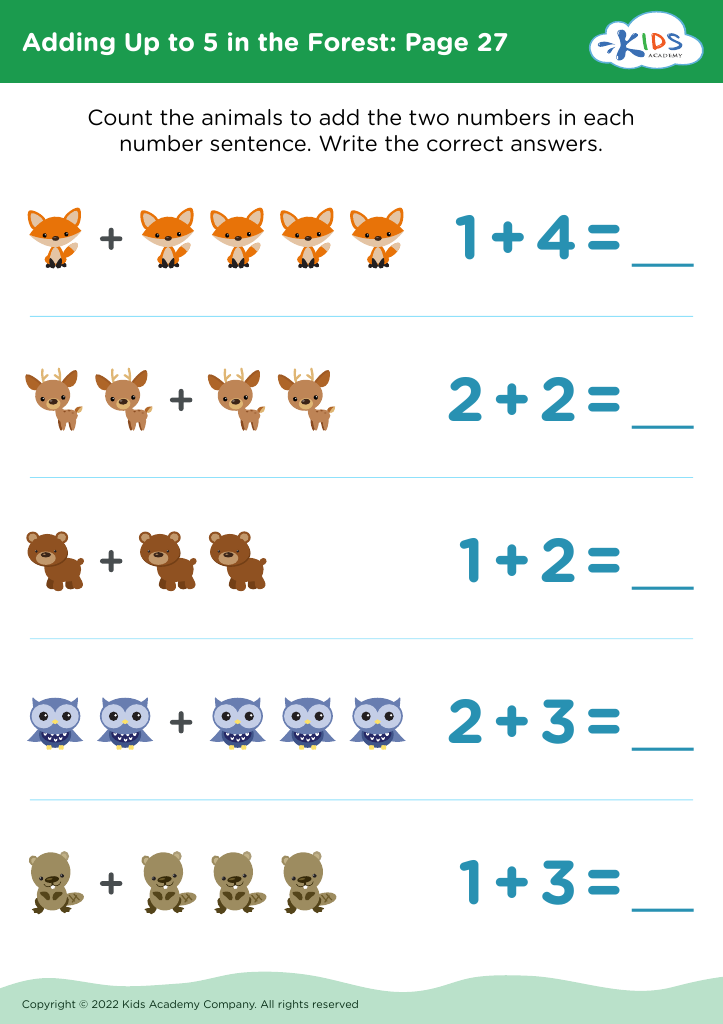
Adding Up to 5 in the Forest: Page 27
Worksheet
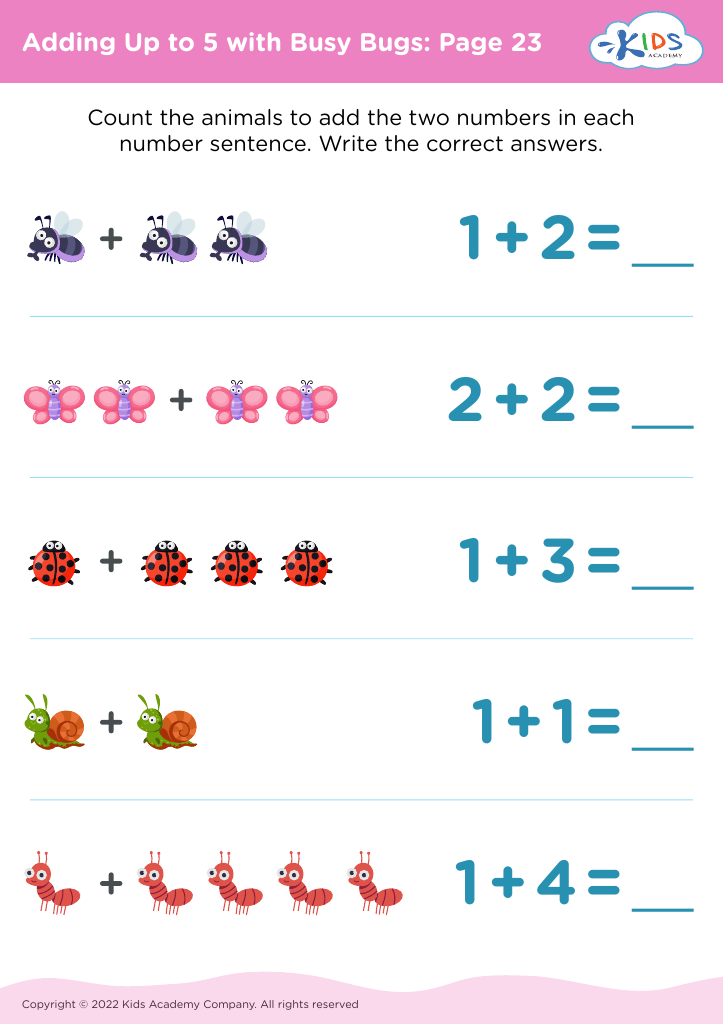
Adding Up to 5 with Busy Bugs: Page 23
Worksheet
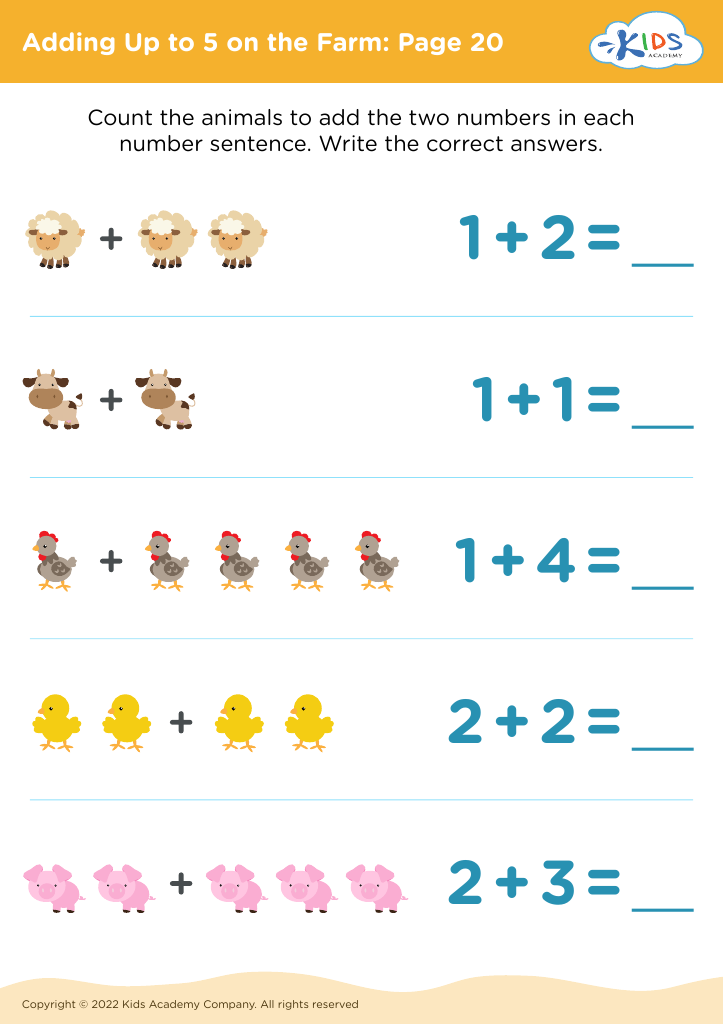
Adding Up to 5 on the Farm: Page 20
Worksheet
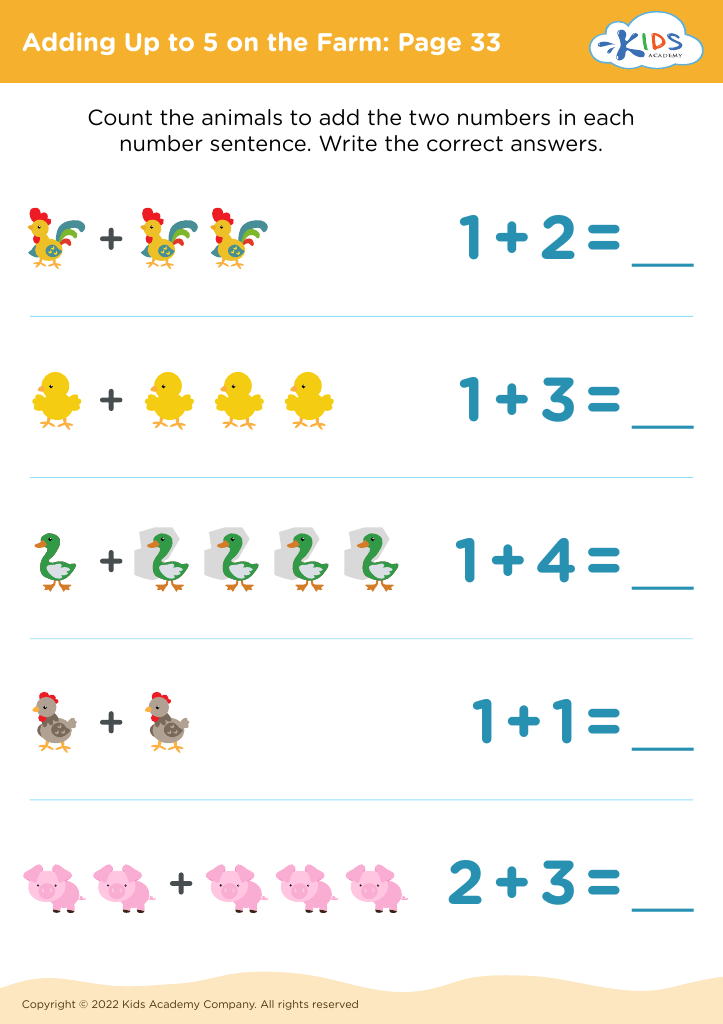
Adding Up to 5 on the Farm: Page 33
Worksheet
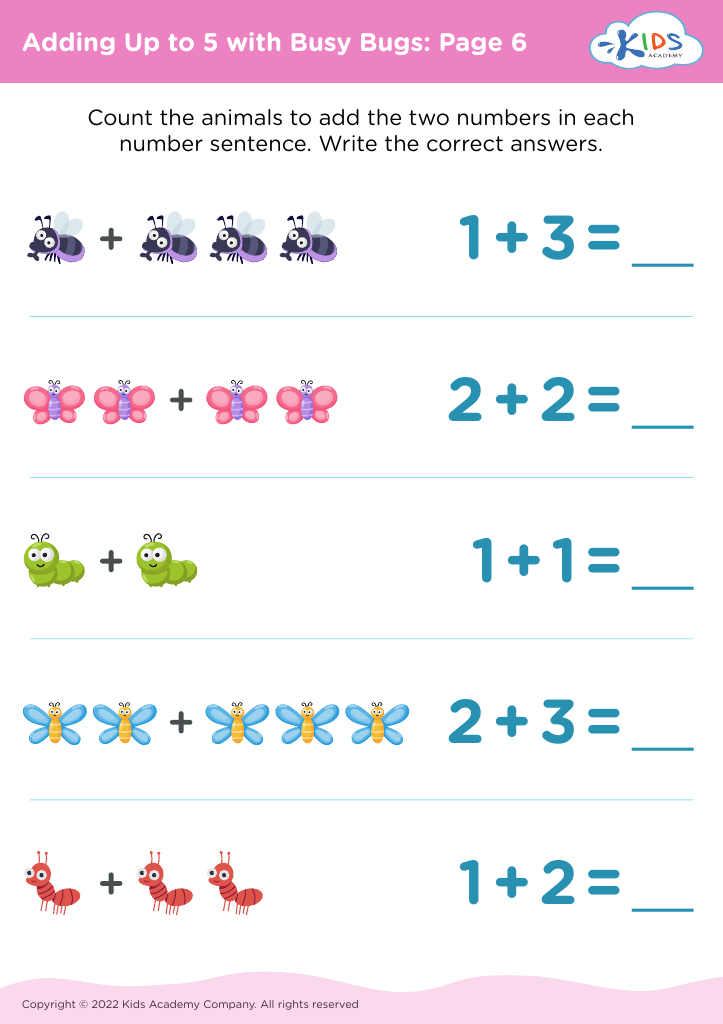
Adding Up to 5 with Busy Bugs: Page 6
Worksheet
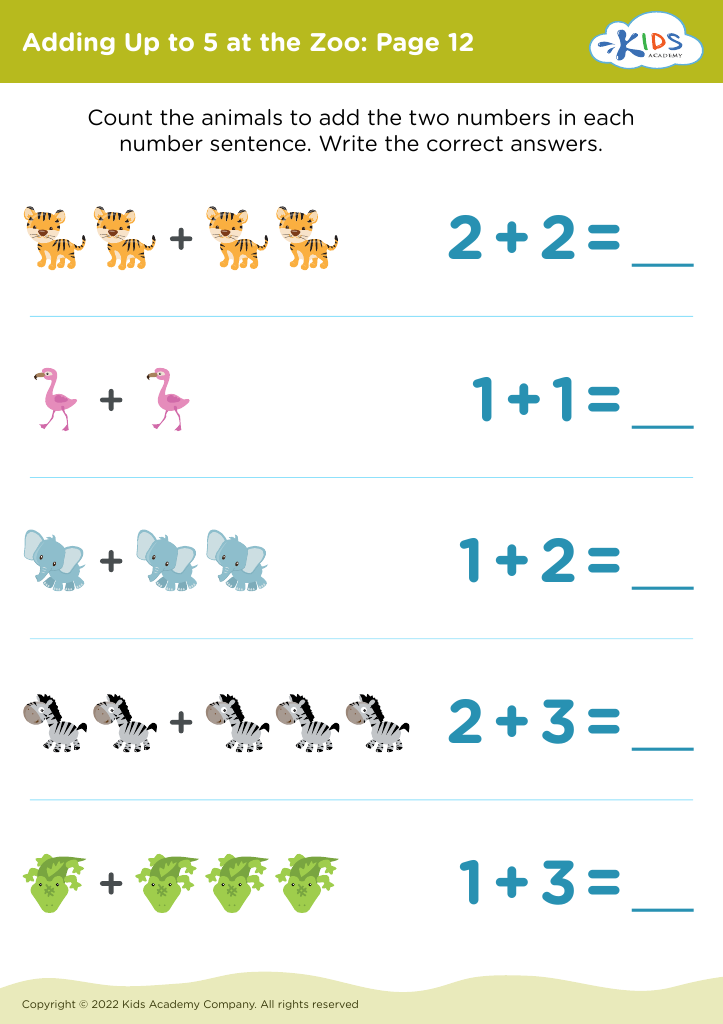
Adding Up to 5 at the Zoo: Page 12
Worksheet
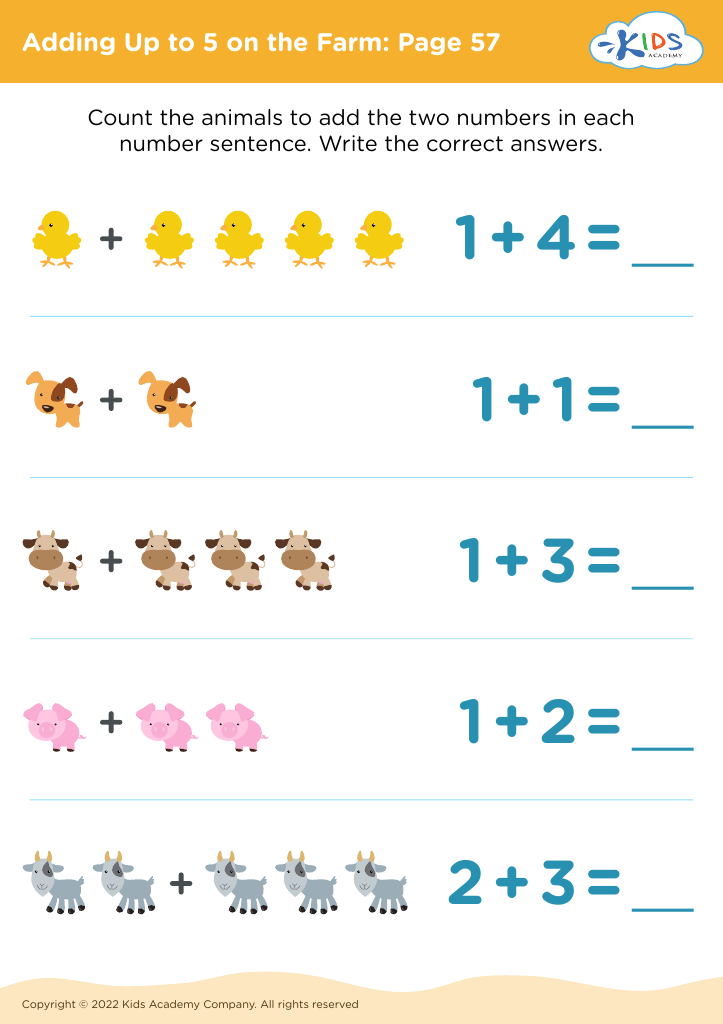
Adding Up to 5 on the Farm: Page 57
Worksheet
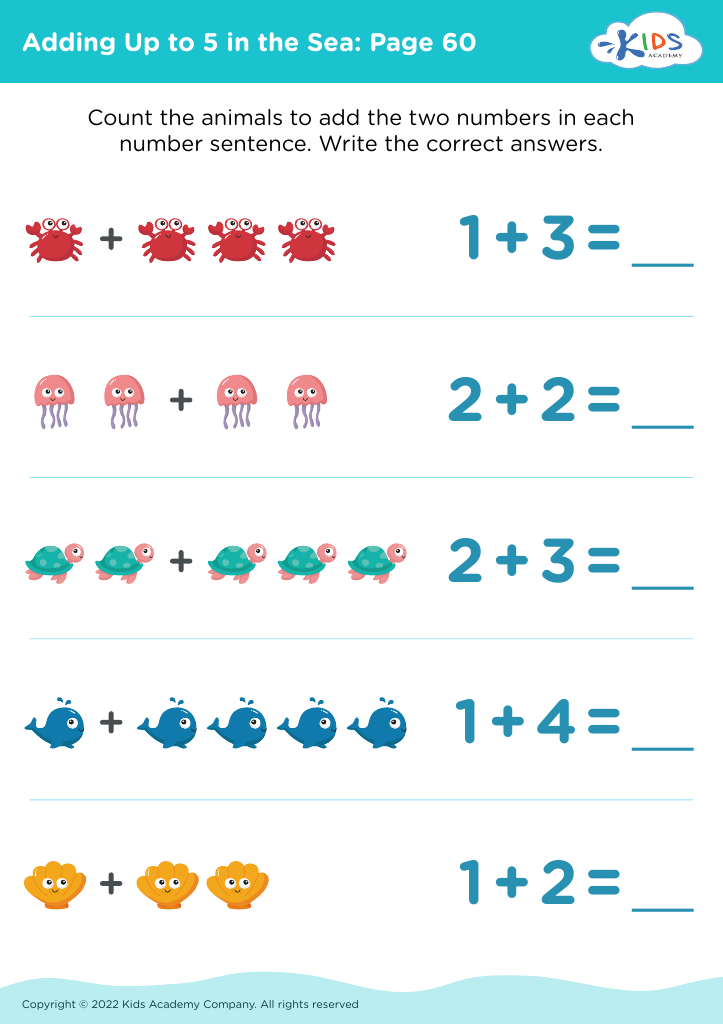
Adding Up to 5 in the Sea: Page 60
Worksheet
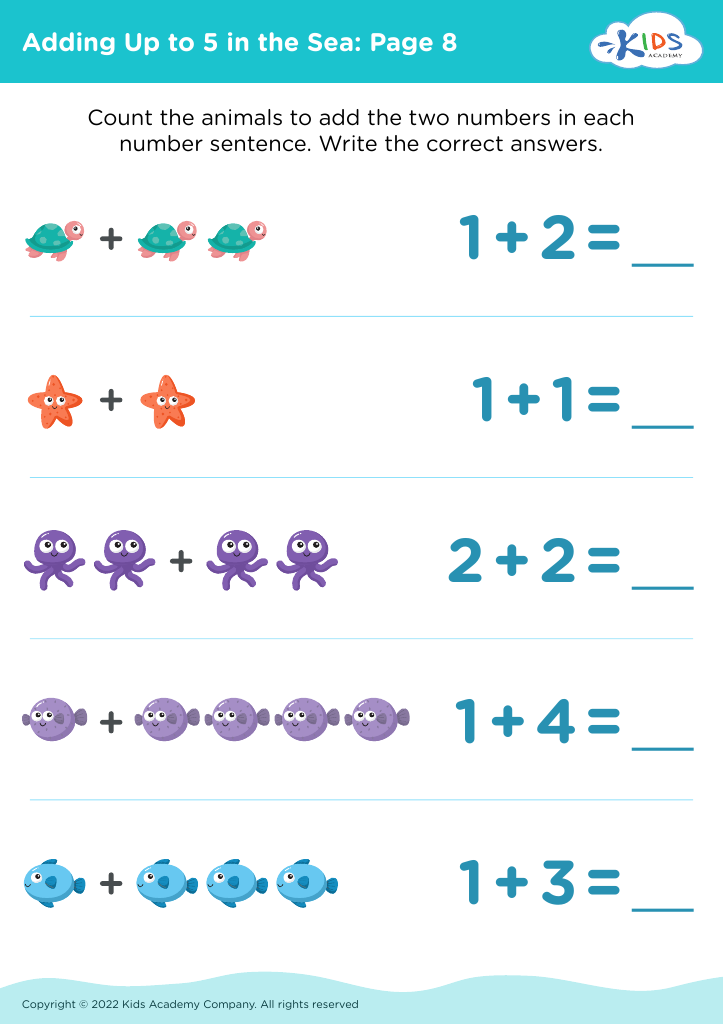
Adding Up to 5 in the Sea: Page 8

Adding Up to 5 in the Sea: Page 8

Adding Up to 5 in the Sea: Page 8
Worksheet
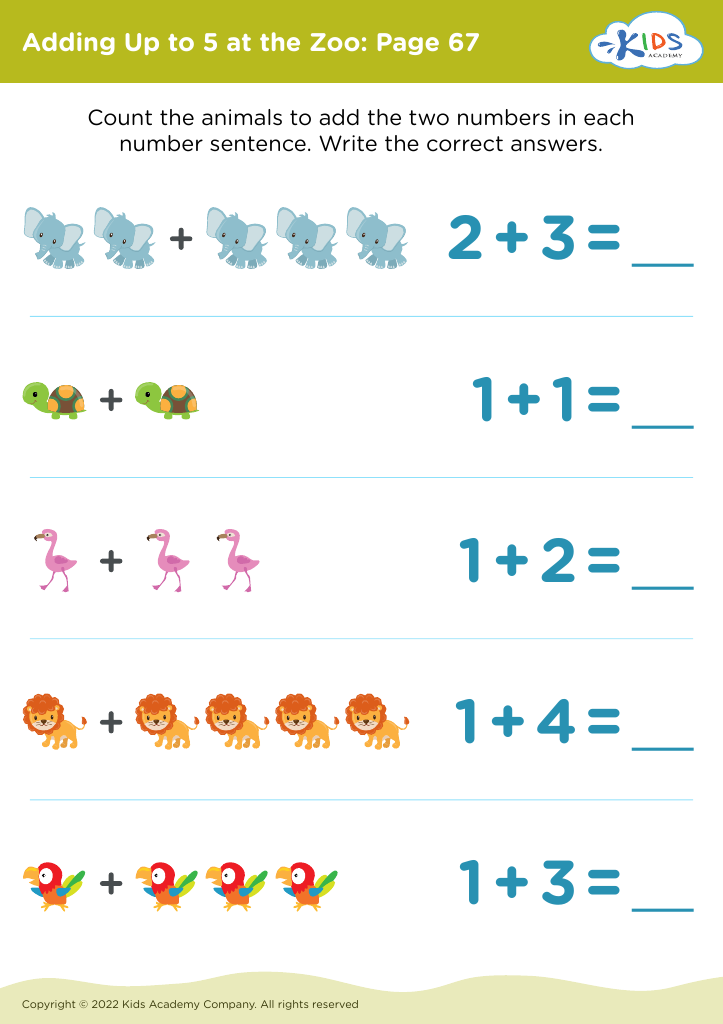
Adding Up to 5 at the Zoo: Page 67
Worksheet
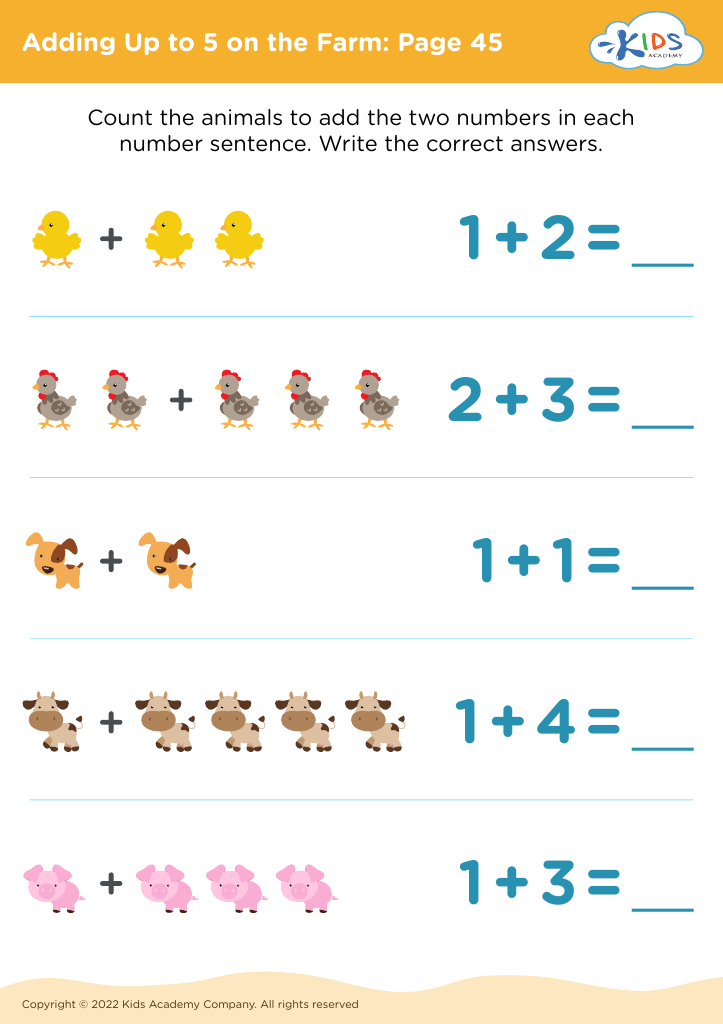
Adding Up to 5 on the Farm: Page 45
Worksheet
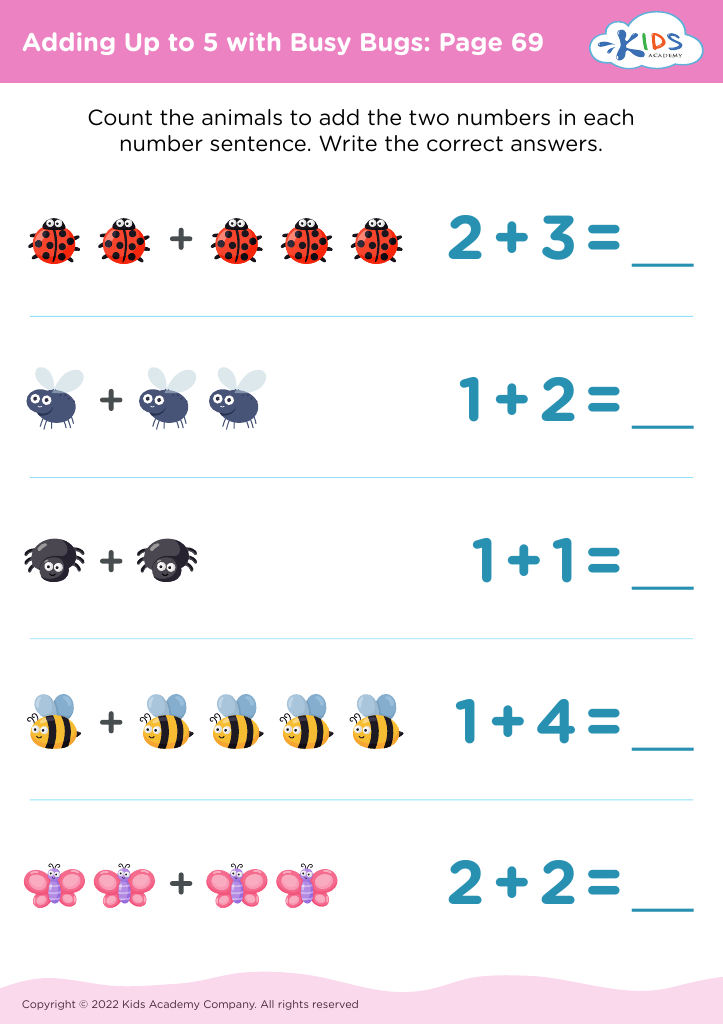
Adding Up to 5 with Busy Bugs: Page 69
Worksheet
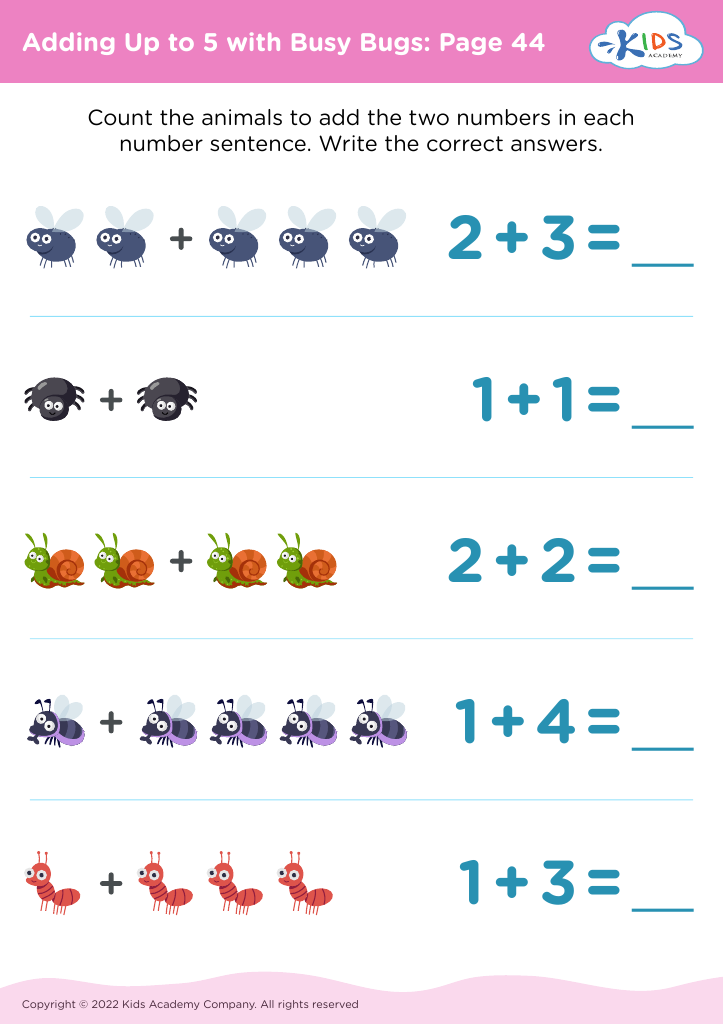
Adding Up to 5 with Busy Bugs: Page 44
Worksheet
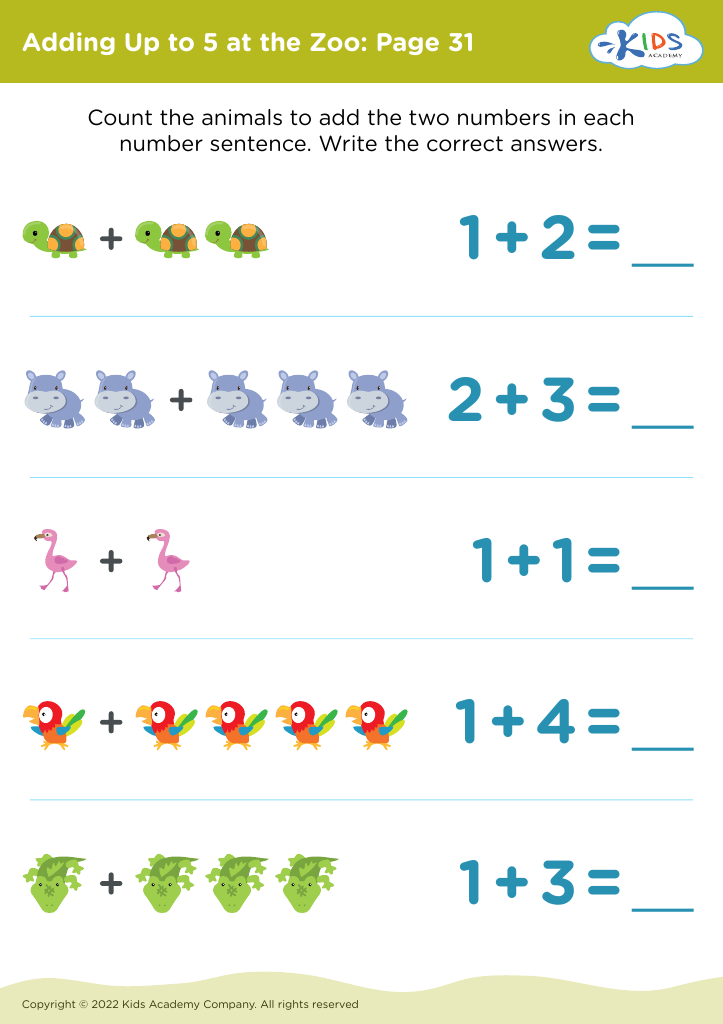
Adding Up to 5 at the Zoo: Page 31
Worksheet
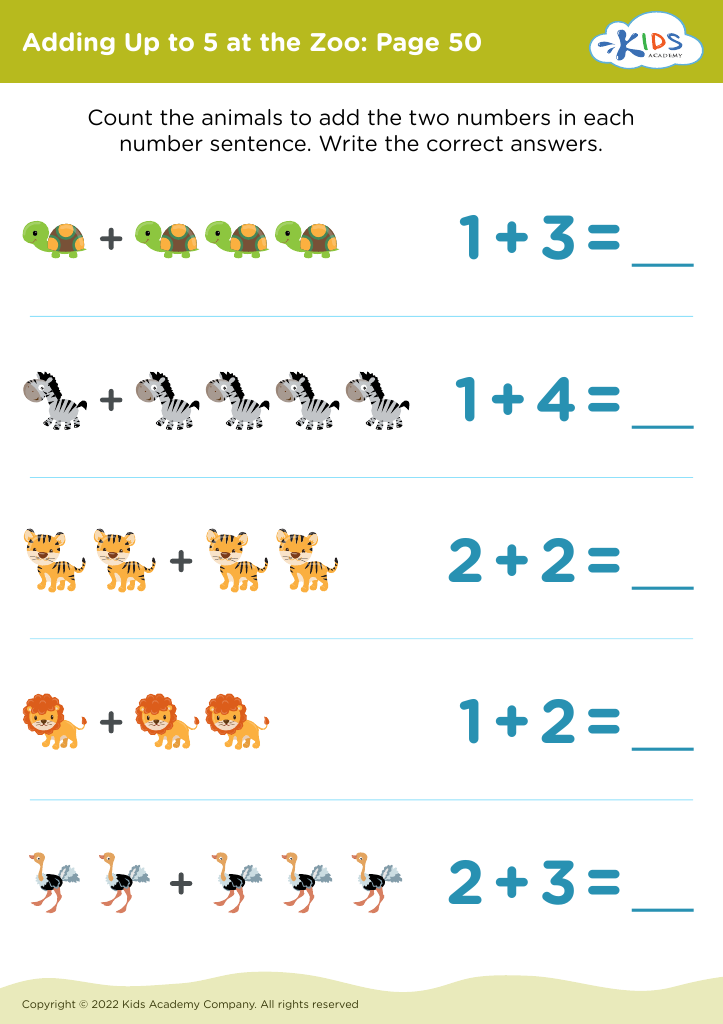
Adding Up to 5 at the Zoo: Page 50
Worksheet
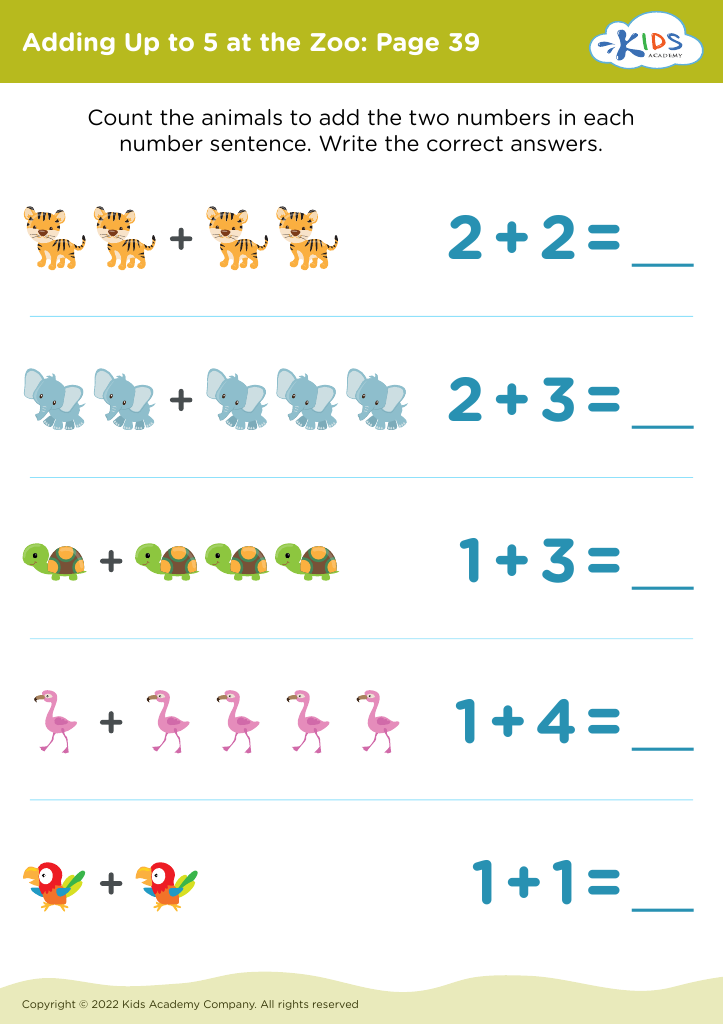
Adding Up to 5 at the Zoo: Page 39
Worksheet
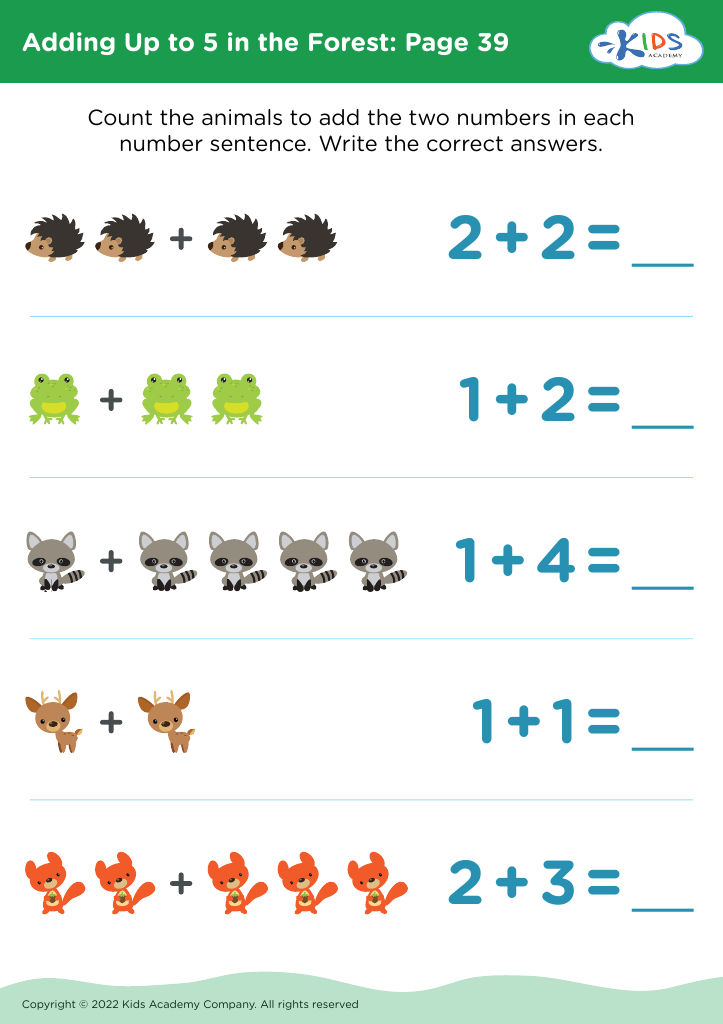
Adding Up to 5 in the Forest: Page 39
Worksheet
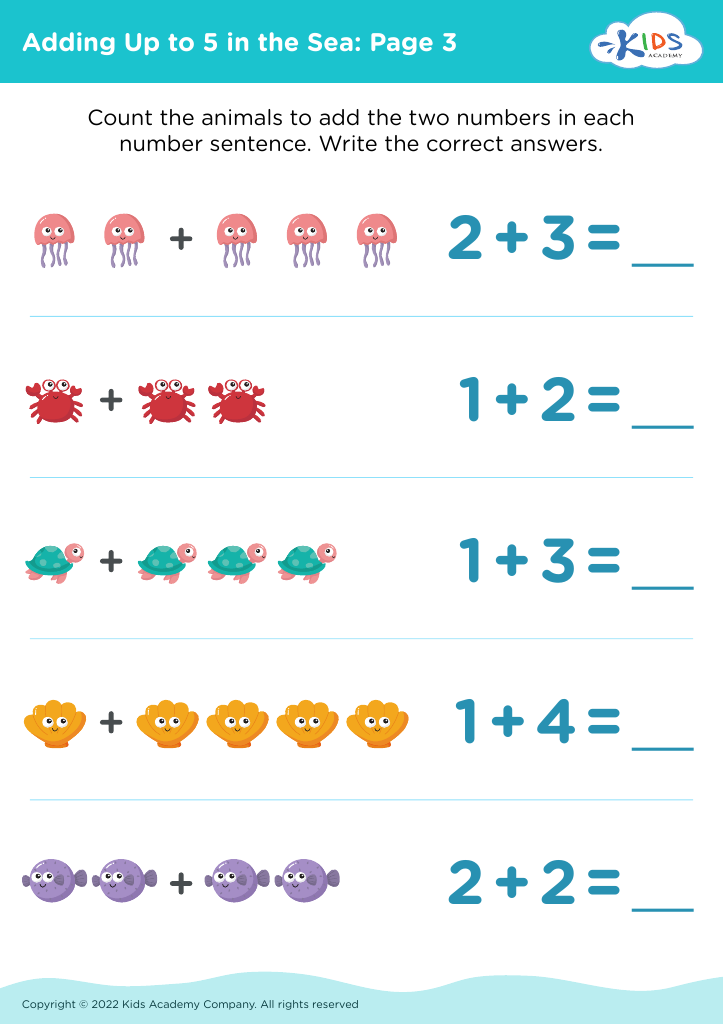
Adding Up to 5 in the Sea: Page 3

Adding Up to 5 in the Sea: Page 3

Adding Up to 5 in the Sea: Page 3
Worksheet
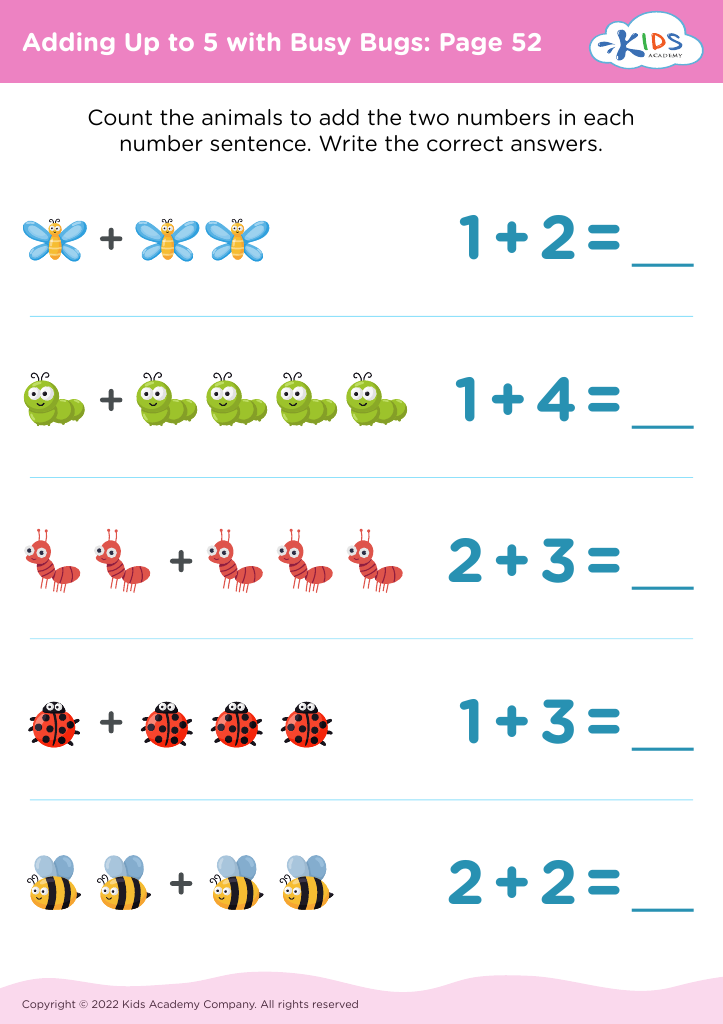
Adding Up to 5 with Busy Bugs: Page 52
Worksheet
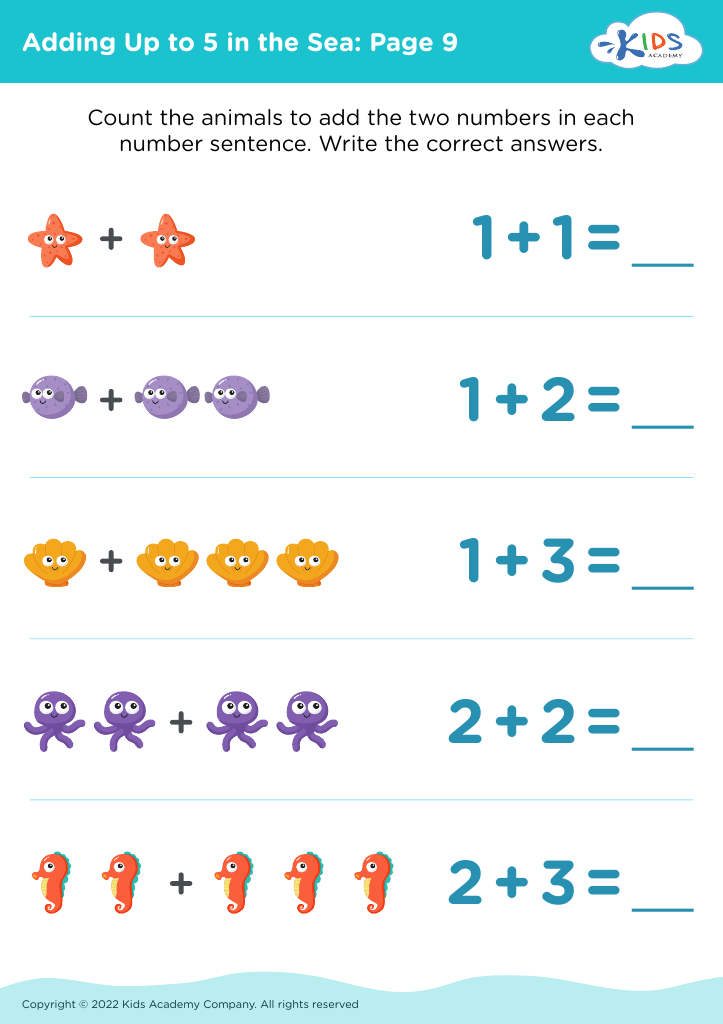
Adding Up to 5 in the Sea: Page 9

Adding Up to 5 in the Sea: Page 9

Adding Up to 5 in the Sea: Page 9
Worksheet
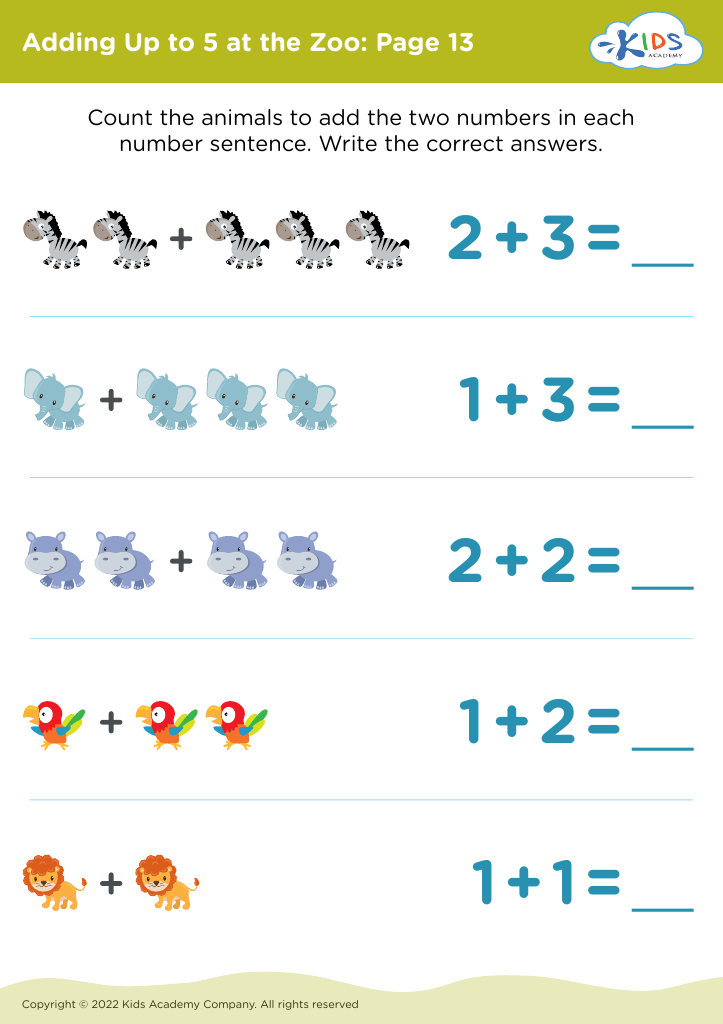
Adding Up to 5 at the Zoo: Page 13
Worksheet
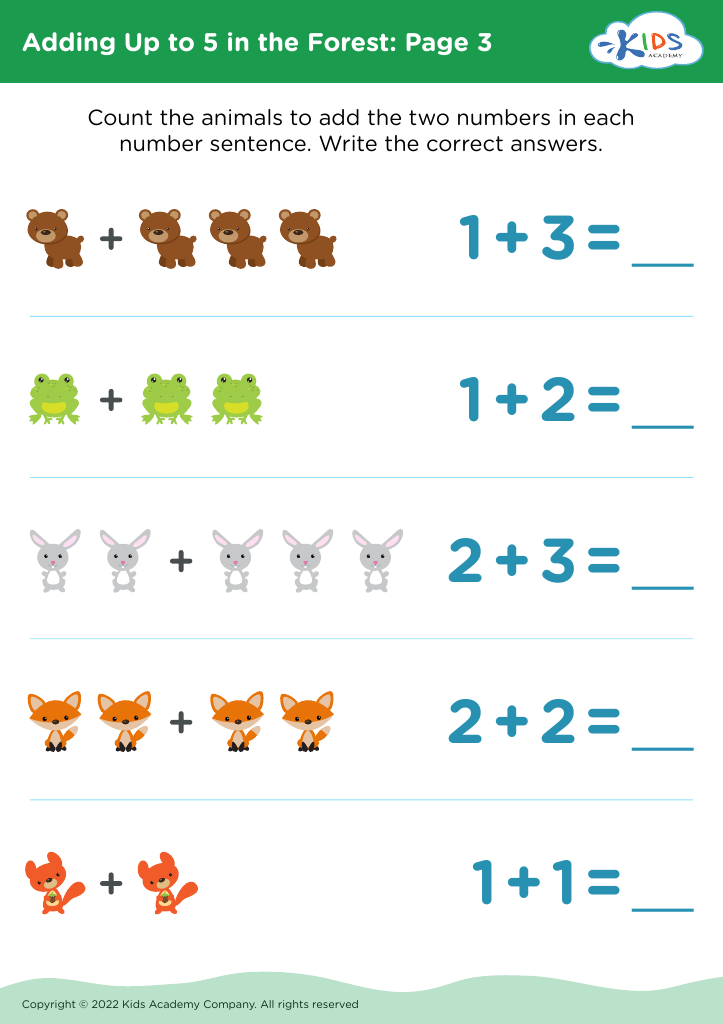
Adding Up to 5 in the Forest: Page 3
Worksheet
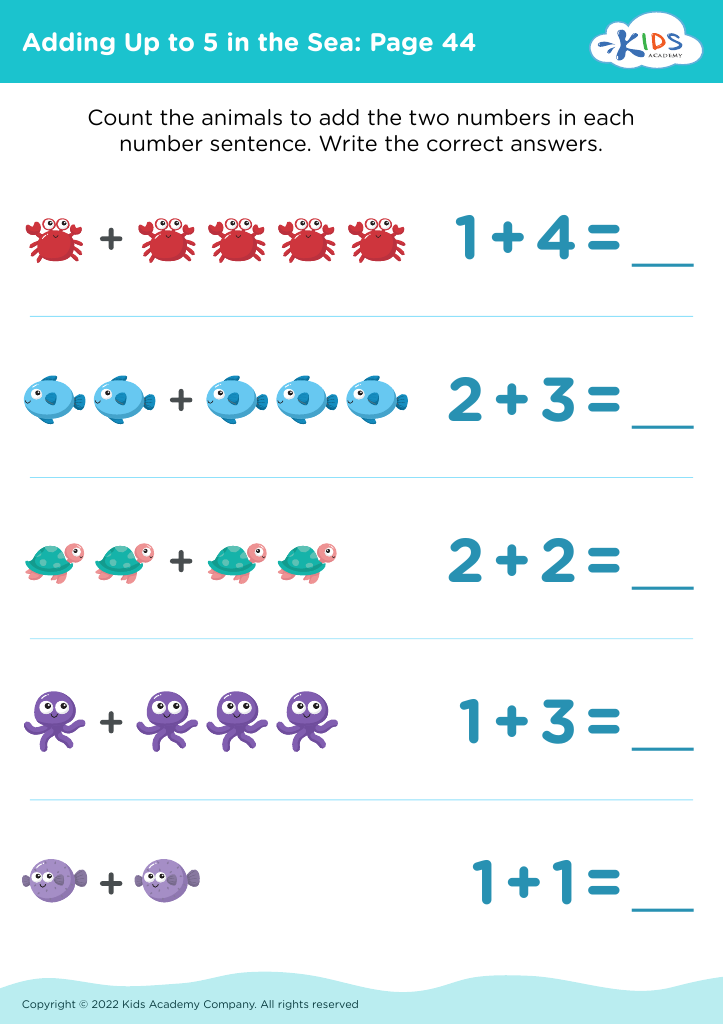
Adding Up to 5 in the Sea: Page 44
Worksheet
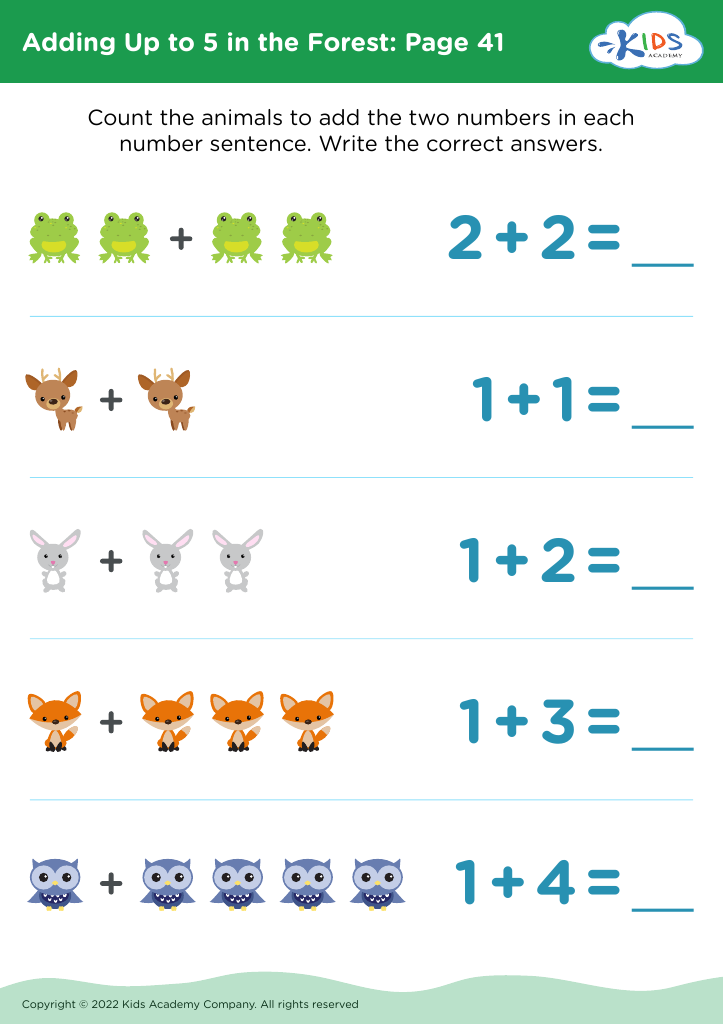
Adding Up to 5 in the Forest: Page 41
Worksheet


... 9 10

Counting practice and addition skills for children aged 3-4 lay a crucial foundation for their future mathematical development. At this age, children are naturally curious and eager to learn, making it an ideal time to introduce basic number concepts. Engaging in counting activities and simple addition can enhance their cognitive abilities and problem-solving skills.

Parents and teachers should recognize that early math skills are linked to stronger academic performance later on. Counting enables children to understand quantity and develop number sense, fostering confidence in their mathematical abilities. Addition introduces the concept of combining sets, helping children grasp the relationship between numbers in a tangible way.

Moreover, counting and addition activities can be interactive and fun, promoting language development and fine motor skills as children use objects, fingers, or drawings to illustrate their thinking. Such playful experiences also encourage social interaction when done in group settings, enhancing teamwork and communication skills.

By prioritizing counting and addition practice, parents and teachers are not just teaching math; they are also nurturing critical thinking, resilience, and a love for learning. These foundational skills significantly impact a child's overall education and lifelong enthusiasm for mathematics.