Fine Motor Skills Addition Worksheets for Ages 3-4 - Page 2
34 filtered results
-
From - To
Help the Bee Find 16 Flowers Worksheet
 Assign to My Students
Planting Seeds for 11 Worksheet
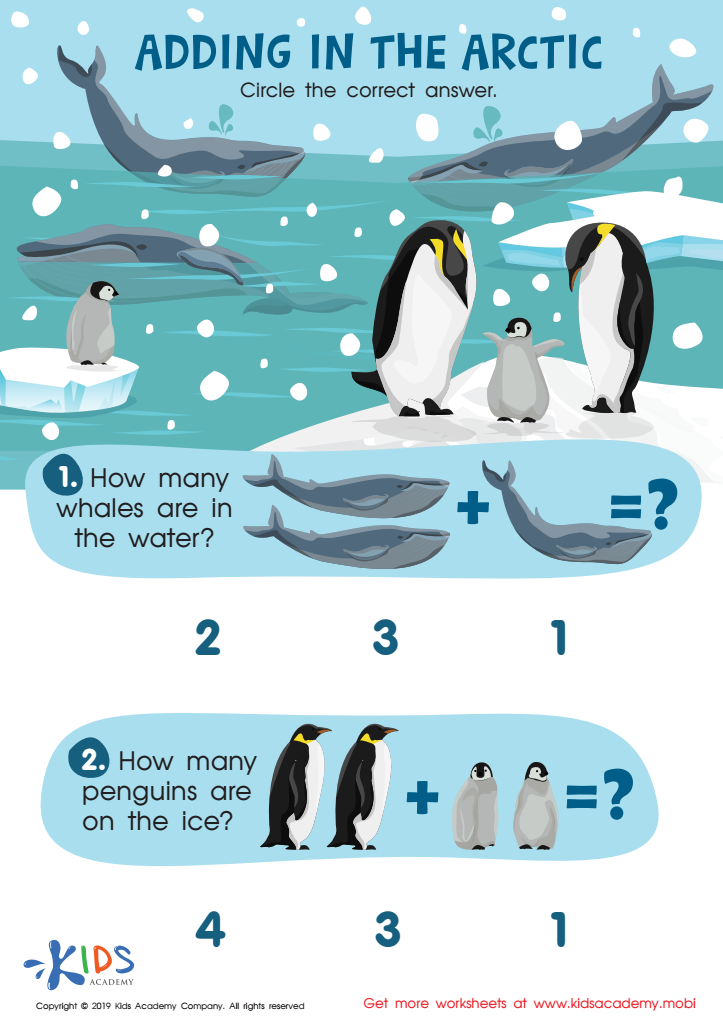
Adding in the Arctic Worksheet
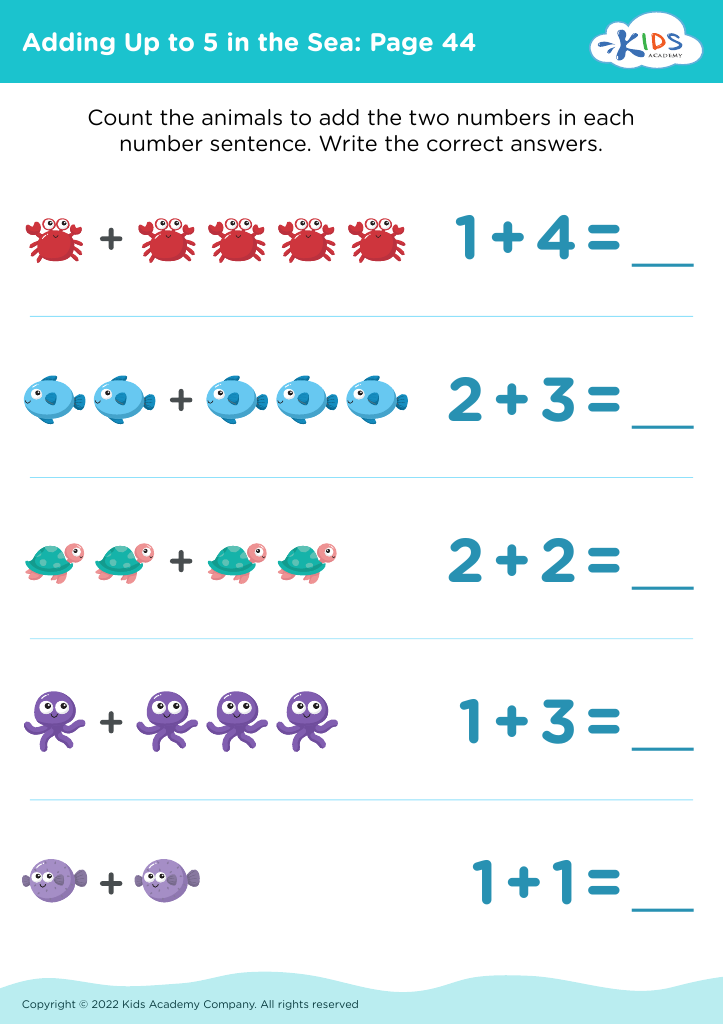
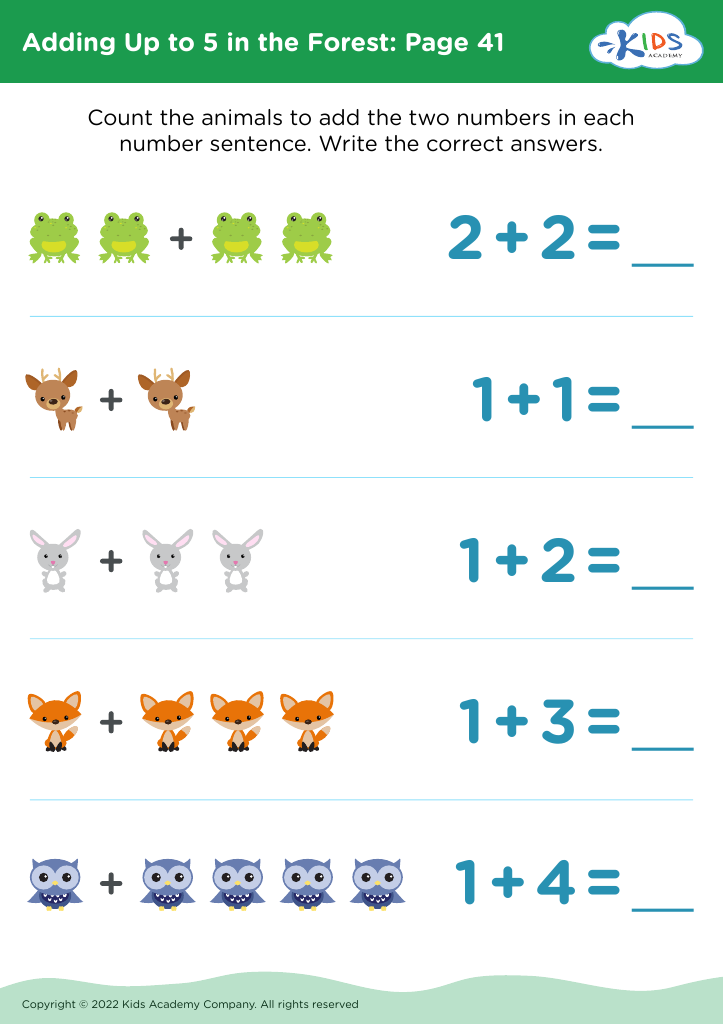








Fine motor skills are crucial for young children, particularly ages 3-4, as they form the foundation for their overall development and learning abilities. These skills involve the coordinated use of small muscles in the hands and fingers, which are essential for tasks such as grasping objects, stacking blocks, drawing, and eventually writing.
Parents and teachers should prioritize fine motor skills because they significantly impact children's academic success and daily life skills. Developing these skills helps enhance hand-eye coordination, boost cognitive development, and encourage problem-solving abilities. Moreover, fine motor skills contribute to children's independence; as they learn to perform tasks like buttoning clothes or using utensils, they gain confidence in their abilities.
Additionally, engaging children in activities that promote fine motor development—like playing with clay, doing puzzles, or coloring—can be both enjoyable and educational. These experiences offer opportunities for social interaction, creativity, and cognitive growth, making them holistic learning tools. Ultimately, nurturing fine motor skills can lead to greater success in school readiness, setting children on a positive trajectory for future learning experiences. However, it’s essential that parents and teachers work together to provide stimulating environments that foster these vital skills.








