Visual comprehension Addition Worksheets for Ages 3-4
7 filtered results
-
From - To
Introduce your little learners to the world of math with our Visual Comprehension Addition Worksheets for Ages 3-4! Designed to engage young minds, these worksheets utilize vibrant illustrations and interactive elements that promote visual learning. Children will explore simple addition concepts through delightful visuals, helping them grasp calculations intuitively. These engaging exercises build essential foundational skills, fostering cognitive development while making math fun! Perfect for preschool and early grade teachers, parents, and caregivers, our worksheets encourage independent practice and enhance visual recognition skills. Download now and watch your child's confidence and math abilities soar, setting them on a path to success!
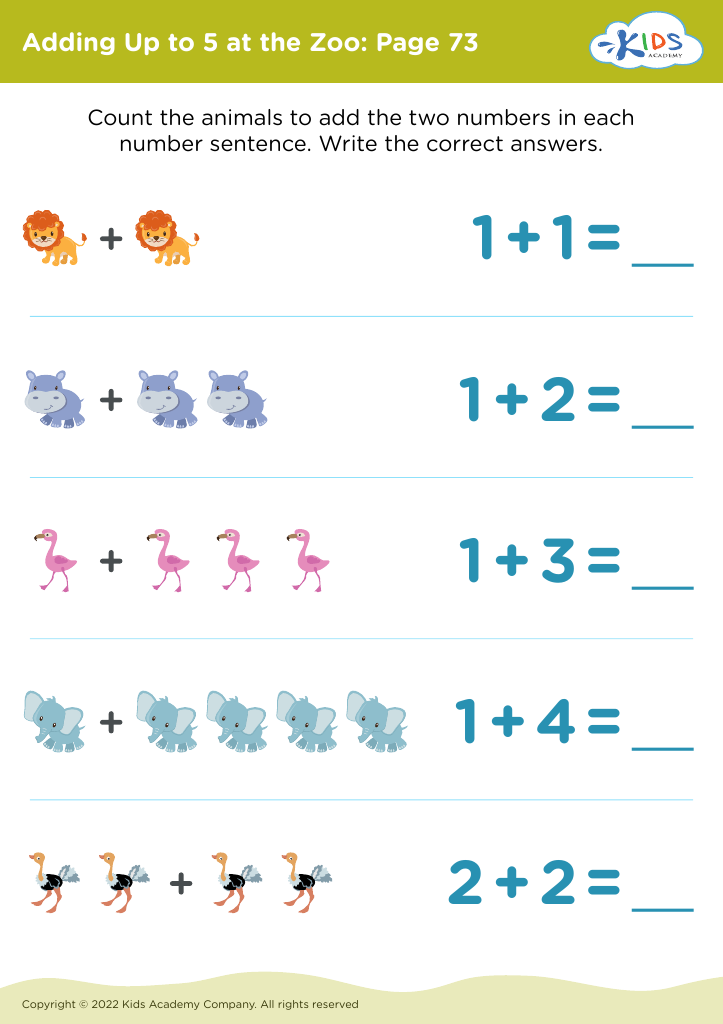
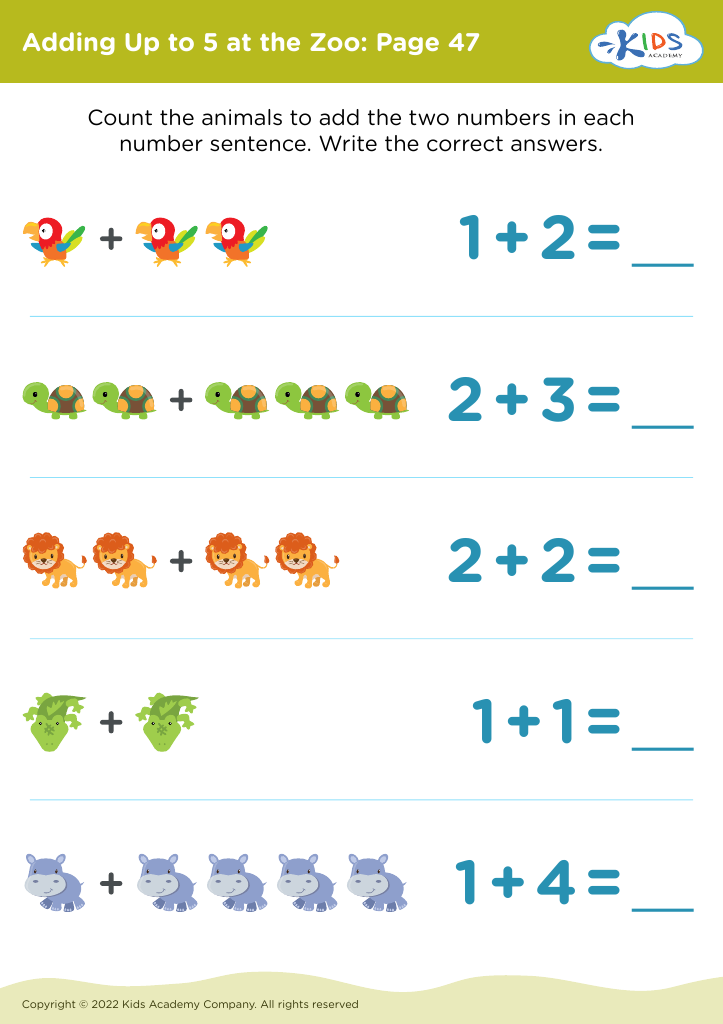
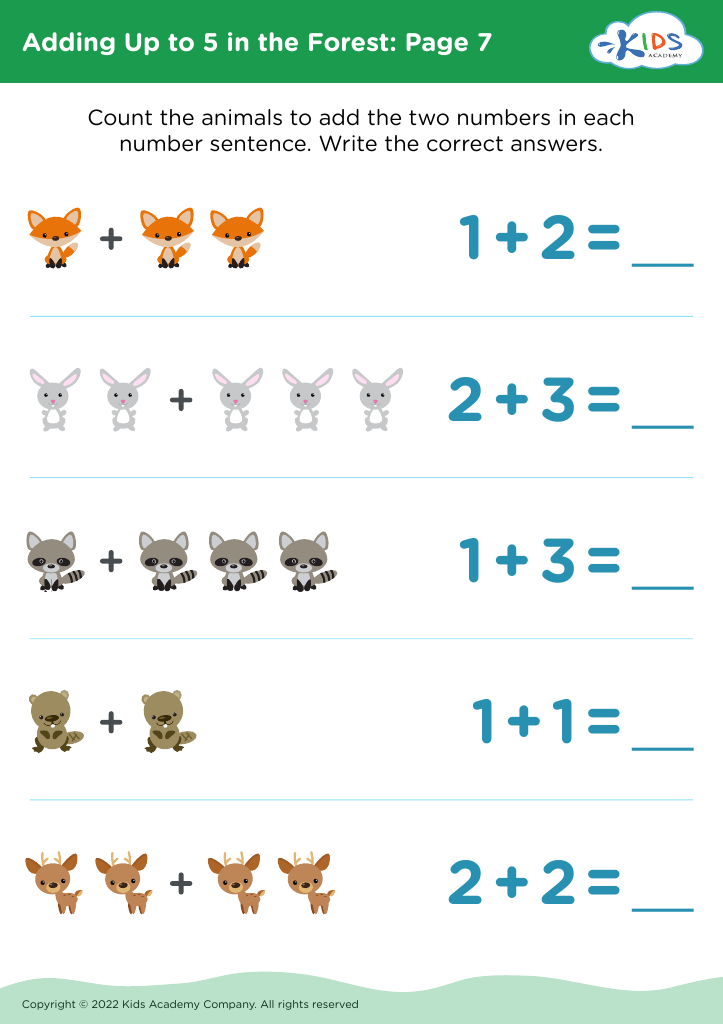
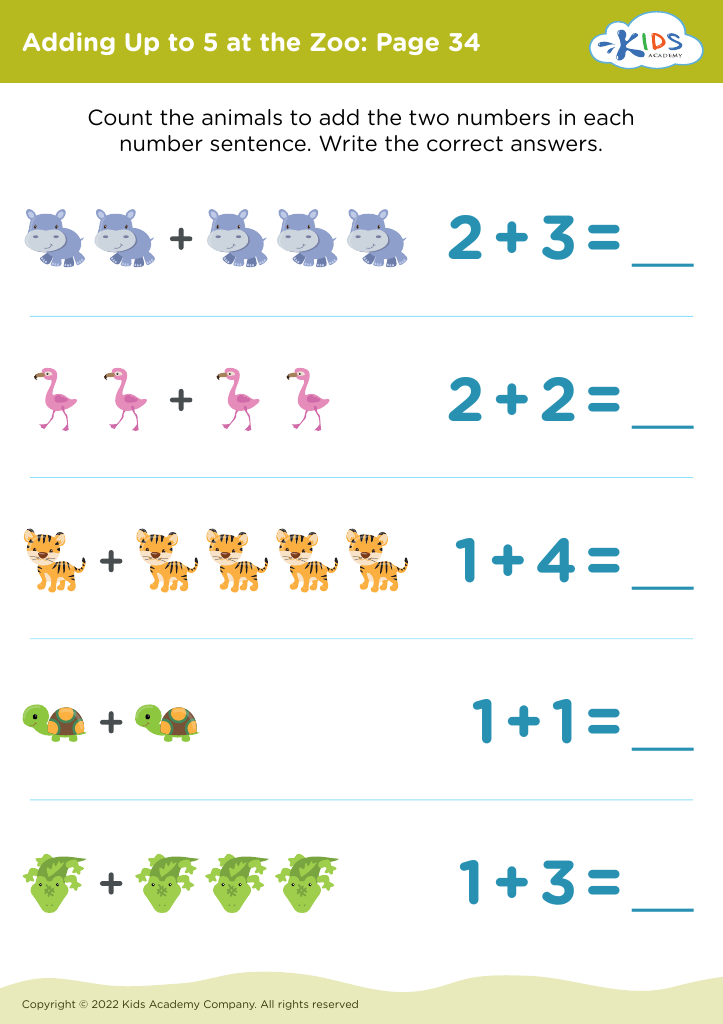
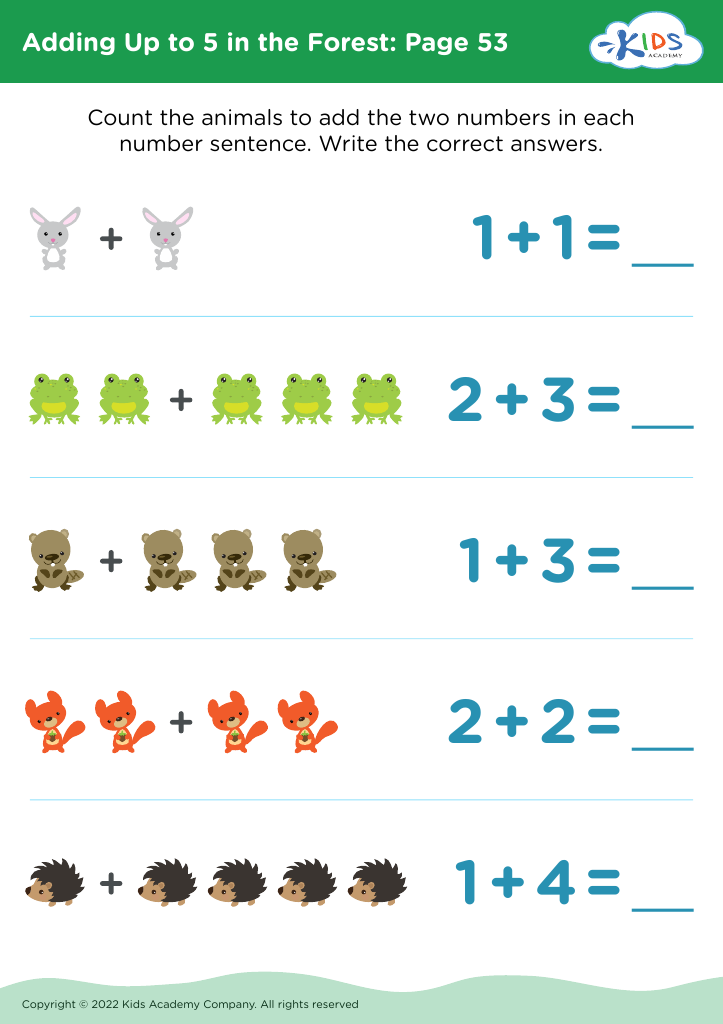
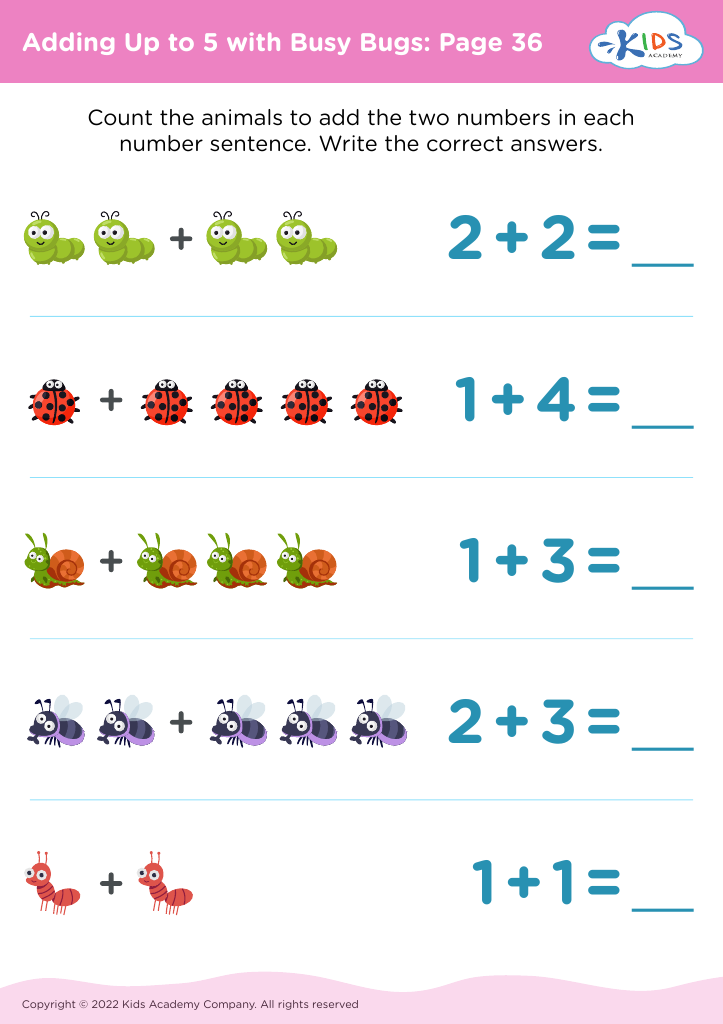
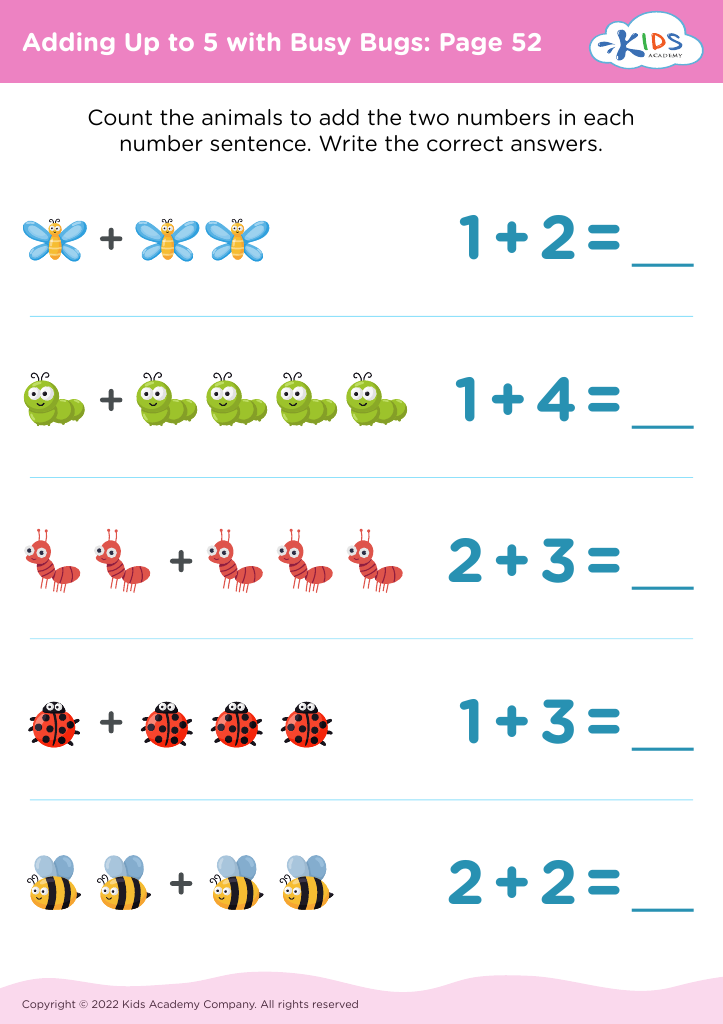








Visual comprehension in addition is crucial for early learners aged 3-4 because it lays the foundation for mathematical understanding and problem-solving skills. At this stage, children are naturally drawn to visuals, which makes incorporating visual aids in teaching basic addition not only effective but also engaging.
Firstly, using pictures, objects, or bright visuals helps young children grasp the concept of combining quantities by making abstract ideas more tangible. By visualizing addition, kids can see how numbers work together, fostering a more intuitive understanding of math. This practice encourages children to recognize patterns and relationships in numbers that are essential for advanced math learning later on.
Moreover, when parents or teachers prioritize visual comprehension, they create a tactile and interactive learning environment. Engaging activities—like counting blocks, using fingers, or interactive storytelling—stimulate curiosity and promote active participation. This approach not only enhances mathematical skills but also bolsters critical thinking and cognitive development, which are pivotal in early childhood education.
Finally, mastering visual comprehension leads to confidence in math, empowering children to tackle more complex problems as they grow. Hence, nurturing these skills early sets the stage for lifelong success in mathematics and related fields.








