Visual Perception Skills Addition Worksheets for Ages 3-4
5 filtered results
-
From - To
Enhance your child's early math abilities with our Visual Perception Skills Addition Worksheets, specially designed for ages 3-4. These engaging worksheets blend fun, colorful visuals with simple addition problems, helping young learners develop vital visual perception skills. As children match, count, and solve, they not only practice basic math but also strengthen hand-eye coordination and attention to detail. Ideal for preschoolers, these activities make learning enjoyable and effective. Give your child a head start in math and prepare them for future success with our expertly crafted, interactive worksheets. Exploring math has never been so exciting!
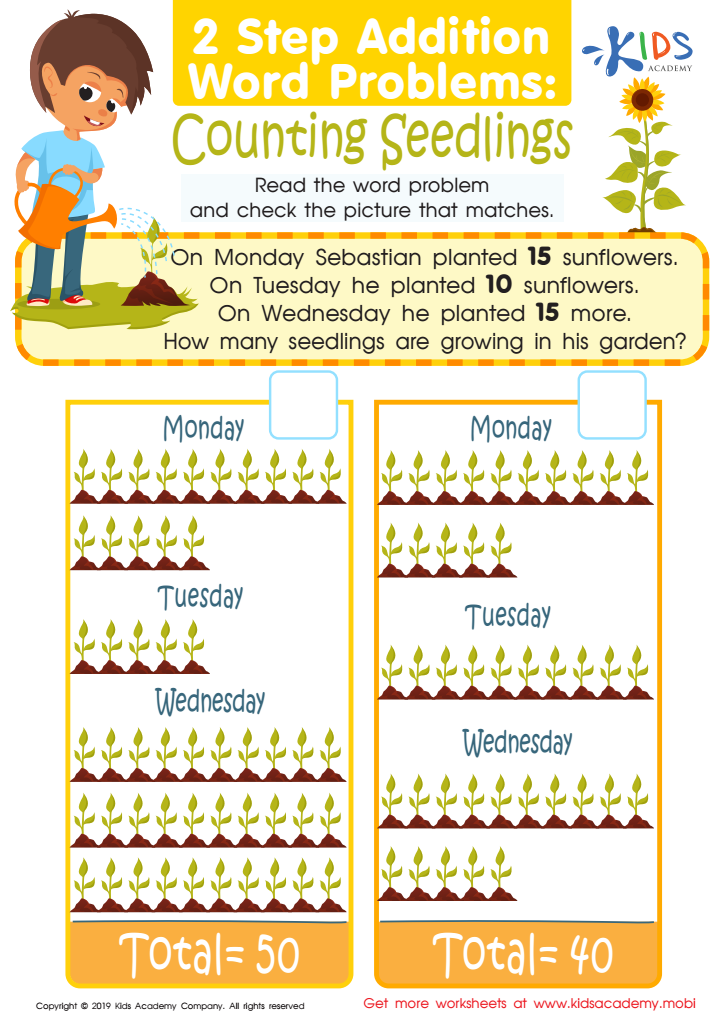
Counting Seedlings Worksheet
 Assign to My Students
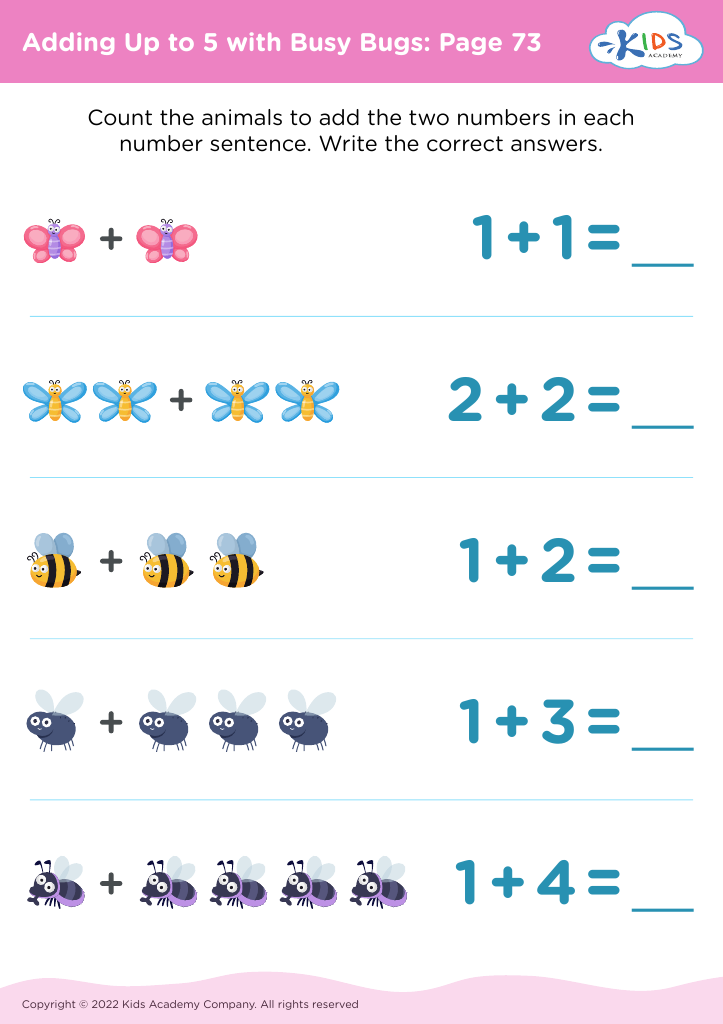
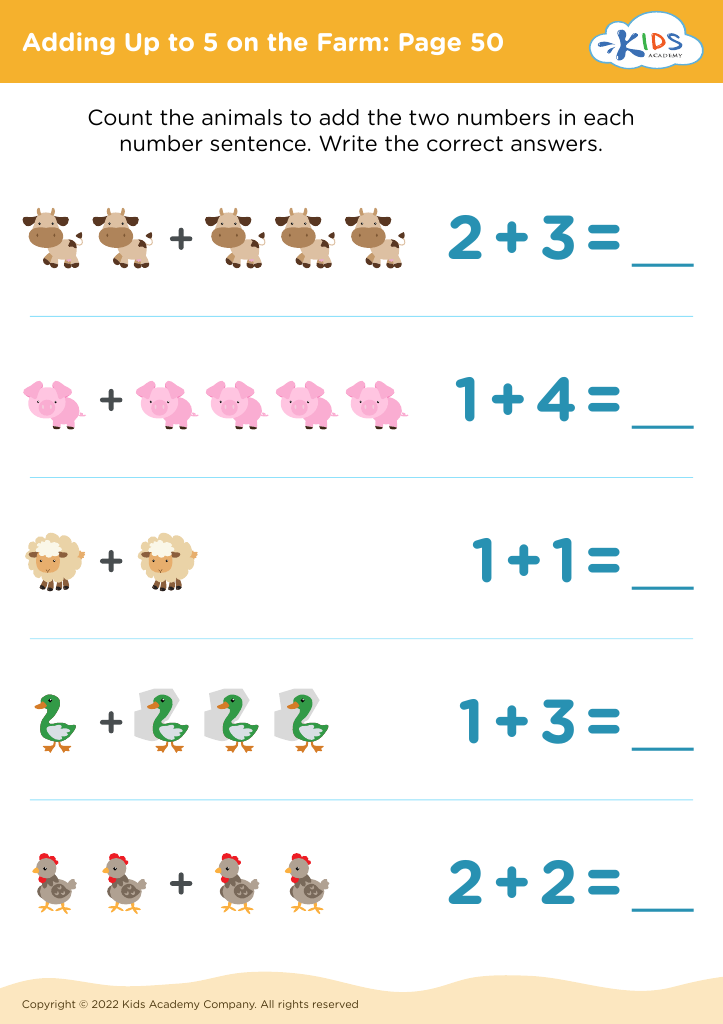
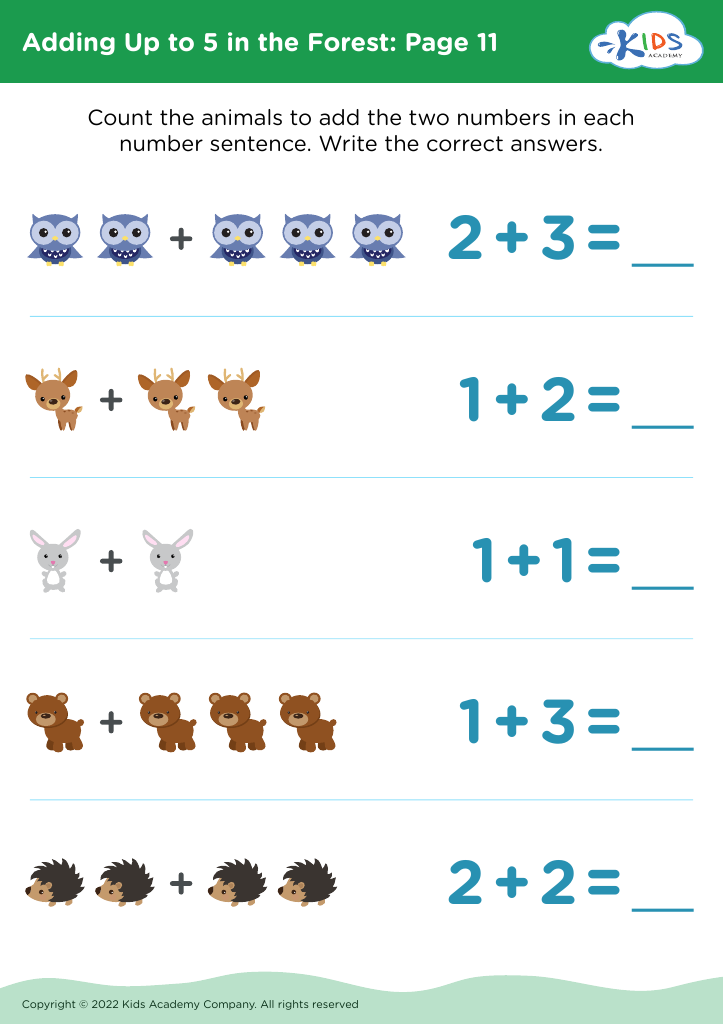
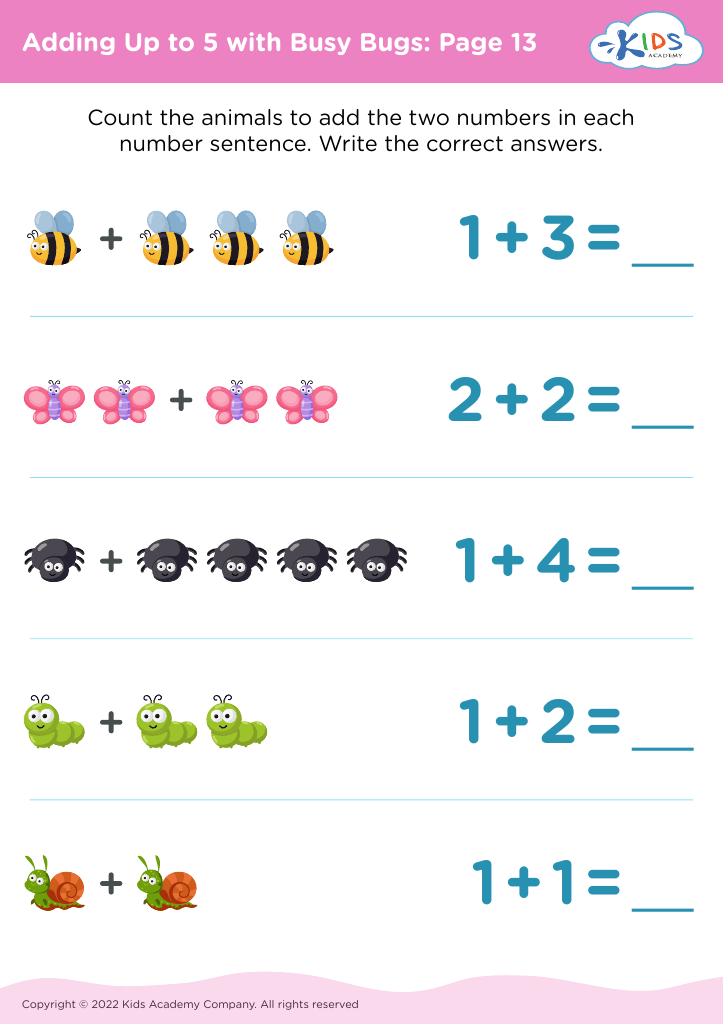








Visual perception skills are crucial for the development of young children, particularly between ages 3-4. These skills help kids make sense of and interpret the visual information they receive from their environment. Parents or teachers should care about nurturing these skills because they form the foundation for vital academic and life skills later on.
Firstly, strong visual perception skills are essential for reading readiness. Children who can easily recognize shapes, letters, and patterns will find it easier to learn to read. This early ability to decode visual symbols lays the groundwork for future literacy and academic success.
Secondly, these skills aid in developing fine motor skills. As children improve in visually differentiating and interpreting objects, they find it easier to perform tasks such as drawing, writing, and cutting, which are critical for their everyday functioning and school activities.
Moreover, visual perception skills enhance problem-solving and cognitive abilities. Kids learn to categorize, compare, and analyze visual information, which enhances their logical thinking and planning abilities.
Lastly, good visual perception helps in boosting a child's confidence. Successfully interacting with their environment makes children feel competent and motivated, fostering a love for learning.
Thus, integrating visual perception activities into early education is invaluable for a child's overall development.








