Spatial reasoning Geometry Worksheets for Ages 3-4
4 filtered results
-
From - To
Nurture your child's mind with our "Spatial Reasoning Geometry Worksheets for Ages 3-4." These engaging and colorful worksheets are designed to enhance early geometric skills and spatial awareness through playful activities. Your little ones will delight in identifying shapes, patterns, and positions while developing their problem-solving abilities. Perfectly tailored for preschoolers, our worksheets ensure a fun and educational experience, laying a strong foundation for future math success. Support your child's early learning with activities that spark curiosity and foster important cognitive skills, ensuring they stay eager and motivated on their educational journey.
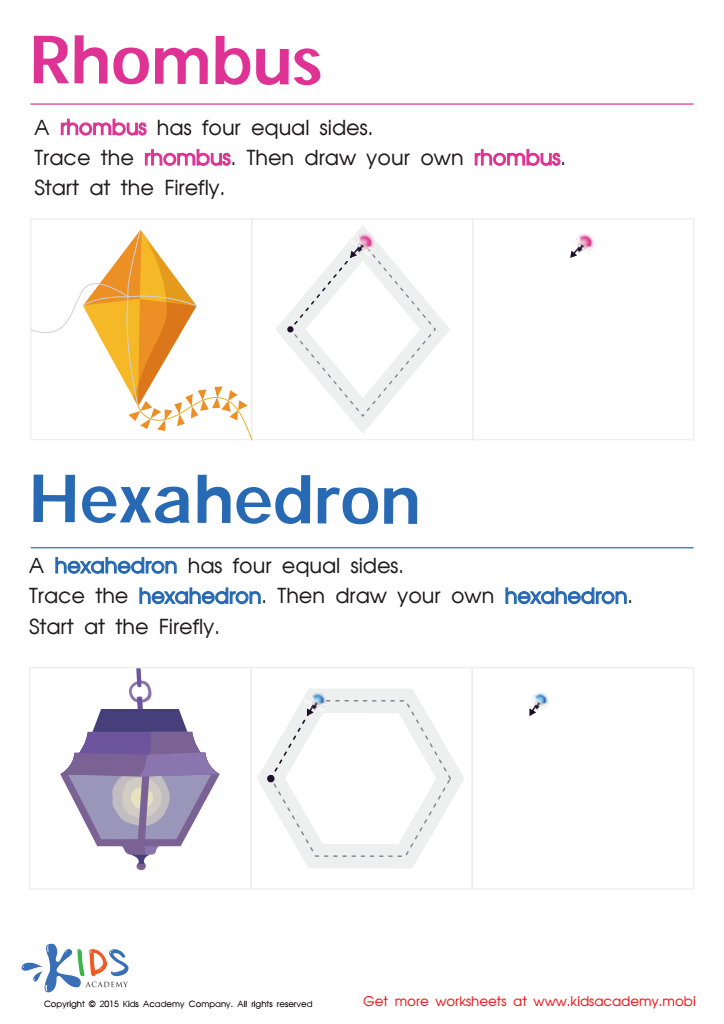
Draw a Rhombus And a Hexahedron Printable
 Assign to My Students











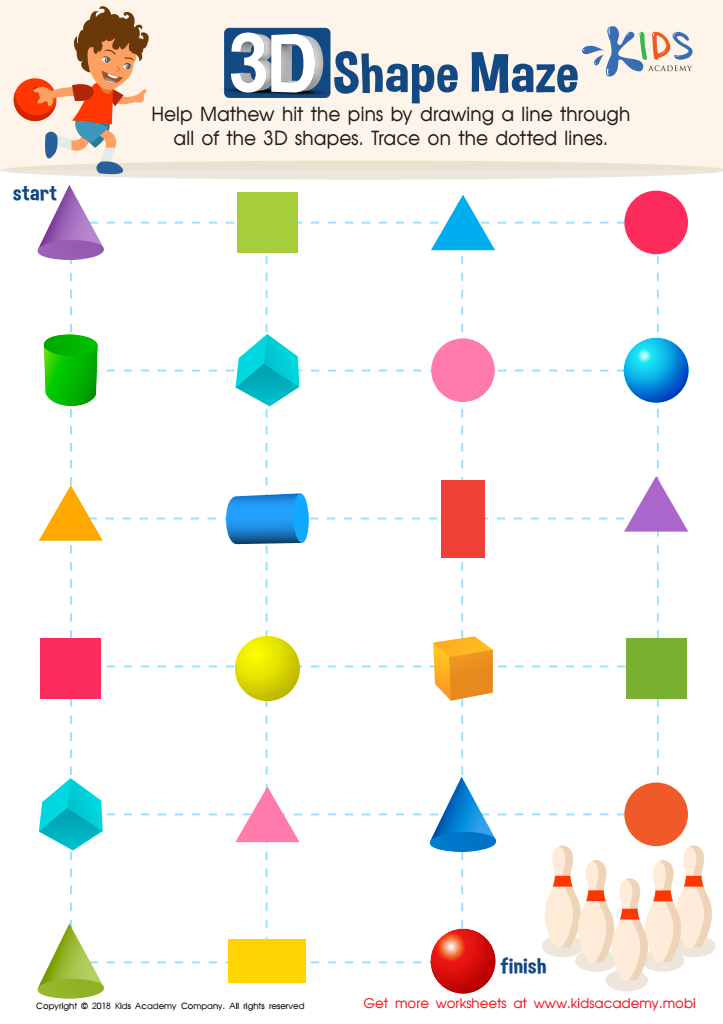
Shapes Maze Geometry Worksheet
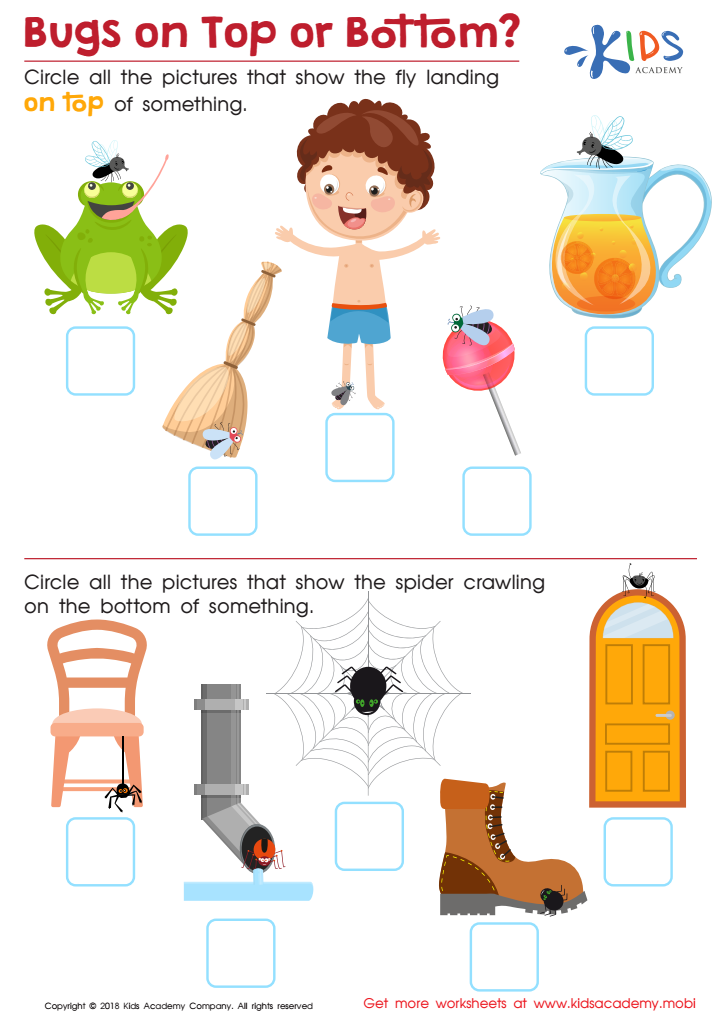
Bugs on Top or Bottom? Worksheet
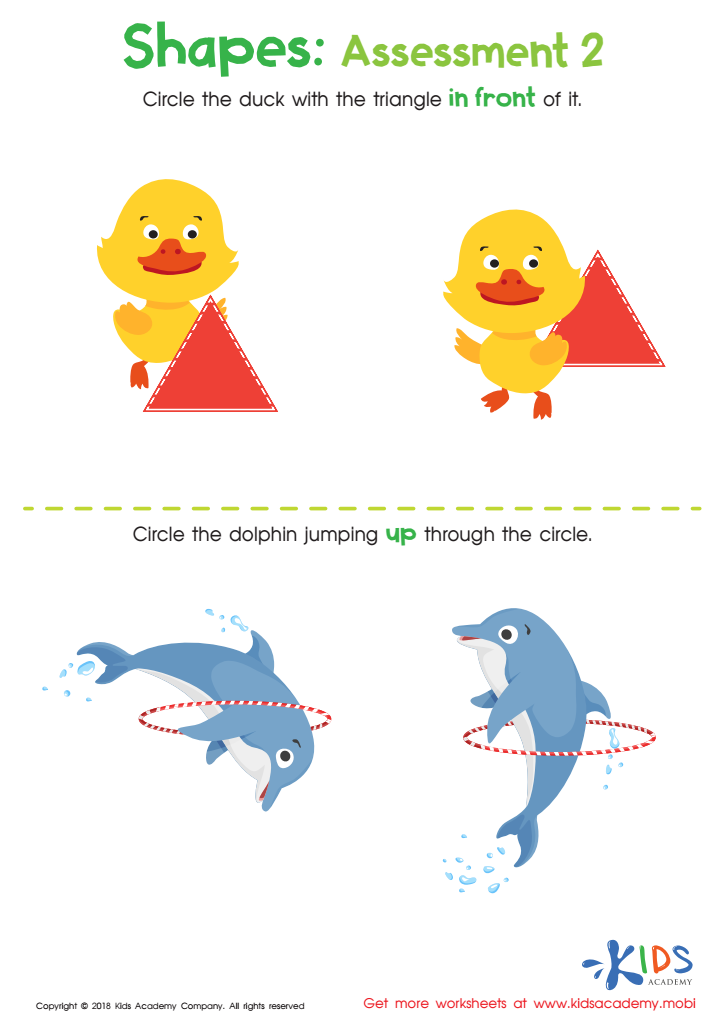
Geometry – Assessment 2 Worksheet








Spatial reasoning and geometry play a critical role in the cognitive and overall development of children, even at the young ages of 3-4. Developing spatial reasoning skills early provides a foundation for mathematical and scientific understanding. This form of reasoning helps children grasp concepts of size, shape, position, direction, and movement through their environments, aiding them in everyday tasks such as fitting shapes into the right spaces, which boosts problem-solving skills.
This early interaction with geometric concepts allows young brains to form crucial cognitive patterns. It encourages children to visualize and manipulate objects mentally, which improves their ability to focus on complex mathematical tasks as they grow. Research indicates that strong spatial skills are linked to better performance in STEM (Science, Technology, Engineering, Math) fields later in life.
Beyond academics, honing spatial reasoning fosters creativity and increases curiosity. It helps children understand the world visually and kinesthetically, offering a more integrated learning experience. Activities like building blocks, puzzle-solving, and drawing not only make learning fun but also develop hand-eye coordination and fine motor skills.
Ultimately, caring about spatial reasoning and geometry from ages 3-4 equips children with essential tools for both academic achievement and everyday life, setting them on a path to becoming confident, curious learners.








