Check out this FREE Trial Lesson on Math for age 3-4!

X

Favorites
With answer key
Interactive
  • 3-4
  • Basic Addition Skills
  • Math
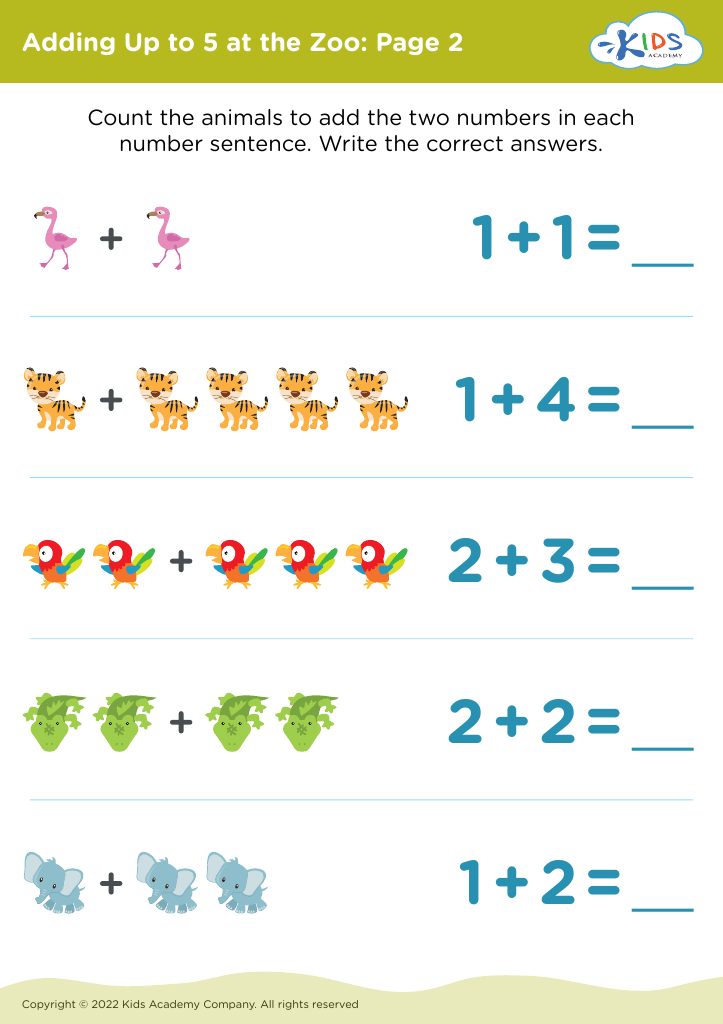
Adding Up to 5 at the Zoo: Page 2

Adding Up to 5 at the Zoo: Page 2

Adding Up to 5 at the Zoo: Page 2
Worksheet
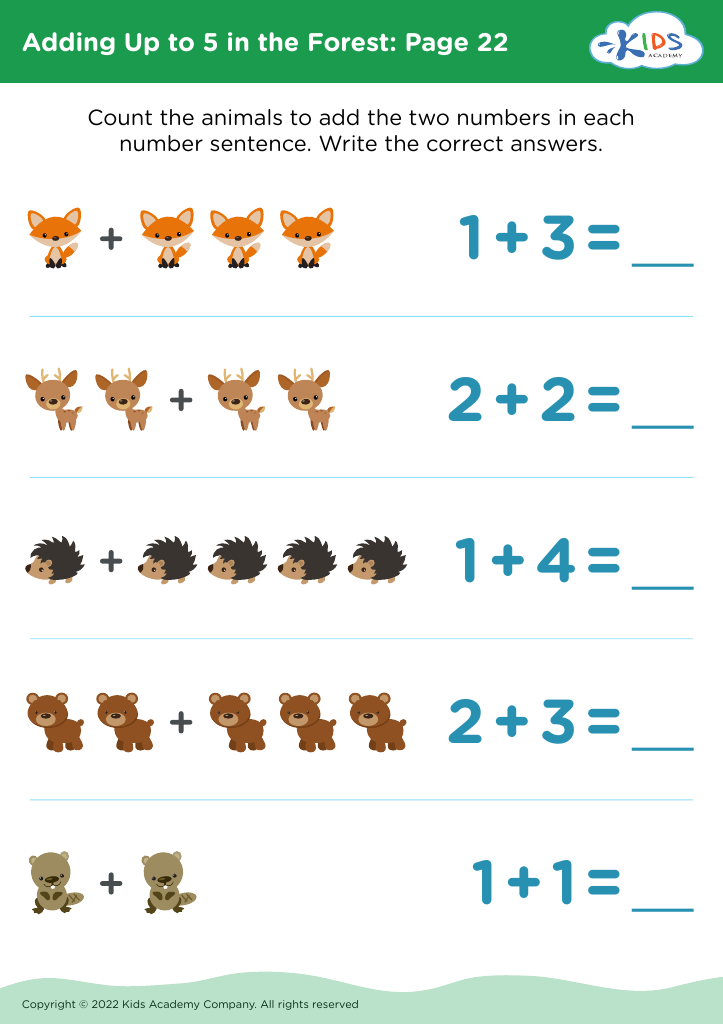
Adding Up to 5 in the Forest: Page 22
Worksheet
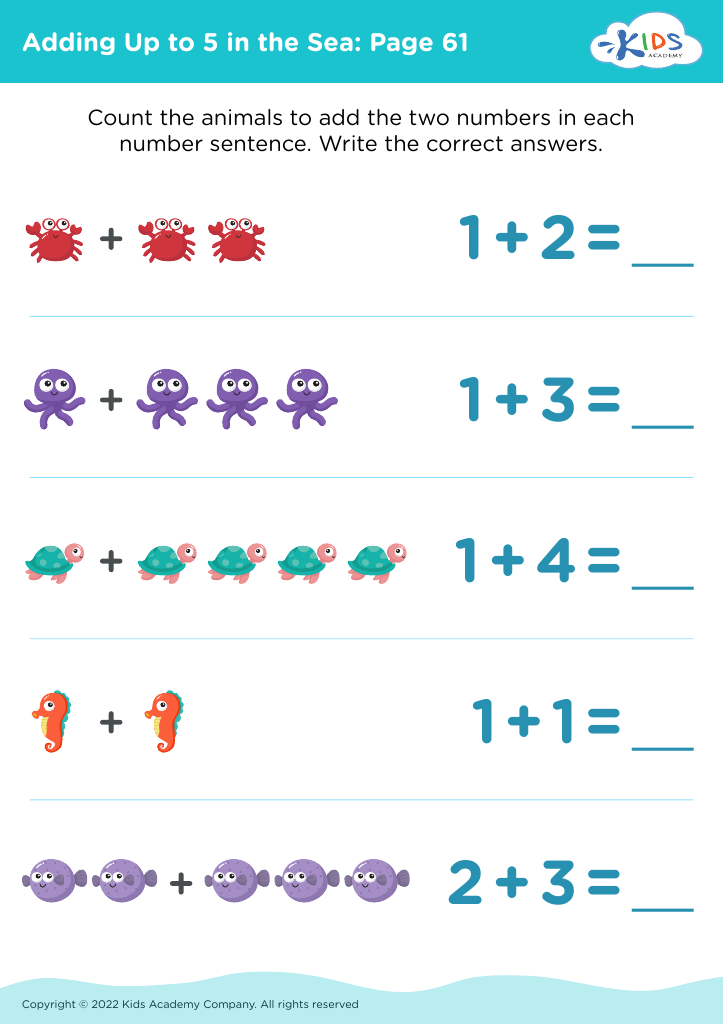
Adding Up to 5 in the Sea: Page 61
Worksheet
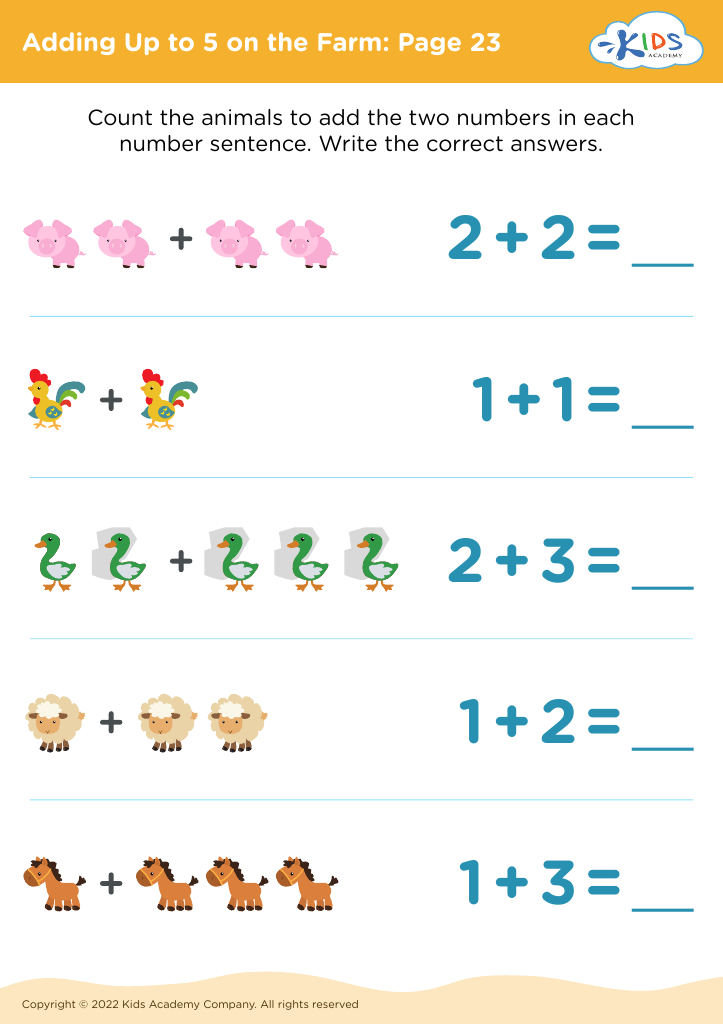
Adding Up to 5 on the Farm: Page 23
Worksheet
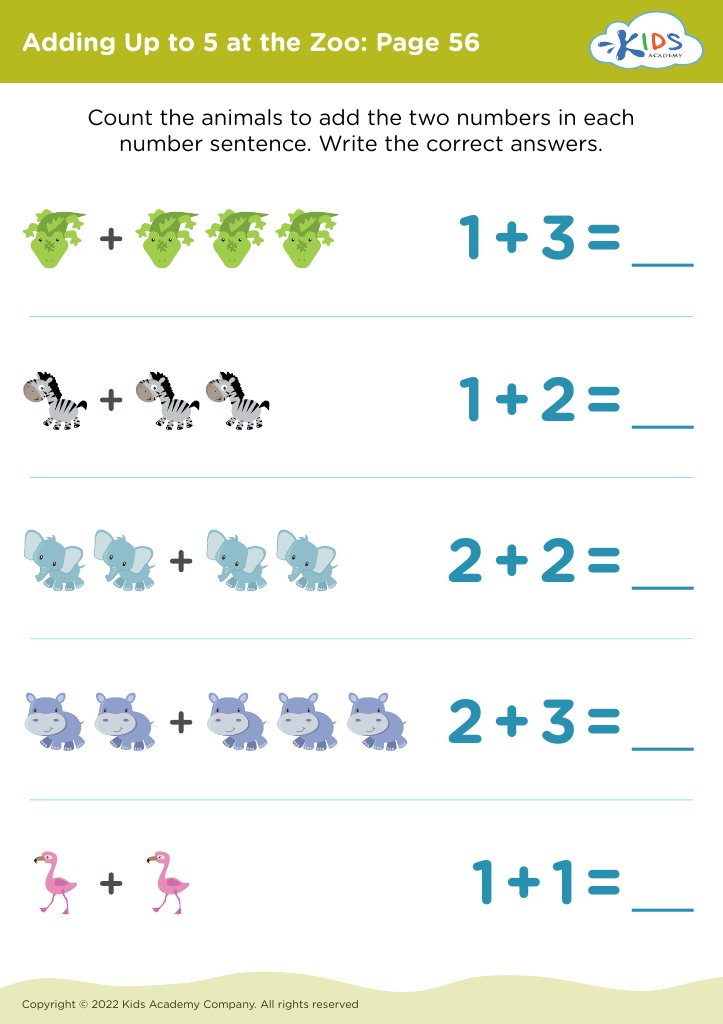
Adding Up to 5 at the Zoo: Page 56
Worksheet
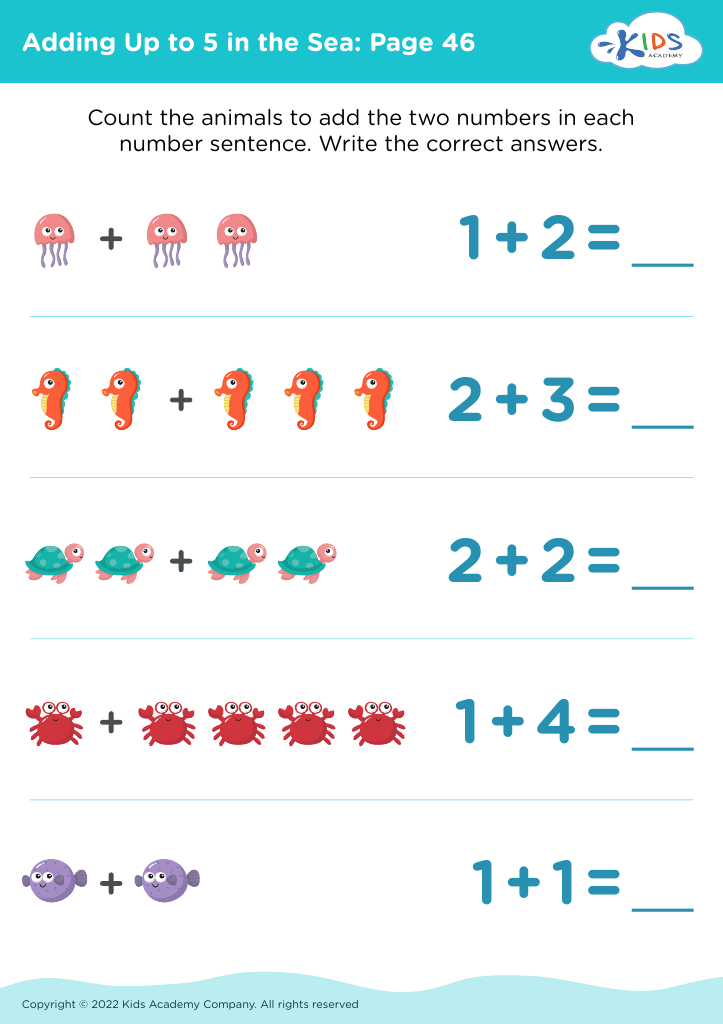
Adding Up to 5 in the Sea: Page 46
Worksheet
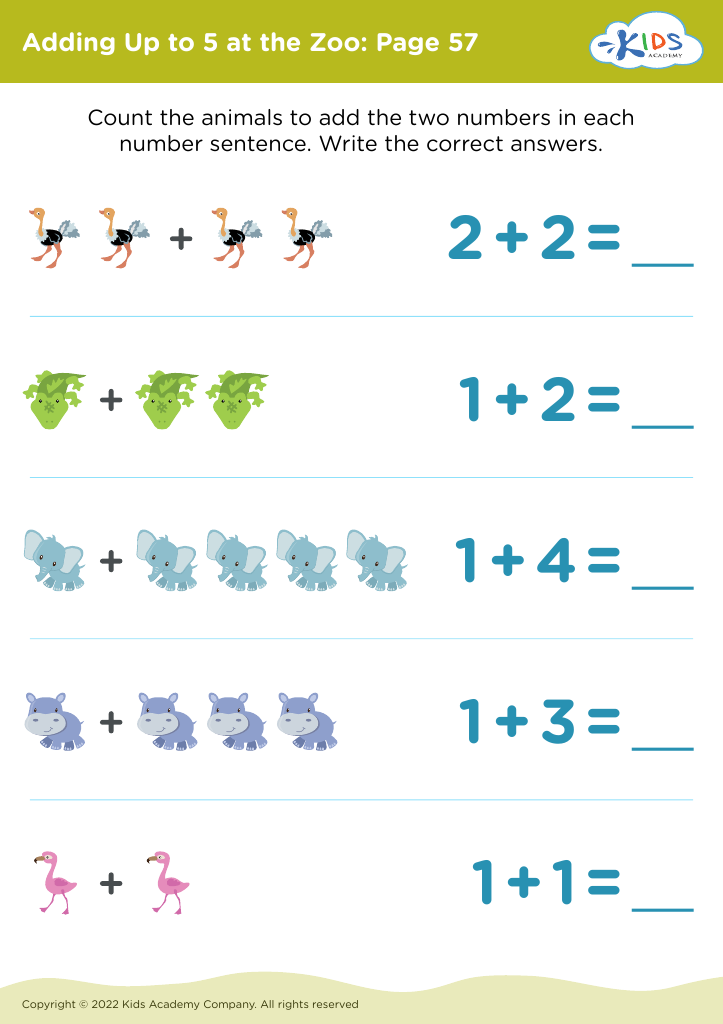
Adding Up to 5 at the Zoo: Page 57
Worksheet
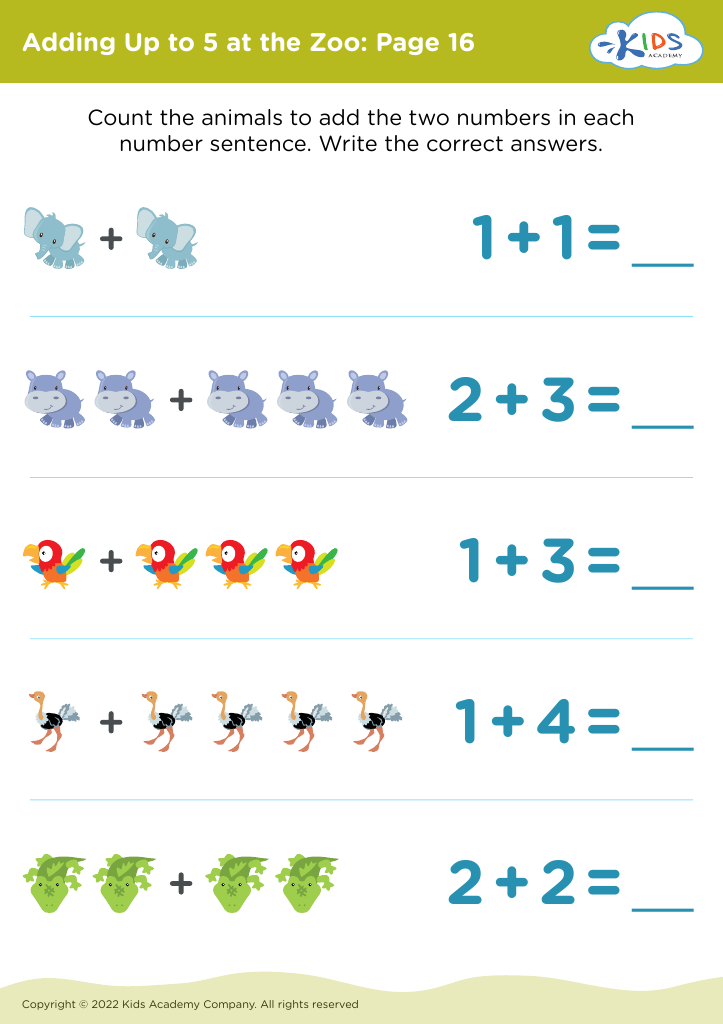
Adding Up to 5 at the Zoo: Page 16
Worksheet
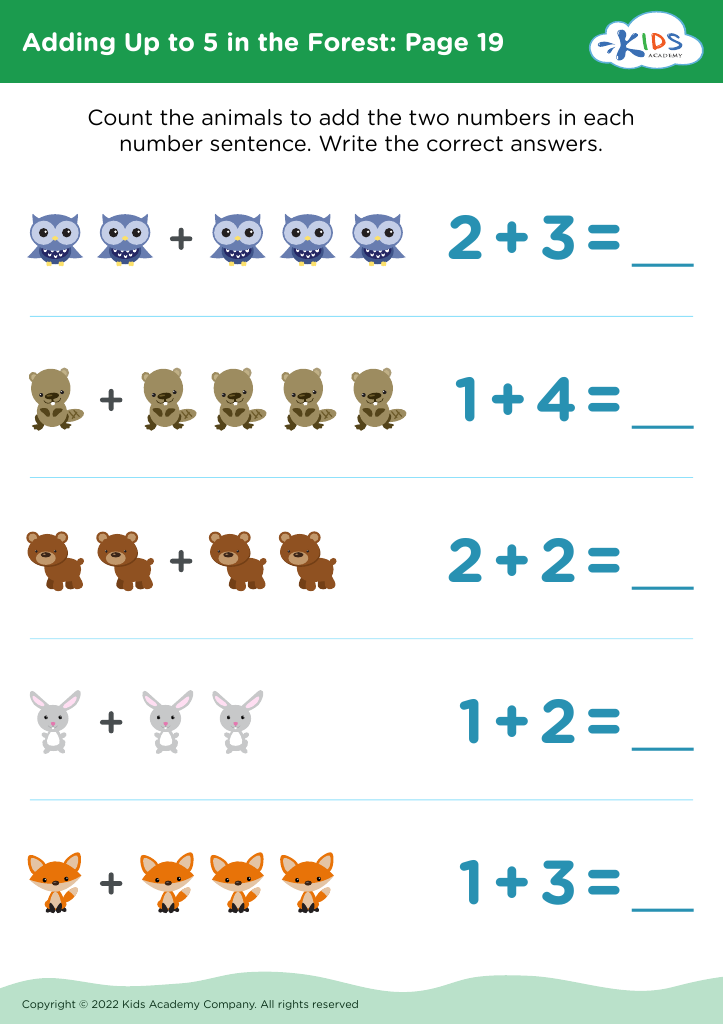
Adding Up to 5 in the Forest: Page 19
Worksheet
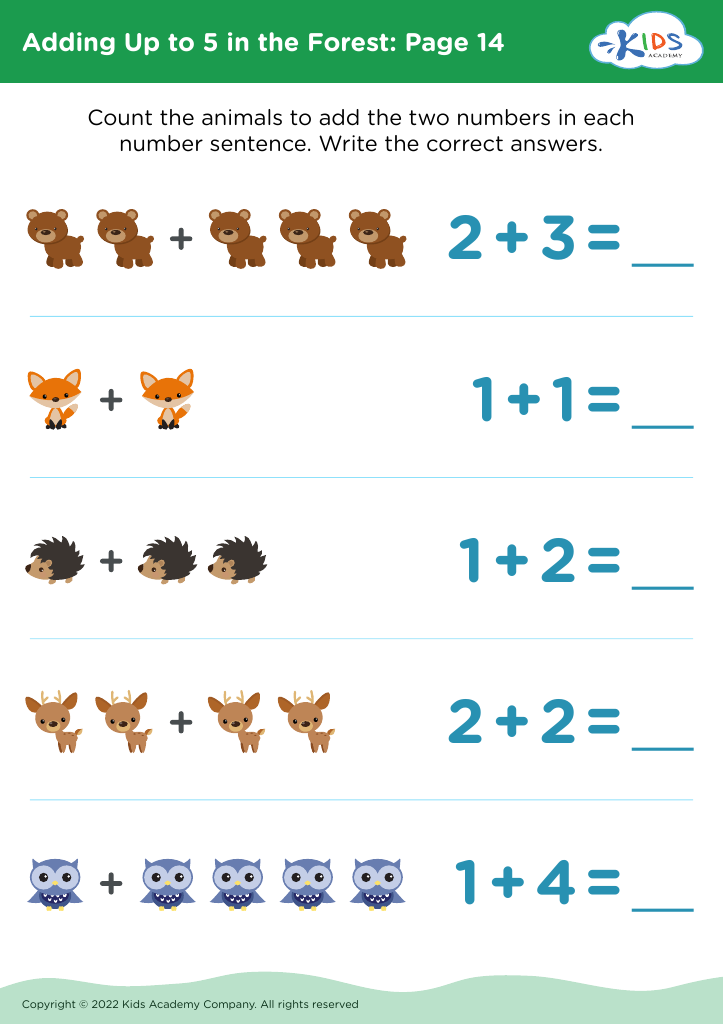
Adding Up to 5 in the Forest: Page 14
Worksheet
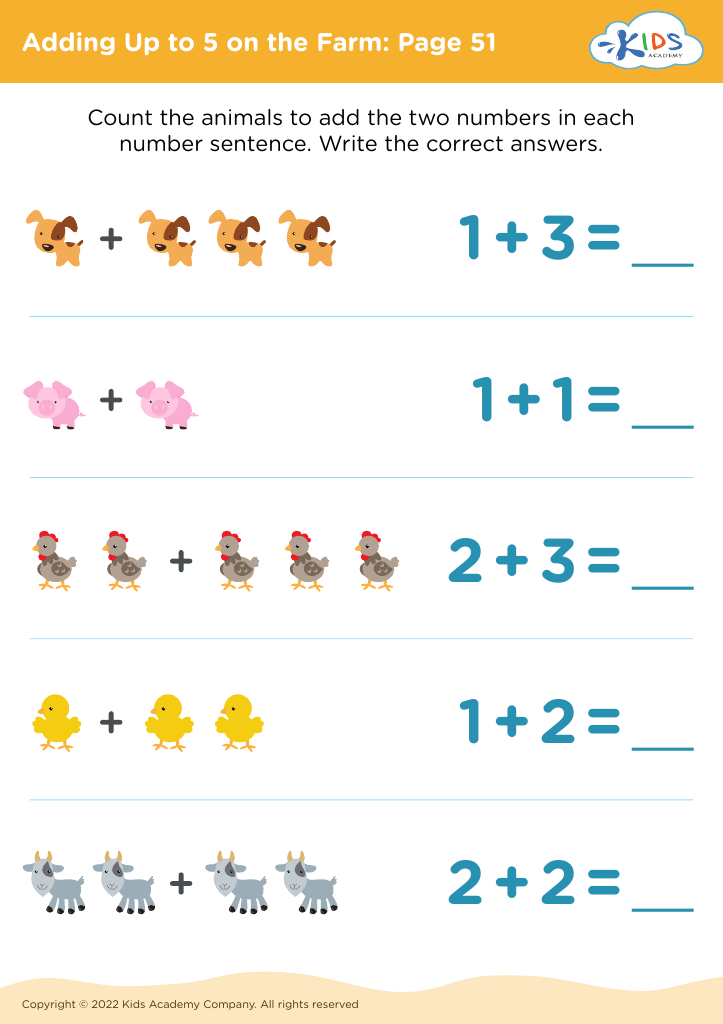
Adding Up to 5 on the Farm: Page 51
Worksheet
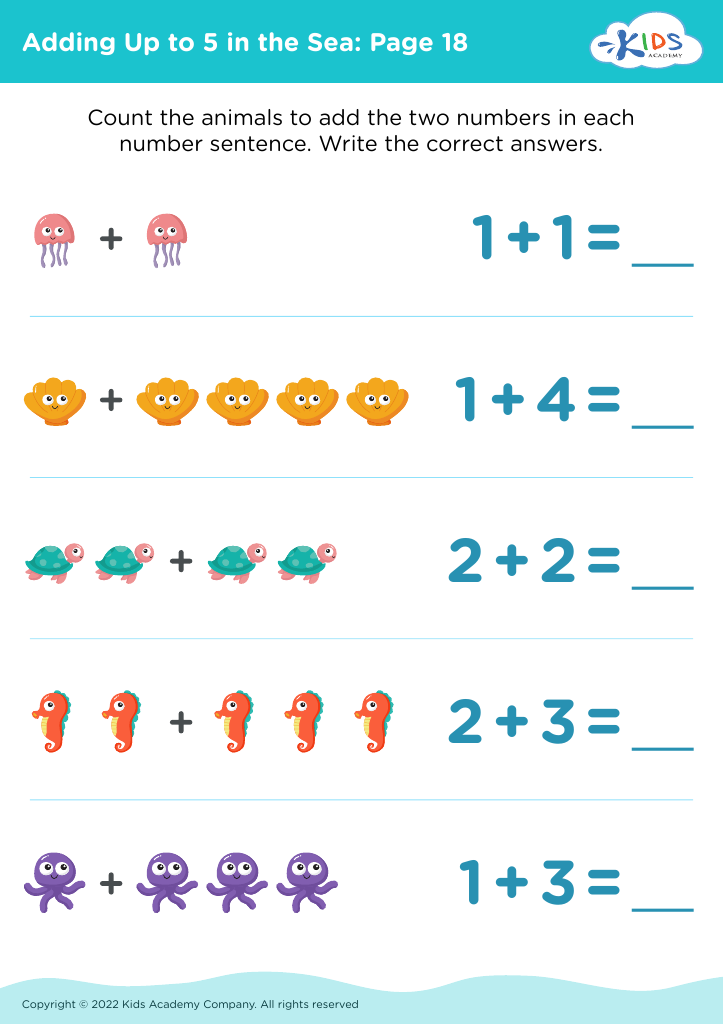
Adding Up to 5 in the Sea: Page 18
Worksheet
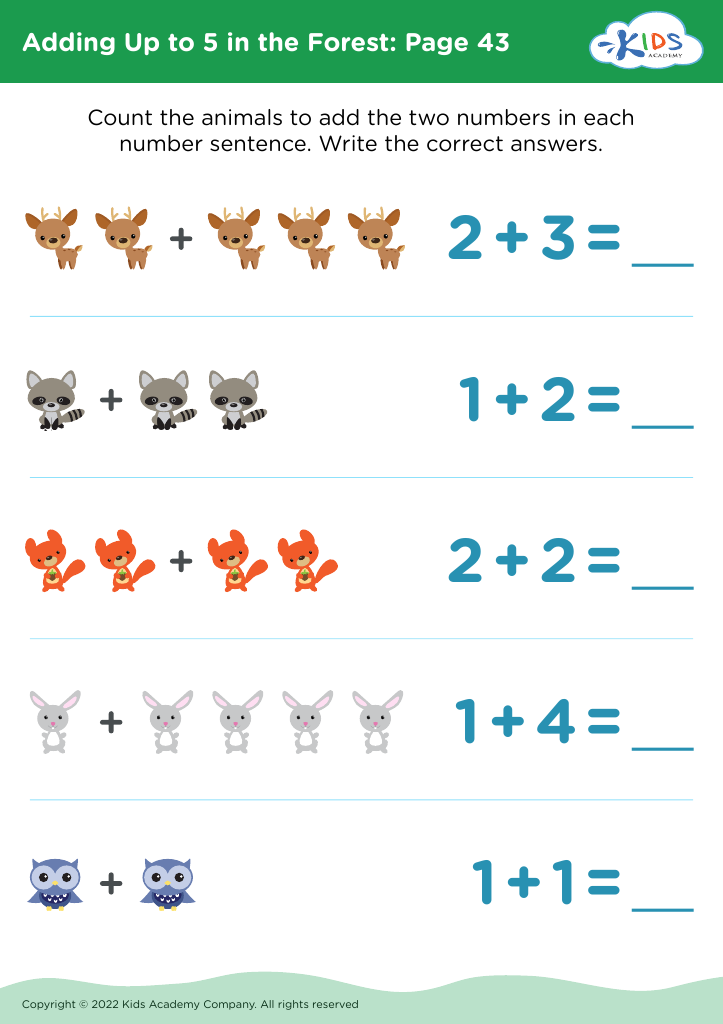
Adding Up to 5 in the Forest: Page 43
Worksheet
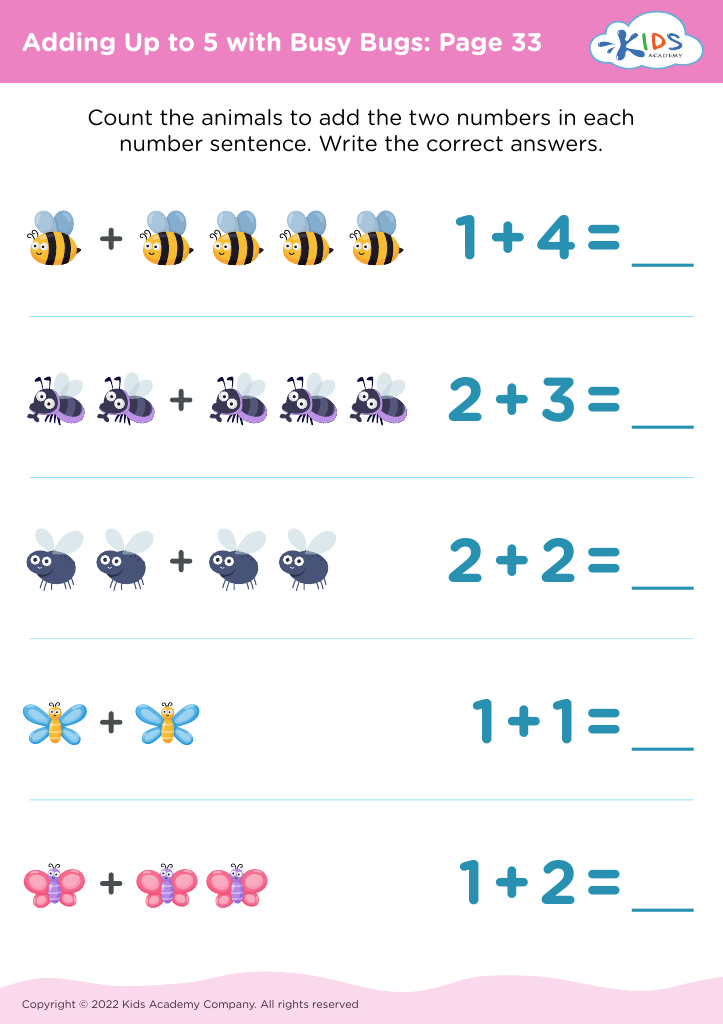
Adding Up to 5 with Busy Bugs: Page 33
Worksheet
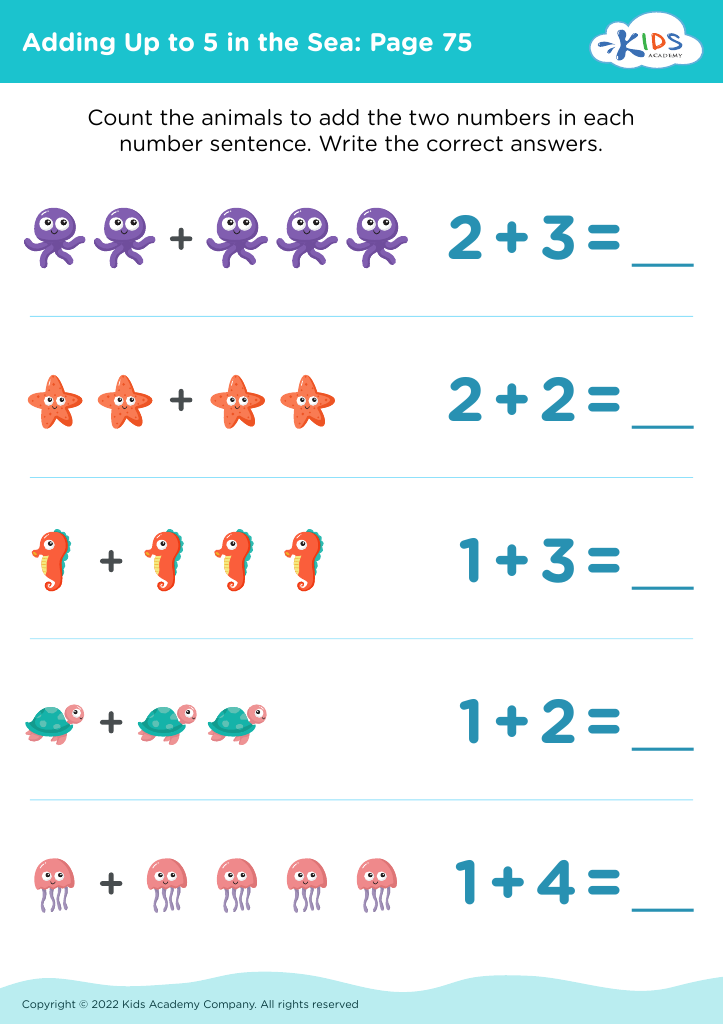
Adding Up to 5 in the Sea: Page 75
Worksheet
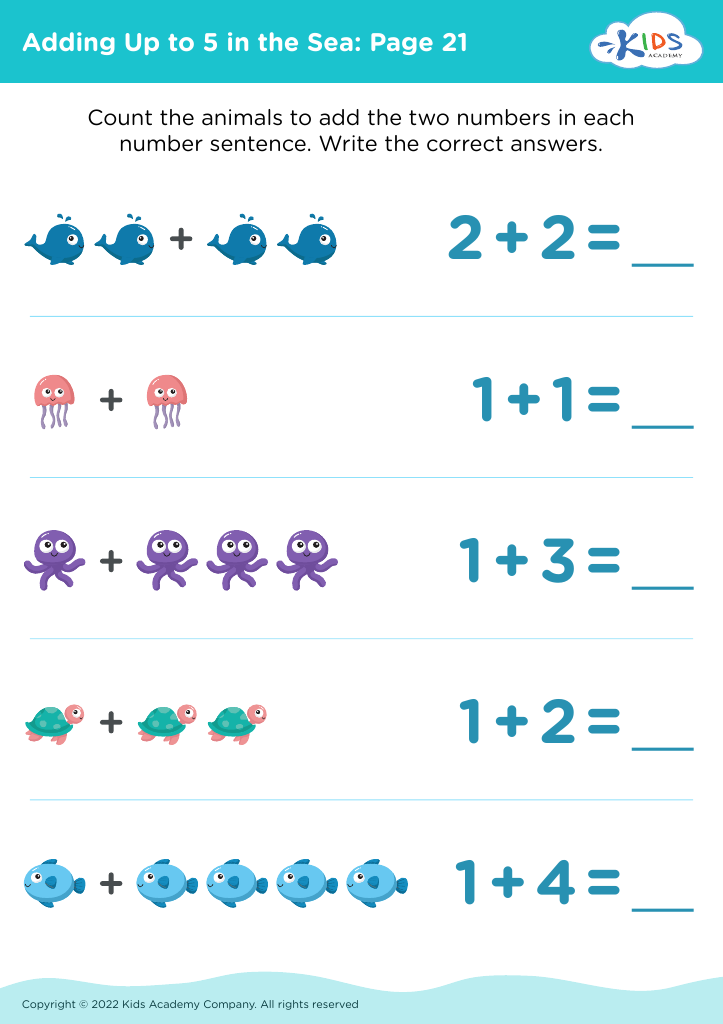
Adding Up to 5 in the Sea: Page 21
Worksheet
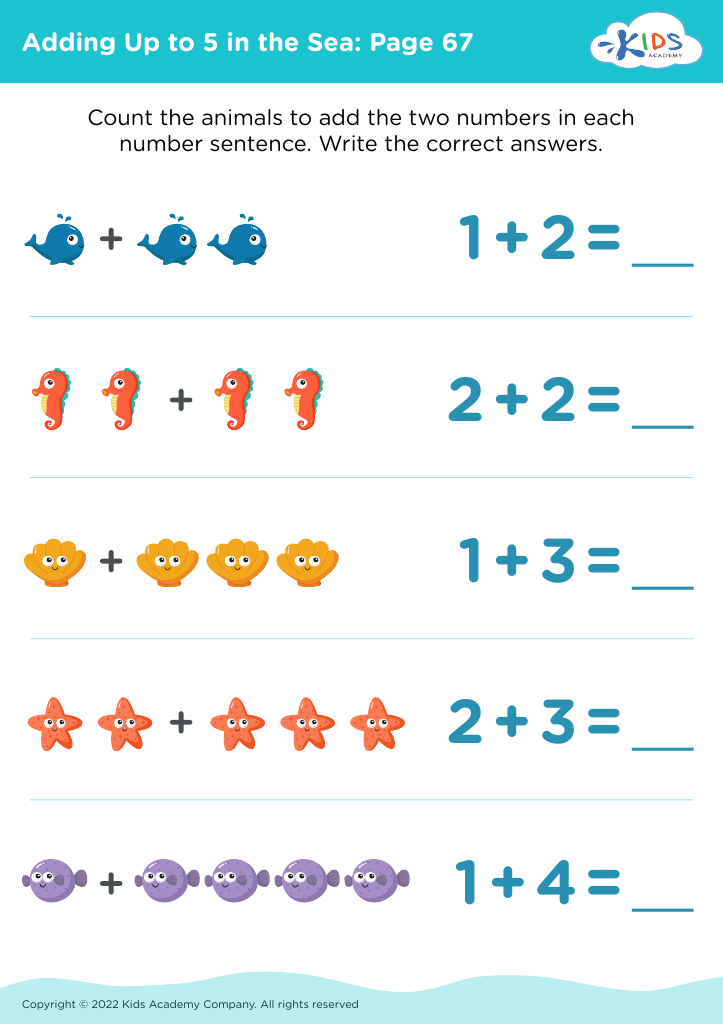
Adding Up to 5 in the Sea: Page 67
Worksheet
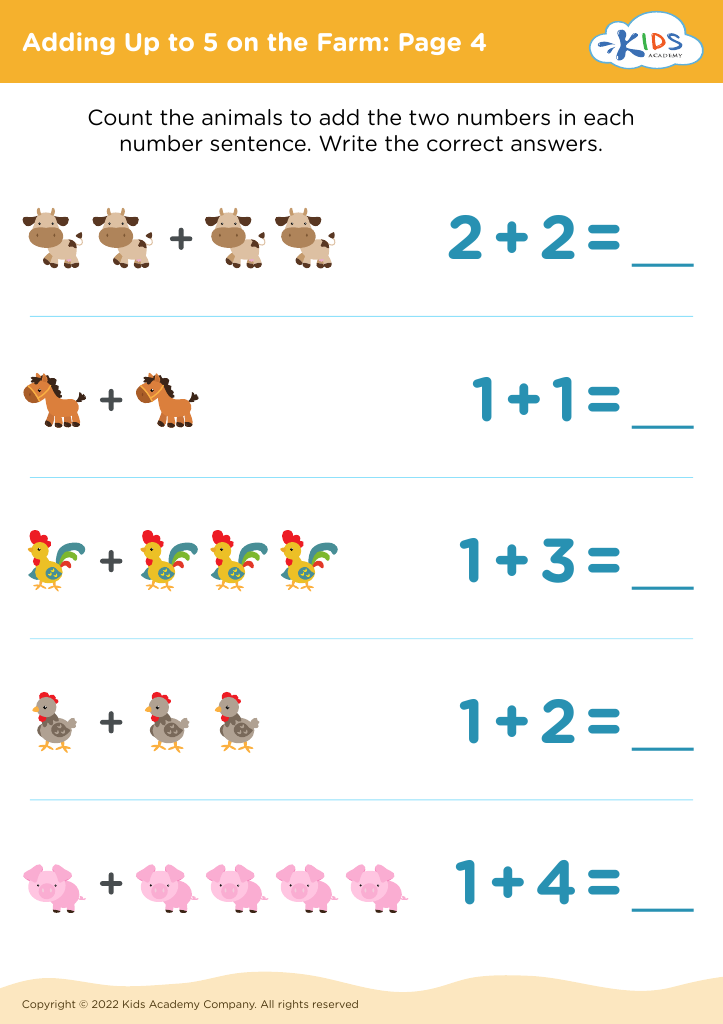
Adding Up to 5 on the Farm: Page 4
Worksheet
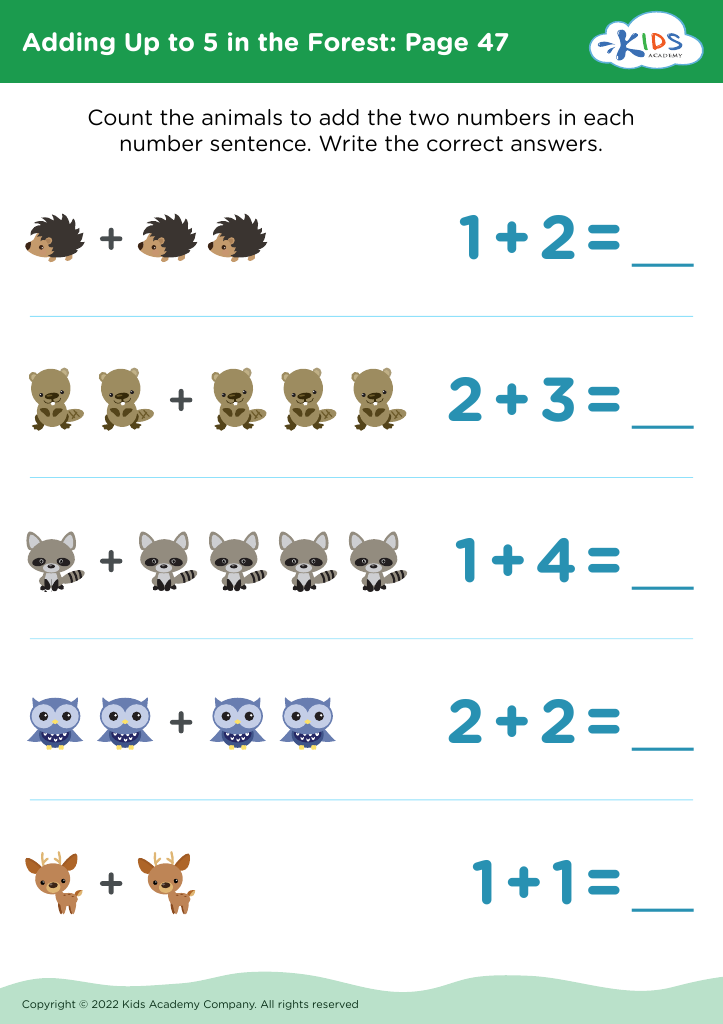
Adding Up to 5 in the Forest: Page 47
Worksheet
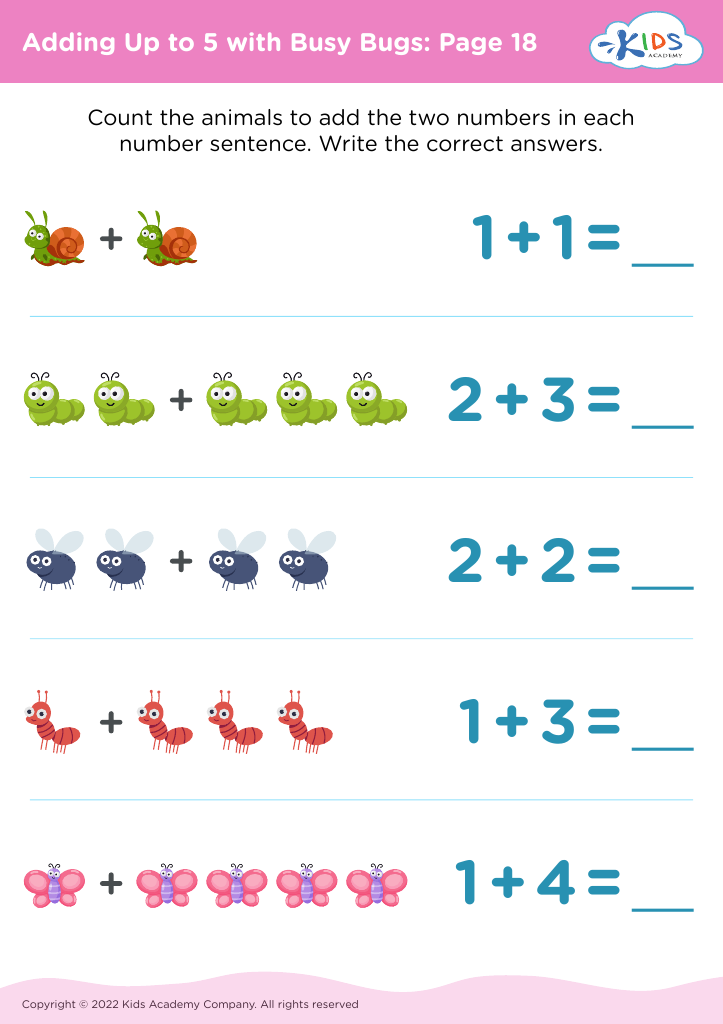
Adding Up to 5 with Busy Bugs: Page 18
Worksheet
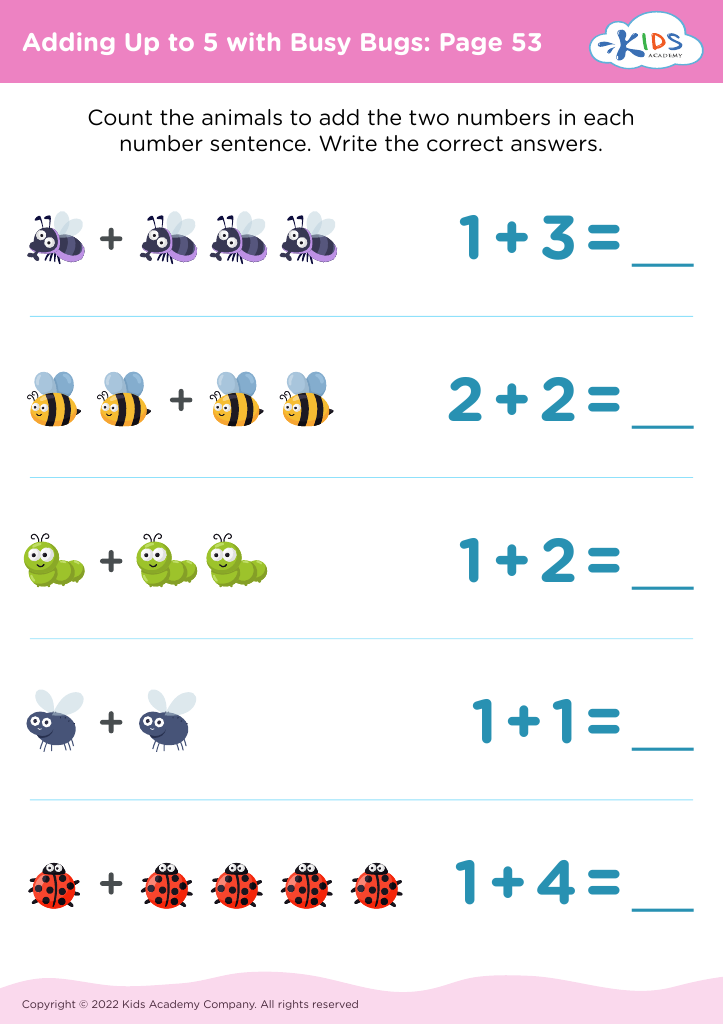
Adding Up to 5 with Busy Bugs: Page 53
Worksheet
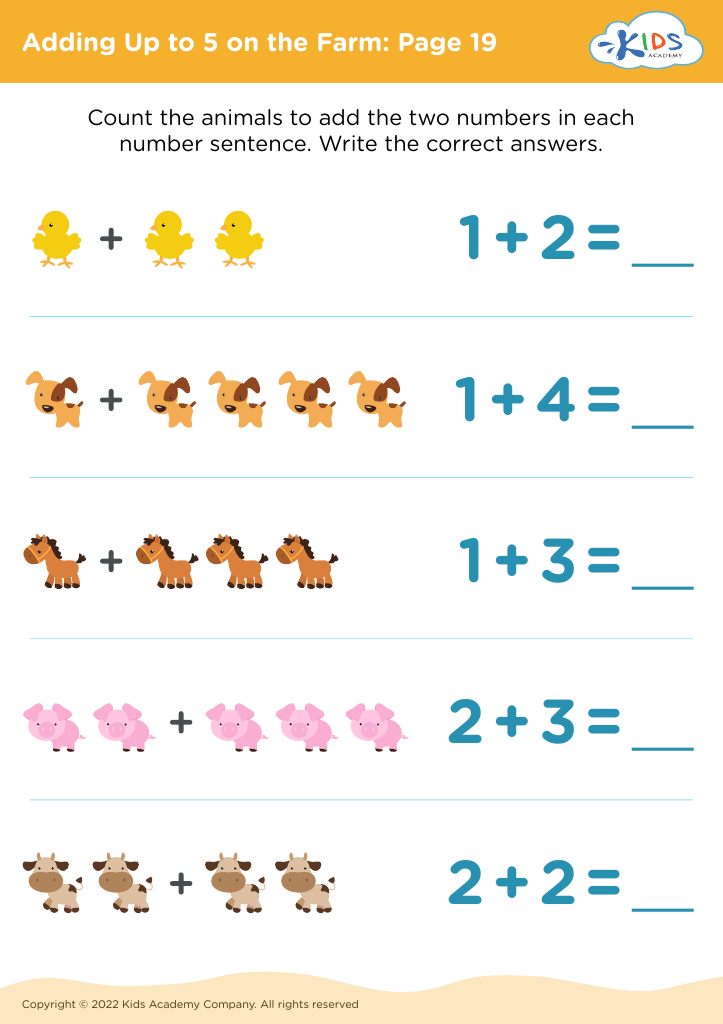
Adding Up to 5 on the Farm: Page 19
Worksheet
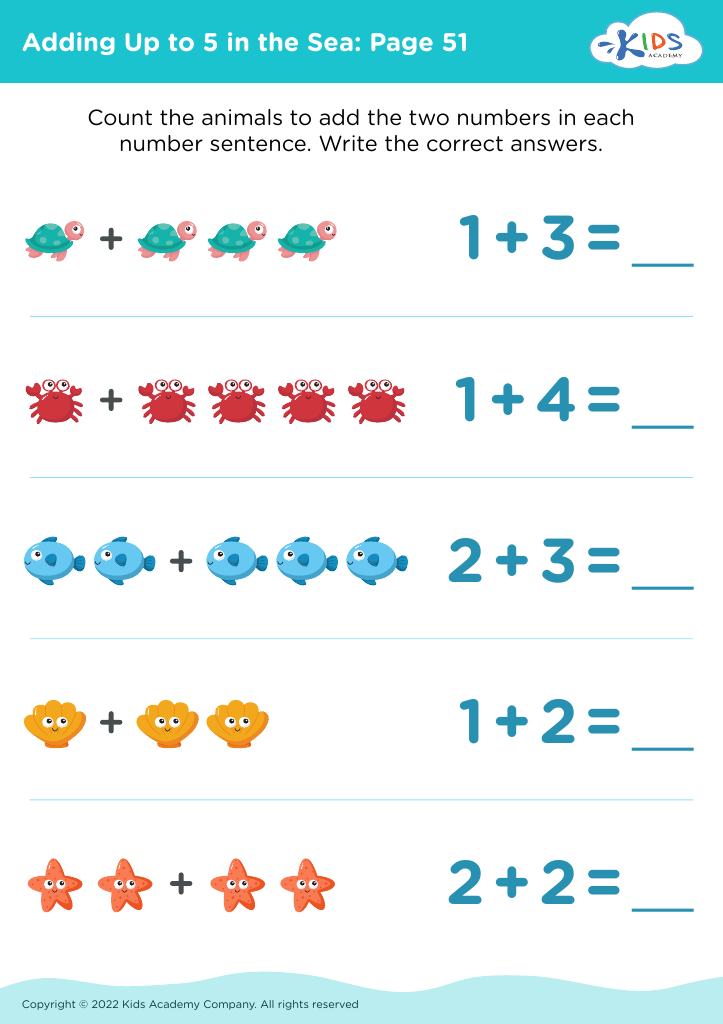
Adding Up to 5 in the Sea: Page 51
Worksheet
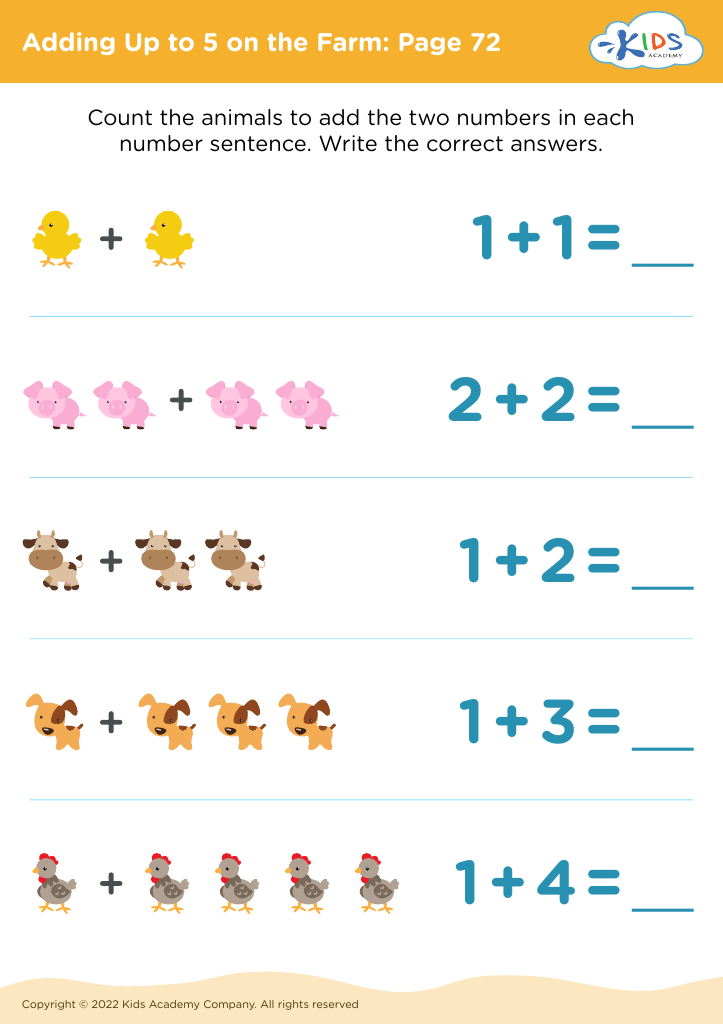
Adding Up to 5 on the Farm: Page 72
Worksheet


Basic addition skills are foundational for young learners, particularly for children aged 3-4. At this stage, children are developing essential cognitive skills, and introducing them to basic math concepts lays the groundwork for future learning. Understanding addition helps toddlers to grasp the concepts of quantity, comparison, and problem-solving. These skills are not only crucial in the realm of mathematics but also impact their critical thinking and reasoning abilities.

For parents and teachers, encouraging basic addition skills can enhance a child’s confidence and curiosity about math. Engaging in counting games or simple addition activities can turn learning into a fun and interactive experience. This early engagement plants a seed for STEM (Science, Technology, Engineering, and Mathematics) literacy, fostering a positive attitude towards math as they progress in their education.

Moreover, children who develop a strong grasp of addition skills are likely to perform better in later grades, easing their educational journey. By nurturing these skills early on, parents and teachers empower students to approach challenges with resilience and creativity, setting a solid foundation for lifelong learning. Ultimately, nurturing these skills encourages a love for learning, critical for achieving success in various areas of a child’s life.