Filters

79 filtered results

Clear all filters
Favorites
With answer key
Interactive

79 filtered results

Difficulty Level

Grade


Check out this FREE Trial Lesson on Math for age 3-4!

Classifying Objects and Count the Number of Objects in Each Category CCSS.Math.Content

Favorites
With answer key
Interactive
  • 3-4
  • Basic Math Skills
  • Math
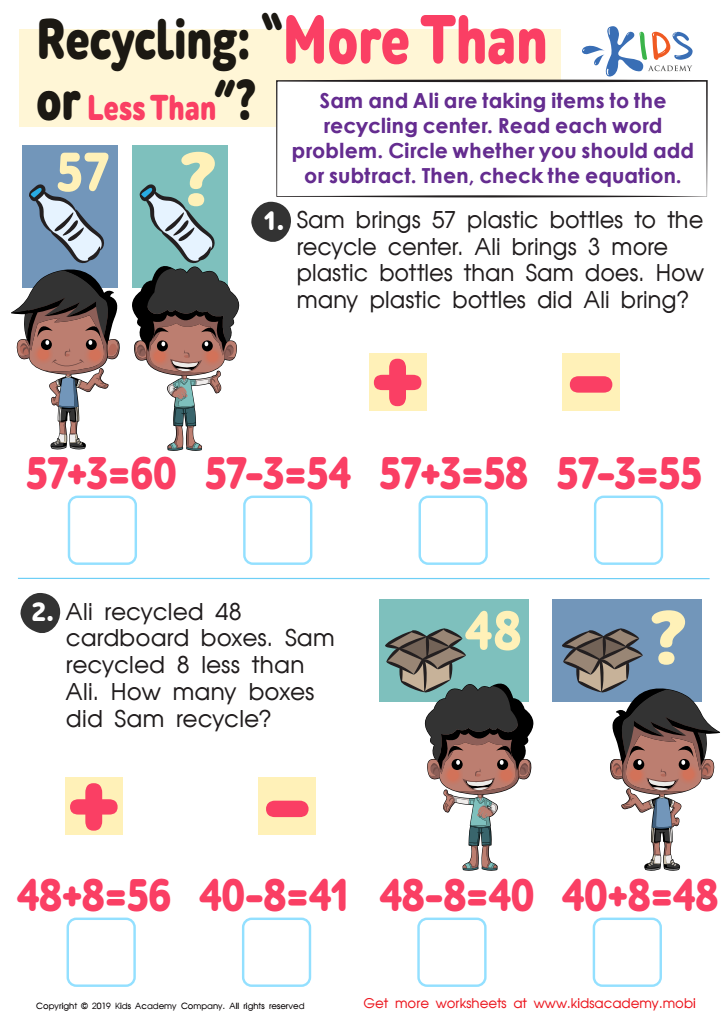
Recycling - More or Less Worksheet

Recycling - More or Less Worksheet

Your child can compare numbers and solve word problems with this free worksheet. Help them understand what's being asked as Sam and Ali take items to the recycling center. They can choose the correct equation to match the word problem and apply their skills in reading and pulling out the appropriate information.
Recycling - More or Less Worksheet
Worksheet
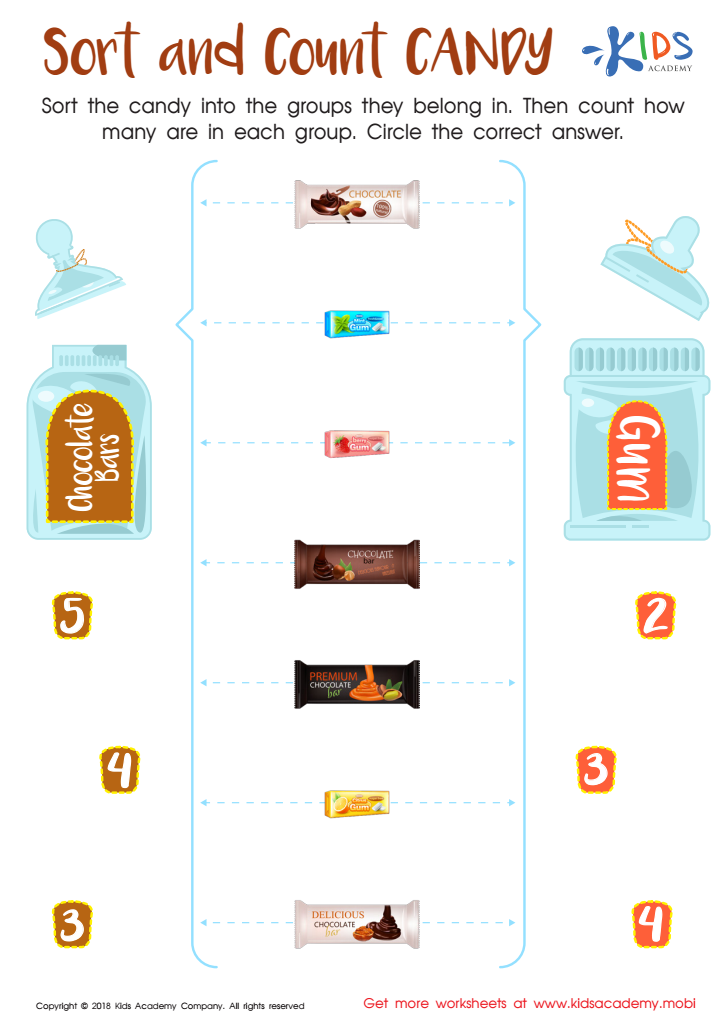
Sort and Count Candy Worksheet

Sort and Count Candy Worksheet

Sort chocolate and candy with your kids! Help them use recognizable items and pictures to sort, practice counting with one-to-one representation, and develop their fine motor skills with the traceable lines. Download this free worksheet to get started. Yum!
Sort and Count Candy Worksheet
Worksheet
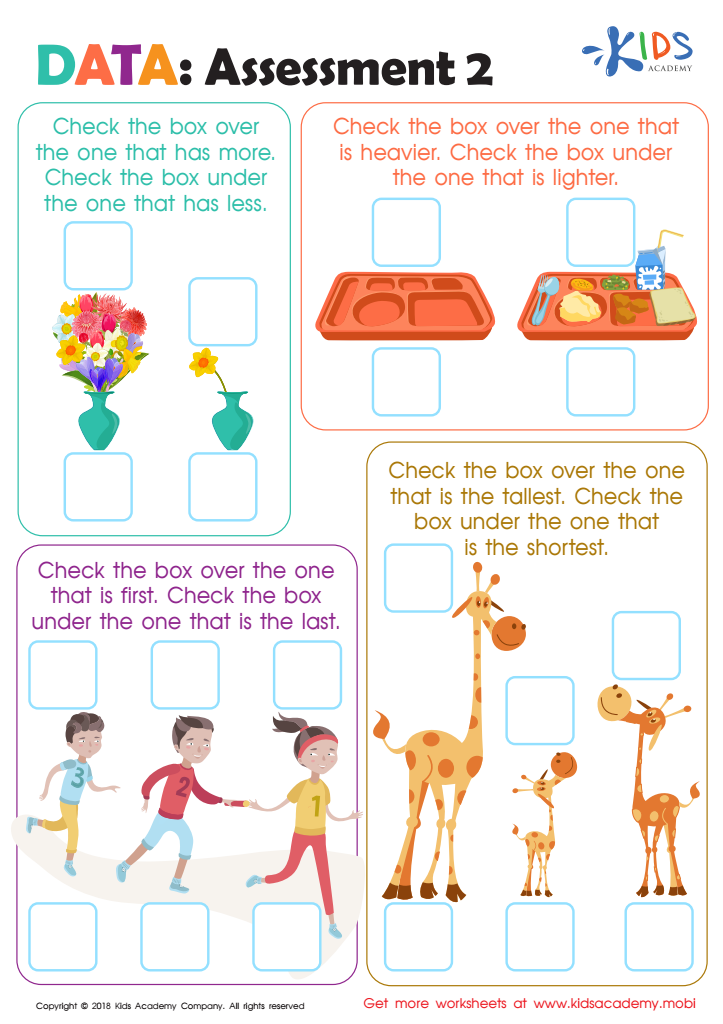
Data: Assessment 2 Worksheet
Data: Assessment 2 Worksheet

This printable worksheet tests students' understanding of words related to quantity and measurement, such as "more", "less", "heavy", "light", "first", "last", "tall", and "short". It helps children compare and contrast when solving measurement problems. Ideal for math classes, it encourages students to gain the essential skills needed in subjects like math, science, and reading.
Data: Assessment 2 Worksheet
Worksheet
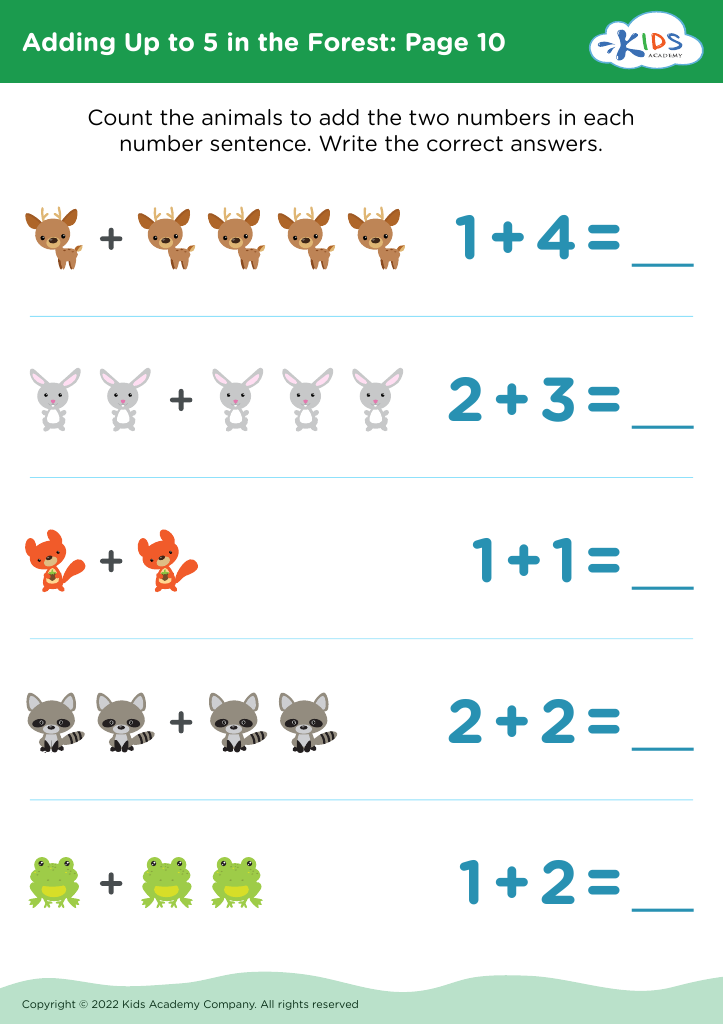
Adding Up to 5 in the Forest: Page 10
Worksheet
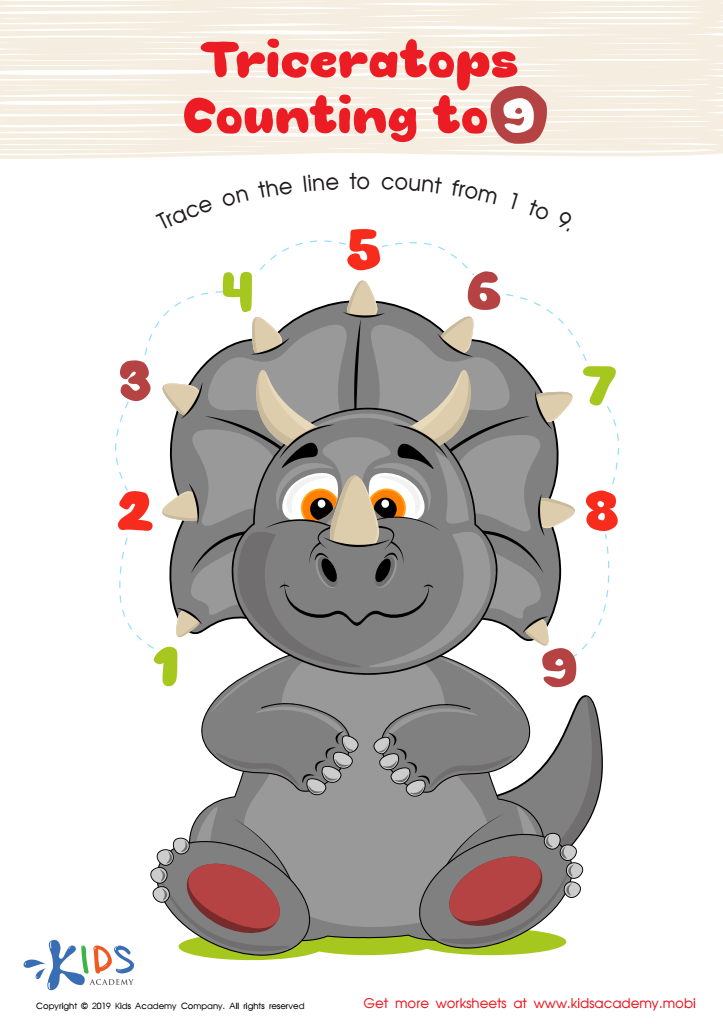
Triceratops Counting to 9 Worksheet
Triceratops Counting to 9 Worksheet

This little triceratops is here to help kids learn to count! Dinosaurs lived long before us and we've never seen one alive, but through research, we know a lot about them. Let the dinosaur help trace on the line from 1 to 9 for a fun counting practice.
Triceratops Counting to 9 Worksheet
Worksheet
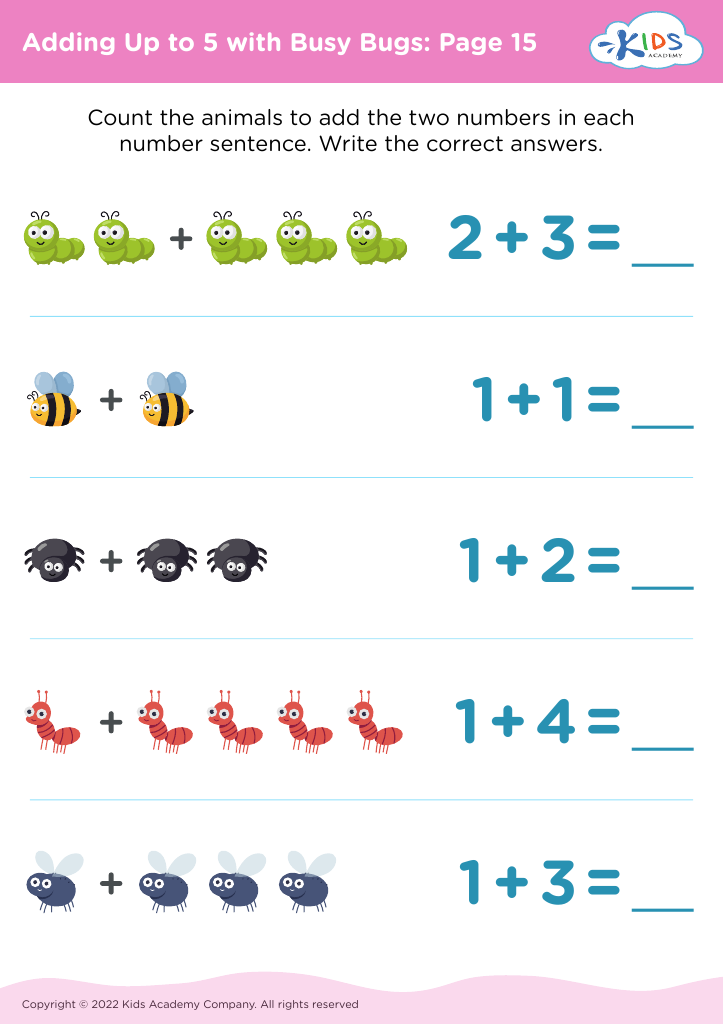
Adding Up to 5 with Busy Bugs: Page 15
Worksheet
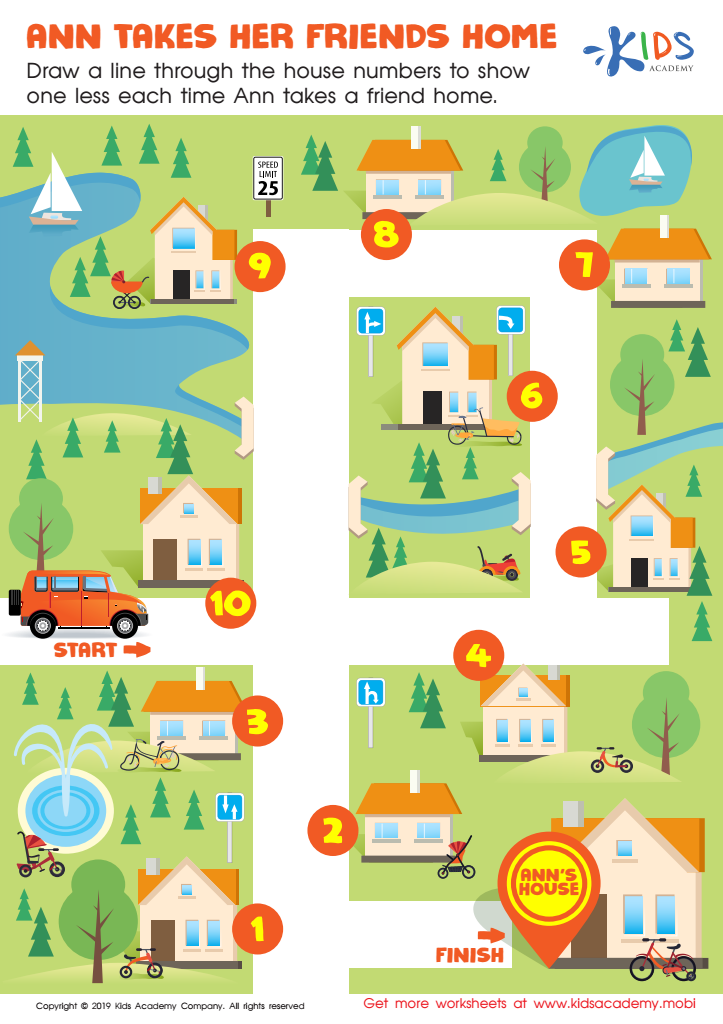
Ann Takes her Friends Home Worksheet


Ann Takes her Friends Home Worksheet

Get your kids to tell you what they enjoy doing with their friends in each other's homes. Then, encourage them to complete the worksheet. It shows Ann taking her friends to her house. Have them draw a line through the house numbers to show Ann taking one friend home at a time.
Ann Takes her Friends Home Worksheet

Worksheet


... 3 4

Basic math skills are foundational for a child’s overall cognitive development and future academic success, making it crucial for parents and teachers to prioritize this area in children aged 3-4 years. At this early age, children are naturally curious, and incorporating math into daily activities helps cultivate their love for learning. Skills like counting, recognizing shapes, and understanding patterns not only enhance their mathematical abilities but also boost critical thinking, problem-solving, and spatial awareness.

Furthermore, early exposure to math fosters language development as children learn to describe quantities, compare sizes, and discuss relationships. Engaging in playful math activities promotes social skills as children take turns and collaborate, making learning a shared experience.

Research indicates that strong early math skills are predictive of later academic achievement. By nurturing these competencies in preschool years, educators and parents empower children, building a strong foundation for later, more complex mathematical concepts. Encouraging basic math skills can significantly impact a child's confidence and attitude towards learning, helping them see math as an enjoyable experience rather than a daunting subject. Ultimately, investing in early math education benefits not only the child but also contributes positively to societal education levels.