Comparison Skills Math Worksheets for Ages 3-4
5 filtered results
-
From - To
Enhance your child’s critical thinking with our Comparison Skills Math Worksheets for Ages 3-4. Specially designed for young learners, these engaging worksheets help children practice comparing sizes, lengths, and quantities. By using fun, familiar objects and vibrant illustrations, kids quickly grasp foundational math concepts. With our printable resources, children will develop essential skills like comparison, reasoning, and pattern recognition, laying the groundwork for future mathematical success. Perfect for preschoolers, these worksheets make learning enjoyable and effective. Give your child a head start in math with our expertly crafted comparison skills worksheets today!
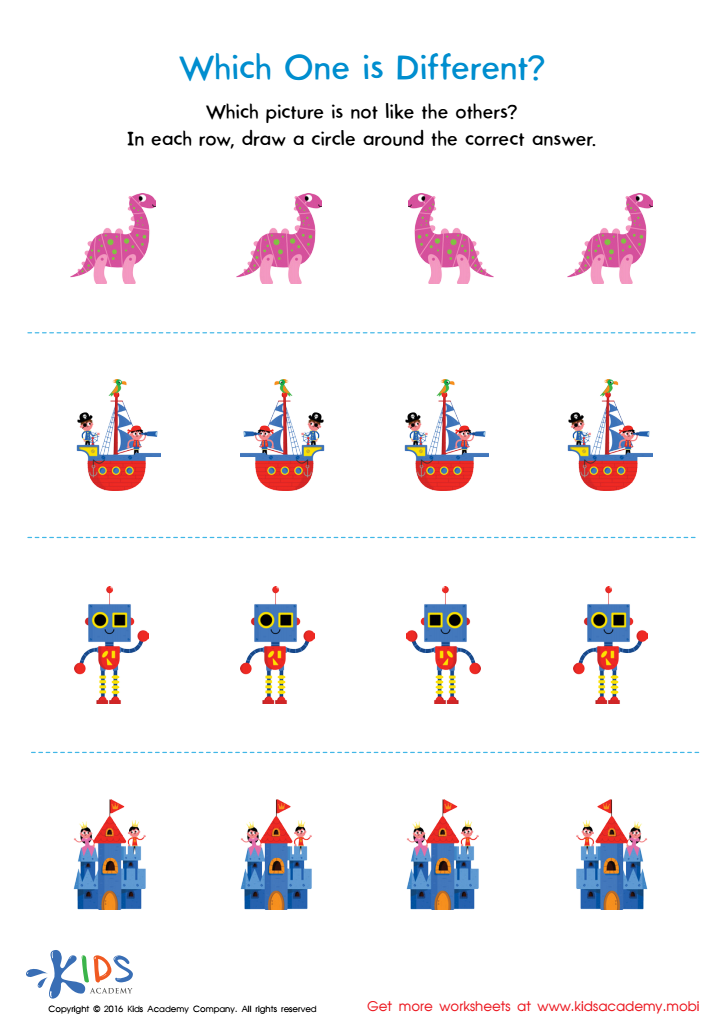
Which One Is Different Worksheet
 Assign to My Students
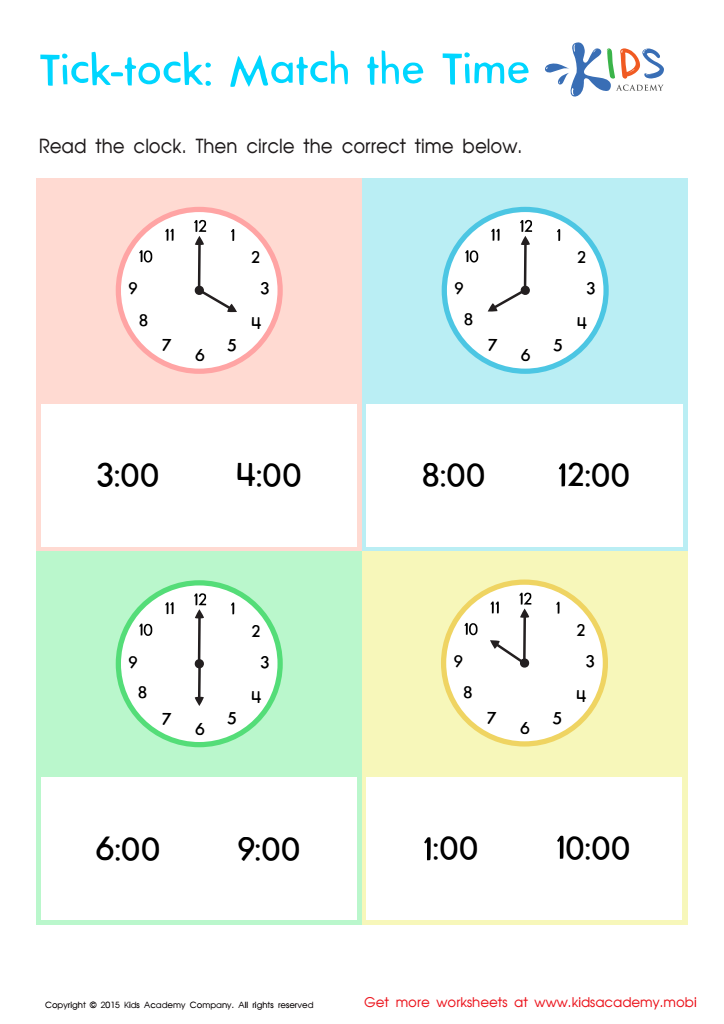
Telling The Time Worksheet: Part 4
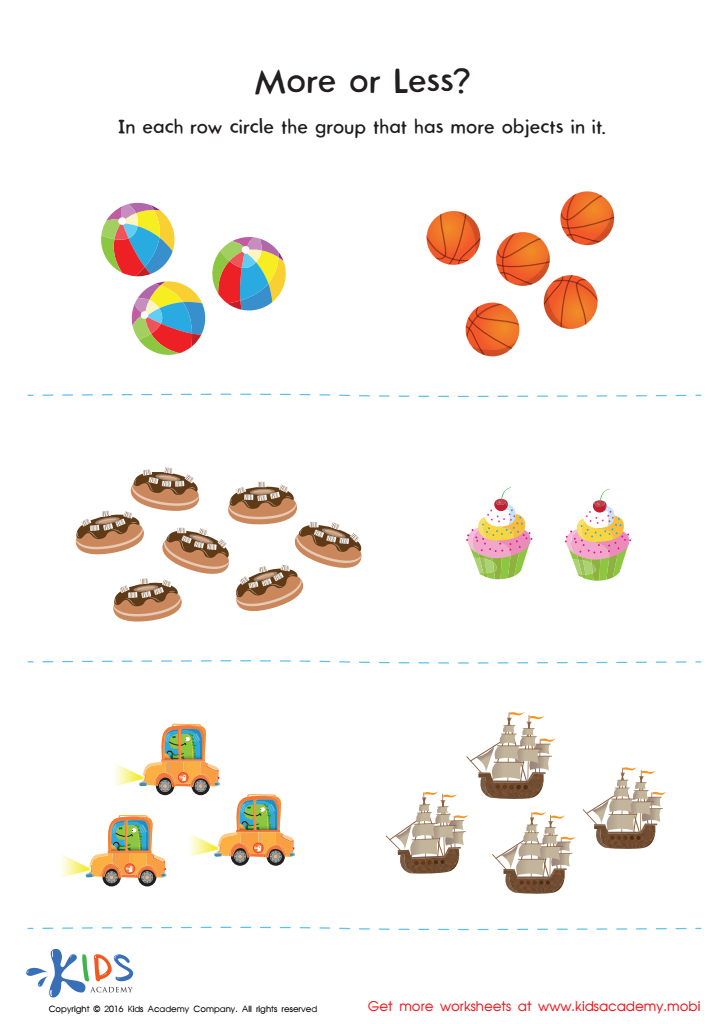
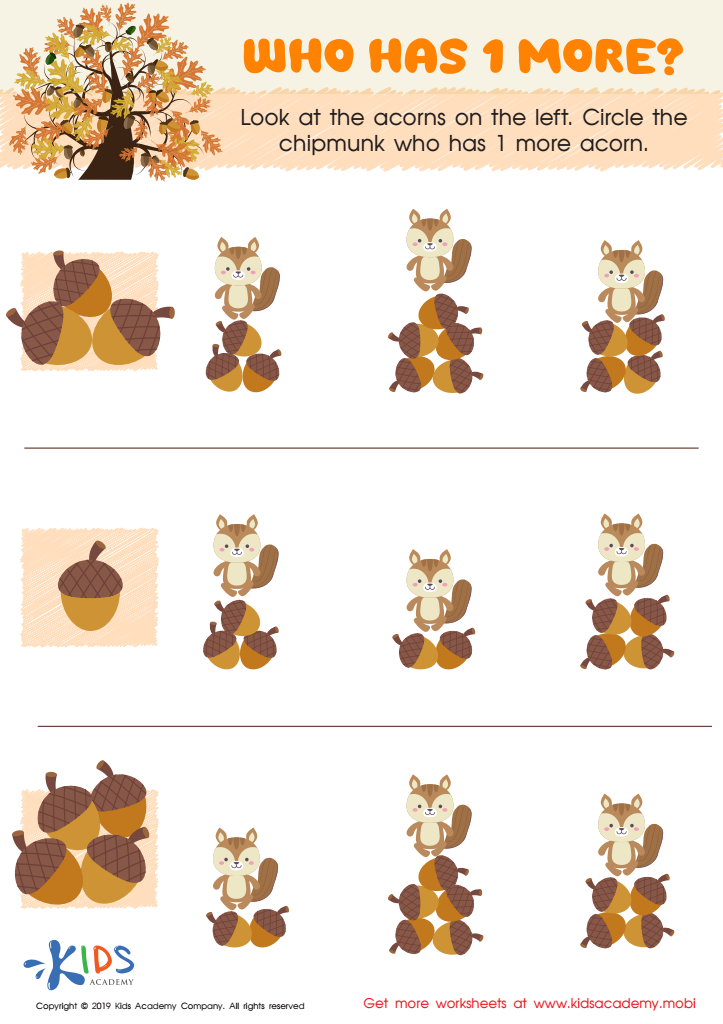
Who Has 1 More? Worksheet
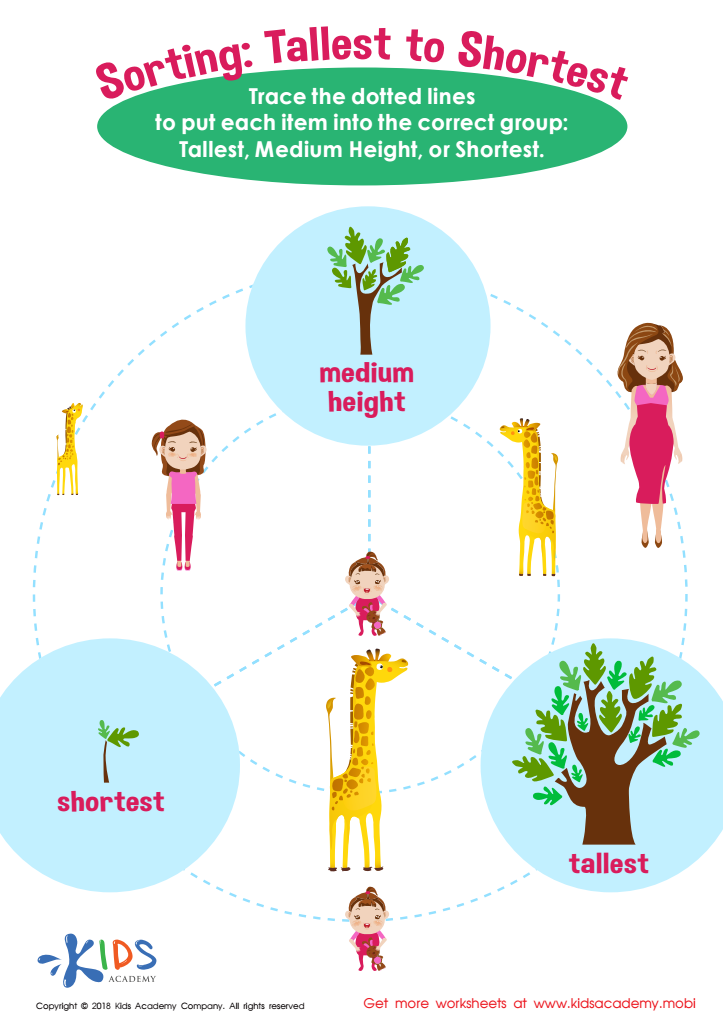
Sorting: Tallest to Shortest Worksheet



.jpg)




Comparison skills play a crucial role in early childhood math education for children aged 3-4. These skills involve the ability to evaluate and articulate differences and similarities between quantities, sizes, and other attributes. For young children, developing comparison skills offers multiple benefits that can set a strong foundation for future mathematical understanding.
Firstly, comparison skills sharpen critical thinking and problem-solving abilities. By mastering concepts like "more than," "less than," and "equal to," children learn to make informed decisions based on their observations and judgments. These skills are not only fundamental to mathematics but also vital for daily life.
Moreover, early comparison activities stimulate vocabulary development and comprehension. Terms like "bigger," "smaller," "taller," and "shorter" help children express themselves more clearly and accurately. This boosts their language skills, which is essential for effective communication in all subjects.
Additionally, grasping comparison concepts enhances social interactions. Children often compare objects or quantities during play and group activities, fostering cooperative learning and social development. They learn to take turns, share opinions, and respect differing viewpoints, which are key aspects of emotional intelligence.
In sum, nurturing comparison skills at ages 3-4 equips children with mathematical acuity, language proficiency, and social competence, paving the way for holistic development and academic success.








