Differentiating shapes Math Worksheets for Ages 3-4
3 filtered results
-
From - To
Explore our engaging "Differentiating Shapes Math Worksheets for Ages 3-4," designed to enhance early math skills through fun, interactive activities. These worksheets help young learners identify, compare, and differentiate various shapes, including circles, squares, triangles, and rectangles. With colorful illustrations and age-appropriate exercises, children will develop essential cognitive abilities and improve their shape recognition in a playful environment. Each worksheet targets foundational math skills while encouraging creativity and critical thinking. Ideal for both classroom and home use, our resources foster a love for learning and set the stage for future academic success. Download our worksheets today and watch your child's confidence grow!
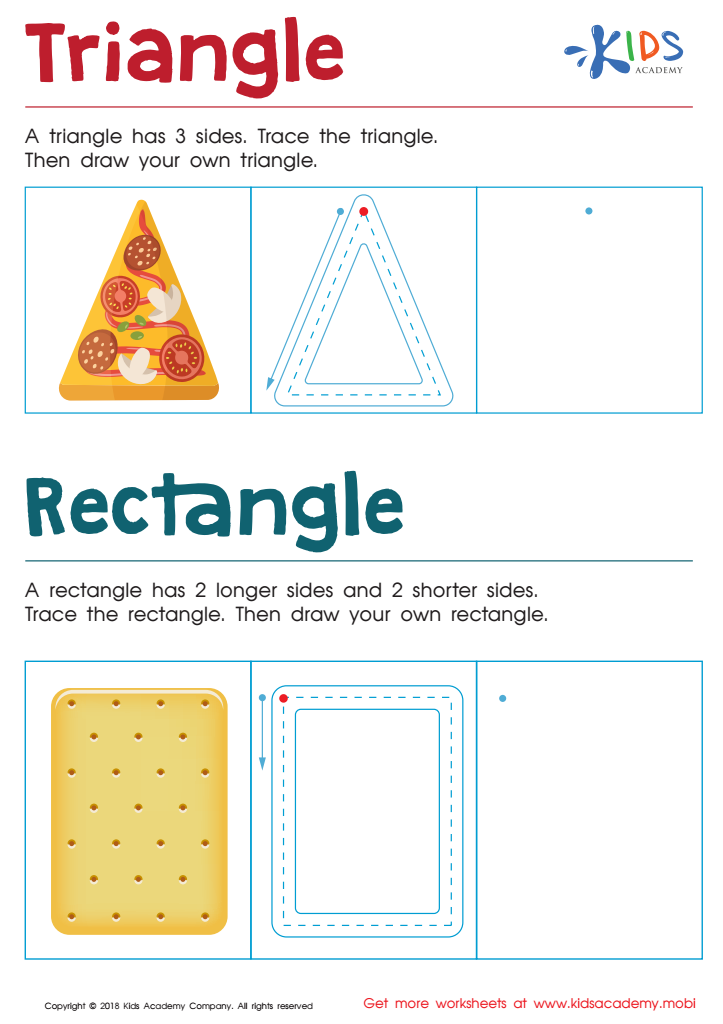
Triangle Rectangle Worksheet
 Assign to My Students
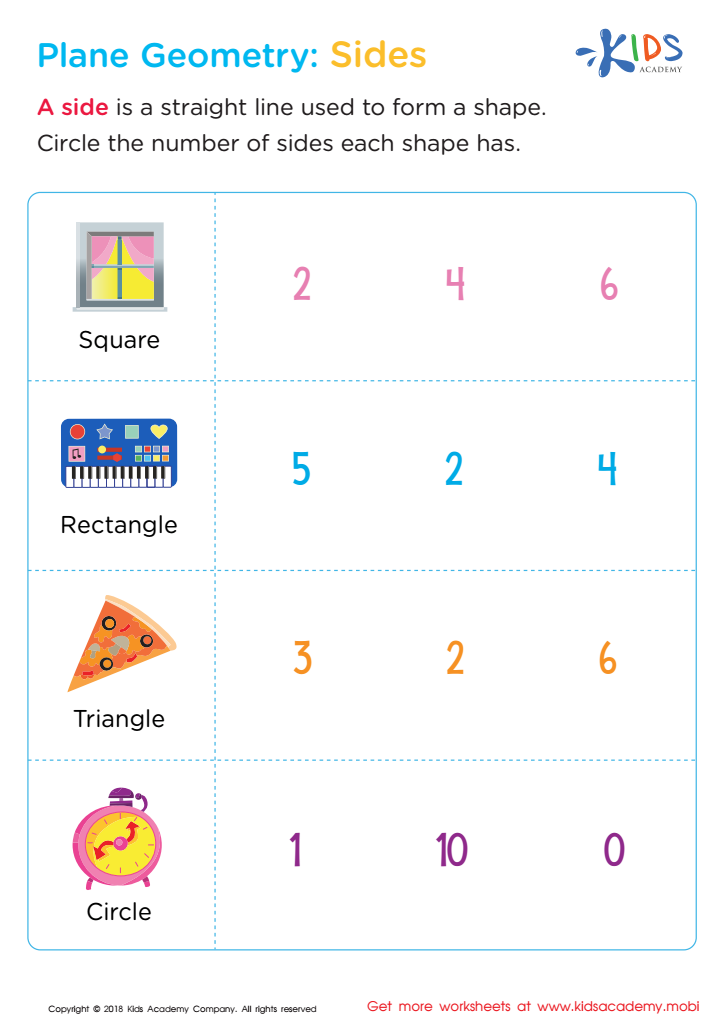
Plane Geometry: Sides Worksheet
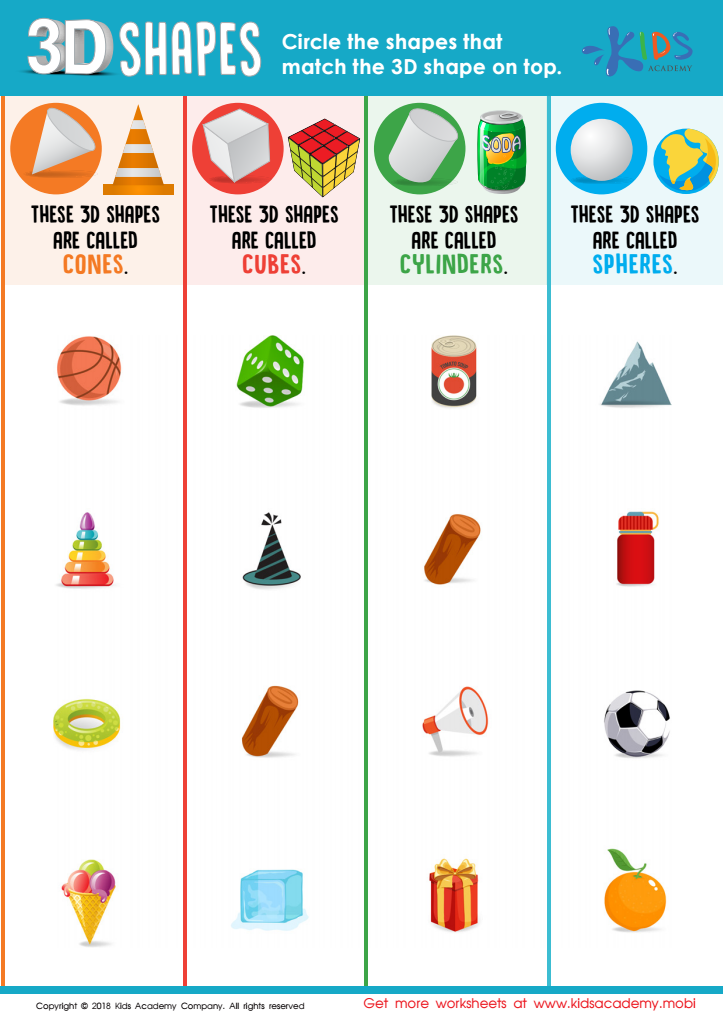
3D Shapes Worksheet







Differentiating shapes for children aged 3-4 is crucial in their early mathematical development and overall cognitive growth. At this stage, children are naturally curious and enthusiastic about learning. Introducing them to different shapes helps build foundational skills in geometry, spatial awareness, and problem-solving.
Firstly, recognizing and naming shapes, such as circles, squares, and triangles, enhances vocabulary and stimulates language development. Engaging children in shape-related activities fosters critical thinking as they categorize and differentiate shapes based on characteristics like size or color. This critical foundation lays the groundwork for more complex mathematical concepts in the future.
Moreover, shape differentiation encourages hands-on learning through various playful activities, like sorting blocks or drawing shapes, which can enhance fine motor skills. This active engagement strengthens memory retention and cognitive connections. Teachers and parents, as guides in this learning journey, should demonstrate enthusiasm and provide meaningful, interactive experiences that make learning enjoyable, promoting confidence.
Lastly, understanding shapes contributes to real-world applications, from recognizing them in everyday objects to being able to navigate spaces efficiently. By nurturing this foundational skill now, parents and teachers invest in their children’s future academic success and help them develop a strong appreciation for math.








