
Enhance counting skills Math Worksheets for Ages 3-4
3 filtered results
Difficulty Level
Grade
Age
-
From - To
Subject
Activity
Standards
Boost your little one's early math abilities with our "Enhance Counting Skills Math Worksheets for Ages 3-4"! Designed specifically for toddlers, these engaging activities combine fun and learning to help kids master counting and number recognition. Each worksheet is carefully crafted to provide ample practice with numbers, patterns, and basic arithmetic, fostering a strong mathematical foundation. KidsAcademy's visually appealing and interactive exercises make learning enjoyable and rewarding, encouraging a lifelong love for math. Perfect for preschool and at-home learners, these worksheets will seamlessly integrate into your child's daily routine. Start enhancing your child's counting skills today!
Favorites
With answer key
Interactive
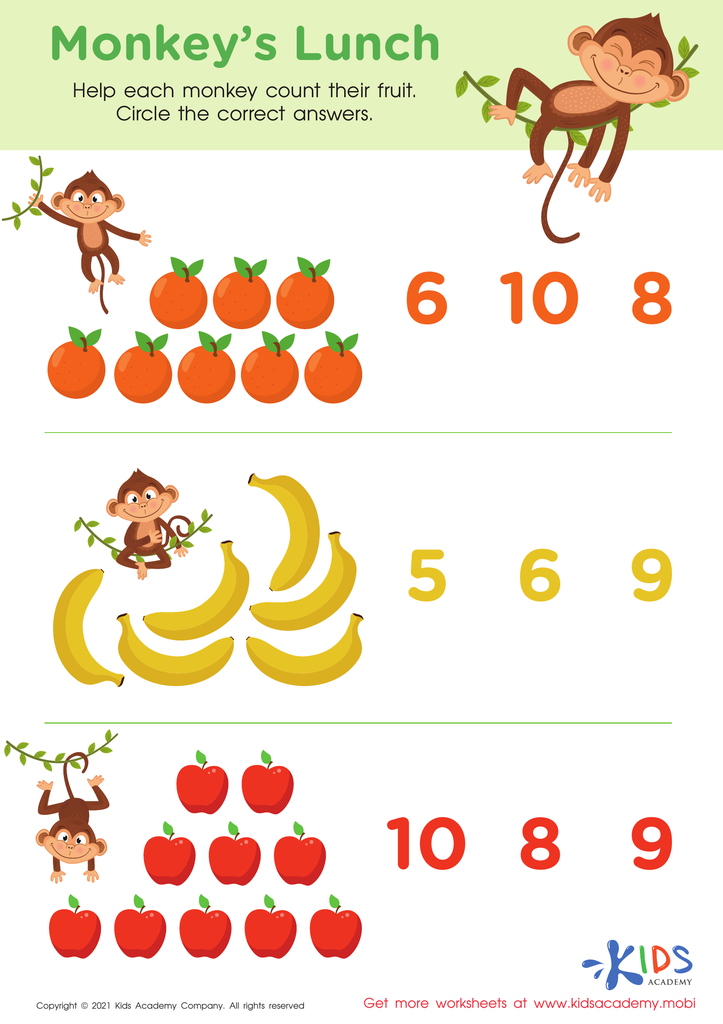
Monkey’s Lunch Worksheet
Download this free worksheet to help your kindergartner perfect their counting skills! Have your child circle the correct answers and count the fruits for the monkeys. It'll seem like fun, but your child is really learning how to count, group objects, and identify numbers.
Monkey’s Lunch Worksheet
Worksheet
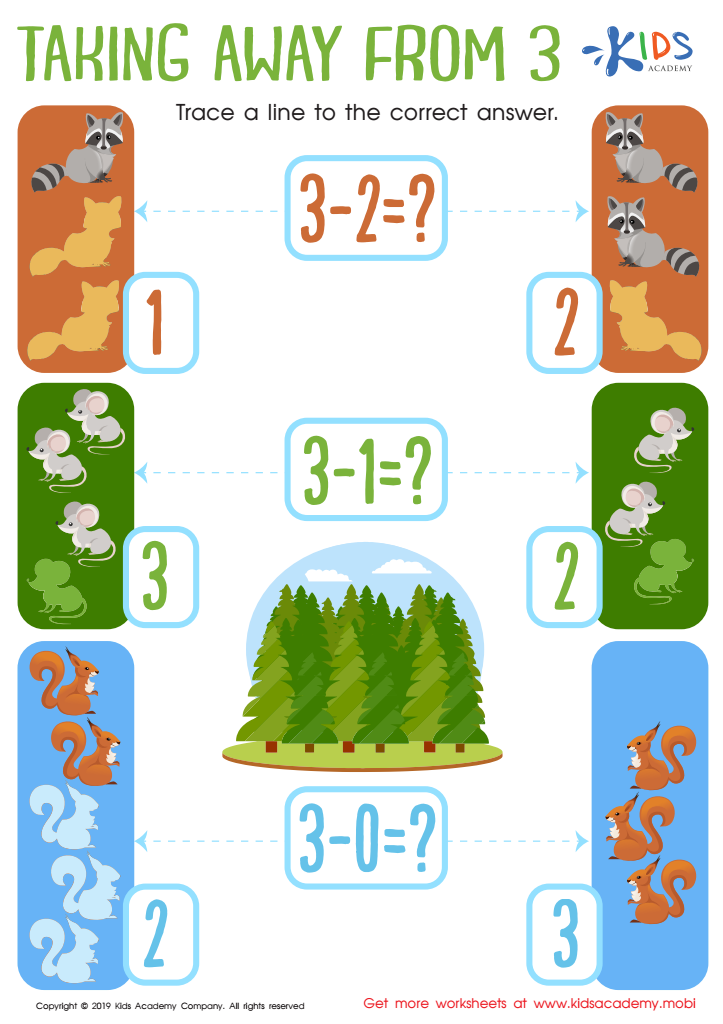
Taking Away From 3 Worksheet
Help your students learn equations and math easily by using this tracing worksheet. It has three different equations that they can count and solve, then trace a line to the correct answer. This will make the learning process fun and exciting.
 Assign to My Students
Taking Away From 3 Worksheet
Worksheet
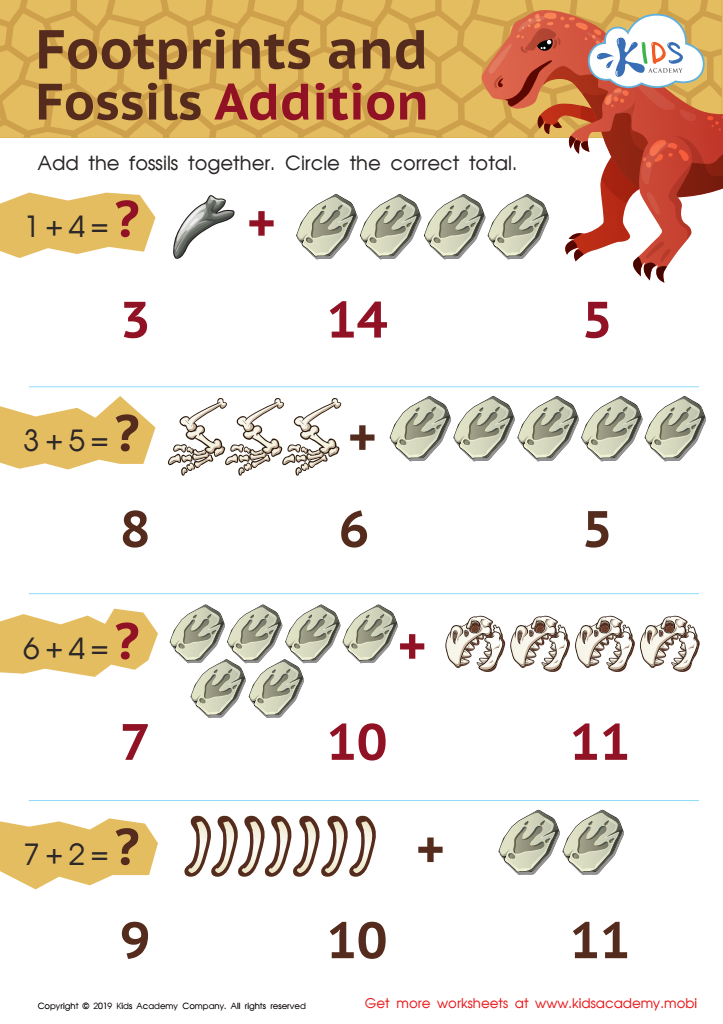
Footprints and Fossils Addition Worksheet
Show your students that addition and subtraction is easy with the right guidance and exercises. Use this worksheet to help them practice by adding fossils and circling the correct total of each equation. Your students will soon see that addition and subtraction is not so intimidating after all.
Footprints and Fossils Addition Worksheet
Worksheet
Join Kids Academy for Free
Who is primarily going to use this learning content?








Counting skills are foundational for young children’s math development and have a broad impact on cognitive and social skills. For children aged 3-4, enhancing these skills is crucial because it sets the stage for more complex mathematical concepts they will encounter in later years.
First, counting is not just about reciting numbers; it also involves understanding quantity, order, and one-to-one correspondence. When children grasp these concepts early on, they develop a stronger number sense. This foundational knowledge makes learning addition, subtraction, and other arithmetic operations easier and more intuitive as they grow.
Secondly, early math skills are often predictive of later academic success. Research shows that children who enter kindergarten with good counting skills typically perform better in math throughout their school years. By engaging in counting activities, they are also exposed to the language of math, including terms like “more,” “less,” “equal,” and other comparative and relational vocabulary.
Moreover, improving counting skills fosters critical thinking and problem-solving abilities. When children count objects during play, they practice making predictions, estimates, and decisions, all of which are essential cognitive skills.
Parents and teachers who prioritize counting activities at this age provide children with a supportive framework for learning. Simple activities like counting snacks, steps, or toys can make learning fun and relevant to their daily lives, thereby fostering a lifelong love for math.








