Money recognition Math Worksheets for Ages 3-4
6 filtered results
-
From - To
Discover our engaging Money Recognition Math Worksheets, specially designed for children aged 3-4! These worksheets help young learners explore and recognize different coins and their values through fun activities and colorful illustrations. With interactive exercises, kids will develop essential math skills while gaining confidence in their understanding of money. Our age-appropriate resources encourage hands-on learning, promoting cognitive development and literacy in early childhood education. Perfect for teachers and parents alike, these worksheets are a valuable tool to aid your child's financial literacy journey. Equip your little ones with the knowledge they need to thrive in a world of currency—start their money recognition adventure today!
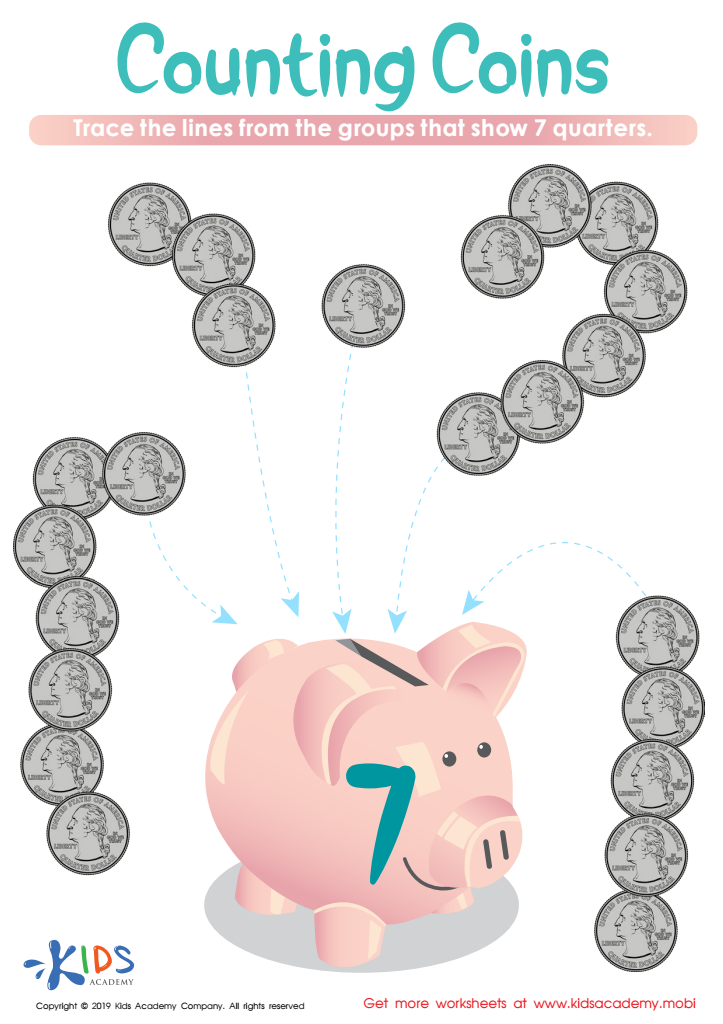
Counting Coins Worksheet
 Assign to My Students
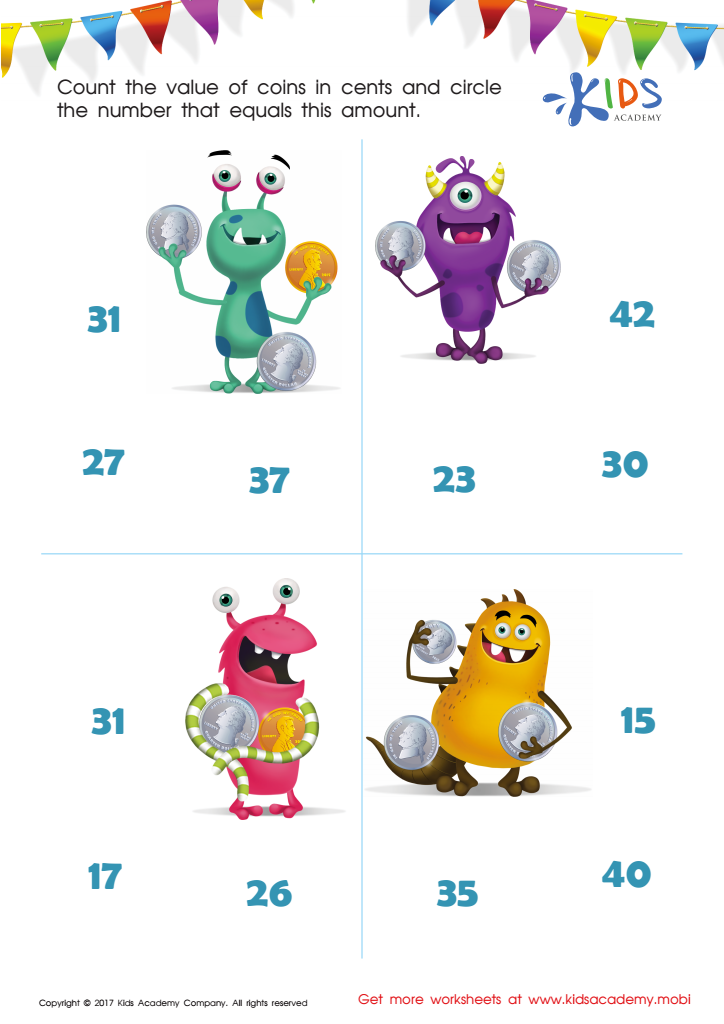
How Many Coins Money Worksheet
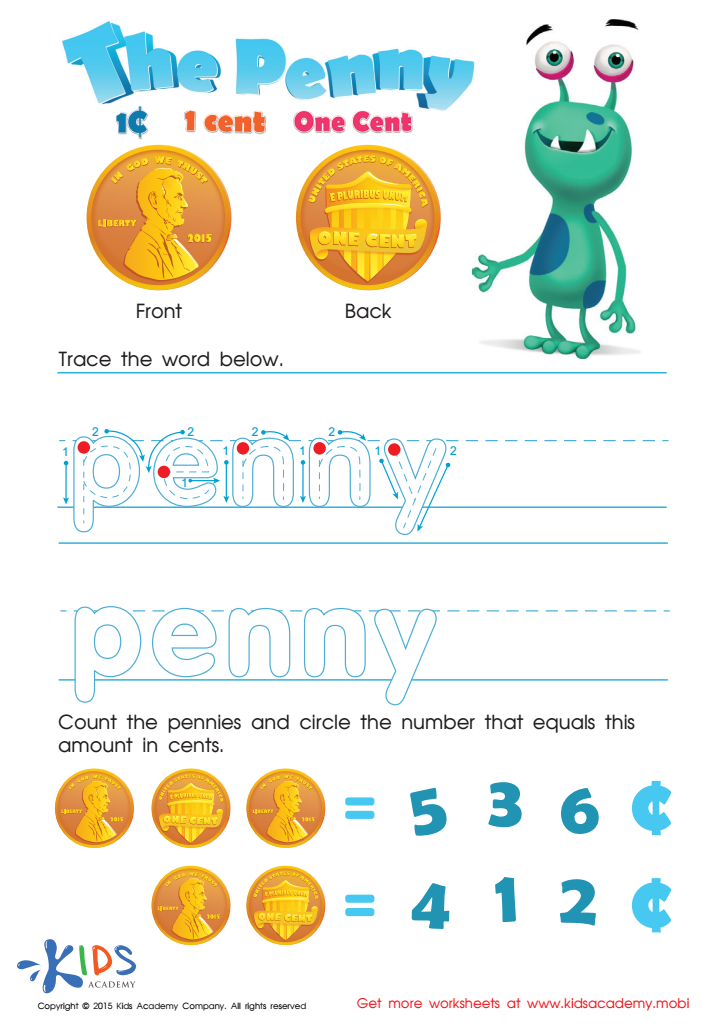
One Cent or the Penny Money Worksheet
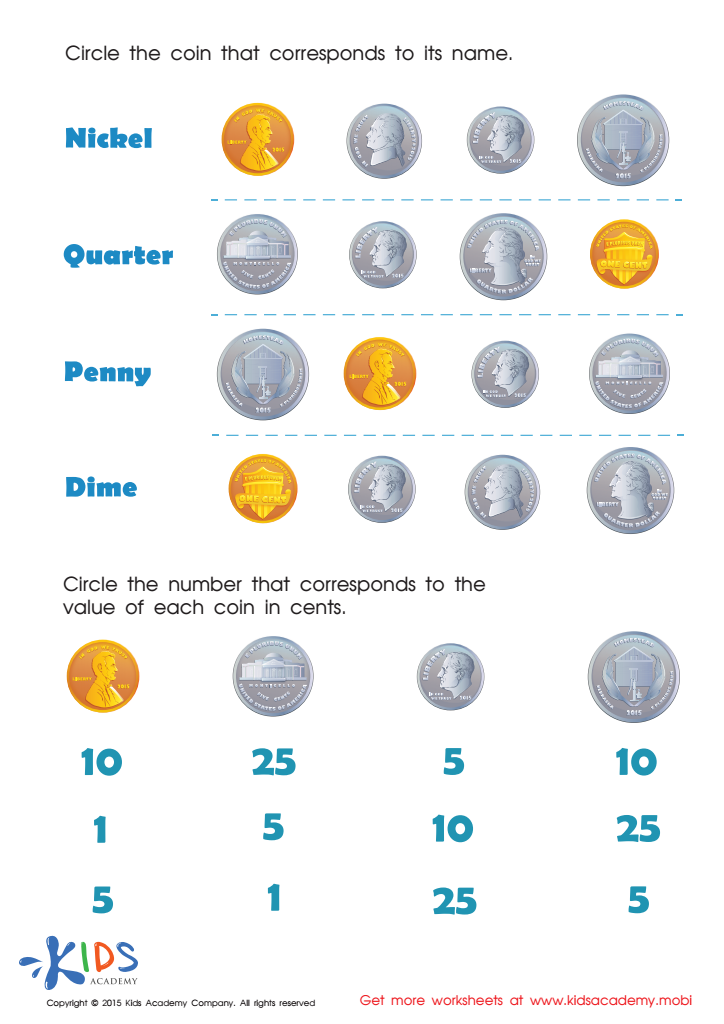
Coin Names and Values Money Worksheet
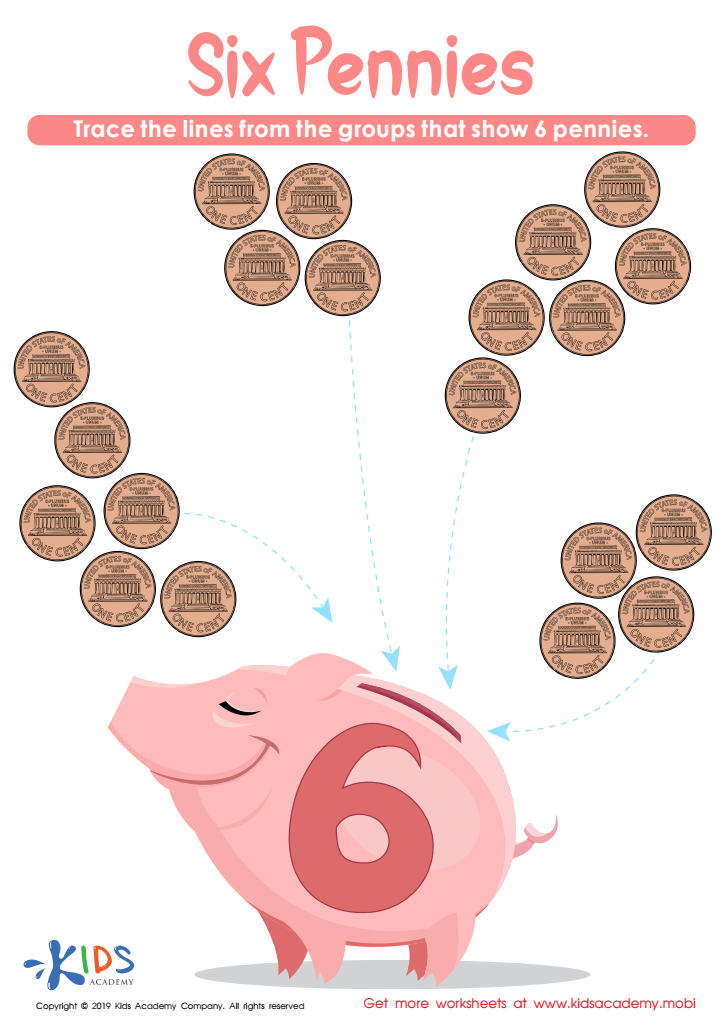
Six Pennies Worksheet
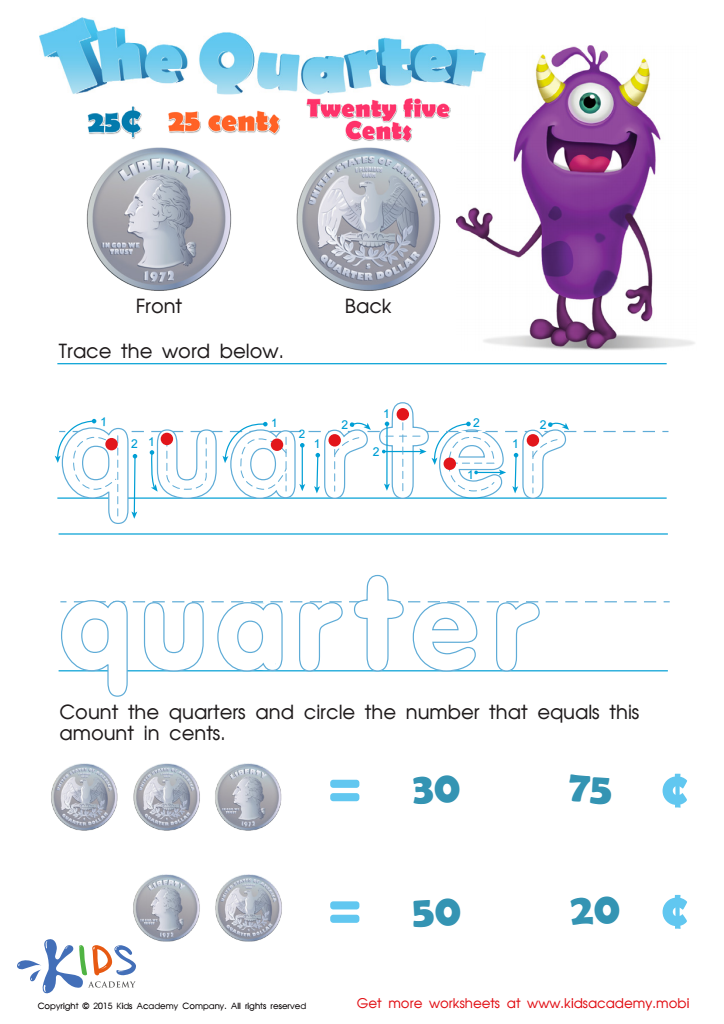
Twenty Five Cents or the Quarter Money Worksheet







Money recognition is a vital skill for children aged 3-4, laying the groundwork for future financial literacy. Teaching young children to recognize and identify money helps them understand its value and functions in everyday transactions. At this age, children are naturally curious and eager to learn, making it an ideal time to introduce basic concepts of money through playful, engaging activities.
Parents and teachers should prioritize money recognition because it encourages essential cognitive skills, such as counting and sorting. Simple games, such as playing shopkeeper or using toy coins, enable children to practice money handling and begin to understand concepts of exchange. This promotes critical thinking and problem-solving skills as they navigate purchasing decisions.
Moreover, early comprehension of money nurtures responsible financial habits. Children who familiarize themselves with money early on are more equipped to grasp budgeting and saving as they grow older. This foundational knowledge can lead to more profound financial understanding in later years, reducing the risk of financial mismanagement in adulthood.
Ultimately, investing time in teaching money recognition fosters confidence in children’s capabilities, equipping them with life skills they will use as they navigate the world around them. It’s an essential part of holistic early education.








