
Underwater animal identification Math Worksheets for Ages 3-4
3 filtered results
Difficulty Level
Grade
Age
-
From - To
Subject
Activity
Standards
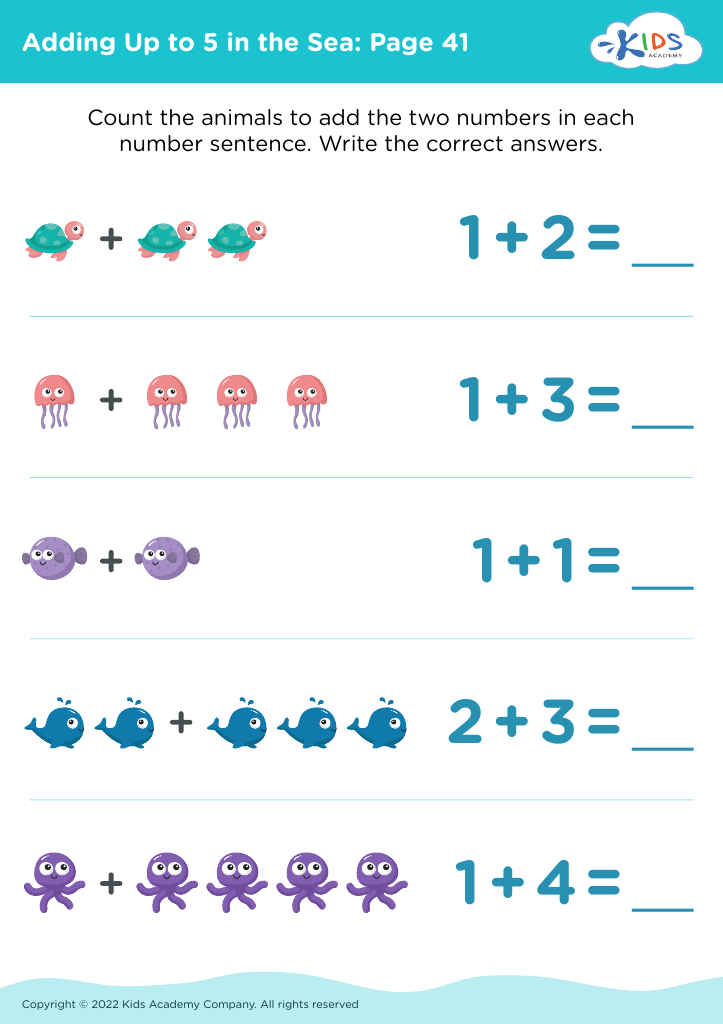
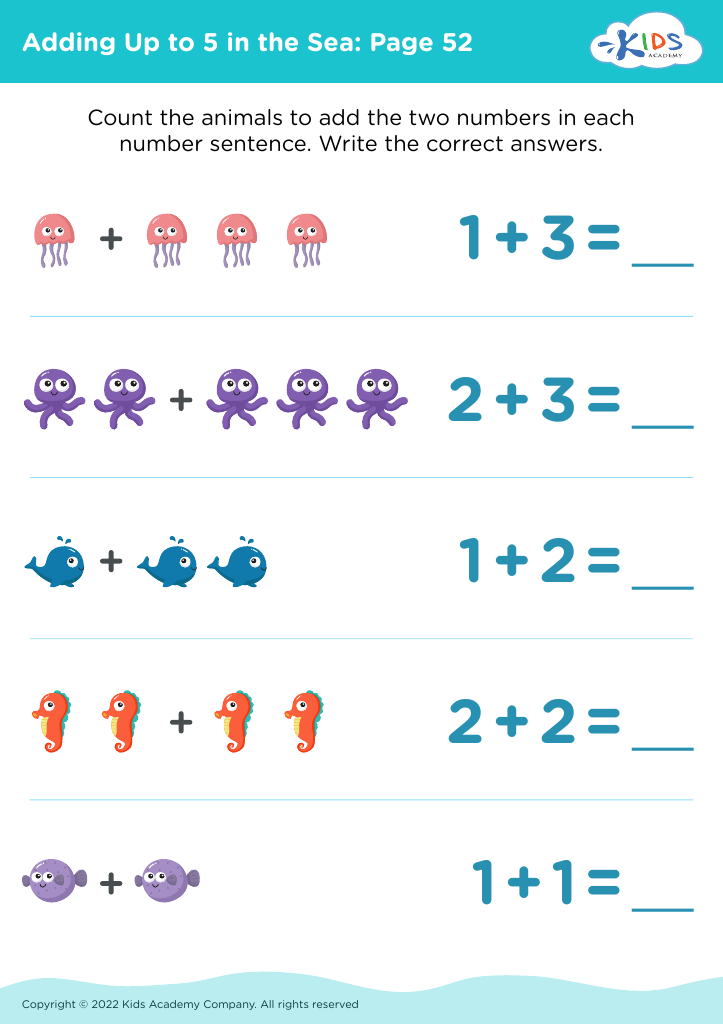
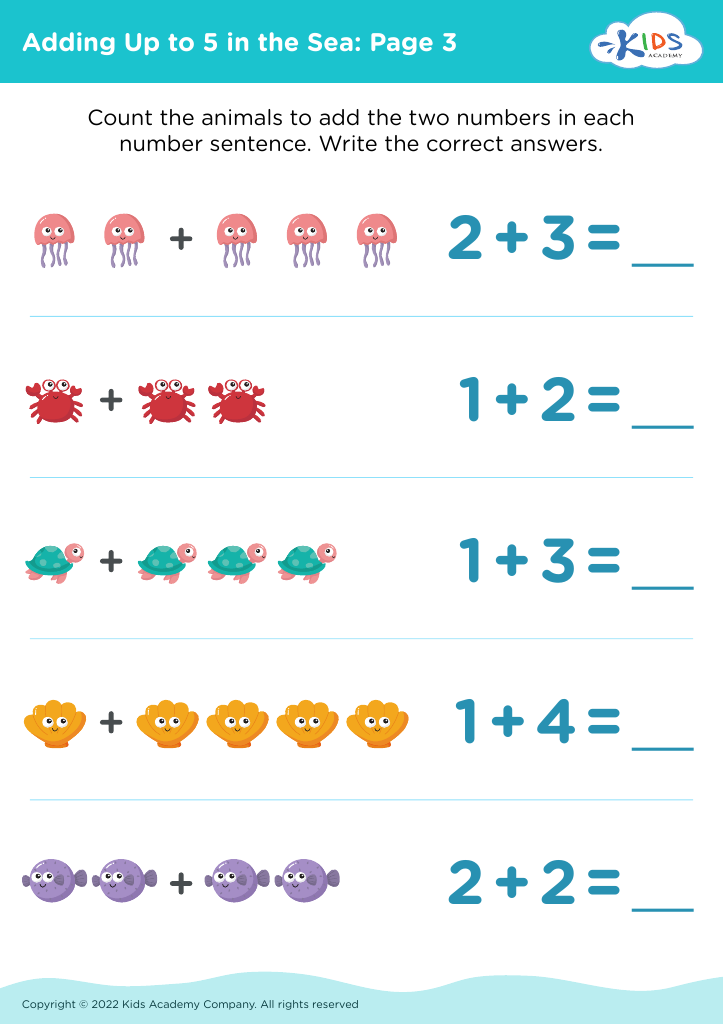
Dive into the exciting world of underwater animals with our engaging Math Worksheets designed for ages 3-4! These worksheets offer a fun and interactive way for young learners to develop essential math skills while exploring fascinating marine life. Children will enjoy identifying various underwater animals, enhancing their visual recognition, and improving their counting abilities through colorful illustrations and interactive activities. Perfect for preschool classrooms or at-home learning, our worksheets provide a creative blend of math learning and environmental awareness. Make learning fun and memorable as your little ones embark on an underwater adventure while building a strong foundation in math!
Favorites
With answer key
Interactive
Join Kids Academy for Free
Who is primarily going to use this learning content?







Introducing underwater animal identification math to children aged 3-4 is essential for several reasons. First, it promotes early numeracy skills, encouraging young learners to count, compare, and categorize various underwater species, ultimately laying a foundation for mathematical understanding. Learning to identify and classify animals also nurtures cognitive development, fostering critical thinking as children begin to recognize patterns and make connections between different creatures.
Moreover, incorporating themes of underwater animals engages children's natural curiosity about the world around them. This engagement can significantly enhance their observational skills and promote exploratory learning. Parents and teachers can harness this interest to create a rich, interactive learning environment through hands-on activities, such as sorting pictures of sea creatures or counting items inspired by aquatic life.
Additionally, exposure to underwater ecosystems nurtures a sense of environmental stewardship from a young age. When children learn about ocean life, they become more aware of the importance of preserving these habitats, cultivating compassion and responsibility toward nature.
Ultimately, combining playful learning with math as they explore underwater animals allows children to develop multiple skills simultaneously, making their educational journey both enjoyable and meaningful. Parents and teachers should embrace this holistic approach to education for fostering competent and caring individuals.








