
Categorization skills Numbers 0–10 Worksheets for Ages 3-4
3 filtered results
Difficulty Level
Grade
Age
-
From - To
Subject
Activity
Standards
Enhance your child's early math abilities with our "Categorization Skills: Numbers 0–10 Worksheets" designed for ages 3-4. These engaging worksheets provide a fun and educational way to help young learners recognize, compare, and categorize numbers from 0 to 10. Through various interactive activities, children will build a strong foundation in number recognition and critical thinking, essential for future learning. Perfect for preschool and kindergarten prep, these printables are an excellent resource to support your child's mathematical development at home or in the classroom. Encourage curiosity and a love for numbers with our expertly crafted worksheets.
Favorites
With answer key
Interactive
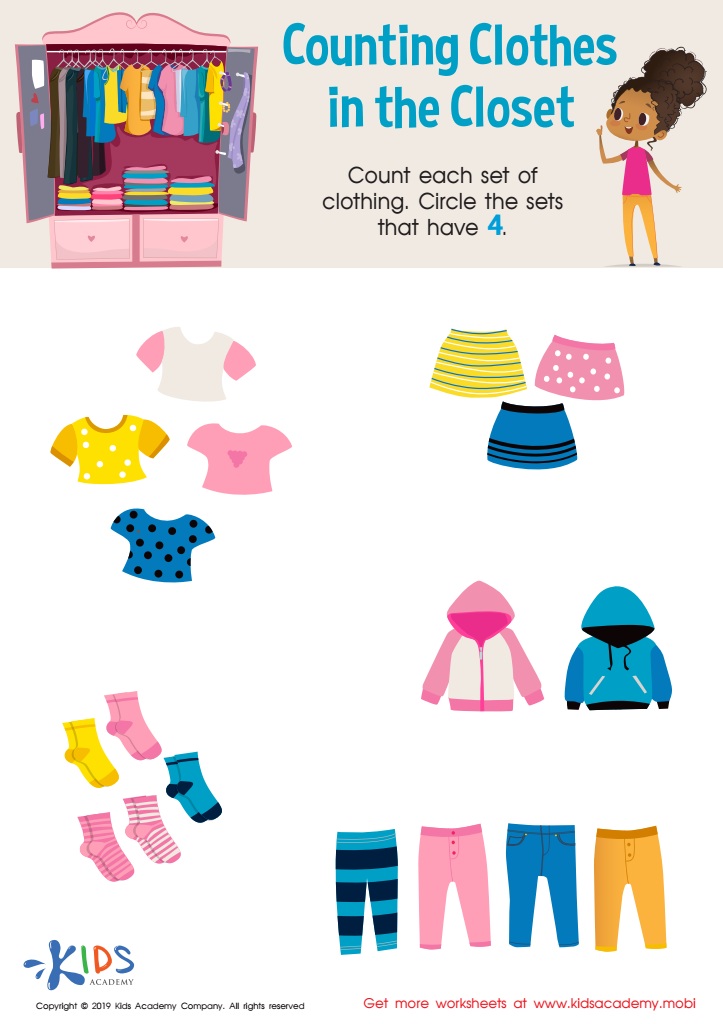
Counting Clothes Worksheet
Help your kids become better counters with fun exercises and objects they can relate to. Print out this worksheet and assist your kid in counting 5 sets of clothing. Have them circle the sets that have 4 so they can master counting small numbers. Strengthen their math skills with your help.
 Assign to My Students
Counting Clothes Worksheet
Worksheet
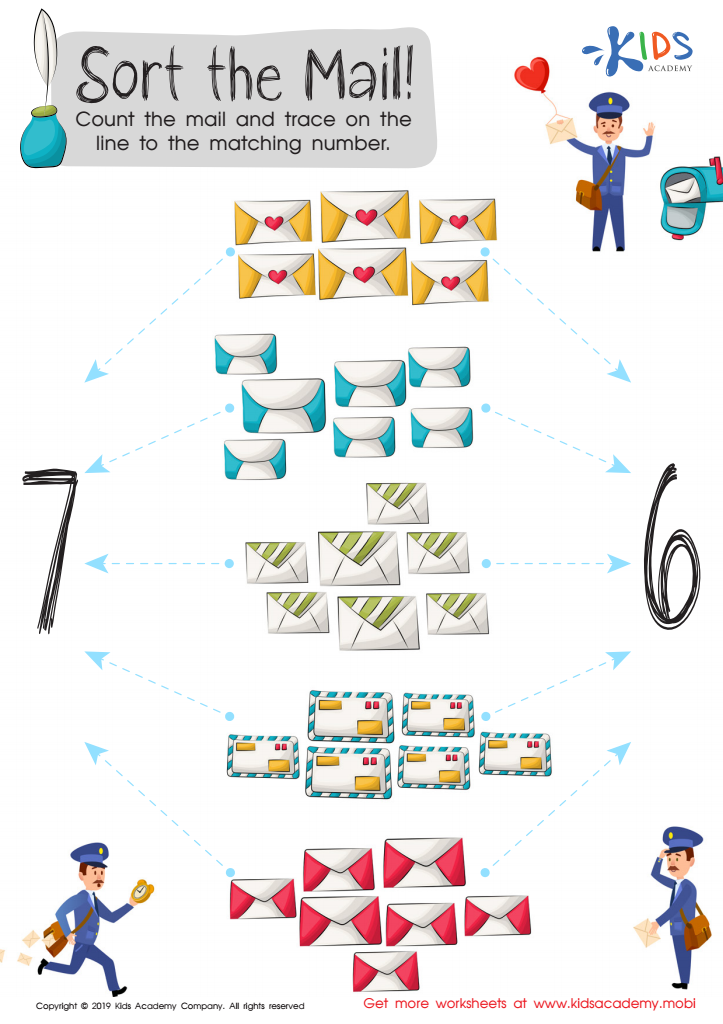
Sort the Mail Worksheet
Kids can learn number sense with one-to-one representation! This worksheet helps them connect groups of letters with the correct numbers by tracing the lines. They'll count and decide whether each group has 6 or 7 envelopes. This exercise gives children a better understanding of numerical representation.
Sort the Mail Worksheet
Worksheet
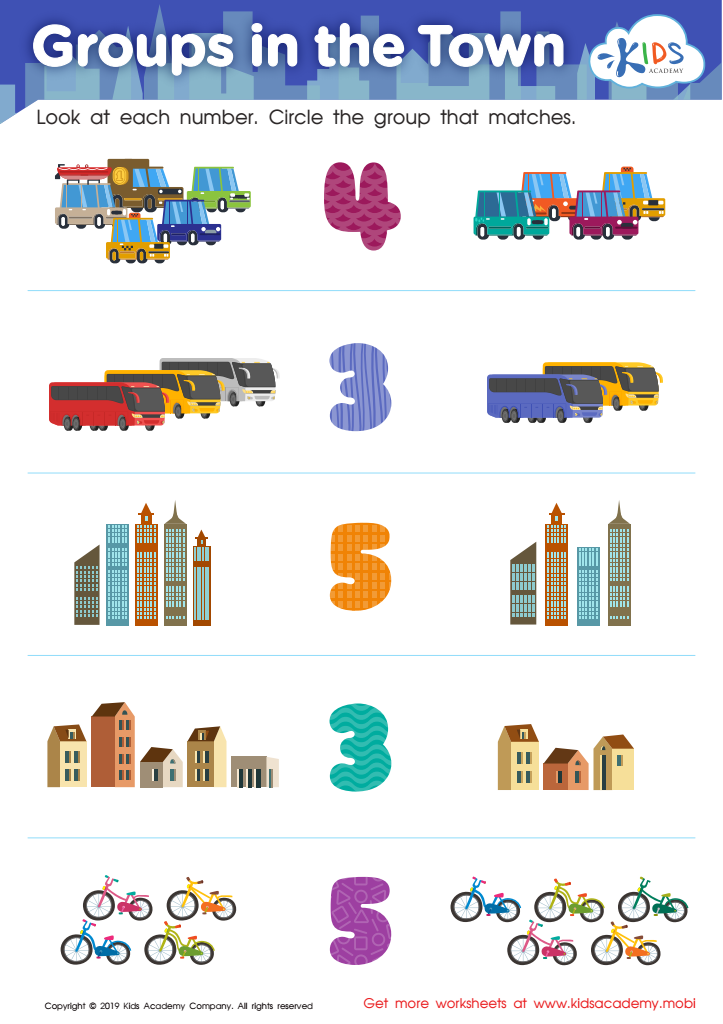
Groups in the Town Worksheet
Help your kids learn to count with this worksheet! Look at each number of objects and circle the group that matches. This simple activity can give them extra practice to support what they learn in school. Learning doesn't have to be a struggle; make it fun and interactive with this worksheet.
Groups in the Town Worksheet
Worksheet
Join Kids Academy for Free
Who is primarily going to use this learning content?








At ages 3-4, children are in a critical phase of cognitive and conceptual development. Building strong categorization skills and familiarity with numbers 0–10 at this stage lays a vital foundation for their future academic success and daily life interactions.
Categorization skills help children make sense of the world by allowing them to group objects, understand similarities and differences, and grasp foundational concepts. For instance, recognizing that a cat, a dog, and a bird are all animals, but they belong to different species sharpens their logical thinking and inference abilities. This skill supports language development as children learn new vocabulary and concepts more efficiently when they can categorize and connect new information with what they already know.
Simultaneously, grasping the numbers 0–10 is foundational for mathematical literacy. Early number knowledge encompasses more than just counting; it includes understanding quantity, number order, and basic arithmetic concepts like 'more than' or 'less than.' Playing with numbers in everyday tasks, such as setting the table with a specific number of plates (one plate per family member), implicitly teaches counting and quantity recognition, building a child's confidence and accuracy in using numbers.
Therefore, focusing on categorization and numbers accelerates cognitive development, fosters critical thinking, and enhances communication skills, equipping young learners with the tools they need for both academic and real-world problem solving.








