Sorting skills Numbers 0–10 Worksheets for Ages 3-4
3 filtered results
-
From - To
Enhance your child's early math skills with our engaging "Sorting Skills Numbers 0–10 Worksheets" designed specifically for ages 3-4. These interactive worksheets focus on helping young learners recognize and sort numbers from 0 to 10, fostering their understanding of numerical values and quantities. With vibrant illustrations and fun activities, children will enjoy sorting numbers into groups, reinforcing essential counting skills while promoting cognitive development. Perfect for homes or classrooms, these worksheets encourage hands-on learning and creativity, making math enjoyable for your little ones. Help your child master sorting skills and set a solid foundation for future math success today!
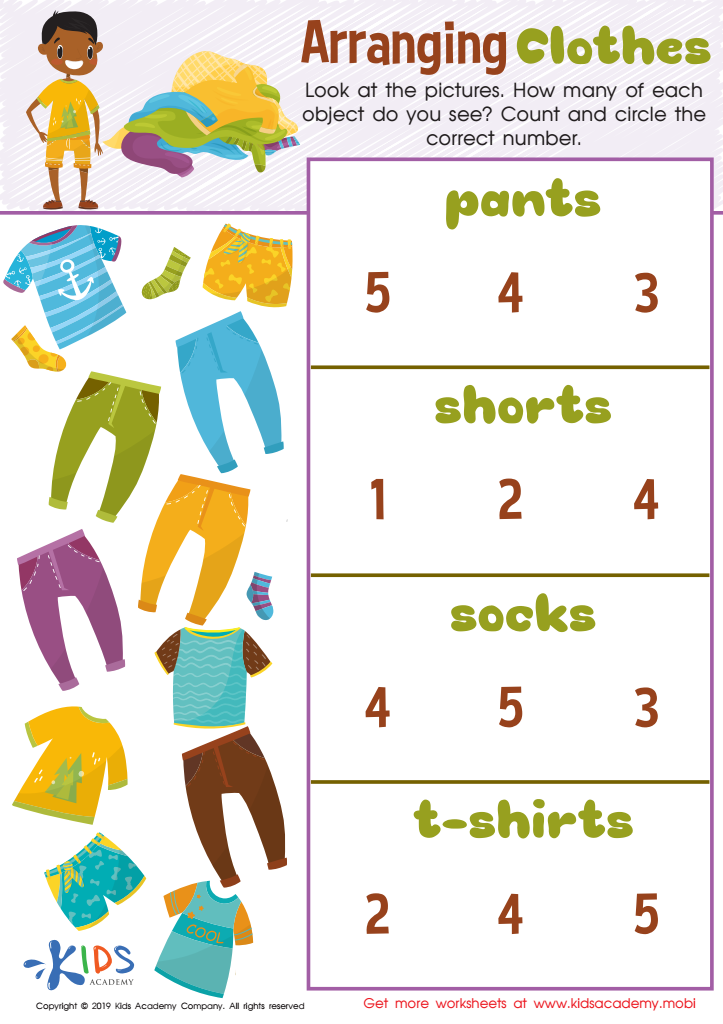
Arranging Clothes Worksheet
 Assign to My Students
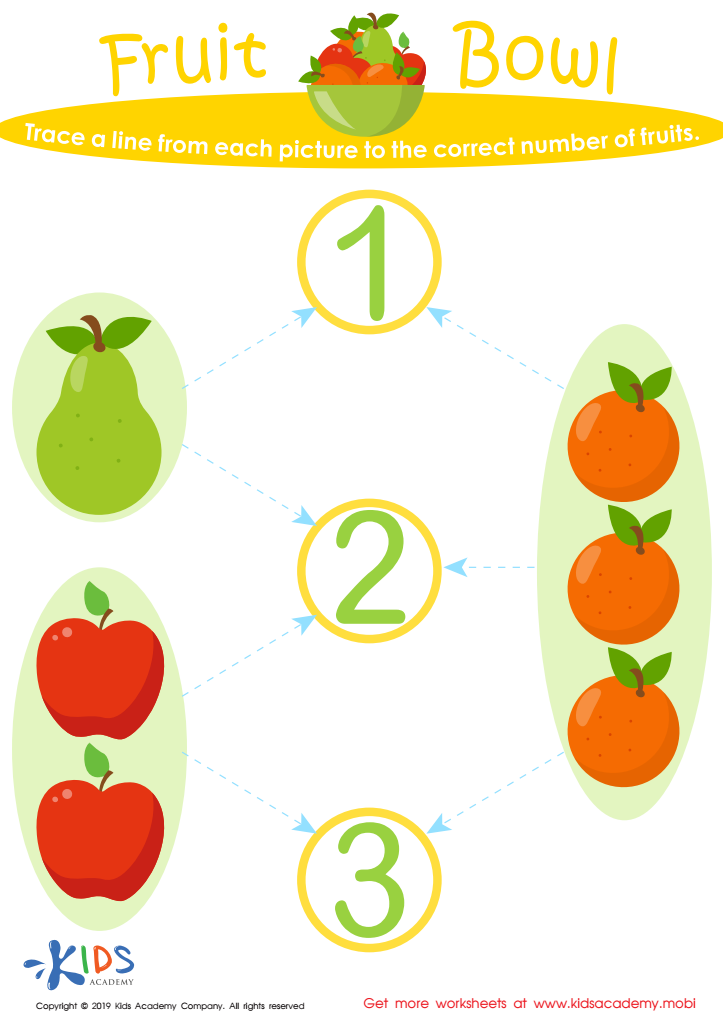
Fruit Bowl Worksheet
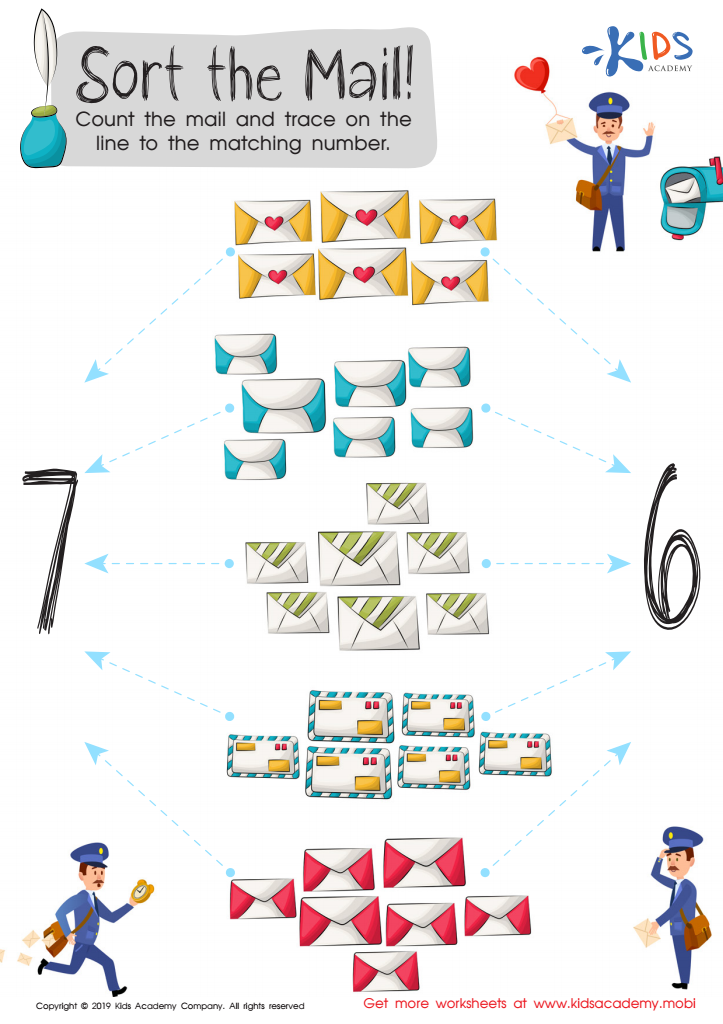
Sort the Mail Worksheet








Sorting skills are fundamental for children ages 3-4, particularly when focusing on concepts involving numbers 0-10. Parents and teachers should care about these skills because sorting lays the groundwork for essential numeracy and cognitive development. Understanding how to categorize and organize objects helps children comprehend mathematical concepts such as quantity, classification, and sequencing.
When young learners sort items, they enhance their critical thinking and problem-solving skills, promoting cognitive flexibility. For example, sorting numbers 0-10 can introduce children to concepts of more and less, as well as similarities and differences—a crucial aspect of early mathematics.
Additionally, sorting engages fine motor skills and encourages language development; children learn to describe their sorting criteria, enhancing their vocabulary and communication skills. These activities foster a sense of order and control, contributing to social skills as children often engage in collaborative play during sorting tasks.
Moreover, early sorting experiences create a strong foundation for future math learning, enriching children’s overall academic journey. By nurturing these skills, parents and teachers pave the way for a lifelong enjoyment and understanding of mathematics, reinforcing the importance of foundational skills in early childhood education.