Spatial awareness Numbers 0–10 Worksheets for Ages 3-4
3 filtered results
-
From - To
Boost your child's spatial awareness with our engaging "Spatial Awareness Numbers 0–10 Worksheets" designed for ages 3-4. These interactive worksheets help young learners explore numbers while developing essential spatial recognition skills through fun activities. Children will enjoy tasks that involve comparing sizes, understanding shapes, and recognizing positions in relation to numbers from 0 to 10. Each worksheet is crafted to stimulate curiosity and cognitive development, incorporating vibrant visuals and easy-to-follow instructions. Perfect for preschoolers at home or in the classroom, these worksheets provide a playful yet educational experience, preparing your little ones for future math concepts with confidence and joy!
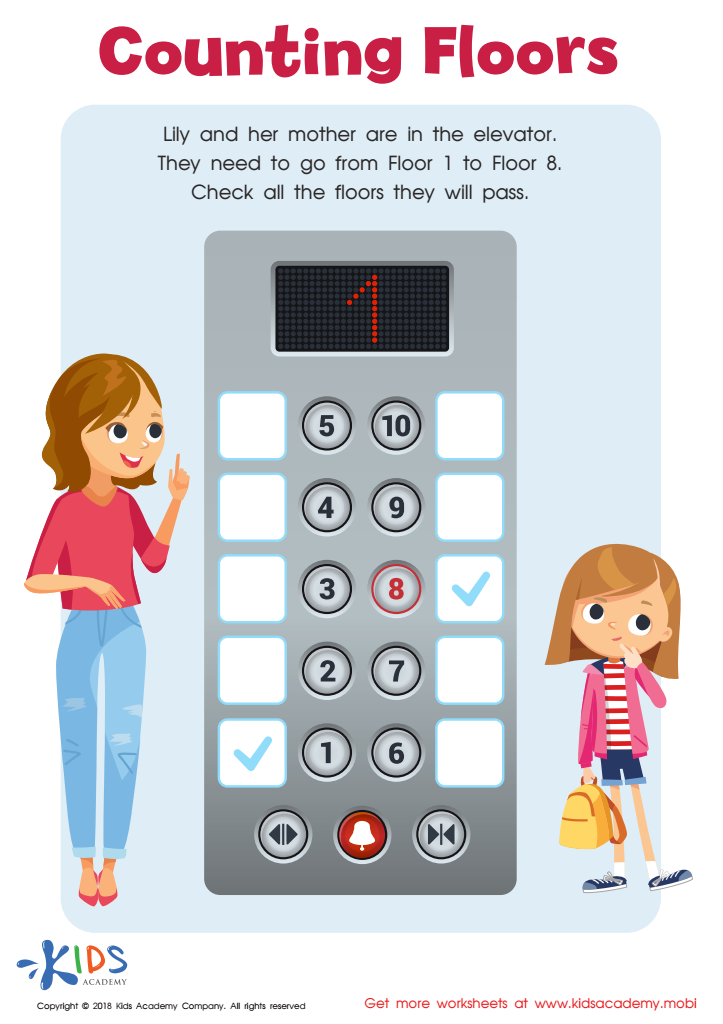
Counting Floors Worksheet
 Assign to My Students
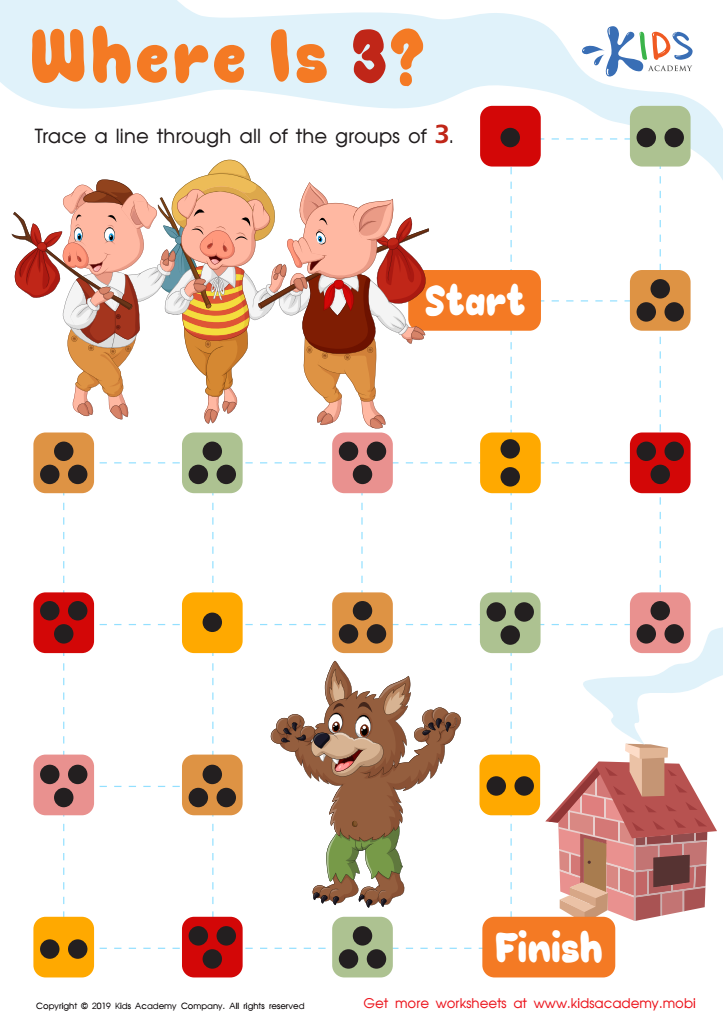
Where Is 3? Worksheet
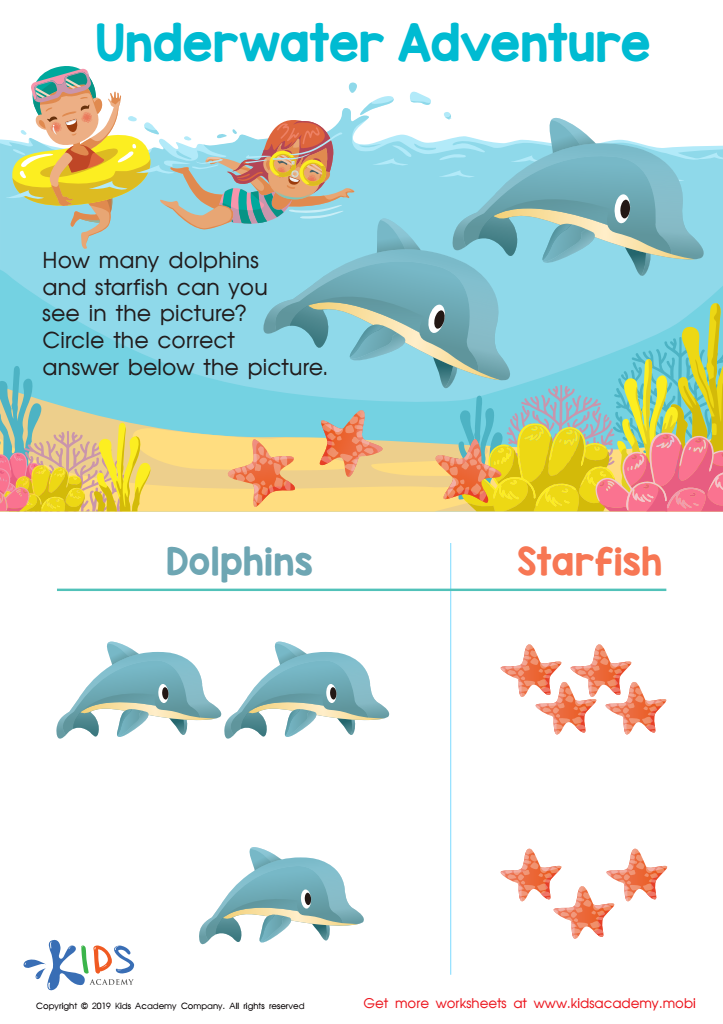
Underwater Adventure Worksheet








Spatial awareness is a crucial cognitive skill that forms the foundation for various developmental milestones in children aged 3 to 4. This skill encompasses understanding the relationships between objects in space and recognizing their positions, shapes, and sizes. Teaching spatial awareness alongside numbers 0–10 can significantly enhance a child's overall learning experience.
First, spatial awareness promotes effective problem-solving and critical thinking. Children learn to visualize their world, which aids them in understanding basic math concepts, such as counting, sorting, and classifying objects. For instance, when children arrange objects in specific patterns or spaces, they’re practicing foundational math skills, essential for future learning in geometry and measurement.
Furthermore, engaging in spatial awareness activities helps develop fine motor skills and hand-eye coordination. These abilities are integral not only for mathematical tasks but also for everyday activities such as writing, building, or even playing sports.
By integrating spatial awareness with early numeracy, parents and teachers foster an interactive learning environment. Activities like puzzles, building blocks, and outdoor play encourage children to explore spatial relationships while learning numbers. This dual approach ensures children are not just memorizing numbers but truly understanding their context and application in the world around them.