Multiplication practice Subtraction Worksheets for Ages 3-4
3 filtered results
-
From - To
Looking for engaging multiplication practice and subtraction worksheets for your little learners aged 3-4? Our carefully designed resources help introduce early math concepts in a fun, interactive way! These worksheets facilitate skill-building through colorful illustrations and age-appropriate challenges that capture children’s attention. By integrating multiplication practice with subtraction activities, kids will develop a solid foundation in numerical skills while enjoying a playful learning experience. Perfect for at-home practice or classroom use, our worksheets encourage critical thinking and problem-solving. Start your child's math journey today with our printable multiplication and subtraction worksheets tailored for young minds!
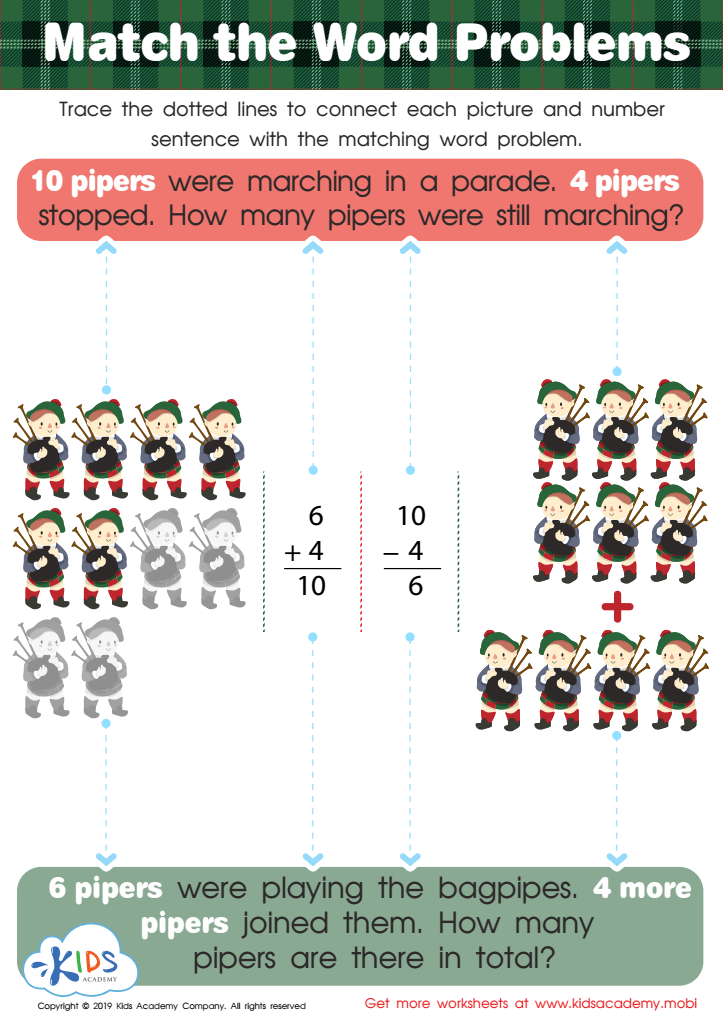
Match the Word Problems Worksheet
 Assign to My Students
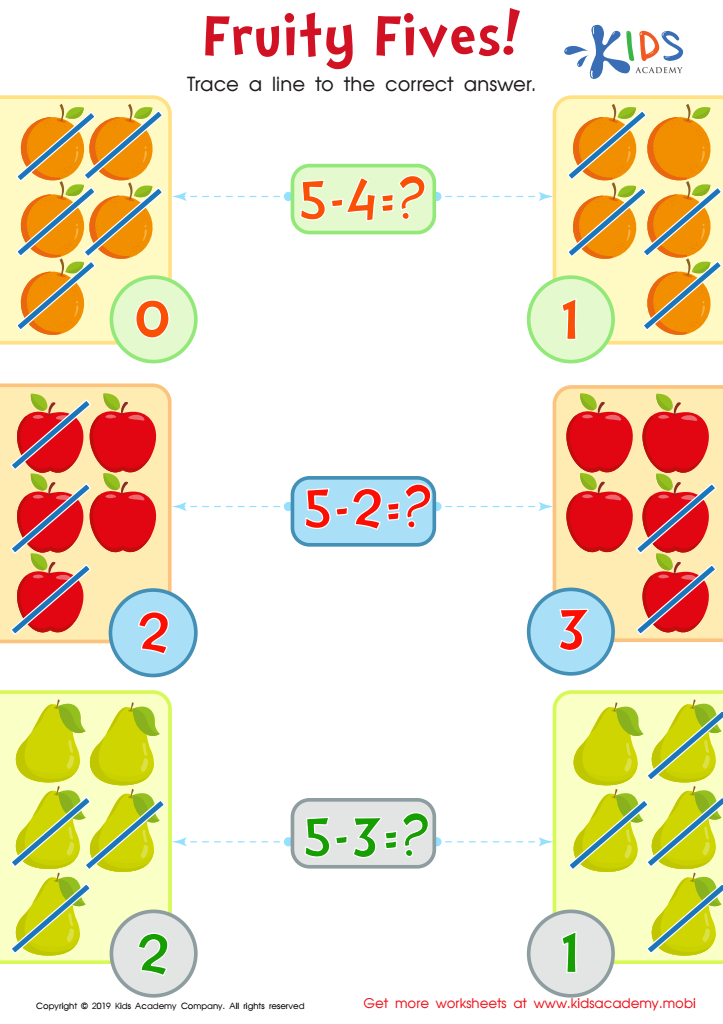
Fruity Fives! Worksheet
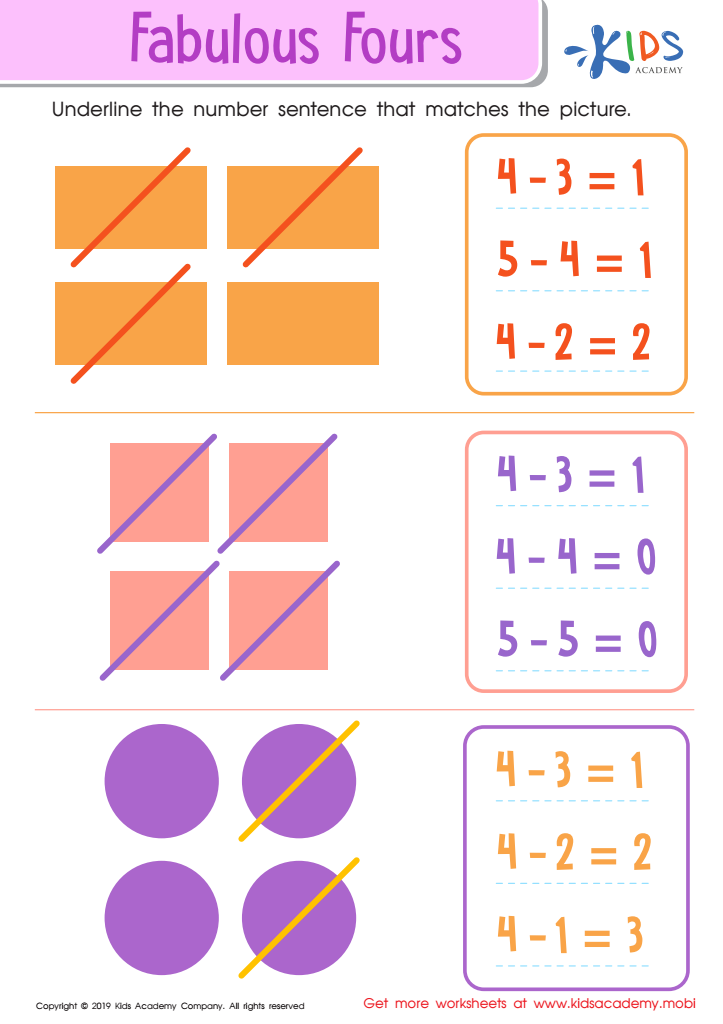
Fabulous Fours Worksheet








Parents and teachers should recognize the importance of foundational mathematical skills, such as multiplication practice and subtraction, even for children as young as 3-4 years old. Engaging young children in basic math concepts fosters critical thinking and problem-solving abilities early on. While multiplication isn’t typically introduced until later, concepts of repeated addition can help kids understand the essence of multiplication as they explore patterns and relationships in numbers. Simple subtraction activities enhance their comprehension of “taking away” and can be linked to real-life scenarios, making learning relatable.
Introducing these concepts through playful methods—like singing songs, using toys, or engaging in everyday activities—encourages a love for math. By incorporating fun and interactive ways of practicing multiplication and subtraction, children build confidence and fluency in their numerical skills. The foundation laid in these formative years sets the stage for more complex math concepts in the future, promoting academic success.
Early exposure to these skills can diminish math anxiety later on and cultivate perseverance and resilience. Overall, nurturing early math understanding through multiplication and subtraction practice not only prepares children for future learning but also enriches their cognitive development and everyday experiences.








