Filters

6 filtered results

Clear all filters
Favorites
With answer key
Interactive

6 filtered results

Difficulty Level

Grade


Enhance your child's critical thinking skills with our engaging Word Problems Worksheets specifically designed for ages 3-4! Perfect for early learners, these worksheets combine fun and educational elements to develop cognitive abilities, problem-solving skills, and mathematical understanding. Each activity encourages kids to apply logical reasoning in a playful context, fostering an early love for math. From counting objects to understanding simple concepts, our worksheets offer a variety of scenarios that make learning exciting. Explore our collection today and help your little ones develop essential skills that will lay a strong foundation for their future education! Ideal for home or classroom use.

Check out this FREE Trial Lesson on Word Problems for age 3-4!

More Word Problems

Favorites
With answer key
Interactive
  • 3-4
  • Critical Thinking
  • Word Problems
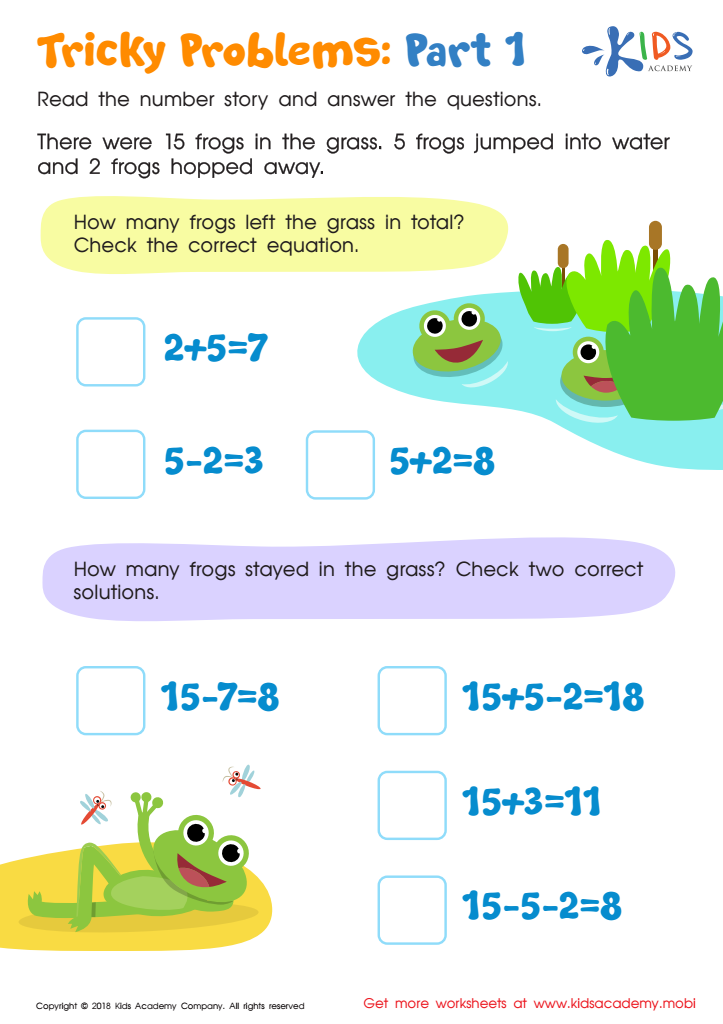
Tricky Problems Worksheet: Part 1

Tricky Problems Worksheet: Part 1

Visualizing word problems can help students solve them. This fun PDF worksheet encourages students to create mental images using math facts, then check boxes to match the equations for basic addition problems. It's a great way to build confidence in solving math.
Tricky Problems Worksheet: Part 1
Worksheet
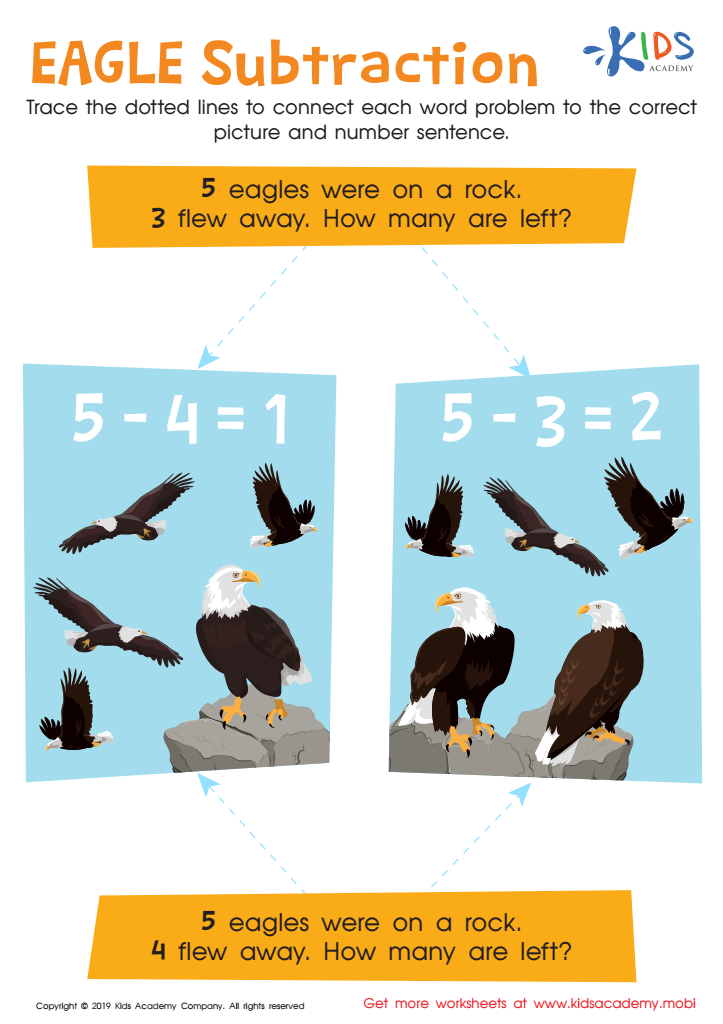
Eagle Subtraction Worksheet

Eagle Subtraction Worksheet

Help your kids become math experts! Through practice and adult guidance, even addition and subtraction can seem simple. Show them how with this worksheet - get them to trace the dotted lines to connect each word problem to the correct picture and solve the number sentence with some eagles!
Eagle Subtraction Worksheet
Worksheet
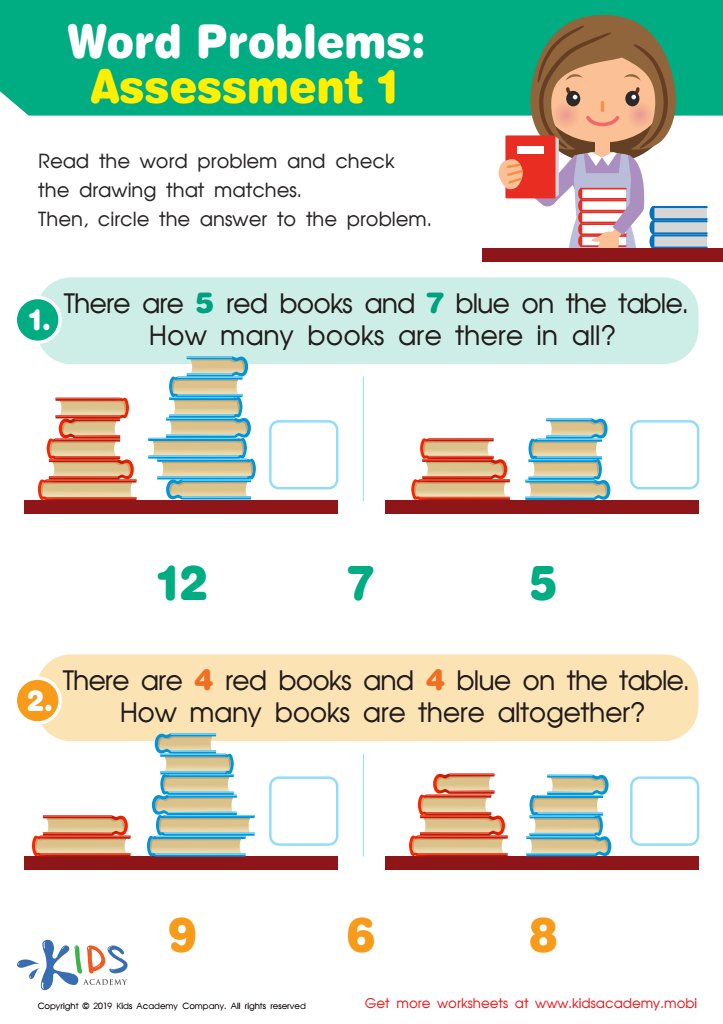
Word Problems: Assessment 1 Worksheet

Word Problems: Assessment 1 Worksheet

This free worksheet assesses your child's basic addition word problem skills. It presents word problems with pictures offering clues in one-to-one representation. Your child will select the correct drawing to match the problem, without even knowing they're being assessed! This is a great way to gauge their math computation and reasoning abilities.
Word Problems: Assessment 1 Worksheet
Worksheet
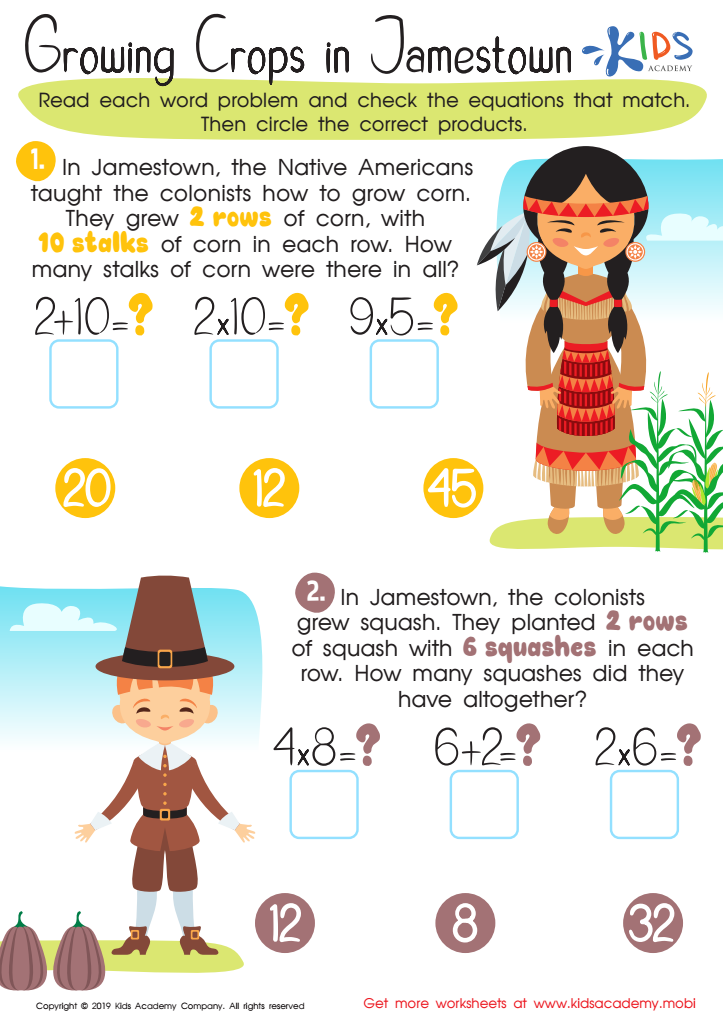
Growing Jamestown Worksheet

Growing Jamestown Worksheet

This exciting multiplication worksheet from Kids Academy uses American history facts as its theme. Kids learn about Native Americans helping early Americans at Jamestown, then read the word problems, match the equations and solve for the product. Finally, circle the correct answer!
Growing Jamestown Worksheet
Worksheet
Word Problems: Assessment 2 Worksheet

Word Problems: Assessment 2 Worksheet

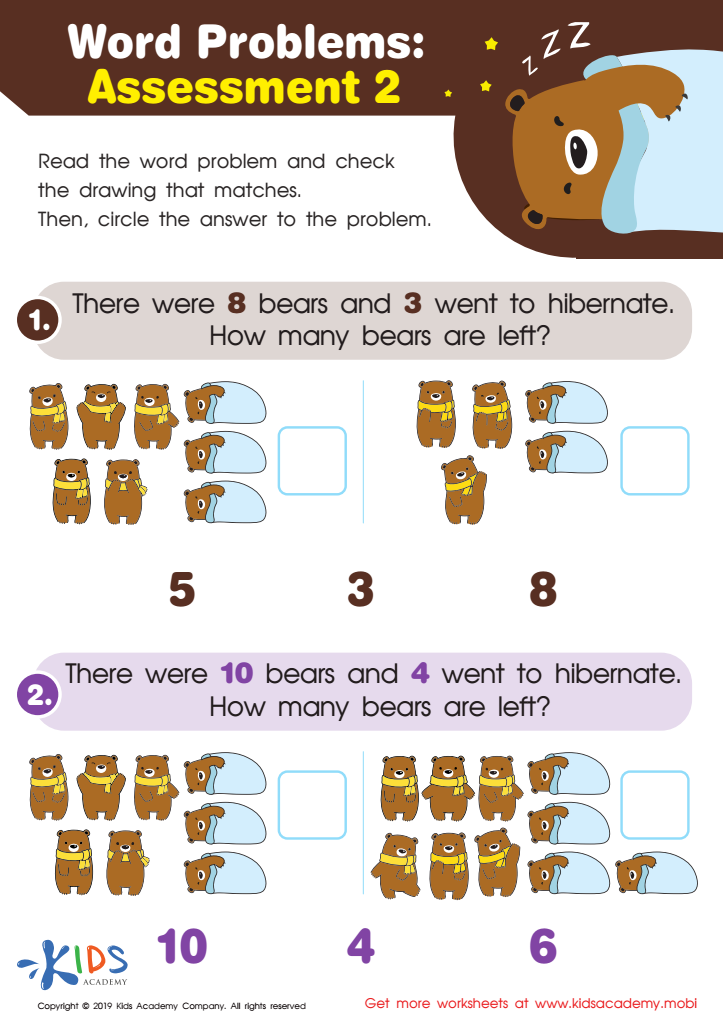
This bear-themed worksheet is a great way to test subtraction skills. Have your child read the word problems and match the correct drawing with the answer. It's a fun way to quiz them without them even knowing. Enjoy counting cute snoozing bears! (80 words)
Word Problems: Assessment 2 Worksheet
Worksheet
Party Problems Worksheet


Party Problems Worksheet

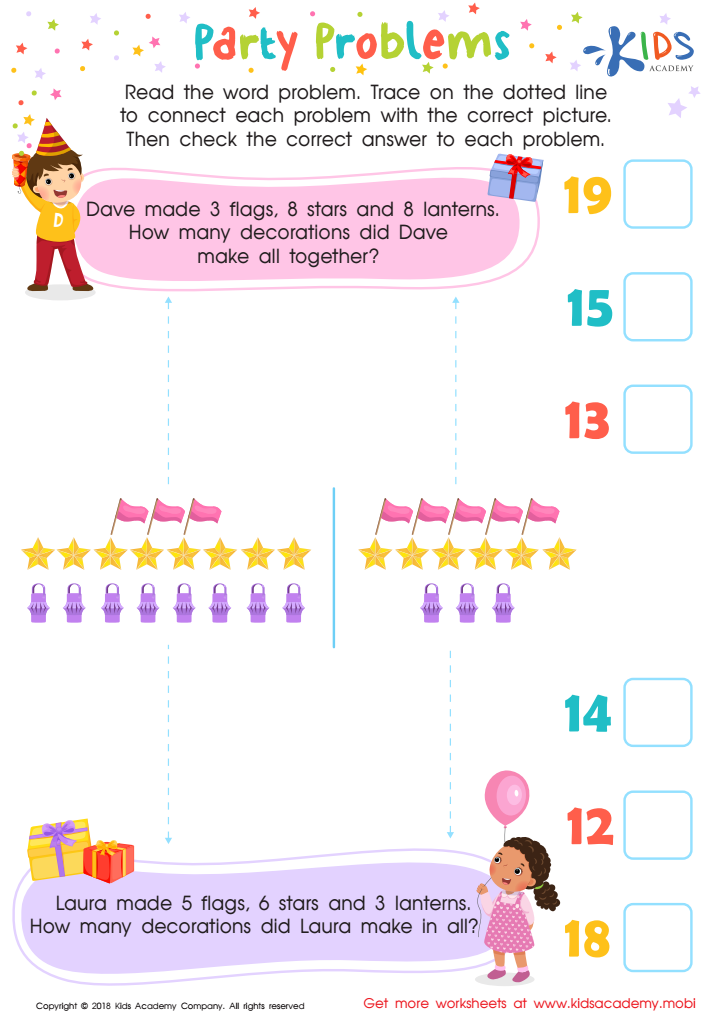
Problems at parties? No problem! With this engaging PDF worksheet, your student can connect word problems to pictures, check correct answers, and find the sum of 3 addend problems. They'll be a party-saving hero in no time!
Party Problems Worksheet
Worksheet


Critical thinking word problems for ages 3-4 are essential tools for fostering cognitive development in young children. At this stage, children are naturally curious and eager to make sense of the world around them. Engaging them with age-appropriate word problems helps cultivate problem-solving skills, which are vital for success in school and beyond.

First, critical thinking challenges children to think independently and creatively. As they work through word problems, they learn to analyze information, draw connections, and apply logic in diverse situations. This lays the foundation for higher-order thinking skills that will benefit them in more complex academic tasks later on.

Additionally, these activities boost language and comprehension skills as children learn to understand the context of the problems being posed. They enhance vocabulary while encouraging dialogue, as children express their thoughts and reasoning processes.

Moreover, critical thinking word problems promote collaboration when children work together, aiding social skill development. Teachers and parents can facilitate this growth by introducing engaging scenarios tailored to children’s interests, helping cultivate a lifelong love for learning. Ultimately, prioritizing these exercises equips children with essential skills for future success, both academically and in their everyday lives.