Hand-eye Coordination Word Problems Worksheets for Ages 3-4
3 filtered results
-
From - To
Enhance your child's learning experience with our Hand-eye Coordination Word Problems Worksheets designed specifically for ages 3-4. These engaging worksheets focus on improving young learners' hand-eye coordination through fun and interactive word problems. Each activity encourages kids to develop essential motor skills while fostering critical thinking and problem-solving abilities. Ideal for preschool and kindergarten settings, our worksheets feature vibrant illustrations and age-appropriate scenarios that captivate children's attention. Parents and educators can effortlessly integrate these worksheets into their learning routines, promoting cognitive development and making math enjoyable for early learners. Download our worksheets today and watch your child's skills grow!
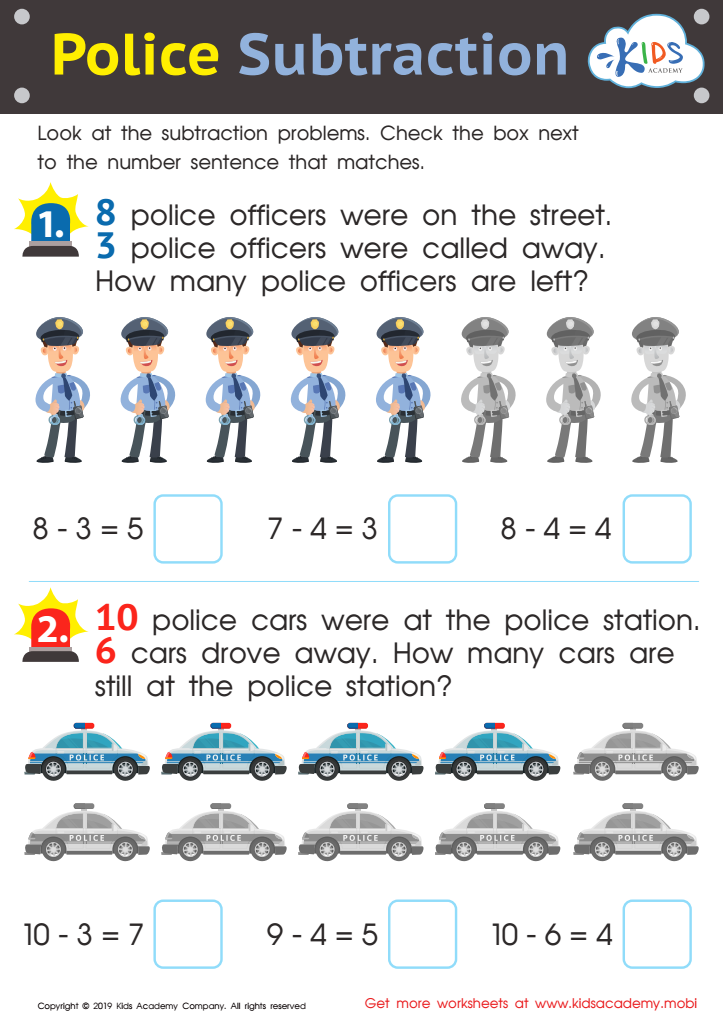
Police Subtraction Worksheet
 Assign to My Students
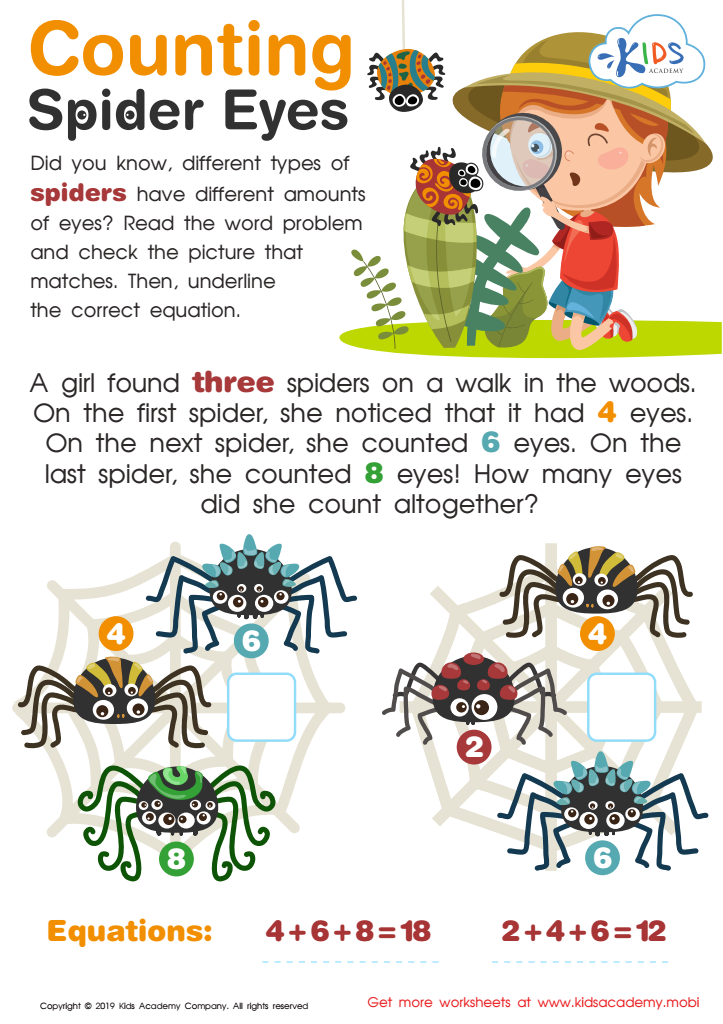
Counting Spider Eyes Worksheet
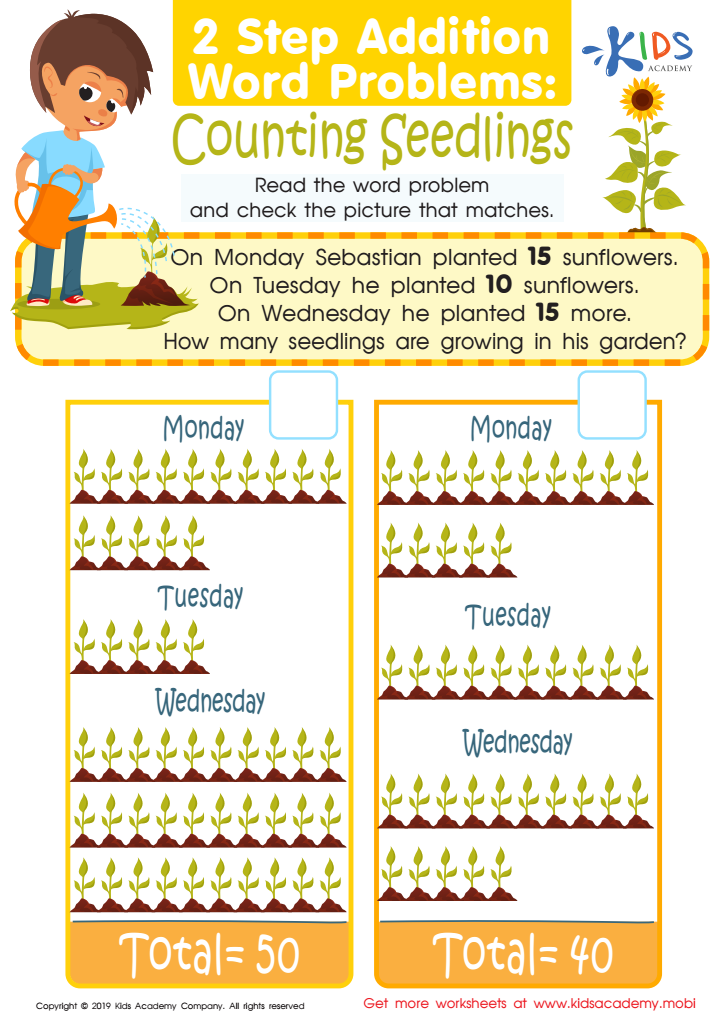
Counting Seedlings Worksheet








Hand-eye coordination is a critical skill that develops during early childhood, particularly between the ages of 3 and 4. Parents and teachers should care about this aspect because it lays the foundation for numerous essential activities in a child's life, from simple tasks like coloring to more complex ones like writing and playing sports. Engaging children with hand-eye coordination word problems enhances their ability to process information and solve problems, promoting cognitive development.
Moreover, such exercises encourage fine motor skills and spatial awareness, which are vital for tasks that require precise movements. Early exposure to these challenges helps children develop confidence in handling objects and contributes to better focus and concentration. Parents and educators can incorporate engaging activities like puzzles, tracing shapes, and simple math through storytelling that combines hand-eye coordination concepts.
Additionally, building a strong base in this skill fosters independence and self-esteem as children gain mastery over basic tasks. As a key component of holistic development, supporting hand-eye coordination in 3- to 4-year-olds ultimately prepares them for future learning adventures, supporting their social, cognitive, and emotional growth. Investing time in such activities significantly benefits children's long-term success in school and life.








