Enhancing reading skills Building Vocabulary Worksheets for Ages 3-4
3 filtered results
-
From - To
Discover our "Enhancing Reading Skills: Building Vocabulary Worksheets" designed specifically for children aged 3-4. These engaging worksheets provide young learners with essential tools to develop their reading and vocabulary skills. Each activity is crafted to promote letter recognition, word meaning, and phonemic awareness in a fun, interactive way. Ideal for parents and educators, these resources encourage early literacy through play-based learning and hands-on activities. With colorful illustrations and simple prompts, children will enjoy expanding their vocabulary and enhancing their reading skills, laying a strong foundation for future academic success. Equip your little ones with the love of language and learning today!
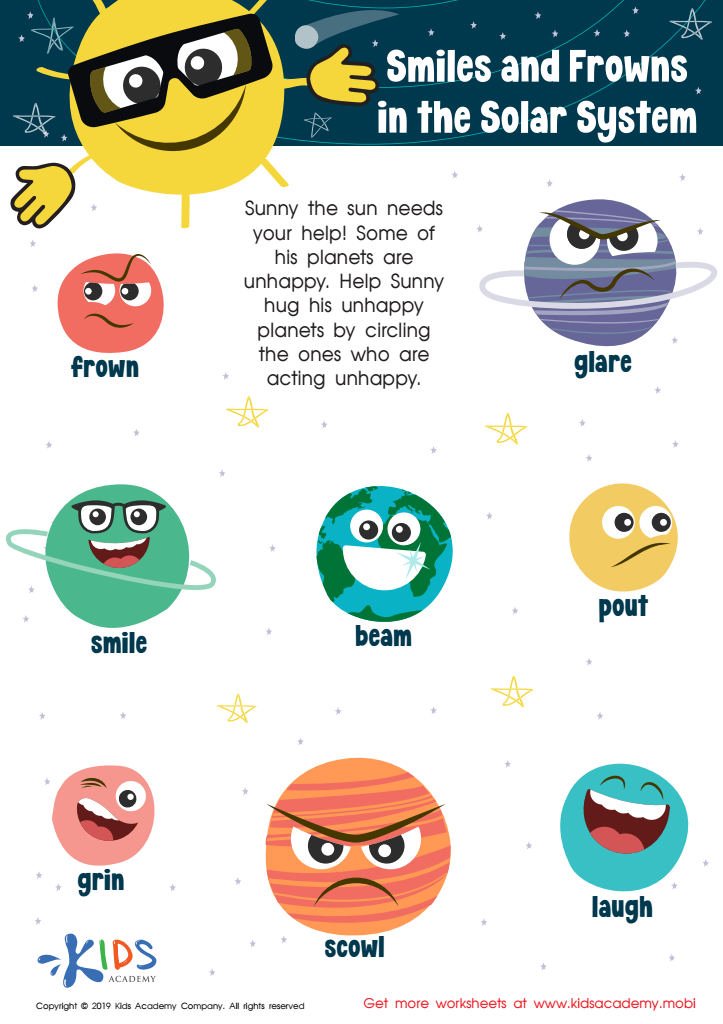
Smile and Frowns in the Solar System Worksheet
 Assign to My Students











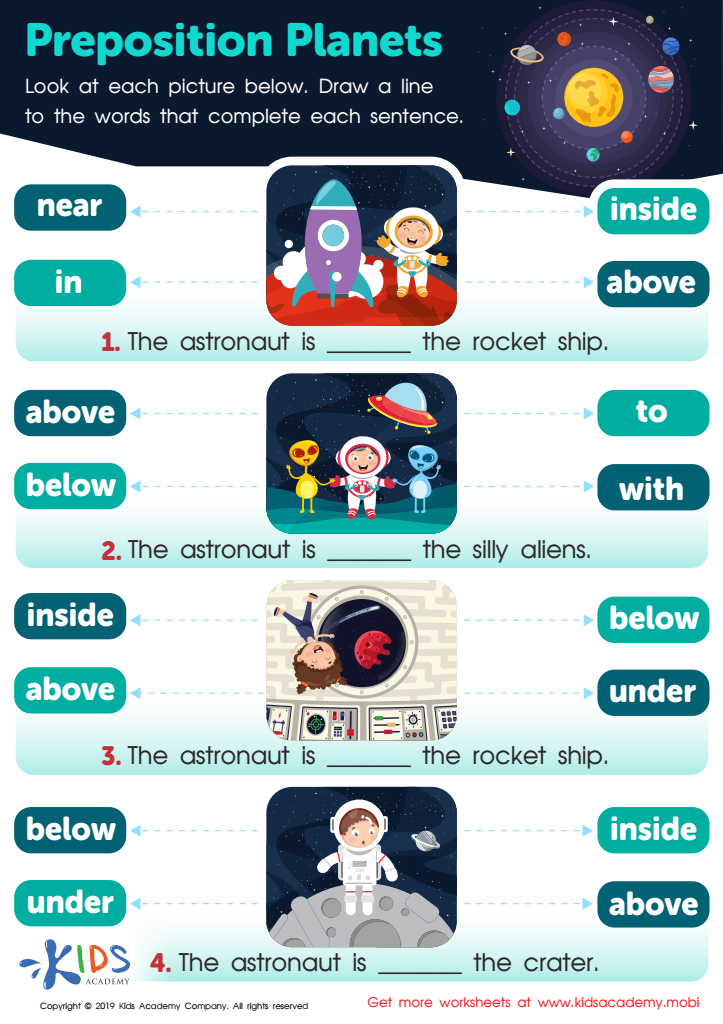
Preposition Planets Worksheet
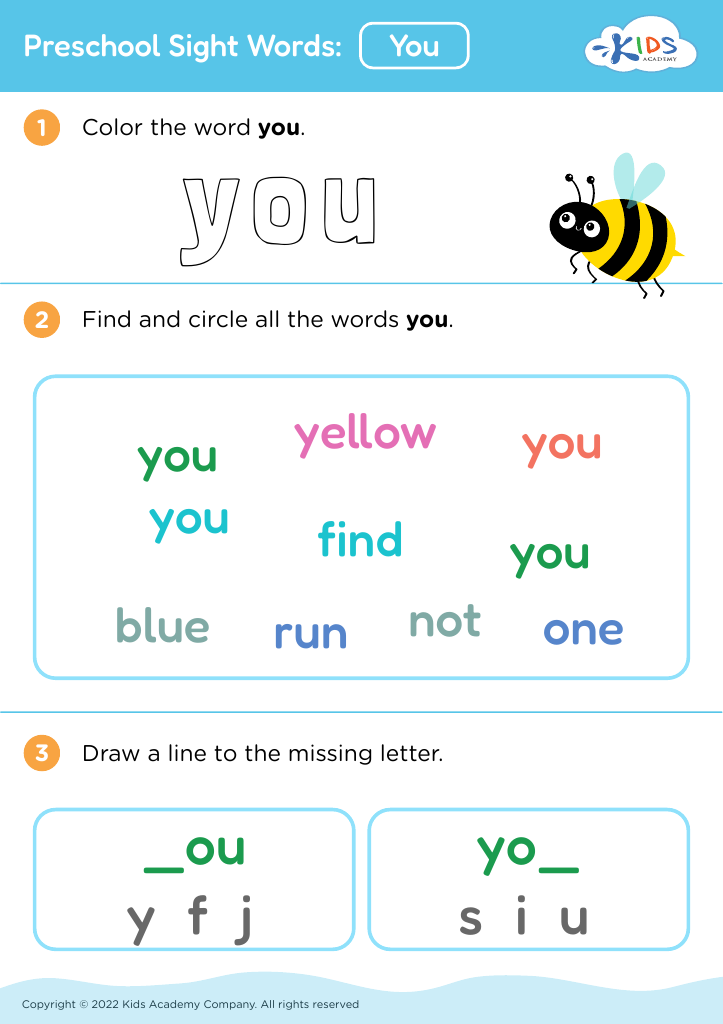







.jpg)
Enhancing reading skills and building vocabulary in children ages 3-4 is crucial for their overall development and future success. At this formative age, children are like sponges, absorbing language and learning rapidly. Parents and teachers who prioritize reading and vocabulary development lay the groundwork for effective communication, critical thinking, and literacy that will benefit children throughout their lives.
Improving vocabulary enhances a child’s ability to express themselves, understand language nuances, and engage in conversations. A robust vocabulary also supports reading comprehension, allowing children to grasp stories' meaning, context, and themes. Early exposure to rich language and diverse words can spark curiosity and a love for reading, fostering a lifelong learning habit.
Furthermore, strong reading skills are linked to academic success across all subjects. Children who read well from an early age tend to perform better in school, leading to increased confidence and enthusiasm for learning. This early intervention can also help bridge potential learning gaps, ensuring children are equipped for future challenges.
In summary, nurturing reading skills and vocabulary between ages 3-4 is vital for building a strong academic foundation, enhancing emotional and social skills, and promoting cognitive development. Parents and teachers play a crucial role in shaping competent and confident communicators.








