Hand-eye Coordination Building Vocabulary Worksheets for Ages 3-4
3 filtered results
-
From - To
Enhance your child's learning journey with our Hand-eye Coordination Building Vocabulary Worksheets for ages 3-4. Designed to support early literacy and motor skills, these engaging worksheets feature fun activities that promote vocabulary development through interactive play. Young learners will strengthen their hand-eye coordination as they match words with images, trace letters, and complete puzzles. Our thoughtfully crafted materials ensure that children remain entertained while gaining essential skills necessary for future academic success. Spark curiosity and foster a love for learning with these vibrant, age-appropriate resources that make building vocabulary a hands-on, enjoyable experience! Perfect for home or classroom use!
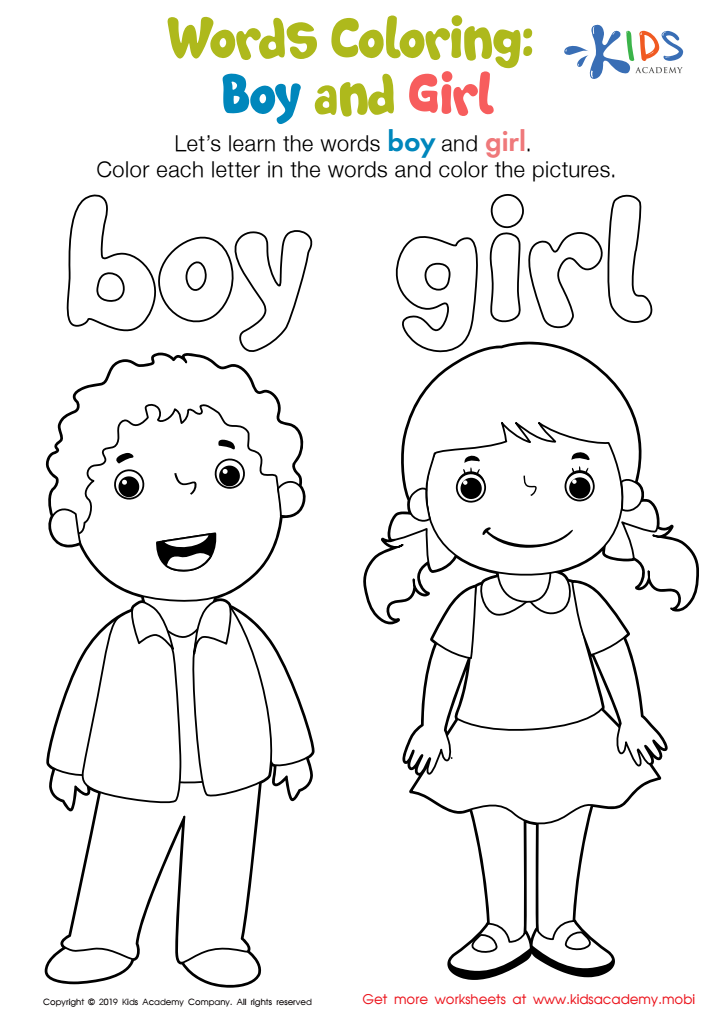
Boy and Girl Words Coloring Worksheet
 Assign to My Students











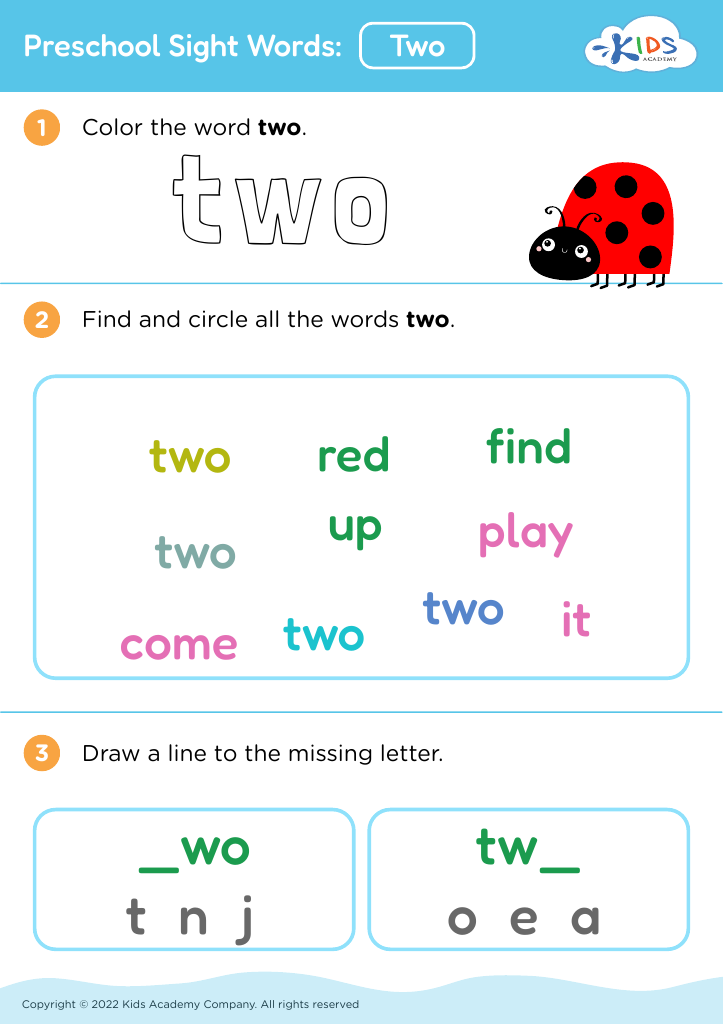
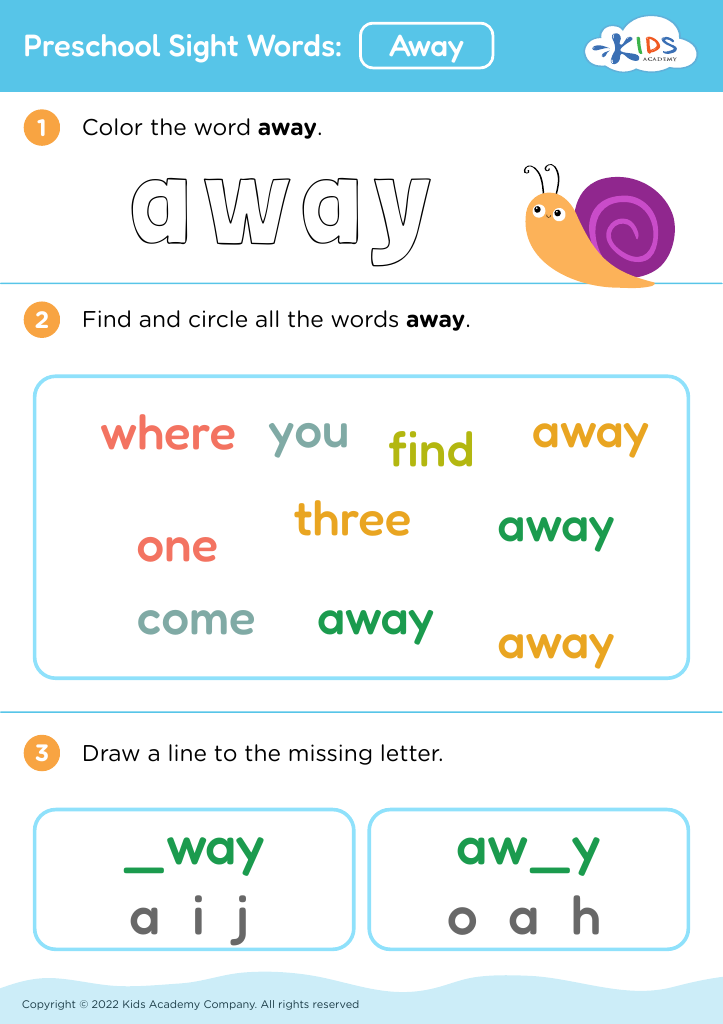








Hand-eye coordination is a crucial developmental skill for young children, particularly those aged 3-4. This skill involves the ability to control hand movements in relation to visual input, which is essential for many daily activities, from basic tasks like grasping objects to more complex ones like writing. Building this coordination at an early age fosters independence and confidence in children as they learn to manipulate their environment.
Parents and teachers should prioritize activities that enhance hand-eye coordination, as these exercises can deeply impact a child's cognitive and physical development. For example, playing with building blocks, drawing, puzzles, or participating in ball games not only improve hand-eye coordination but also help develop fine motor skills, problem-solving abilities, and spatial awareness.
Furthermore, a well-rounded vocabulary is often interconnected with physical activities. For instance, describing movements while playing helps children articulate their experiences, increasing language skills and comprehension. When parents and teachers engage children in these activities, they’re not just enhancing physical skills; they are also nurturing communication and social development. Overall, fostering hand-eye coordination in young children sets a solid foundation for future learning, ensuring they are well-prepared for the more complex challenges of schooling and everyday life.








