
Spelling practice Building Vocabulary Worksheets for Ages 3-4
16 filtered results
Difficulty Level
Grade
Age
-
From - To
Subject
Activity
Standards
Enhance your child's literacy skills with our Spelling Practice Building Vocabulary Worksheets for ages 3-4. These engaging, age-appropriate worksheets make learning fun! Designed to cultivate essential spelling and vocabulary skills, these activities help young learners recognize letters, improve phonemic awareness, and promote letter-sound correspondence. Each worksheet features colorful illustrations and interactive exercises geared toward captivating young minds and fostering a love for reading. Ideal for both classroom use and home learning, these resources support early childhood development by building foundational language skills. Start your child's spelling journey today and watch their vocabulary flourish!
Favorites
With answer key
Interactive
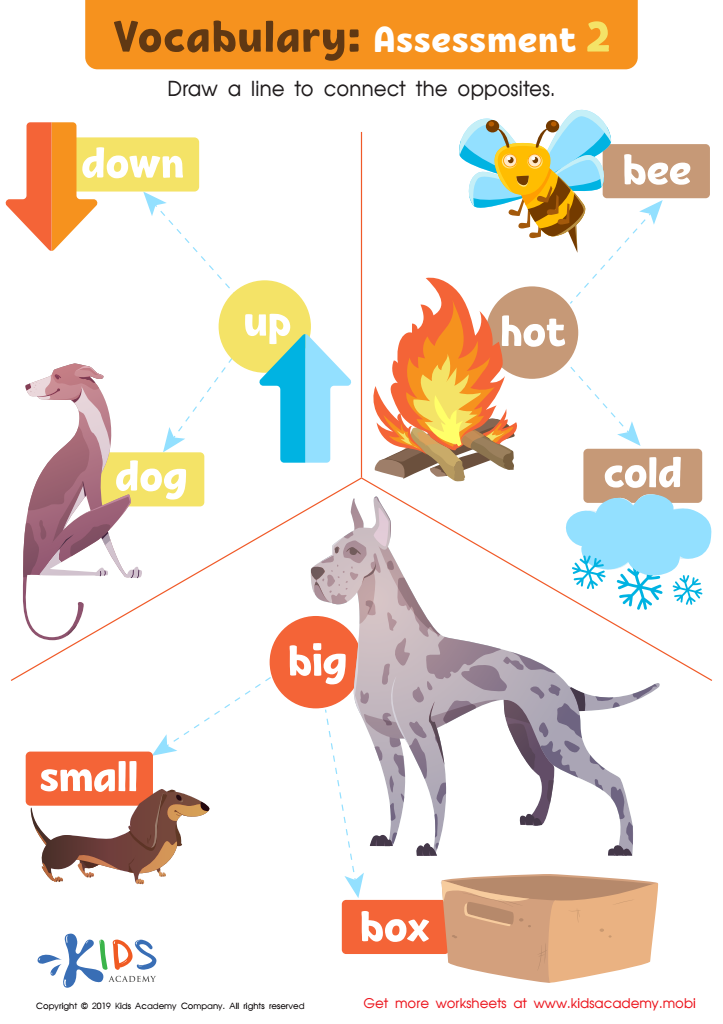
Vocabulary: Assessment 2 Worksheet
Opposites attract! Boost your preschooler's vocabulary by reviewing antonyms with this fun worksheet. View the images, read the words, and find the opposites. Guide your learner with the illustrations, then discuss each one before they trace the dotted lines to match. Have fun and reinforce learning!
 Assign to My Students
Vocabulary: Assessment 2 Worksheet
Worksheet











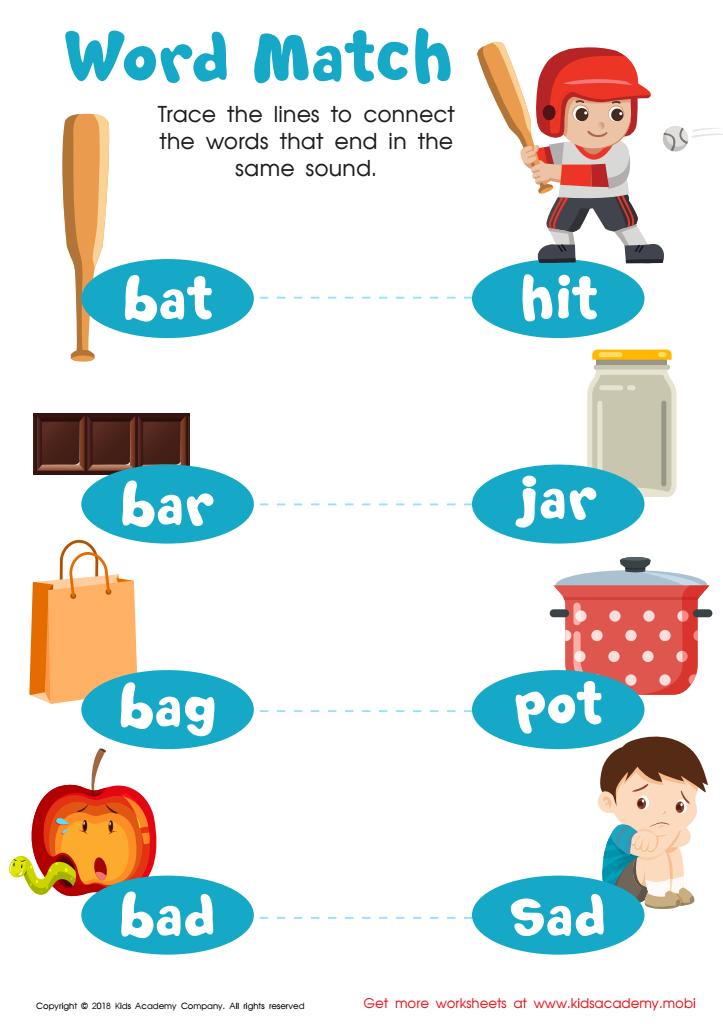
Word Match Reading Worksheet
This printout helps children learn to read fluently by connecting words with the same sound. Colorful pictures aid understanding and context for kindergarten-level students. Tracing lines, they learn to identify the sounds made by letters of the alphabet and deepen their knowledge of phonics.
Word Match Reading Worksheet
Worksheet
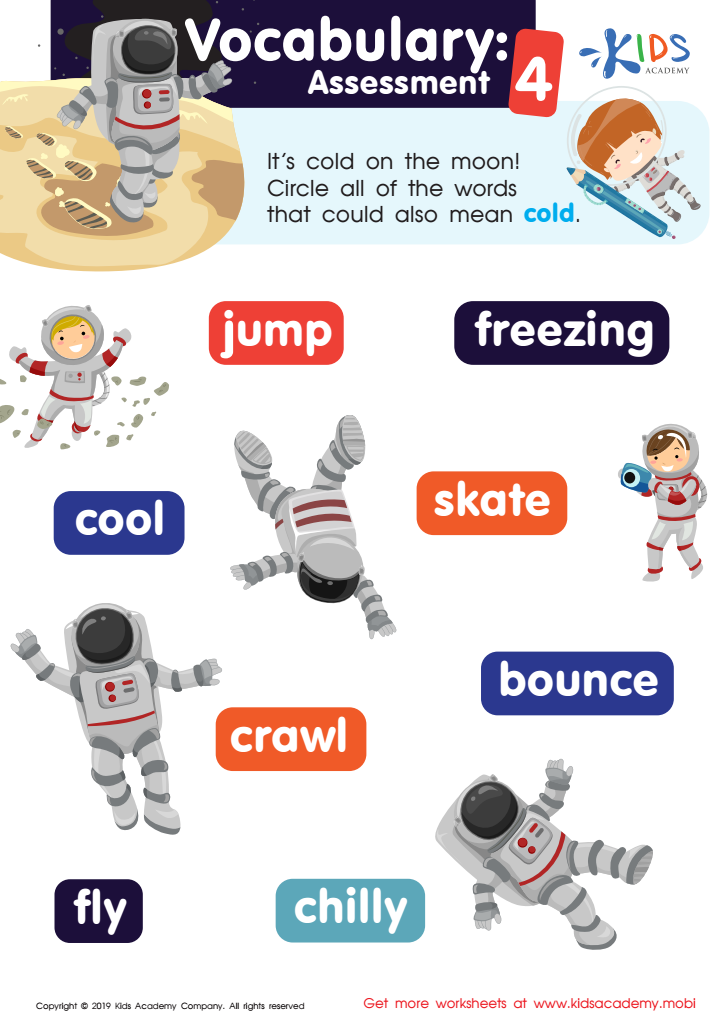
Vocabulary: Assessment 4 Worksheet
Download this free worksheet and have your child explore outer space with our charming astronauts! Help them find the right words to describe the chilly moon. Have fun with synonyms as they circle the right words to match "cold". Let your child's imagination run wild as they discover the wonders of space with this Kids Academy exercise!
Vocabulary: Assessment 4 Worksheet
Worksheet
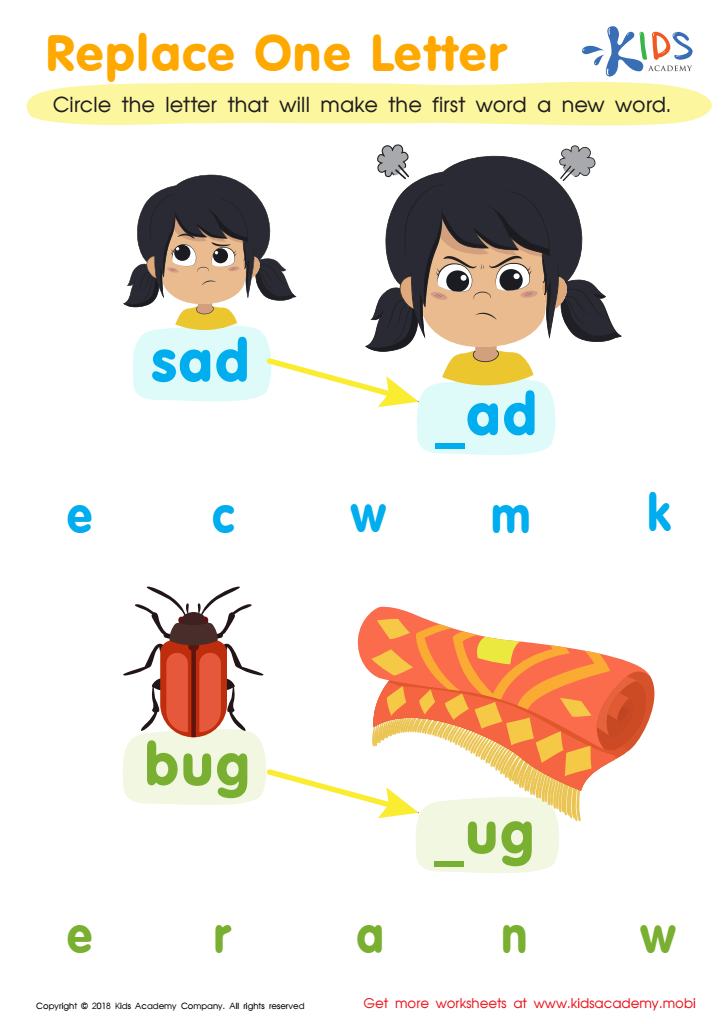
Replace One Letter Worksheet
Emerging readers will practice switching initial consonants to create new words with this fun PDF worksheet. They'll use picture clues, learn about onset letters and work on their fine motor skills as they circle the right letter for each "ad" and "ug" word family.
Replace One Letter Worksheet
Worksheet
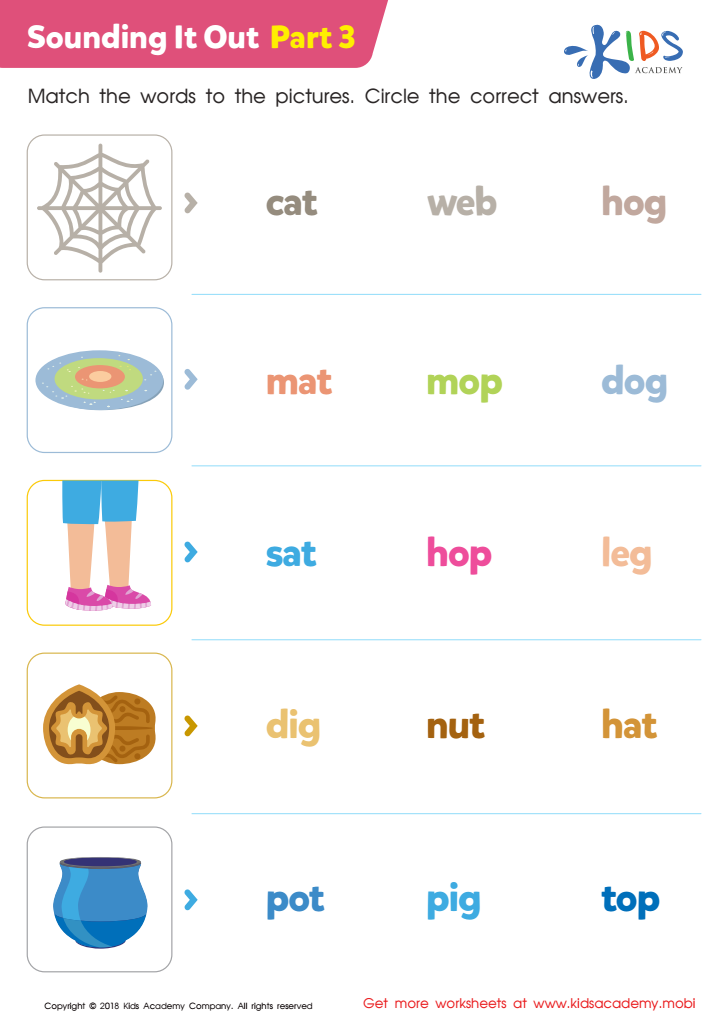
Sounding it Out: Part 3 Worksheet
Once Parts 1 and 2 are complete, this printable phonics worksheet will help kids take their reading skills to the next level! As they gain confidence, give them hints less often and direct their attention to three words in a row. Ask them to read and circle the correct word to complete!
Sounding it Out: Part 3 Worksheet
Worksheet
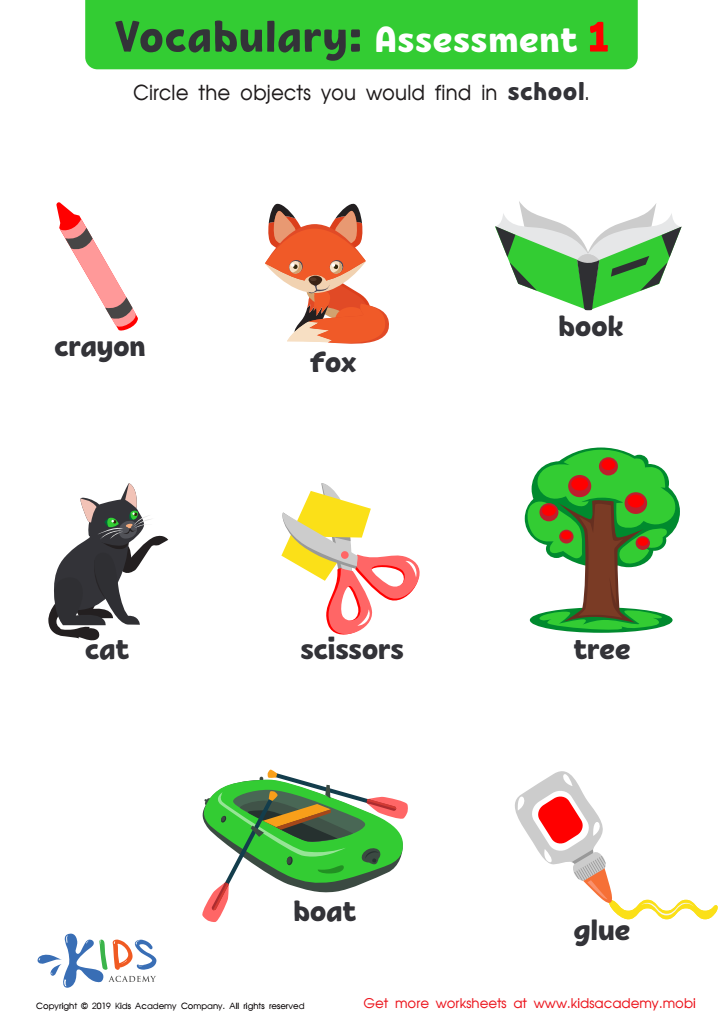
Vocabulary: Assessment 1 Worksheet
Want to check your child's vocabulary? This worksheet has kids identify objects from school through picture clues. It reinforces reading and fine motor skills, while providing an assessment of their reading growth and needs.
Vocabulary: Assessment 1 Worksheet
Worksheet
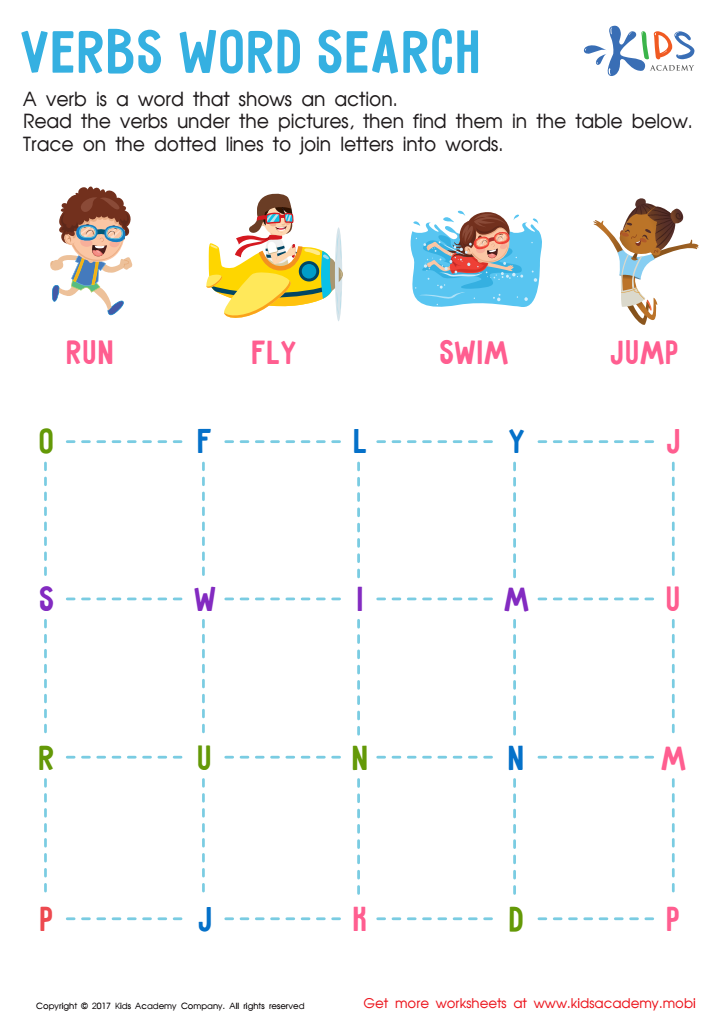
Verbs Word Search Worksheet
Ask your child if they understand the meaning of the word "verb". If not, explain that it's a word that shows an action. Give examples of familiar verbs. Then look at the pictures in the tracing sheet and read the words. Ask your child to follow the dotted lines to find the hidden words. Perfect tool to teach spot and use verbs!
Verbs Word Search Worksheet
Worksheet
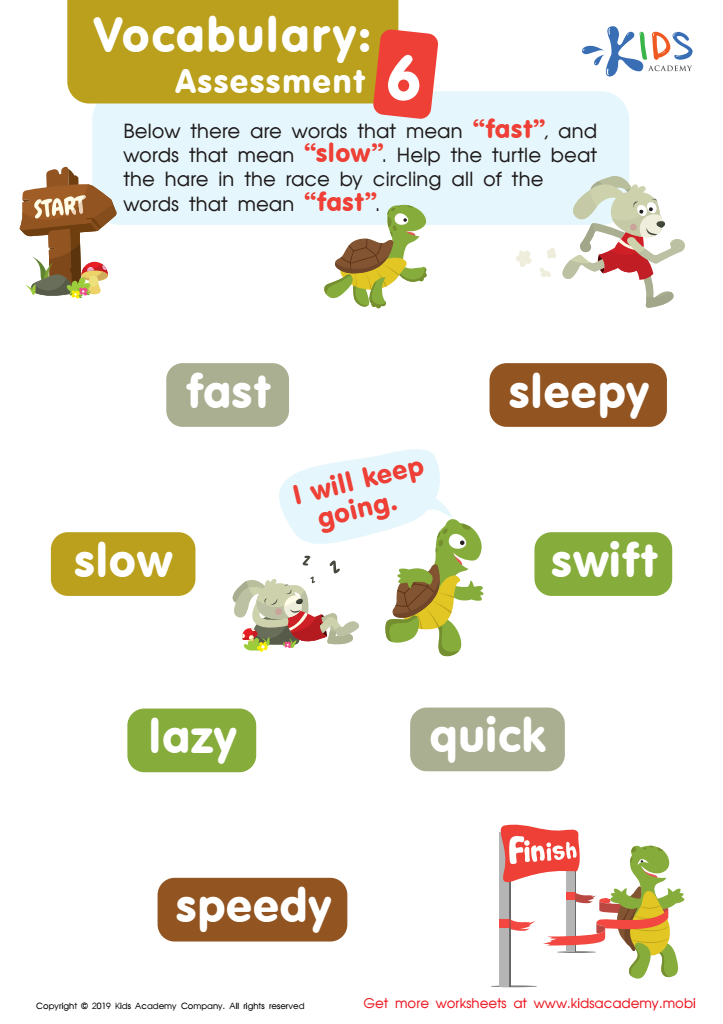
Vocabulary: Assessment 6 Worksheet
Read our turtle a tale of an old classic: the tortoise and the hare! Help him win by circling the fastest synonyms on this printable vocabulary worksheet. Each word is a synonym for either "slow" or "fast". Give our turtle a boost - circle the correct words and complete the page!
Vocabulary: Assessment 6 Worksheet
Worksheet
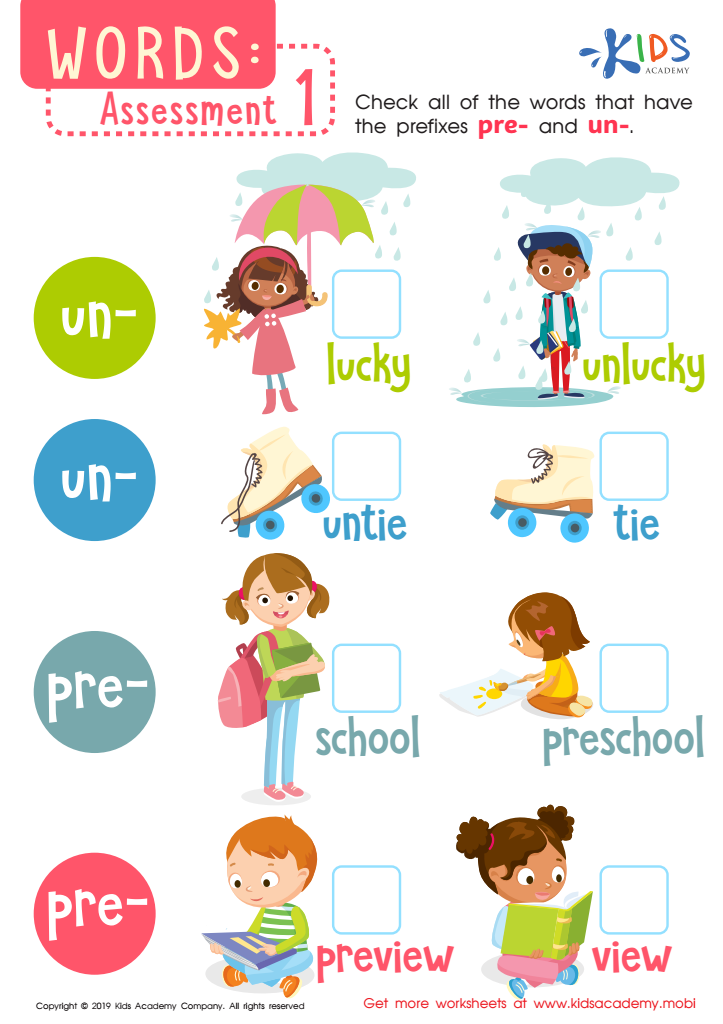
Words: Assessment 1 Worksheet
Help your child develop their knowledge of prefixes and suffixes with Kids Academy! This worksheet can test their understanding of pre- and un-. Have them view the illustrations and read the words to find the targeted prefix in each row. This is a great way to enhance their words and clarify meanings!
Words: Assessment 1 Worksheet
Worksheet
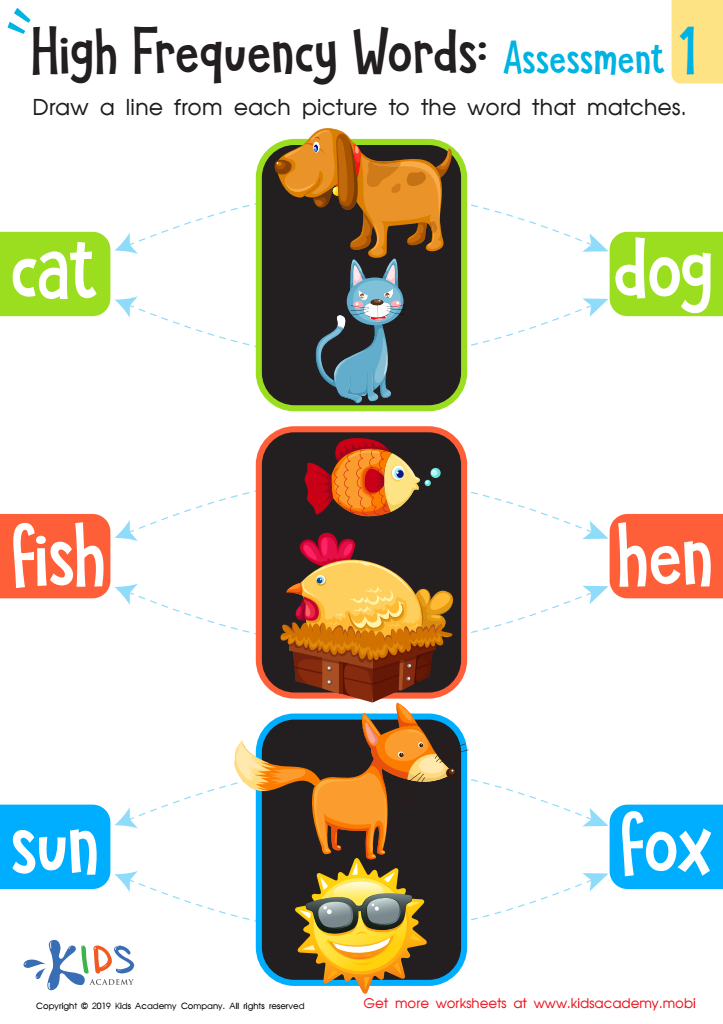
High Frequency Words: Assessment 1 Worksheet
Emergent readers need to know high-frequency words accurately and quickly to develop fluency. Connecting these words to colorful, fun pictures helps reading prosody. This assessment worksheet uses traceable lines to help learners match pictures to words.
High Frequency Words: Assessment 1 Worksheet
Worksheet
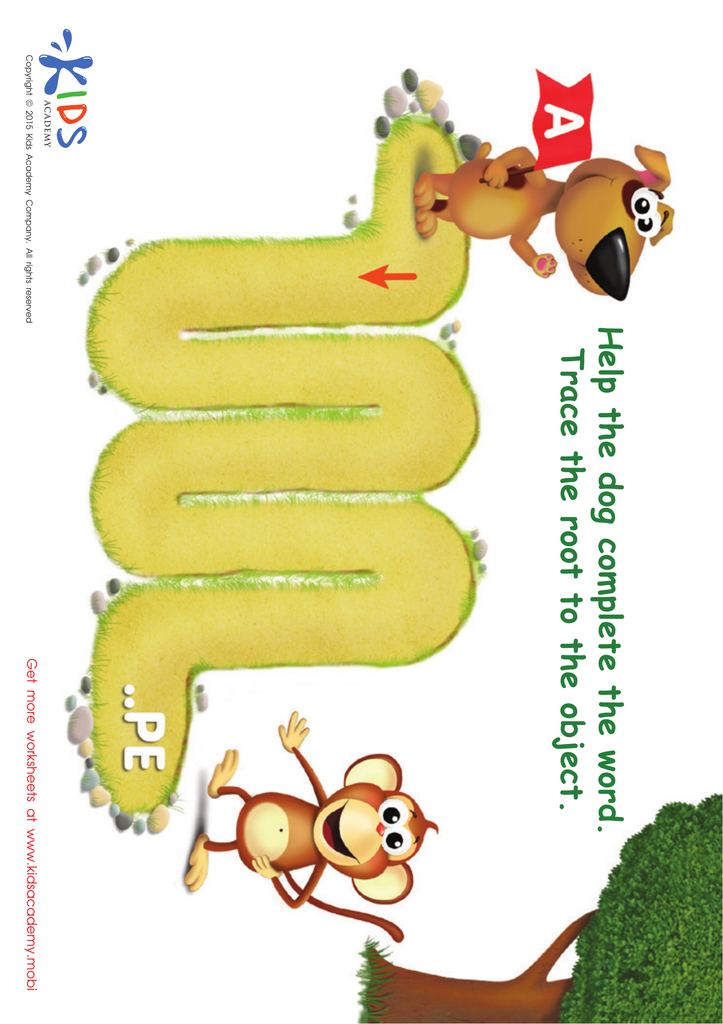
Long Vowel Sound A Worksheet Worksheet
Help our adorable dog by completing the word he's holding a flag for! Use the picture as a clue to read the word. This PDF worksheet will help early learners with pre-reading and phonics skills. For an added challenge, have your child write the word on the page near the path they drew. Be sure to talk about what the long vowel A sounds like for the best results.
Long Vowel Sound A Worksheet Worksheet
Worksheet
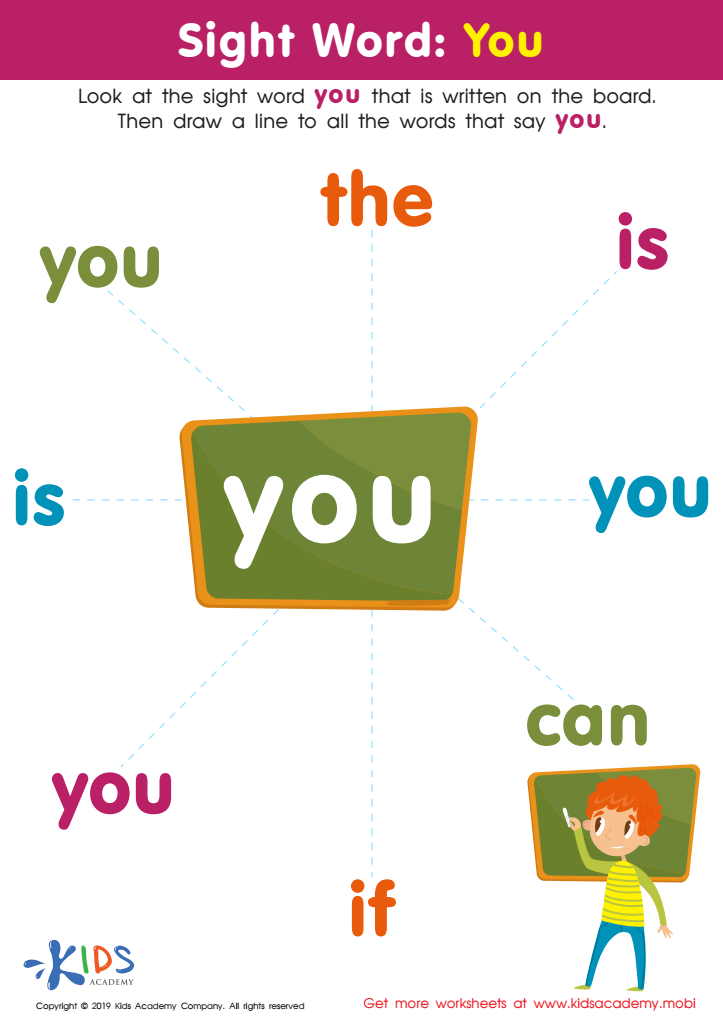
Sight Word You Worksheet
This free worksheet features the word 'you' and helps beginning readers practice visual-discriminatory skills. Using traceable lines and different colored words, it's an easy way to reinforce their identification of the word and build fluency.
Sight Word You Worksheet
Worksheet
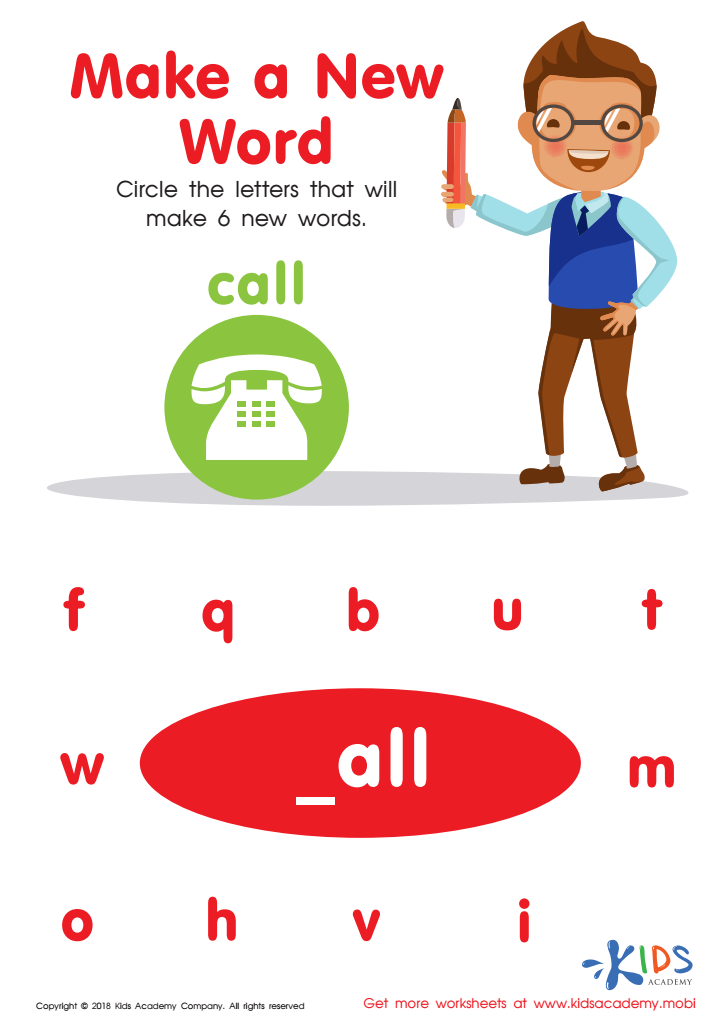
Make a New Word Worksheet
Young readers and writers can enhance their skills with this fun PDF worksheet. They'll trace letters to create new words and feel like super readers and writers after finding six words. They'll also practice building words with the "all" word family.
Make a New Word Worksheet
Worksheet
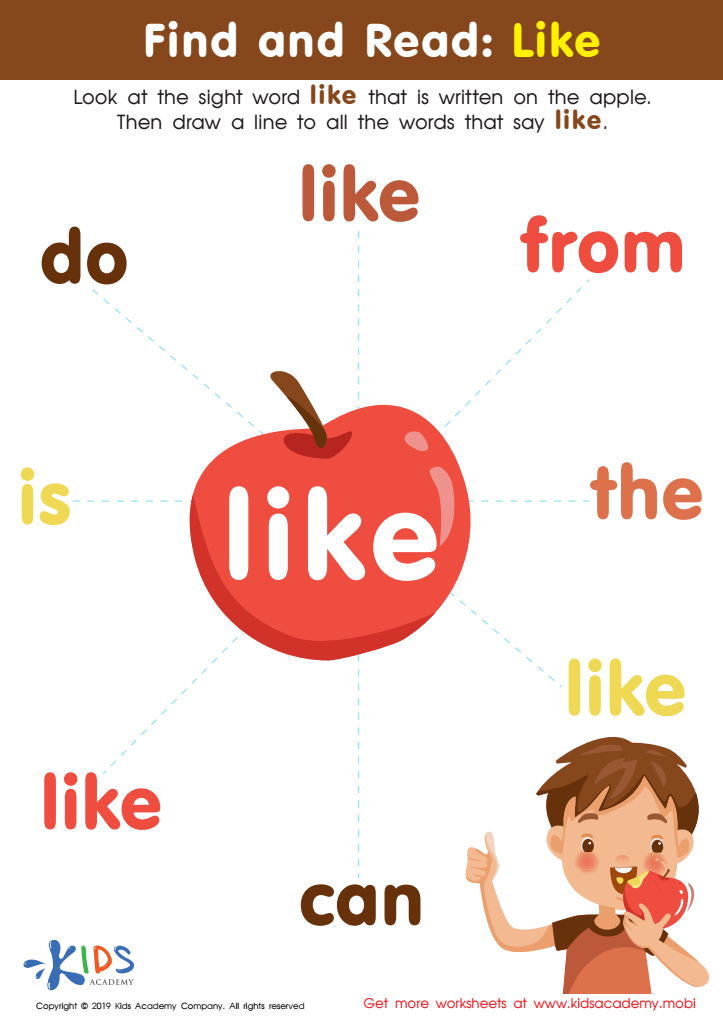
Find and Read: Like Worksheet
Reading starts with learning sight words. This free PDF worksheet helps kids learn the word "like" in various ways. It encourages their visual discrimination skills with its colorful design and traceable lines. It's a great way to help them recognize and differentiate this common sight word from other words that look similar.
Find and Read: Like Worksheet
Worksheet
Join Kids Academy for Free
Who is primarily going to use this learning content?








Spelling practice and vocabulary building for children aged 3-4 are foundational elements of early literacy that greatly influence language development and future academic success. At this age, children are remarkably receptive to new words and sounds, making it an ideal time for parents and teachers to introduce rich vocabulary through engaging activities.
Normalized spelling practice helps children develop phonemic awareness—the ability to recognize and manipulate sounds—which is crucial for reading and writing later on. A strong vocabulary equips children with the tools to express themselves clearly, facilitating better communication skills.
Additionally, building vocabulary at a young age has far-reaching benefits. It enhances cognitive skills, including memory and comprehension, and fosters critical thinking. Children who engage in interactive conversations, storytelling, and playful spelling activities become more confident in their language abilities.
By focusing on these skills early, parents and teachers lay the groundwork for lifelong learning, as children who grow up with strong language skills are more likely to excel in school and beyond. Involving children in fun spelling games and diverse reading experiences not only nurtures their linguistics but also strengthens family and classroom bonds, creating a supportive learning environment.








