
Understanding patterns Building Vocabulary Worksheets for Ages 3-4
4 filtered results
Difficulty Level
Grade
Age
-
From - To
Subject
Activity
Standards
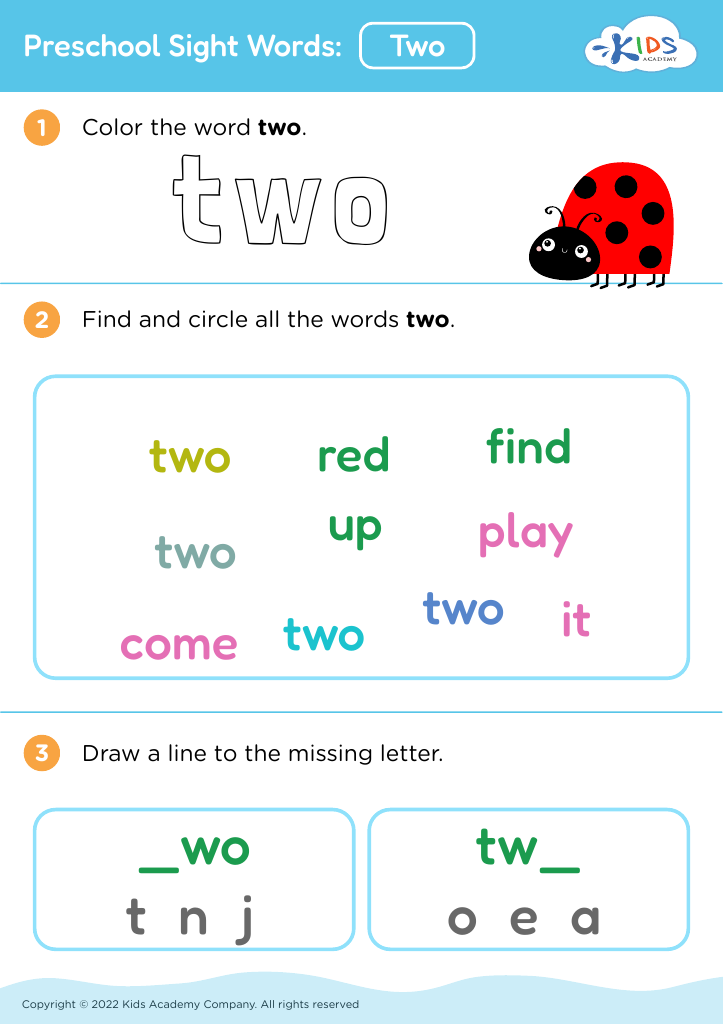
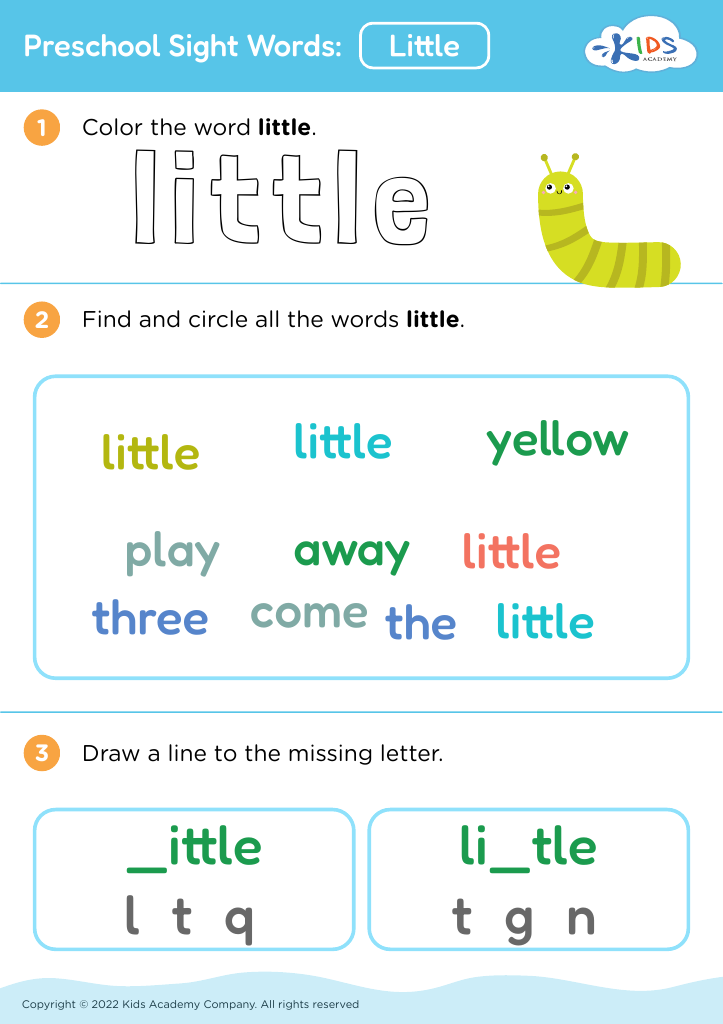
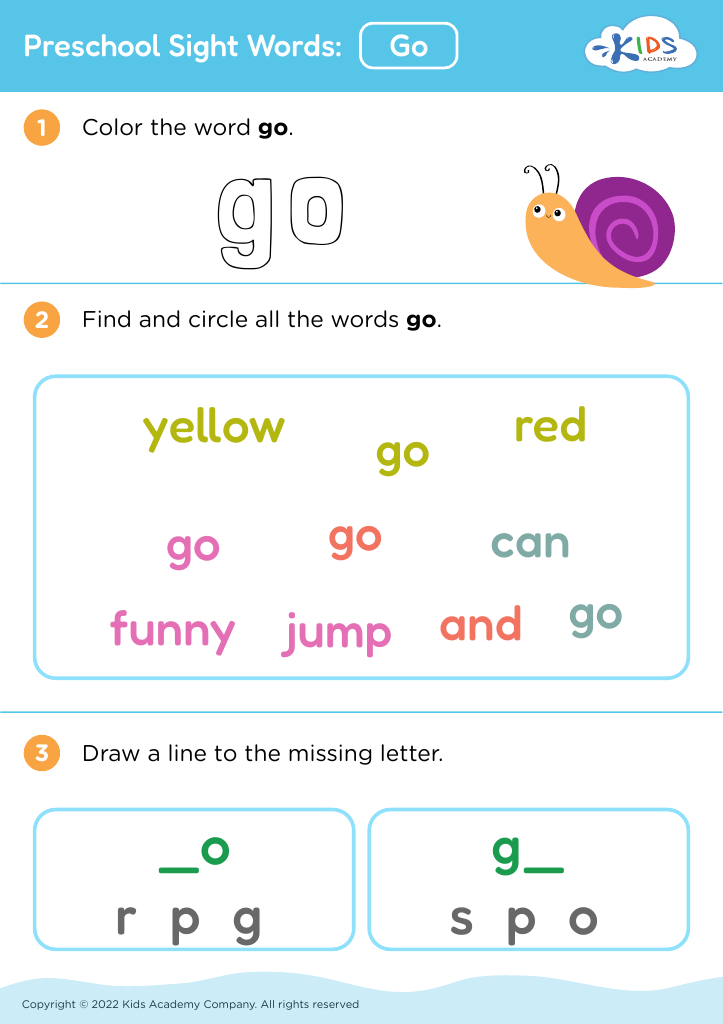
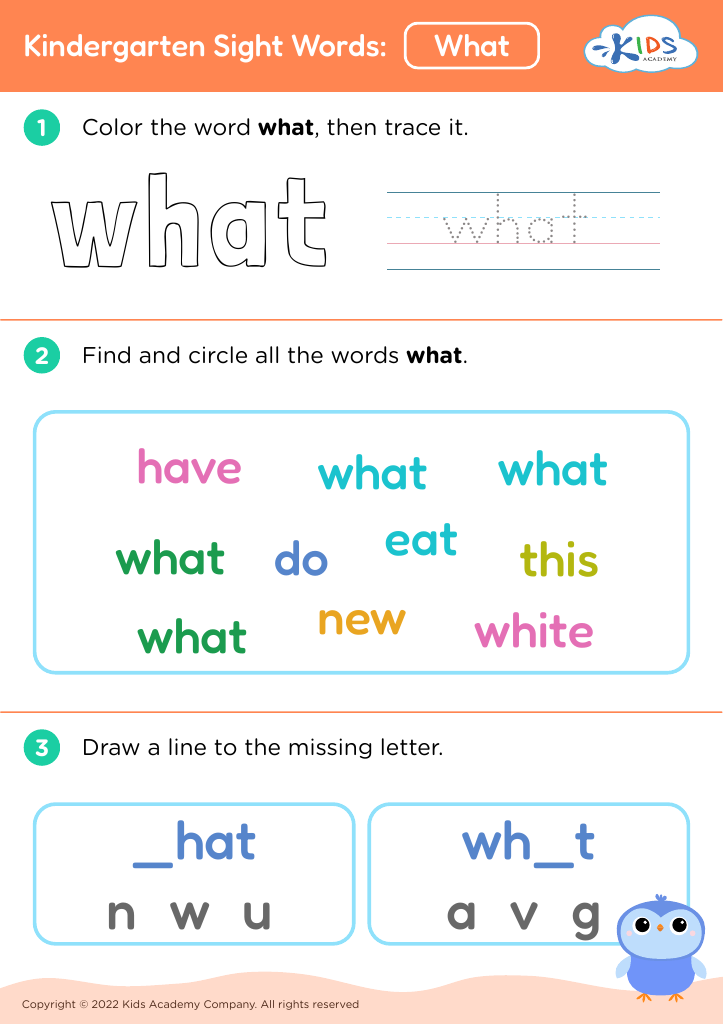
Our "Understanding Patterns Building Vocabulary Worksheets for Ages 3-4" offer a fun and engaging way for young learners to develop essential language skills. By recognizing and creating patterns, children not only build critical thinking capabilities but also expand their vocabulary. Each worksheet is thoughtfully designed to captivate little minds through enjoyable activities featuring colors, shapes, and sequences. Tailored for beginners, these exercises align with early education standards, ensuring age-appropriate challenges while fostering creativity and cognitive growth. Perfect for both home and classroom settings, our worksheets serve as an excellent resource to support your child’s language and literacy journey.
Favorites
With answer key
Interactive











Join Kids Academy for Free
Who is primarily going to use this learning content?








Understanding patterns and building vocabulary are fundamental for children aged 3-4 because they form the cornerstones of cognitive and language development, critical at this formative stage. Recognizing patterns equips children with problem-solving skills and logical thinking. For instance, when children understand patterns in shapes, colors, or numbers, they develop the ability to predict and reason, which is essential for later mathematical concepts. Foster an environment where pattern recognition activities, like sorting blocks by shape or color, are given regular attention.
Equally important is vocabulary building. A rich vocabulary enhances a child’s ability to communicate effectively, express emotions, and understand the world around them. Young children absorb words rapidly; hence, engaging them in diverse conversations, reading stories aloud, and introducing new words daily is paramount. As vocabulary grows, it also supports reading comprehension and academic confidence in later years.
Therefore, both pattern recognition and vocabulary development should be integral parts of a child's daily routine. Parents and teachers who prioritize these skills help lay a robust foundation for lifelong learning and success in various academic subjects and everyday interactions. Incorporating games, books, and hands-on activities that stimulate these areas can make learning both effective and enjoyable for young children.








