Understanding suffixes Building Vocabulary Worksheets for Ages 3-4
3 filtered results
-
From - To
Expand your child's vocabulary with our "Understanding Suffixes Building Vocabulary Worksheets for Ages 3-4". These carefully designed worksheets help young learners grasp the concept of suffixes, enhancing their word comprehension and language skills. Each engaging activity guides children through fun and educational exercises, making learning effortless and enjoyable. Perfect for early grade teachers and parents, these resources nurture foundational literacy in a playful way. Available for download at Kids Academy, start building your child's language prowess and prepare them for reading success. Discover the joy of learning with our playful and effective vocabulary worksheets today.
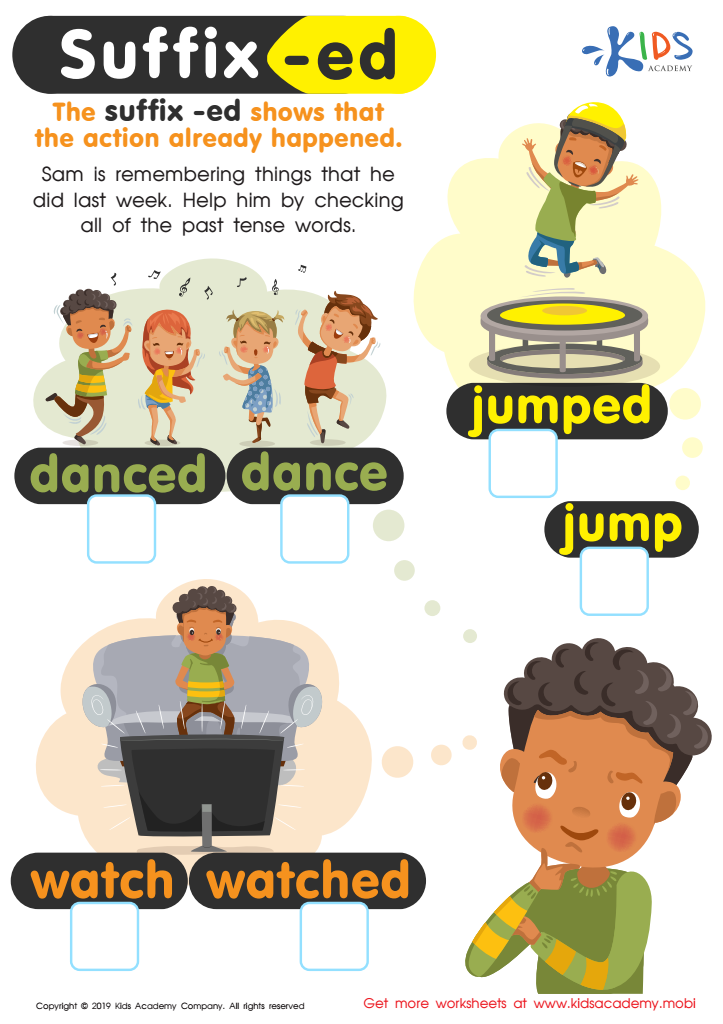
Suffix-ed Worksheet
 Assign to My Students











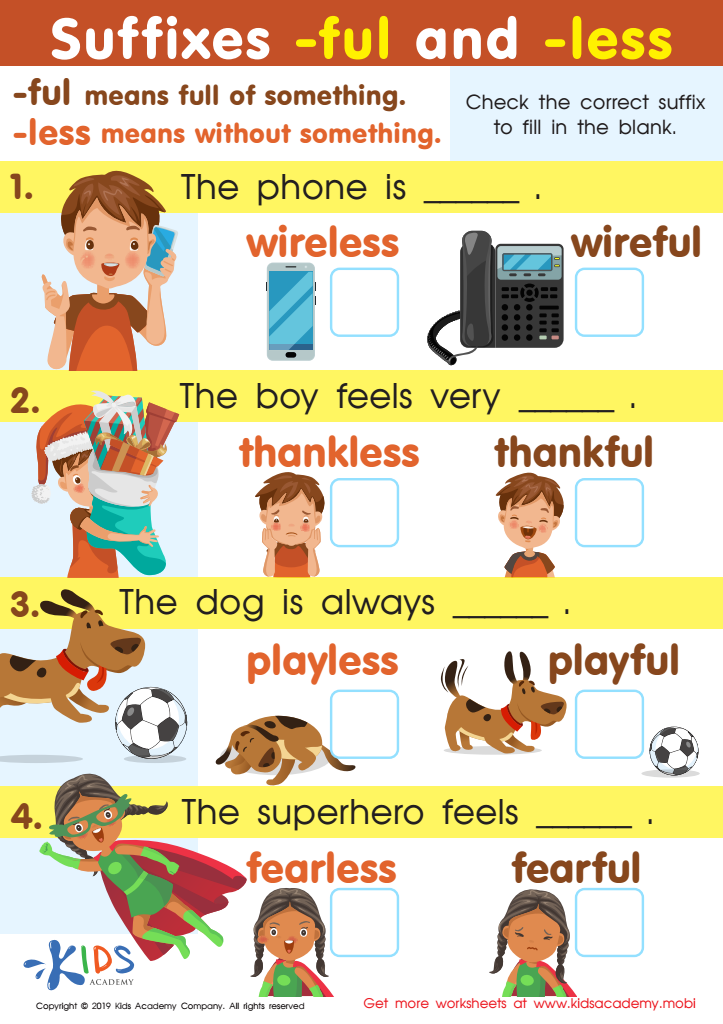
Suffixes –ful and –less Worksheet
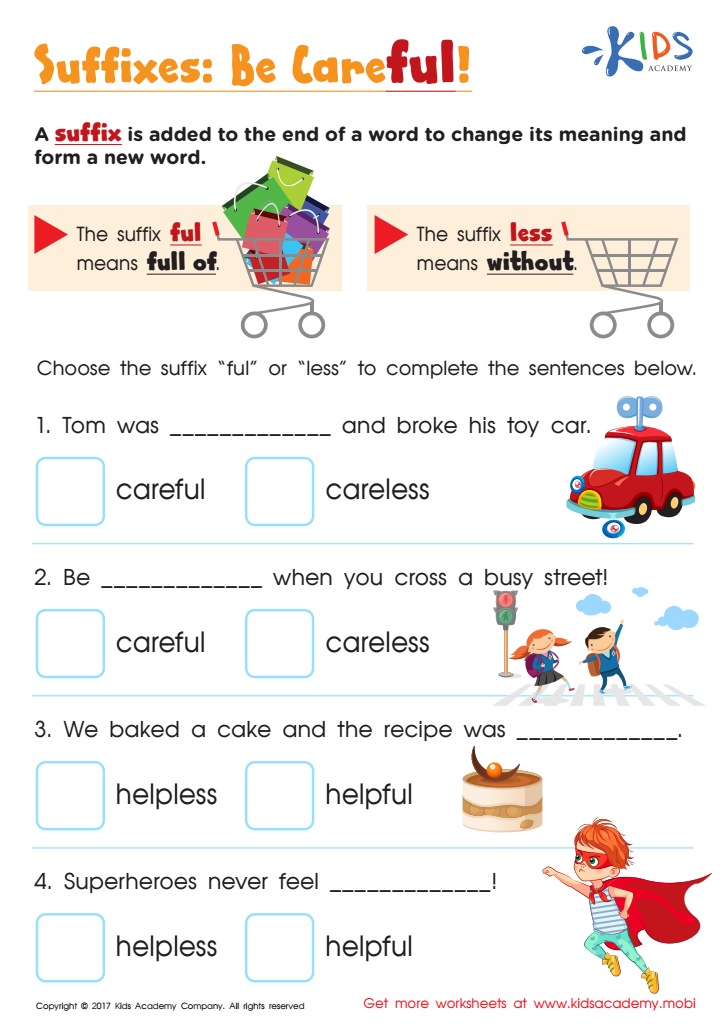
Suffixes Ful and Less Worksheet



.jpg)




Understanding suffixes and building vocabulary are crucial components of early language development for ages 3-4. At this formative stage, children are rapidly absorbing language, and introducing them to basic suffixes helps expand their vocabulary, aids in reading comprehension, and promotes both spoken and written communication skills.
Suffixes, simple word-endings like '-s,' '-ed,' and '-ing,' introduce young learners to a world of word-formation. For example, adding '-s' makes plurals, which helps the child understand quantity words, expanding beyond singular terms they've already learned. Understanding that '-ed' means something happened in the past gives them a grasp of time. Recognizing '-ing' helps convey action in progress, thereby enhancing their narrative skills.
Additionally, a robust vocabulary is foundational for academic success and effective communication. Exposure to a variety of words, and understanding how they can be modified, builds cognitive flexibility essential for complex problem-solving and critical thinking. Engaging in vocabulary-building activities also promotes curiosity and love for learning among young children.
When parents and teachers incorporate suffixes in playful, age-appropriate ways, they help children build a strong linguistic foundation, setting the stage for literacy, social interaction, and overall educational success.








