Visual interpretation Reading Fiction Worksheets for Ages 3-4
3 filtered results
-
From - To
Introduce your little ones to the charm of storytelling with our Visual Interpretation Reading Fiction Worksheets for Ages 3-4 at Kids Academy. Designed to spark their imagination, these worksheets encourage children to engage deeply with stories through vibrant illustrations. By interpreting visual elements, preschoolers develop critical thinking and comprehension skills in a fun and interactive way. Ideal for early learners, our resources are tailored to balance enjoyment with education, fostering a love for reading while building foundational skills. Start your child's literary adventure today with our expertly crafted activities that make fiction reading irresistible.
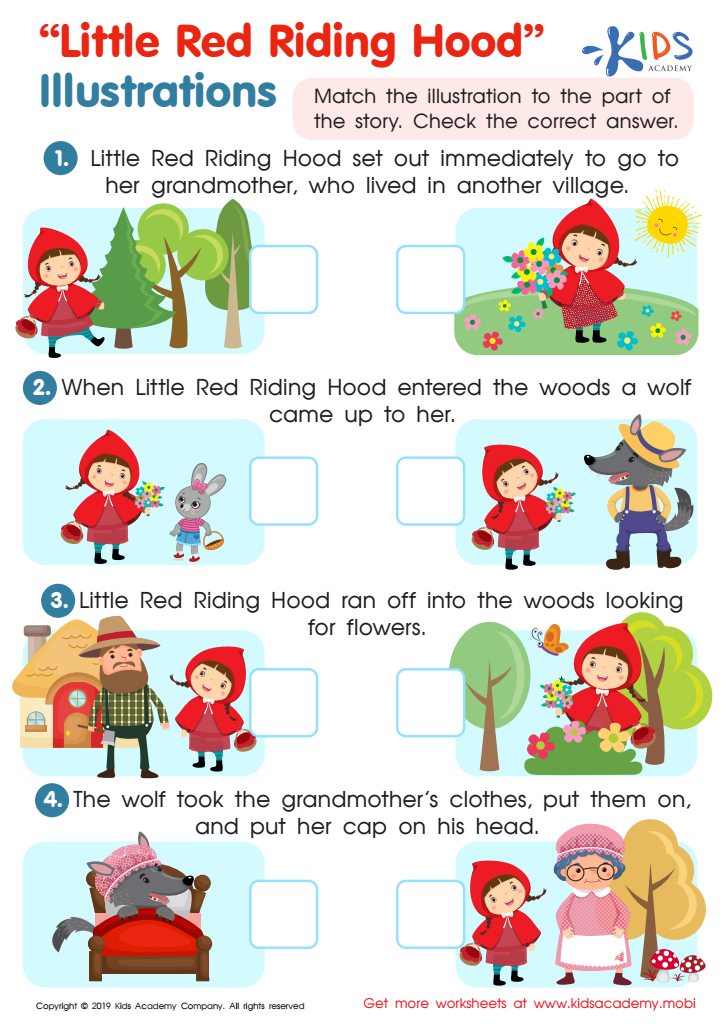
Little Red Riding Hood: Illustrations Worksheet
 Assign to My Students
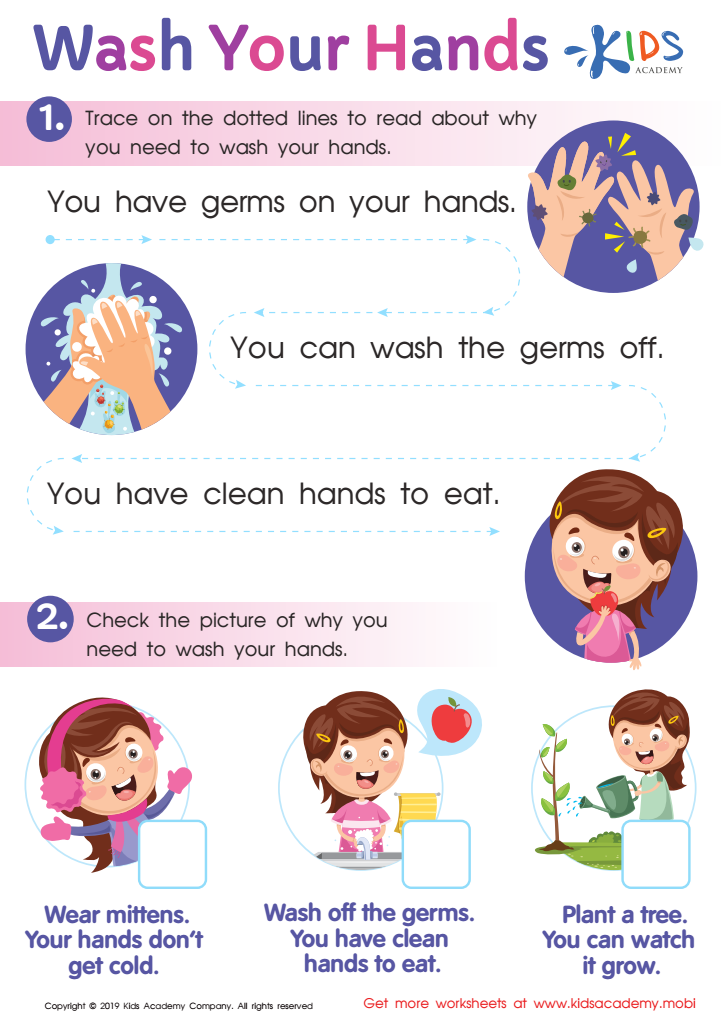
Wash Your Hands Worksheet
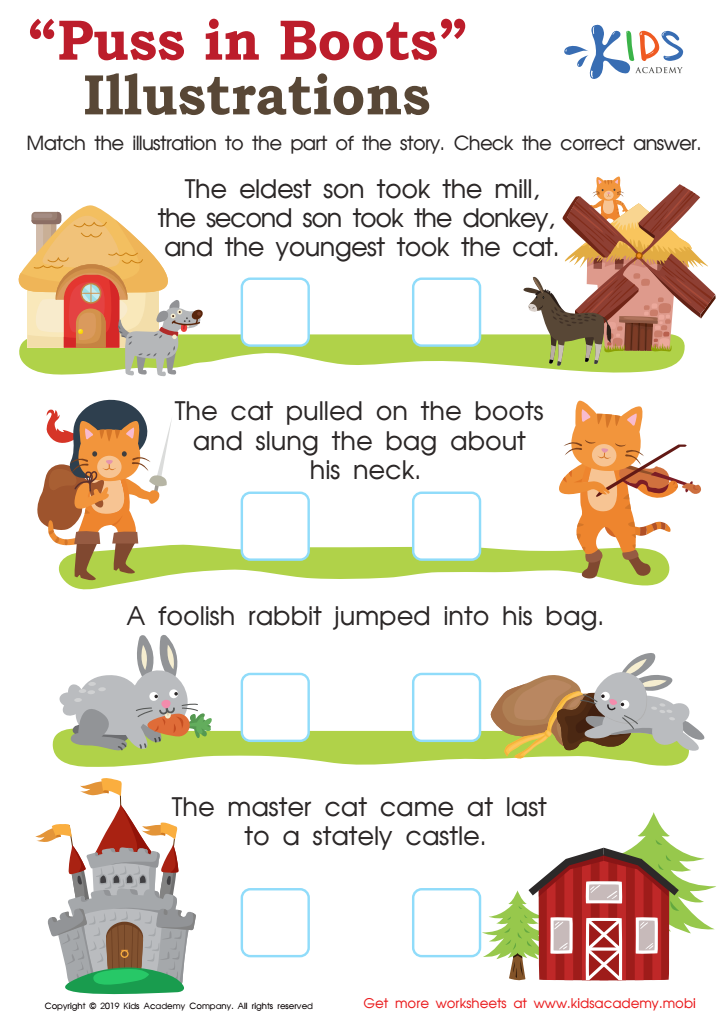
Puss in Boots Illustrations Worksheet








Visual interpretation plays a crucial role in the early literacy development of children aged 3-4 as they engage with fiction. At this age, children are developing their language and cognitive skills rapidly, and pictures in books offer a gateway to understanding and enjoying stories even before they can read words fluently. Picture books, which combine vibrant illustrations with simple text, help young children grasp narrative structures like beginning, middle, and end.
For parents, engaging in visual interpretation activities can significantly enhance quality bonding time. Discussing pictures in a story promotes vocabulary growth, comprehension, and expressive language skills. For instance, asking a child questions about a picture encourages them to think critically and describe what they observe, paving the way for more complex reasoning skills.
Teachers, too, have much to gain from focusing on visual interpretation in early literacy. It provides an inclusive way to engage all learners, regardless of their current reading level. Visual cues support children in making predictions, enhancing their ability to infer meaning, and fostering empathy by seeing and discussing varied characters and scenarios.
Overall, emphasizing visual interpretation when reading fiction nurtures a child’s creativity, listening, and observational skills, forming an essential foundation for lifelong literacy and learning.








