
Vocabulary development Reading Fiction Worksheets for Ages 3-4
4 filtered results
Difficulty Level
Grade
Age
-
From - To
Subject
Activity
Standards
Introducing our engaging Vocabulary Development Reading Fiction Worksheets for ages 3-4! Designed to enhance early literacy skills, these worksheets encourage young children to explore the magic of storytelling. Through interactive activities, children will build their vocabulary by identifying new words, matching pictures, and completing sentences. Each worksheet is thoughtfully crafted to inspire creativity and foster a love for reading, making learning fun and effective. Ideal for parents and educators, these resources support language development by immersing kids in fiction while promoting comprehension and word recognition. Spark your child's imagination and equip them with essential skills today!
Favorites
With answer key
Interactive
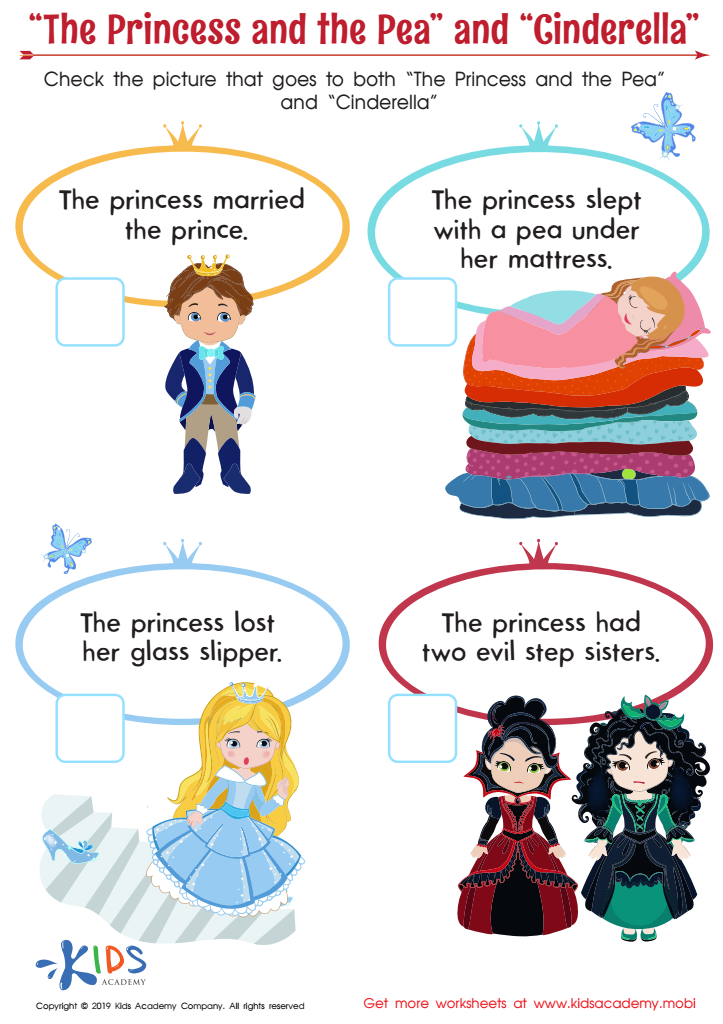
“The Princess and the Pea” and “Cinderella” Worksheet
Read "Cinderella" and "The Princess and the Pea" to your little ones. Ask them what their favorite parts were and what similarities they found in the princesses. This worksheet has four pictures of scenes from the stories. Ask your kids which picture goes with both tales.
 Assign to My Students
“The Princess and the Pea” and “Cinderella” Worksheet
Worksheet
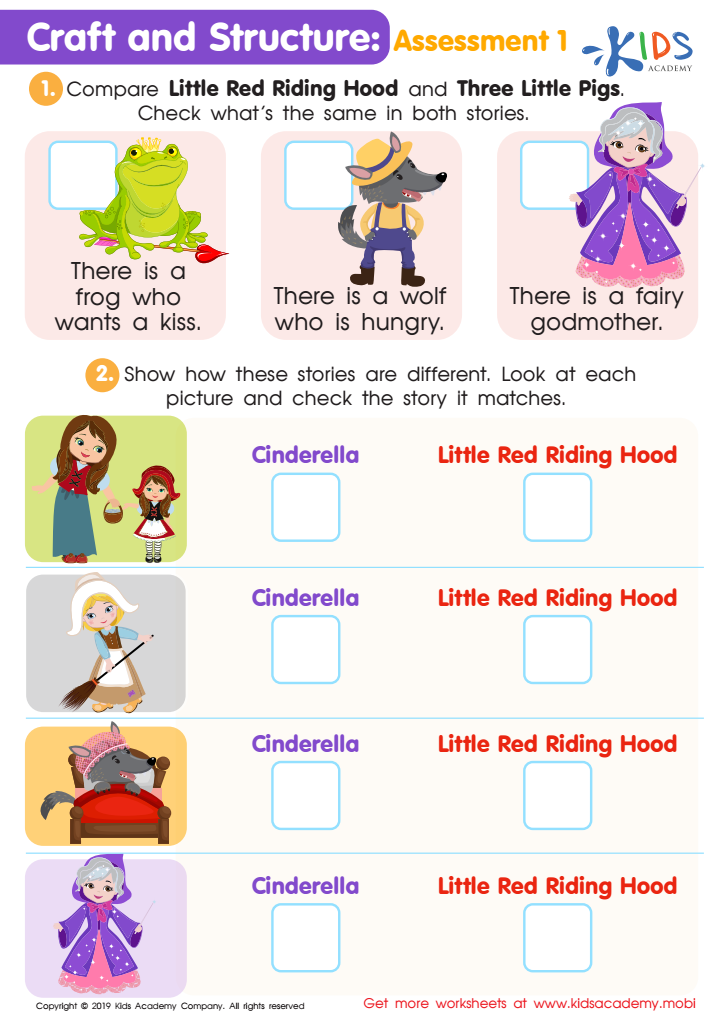
Craft and Structure: Assessment 1 Worksheet
Fairytales are a great way to bond with your kids while teaching them. Popular stories include Little Red Riding Hood and Three Little Pigs. Test how well they understood these two with this assessment worksheet. Ask them to compare the two stories and check what is the same. Doing this will help kids learn new words and sentence construction, as well as teaching them life lessons.
Craft and Structure: Assessment 1 Worksheet
Worksheet
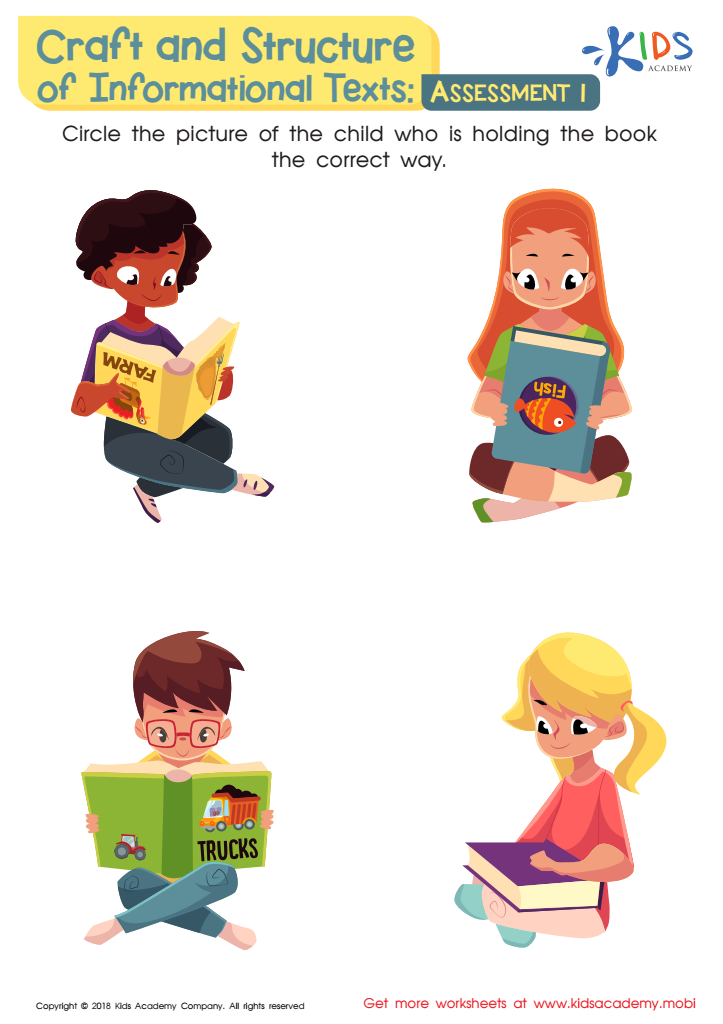
Craft and Structure of Informational Texts: Assessment 1 Worksheet
Young children need to know how to hold books correctly when they start reading. This assessment worksheet helps them show they know what to do. They'll look at the pictures and circle the child who is holding the book correctly. It's a great way to tell they are well on their way to becoming lifetime readers!
Craft and Structure of Informational Texts: Assessment 1 Worksheet
Worksheet
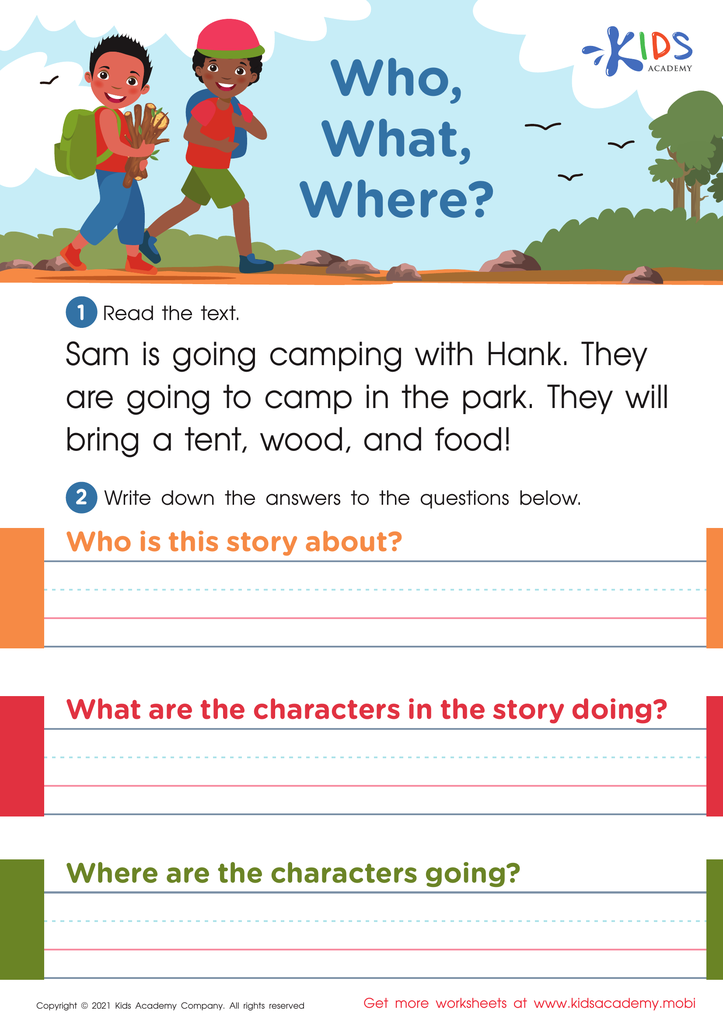
Who, What, Where? Worksheet
The availability of technology has changed the way students learn and interact with their environment in a very meaningful way.
Technology has revolutionized learning and interaction for students. It offers an array of opportunities to engage with their surroundings, leading to a more meaningful educational experience.
Who, What, Where? Worksheet
Worksheet
Join Kids Academy for Free
Who is primarily going to use this learning content?


.jpg)




Parents and teachers should prioritize vocabulary development through reading fiction for children aged 3-4 because it lays the foundation for their language skills and cognitive growth. At this age, children are incredibly receptive to new words, and engaging with stories introduces them to diverse vocabulary in context, enhancing comprehension and retention.
Reading fiction nurtures imagination and promotes critical thinking as children visualize characters, settings, and events. Hearing expressive storytelling not only captivates young minds but also exposes them to sentence structure, grammar, and the rhythm of language. This exposure aids in building a robust vocabulary that will benefit reading fluency and writing competence as they progress.
Furthermore, reading together fosters emotional connections and strengthens bonds between caregivers and children. It allows for shared experiences, creating opportunities for conversations that deepen understanding and encourage curiosity.
Lastly, a rich vocabulary is linked to academic success in later years. By encouraging reading fiction at this early stage, parents and educators are investing in children’s future, equipping them with the language skills essential for effective communication, problem-solving, and overall learning. In summary, promoting vocabulary development through reading fiction at ages 3-4 is crucial for linguistic, cognitive, and emotional growth.








