Reading comprehension Reading Non-Fiction Worksheets for Ages 3-4
5 filtered results
-
From - To
Explore our engaging Reading Comprehension Non-Fiction Worksheets designed for ages 3-4! These resources aim to spark curiosity and enhance critical thinking skills in young learners. Each worksheet introduces interesting topics drawn from real-world concepts, tailored to the developmental needs of preschoolers. Children will practice comprehension skills through fun activities that encourage them to explore and understand information presented in various formats. These printable worksheets promote literacy and foster a love for reading, making learning enjoyable and interactive. Perfect for parents and educators alike, our worksheets support early childhood education and lay the foundation for lifelong learning. Discover the joy of knowledge today!
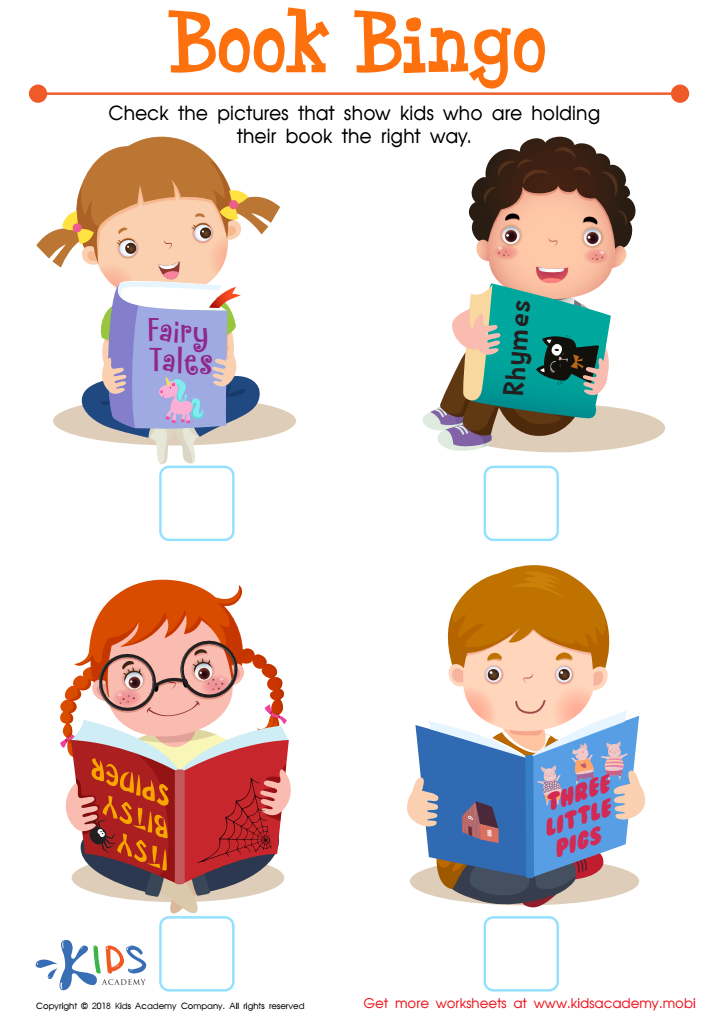
Book Bingo Worksheet
 Assign to My Students
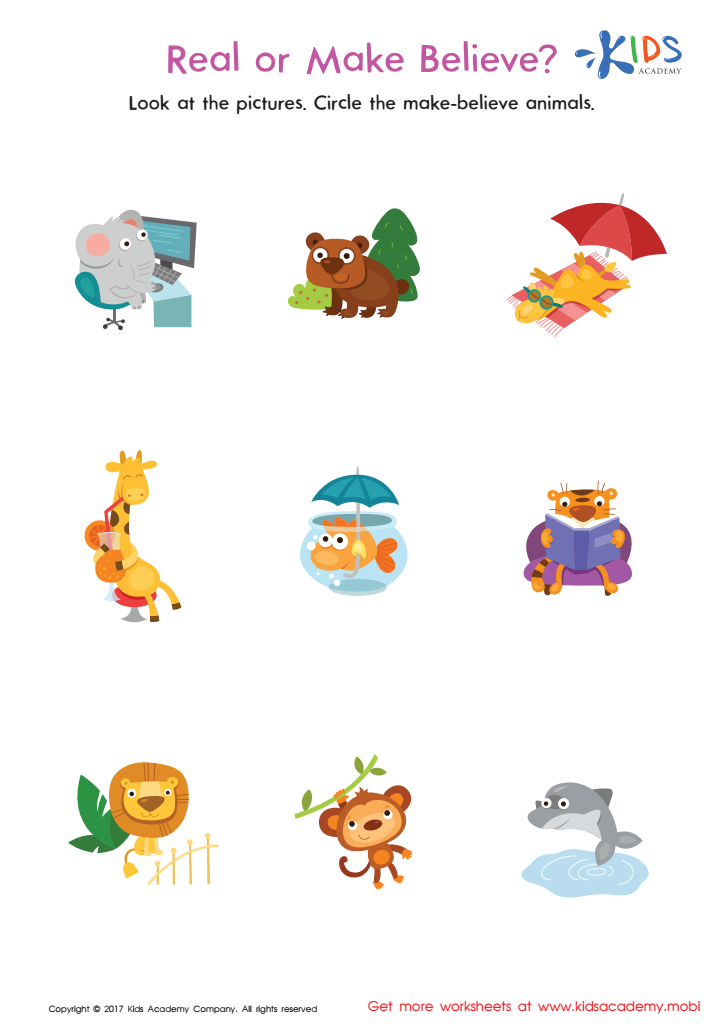
Fact or Make Believe Worksheet
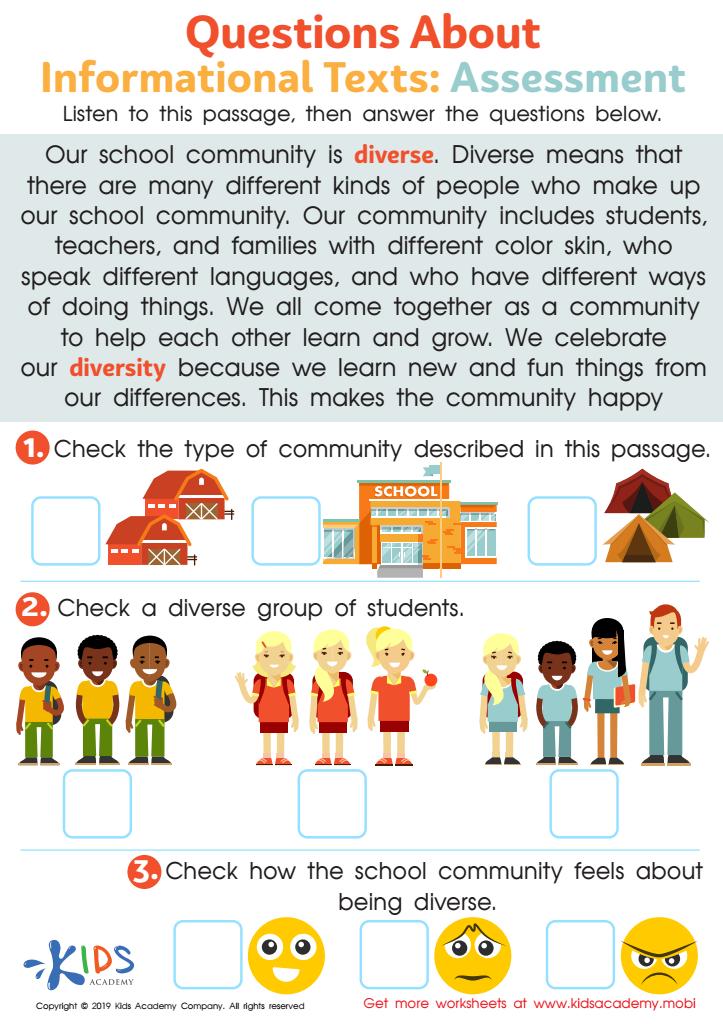
Questions About Informational Texts: Assessment 1 Worksheet
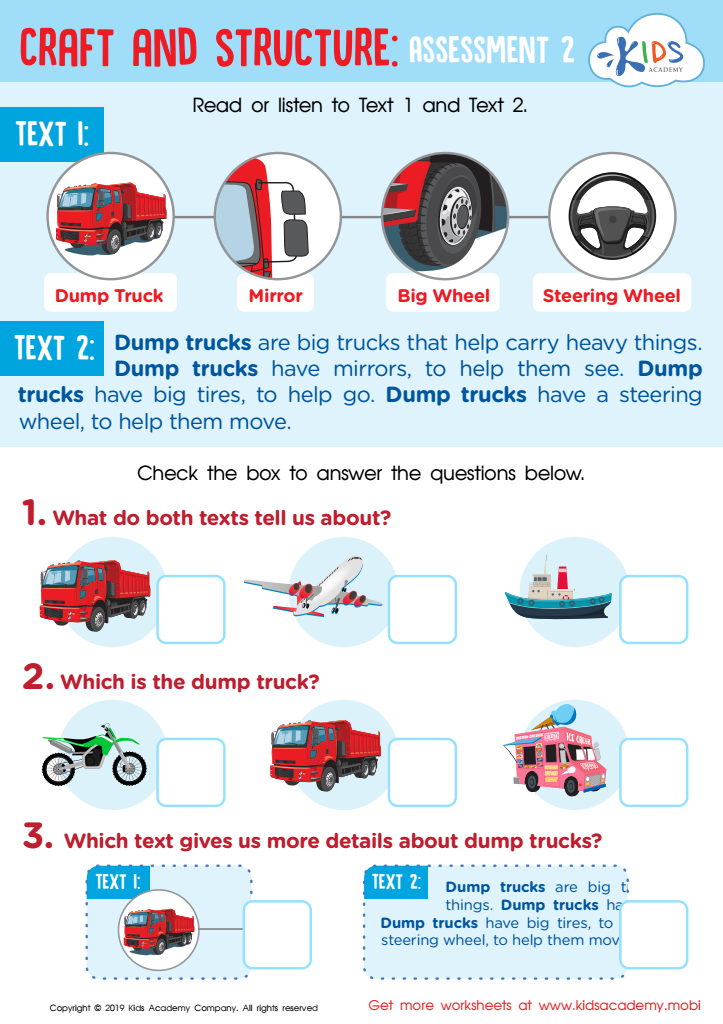
Craft and Structure: Assessment 2 Worksheet
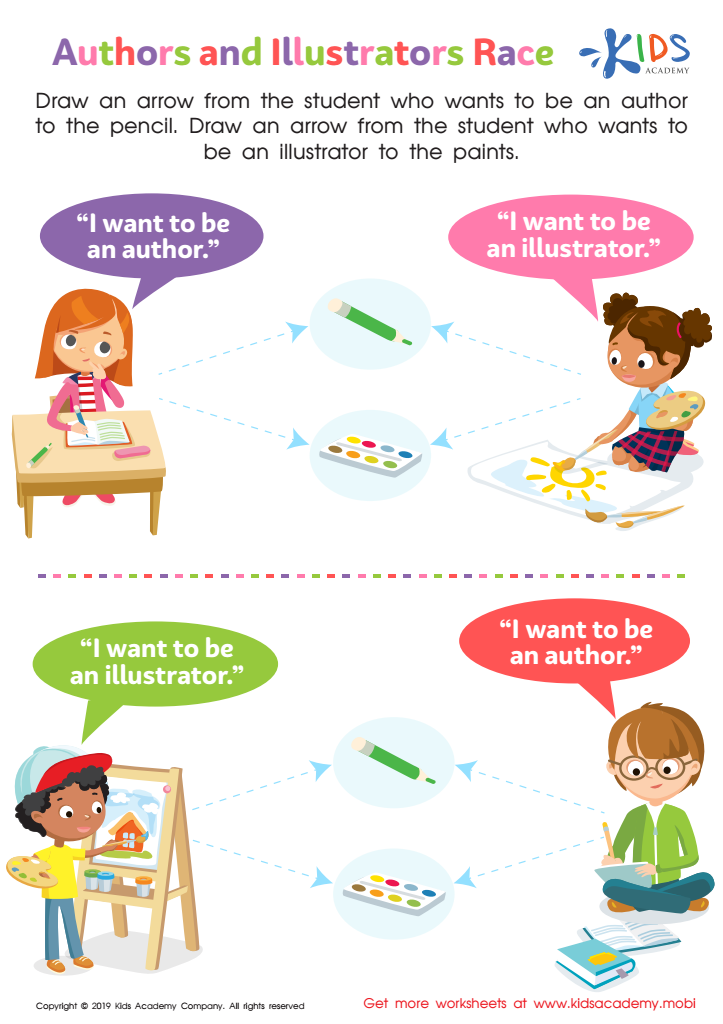
Authors and Illustrators Race Worksheet








Reading comprehension, particularly of non-fiction texts, is a critical skill for children ages 3-4, and both parents and teachers play an essential role in fostering this ability. At this young age, children are naturally curious and eager to learn about the world around them. Exposing them to non-fiction reading materials—such as simple books about animals, nature, or community helpers—helps to nurture this curiosity and encourages an appreciation for factual information.
Reading non-fiction enhances vocabulary and language skills as kids encounter new words and concepts. By grasping the main ideas and details in these texts, children develop critical thinking, enabling them to connect information to their own experiences. Engaging with factual content also lays the groundwork for future academic success, as early comprehension skills are associated with later reading achievements.
Moreover, discussing non-fiction texts allows parents and teachers to model analytical thinking and questioning strategies, fostering a dialogue that promotes deeper comprehension. By caring about reading comprehension at such an early stage, caregivers and educators help cultivate lifelong learners who are informed, curious, and ready to explore their world with a critical eye. Encouraging love for reading now establishes foundational skills that will benefit children throughout their educational journeys.








