Improving reading skills Sight Words Worksheets for Ages 3-4
3 filtered results
-
From - To
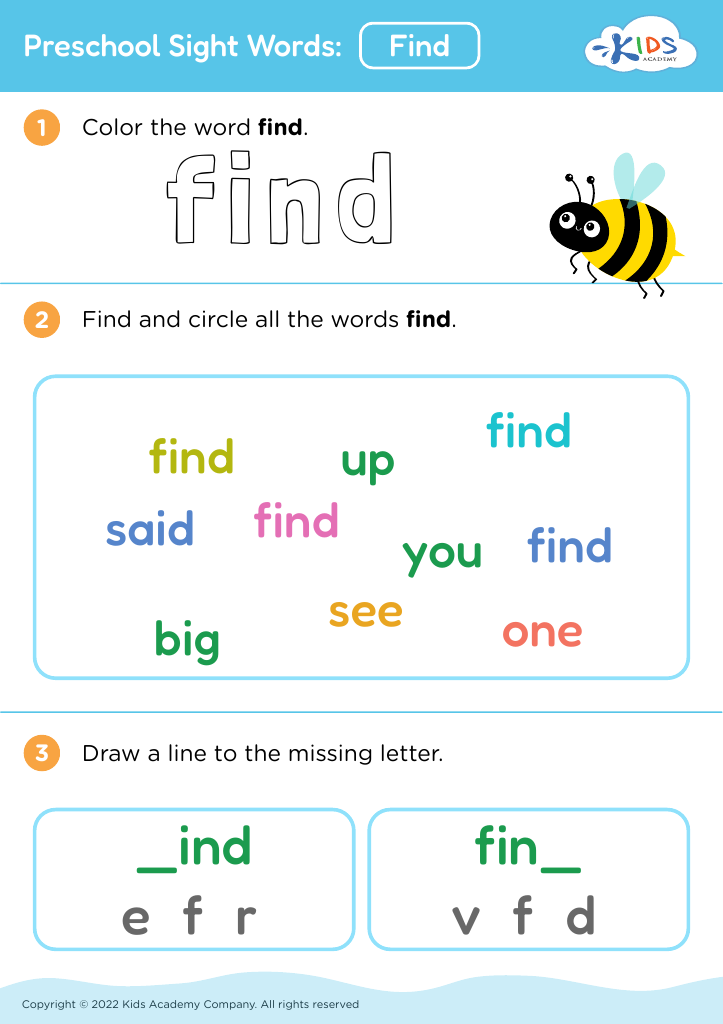
Discover our "Improving Reading Skills: Sight Words Worksheets" designed specifically for children ages 3-4! These engaging worksheets focus on essential sight words, helping young learners build a strong foundation for reading. Through fun activities, your child will increase word recognition and comprehension, making reading a delightful experience. Our user-friendly materials promote interactive learning, allowing kids to practice at their own pace. With colorful illustrations and engaging exercises, these worksheets are perfect for parents and educators who want to nurture early literacy skills. Start your child’s reading journey today with our thoughtfully crafted sight words worksheets!



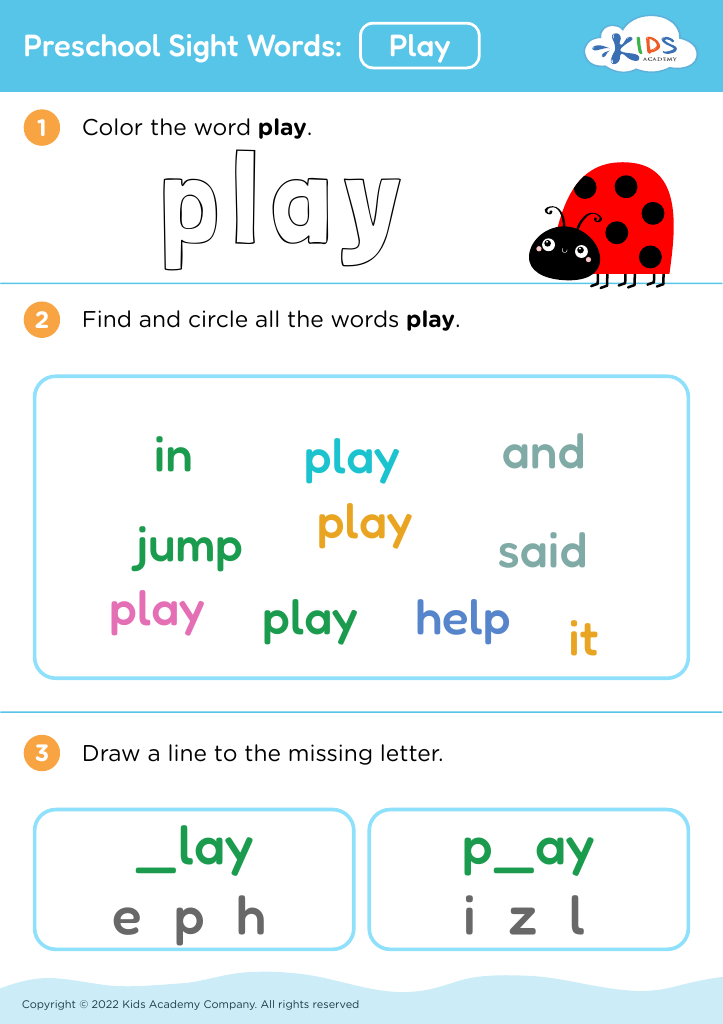
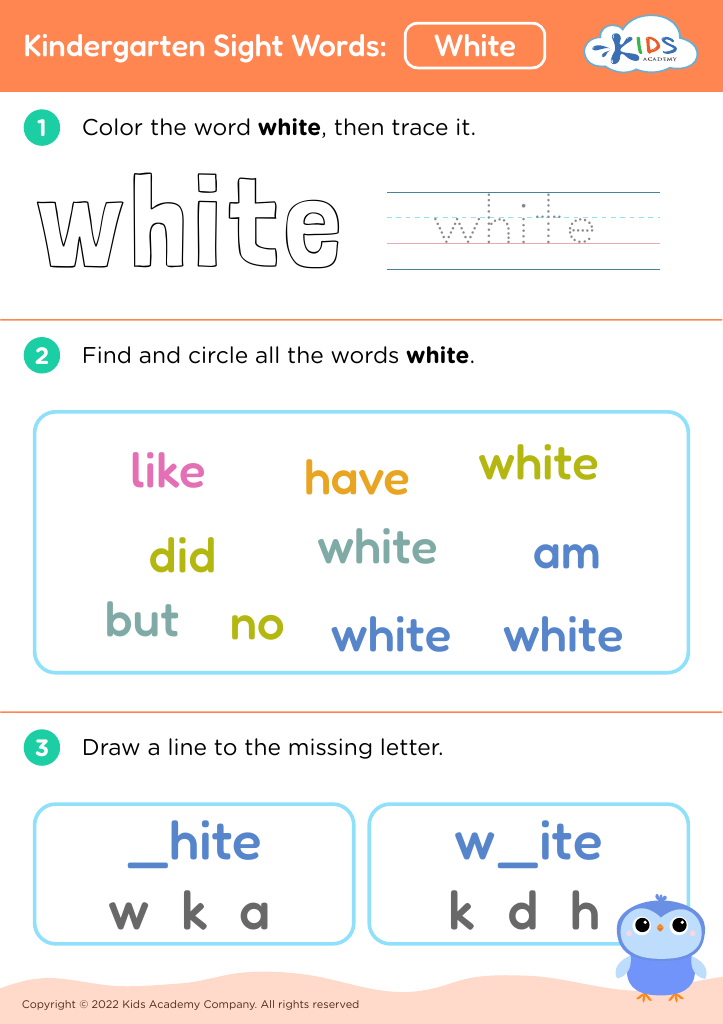








Improving reading skills, particularly sight words, in children aged 3-4 is crucial for their early literacy development. Sight words are commonly used words that children need to recognize instantly, helping them to read fluently and comprehend text better. At this age, children are like sponges, eagerly absorbing language through interactions with adults, stories, and play activities.
Parents and teachers play an essential role in nurturing this aspect of a child’s learning. Building a strong foundation in sight words enhances vocabulary, spelling, and overall reading confidence. Early proficiency allows children to engage with books and other reading materials sooner, fostering a love for reading that can last a lifetime.
Additionally, recognizing sight words paves the way for more advanced reading skills. Early readers can transition from word recognition to understanding, enhancing their ability to interpret simple sentences and narratives independently. This independence boosts self-esteem and motivation, encouraging lifelong learning.
Furthermore, a child's ability to read impacts academic success across subjects, making it vital for parents and teachers to actively participate in cultivating reading skills from a young age. Investing in literacy at this stage sets the groundwork for a brighter educational future.