Introduce young learners to fractions effortlessly with our "Understanding Fractions Sight Words Worksheets" designed for ages 3-4. These engaging, easy-to-follow worksheets blend foundational math concepts with essential sight words, perfect for early learners. Our activities focus on visual and hands-on methods to help children recognize, compare, and understand fractions while boosting their reading skills. With colorful graphics and interactive tasks, kids will find learning fractions enjoyable and approachable. Perfect for preschoolers and early Kindergarten children, these worksheets offer a fun and educational way to enhance their early math and literacy skills simultaneously. Start your child’s journey to mastering fractions today!
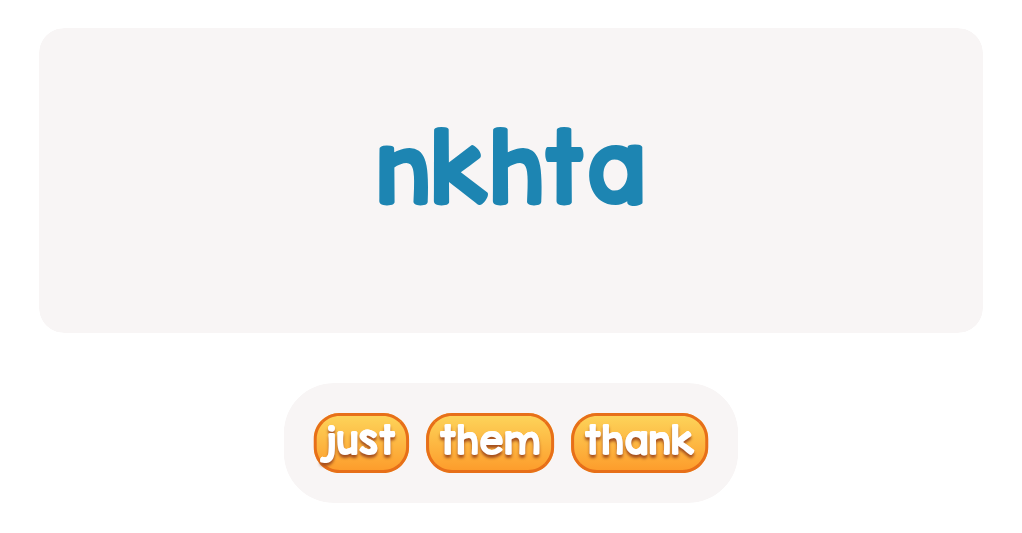
Check out this FREE Trial Lesson on Sight Words for age 3-4!

Sorting Objects into 3 Categories

Favorites
With answer key
Interactive
  • 3-4
  • Understanding fractions
  • Sight Words
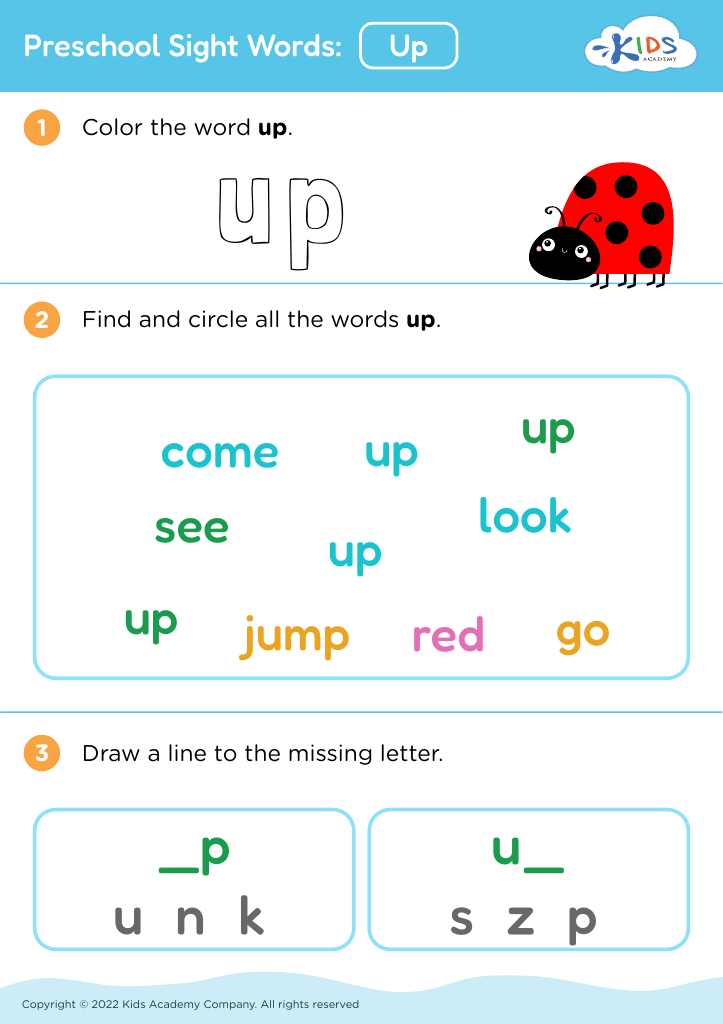
Preschool Sight Words: Up

Preschool Sight Words: Up

Preschool Sight Words: Up
Worksheet
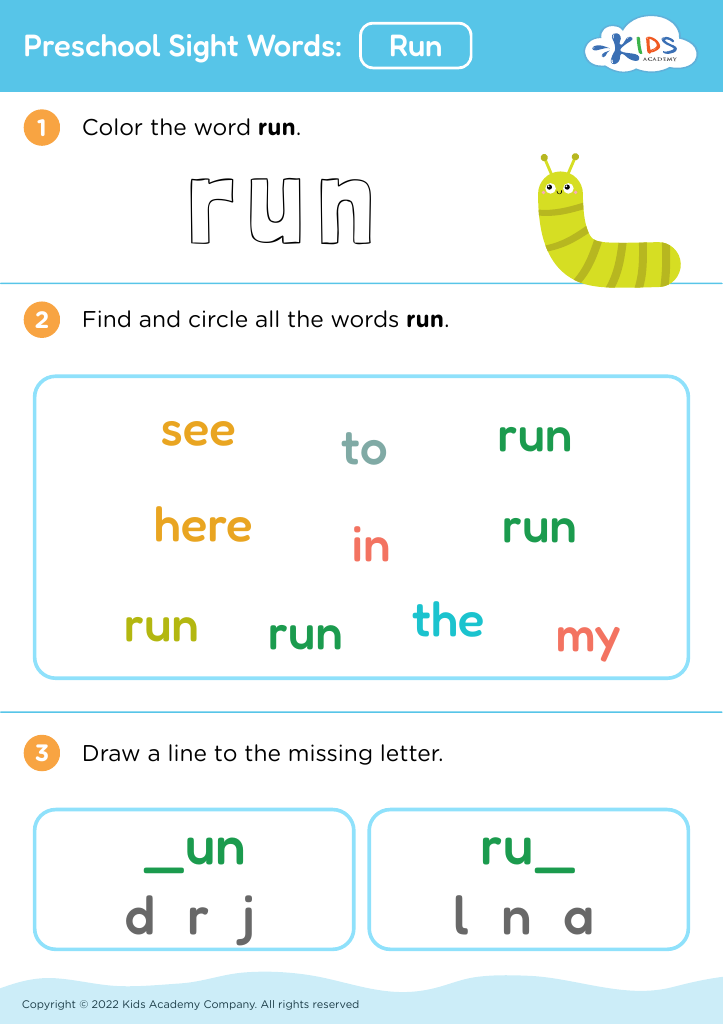
Preschool Sight Words: Run

Preschool Sight Words: Run

Preschool Sight Words: Run
Worksheet
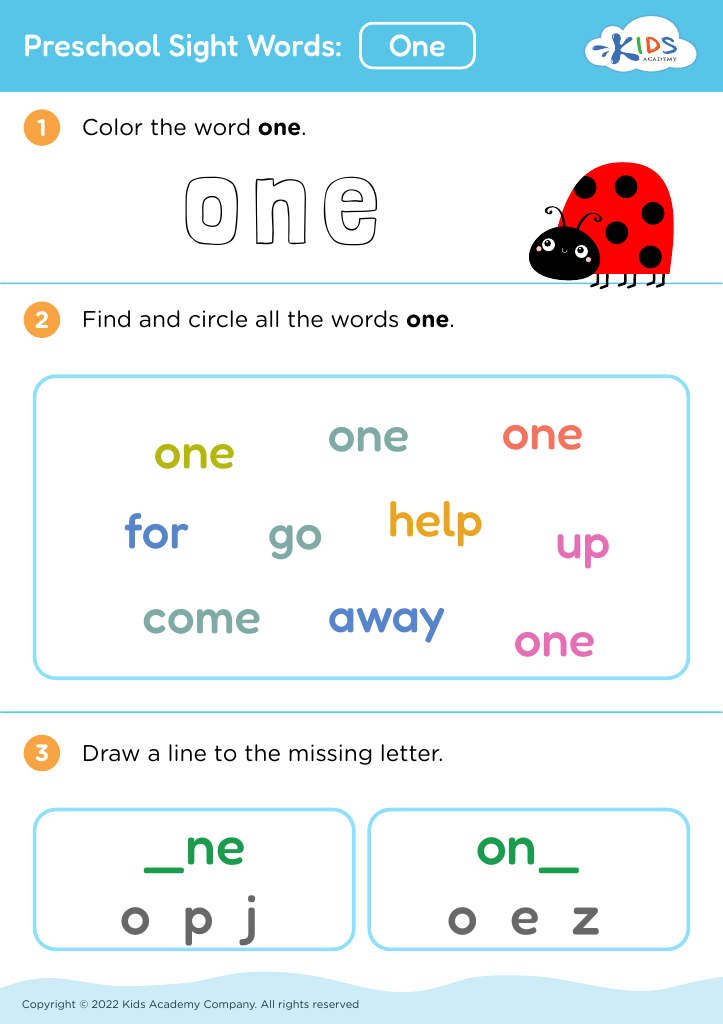
Preschool Sight Words: One

Preschool Sight Words: One

Preschool Sight Words: One
Worksheet
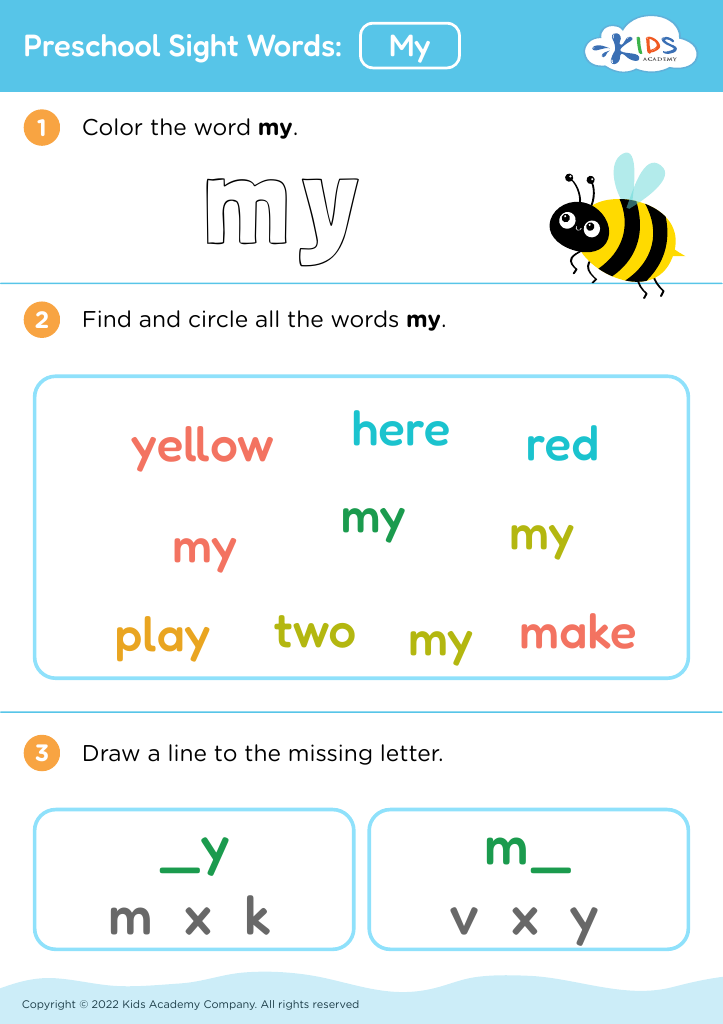
Preschool Sight Words: My

Preschool Sight Words: My

Preschool Sight Words: My
Worksheet
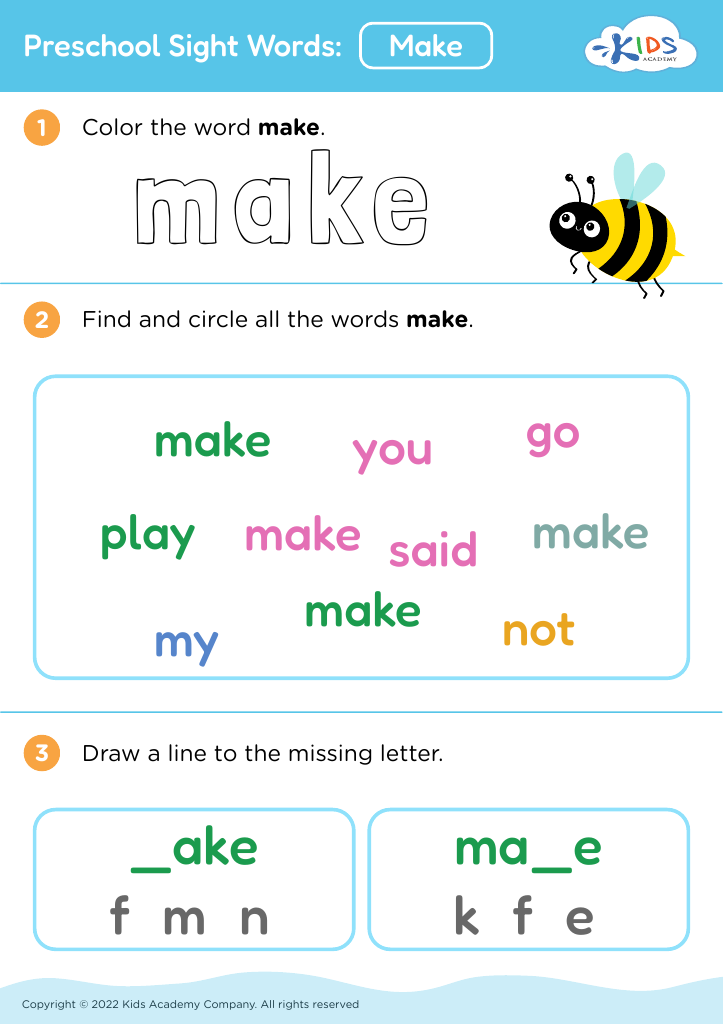
Preschool Sight Words: Make

Preschool Sight Words: Make

Preschool Sight Words: Make
Worksheet
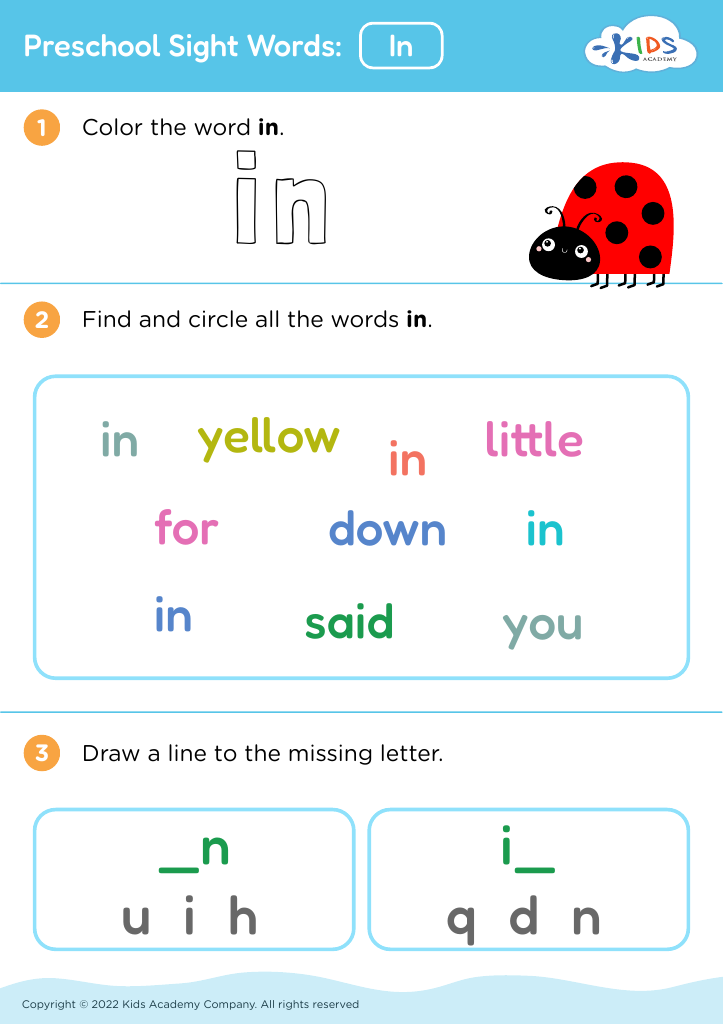
Preschool Sight Words: In

Preschool Sight Words: In

Preschool Sight Words: In
Worksheet
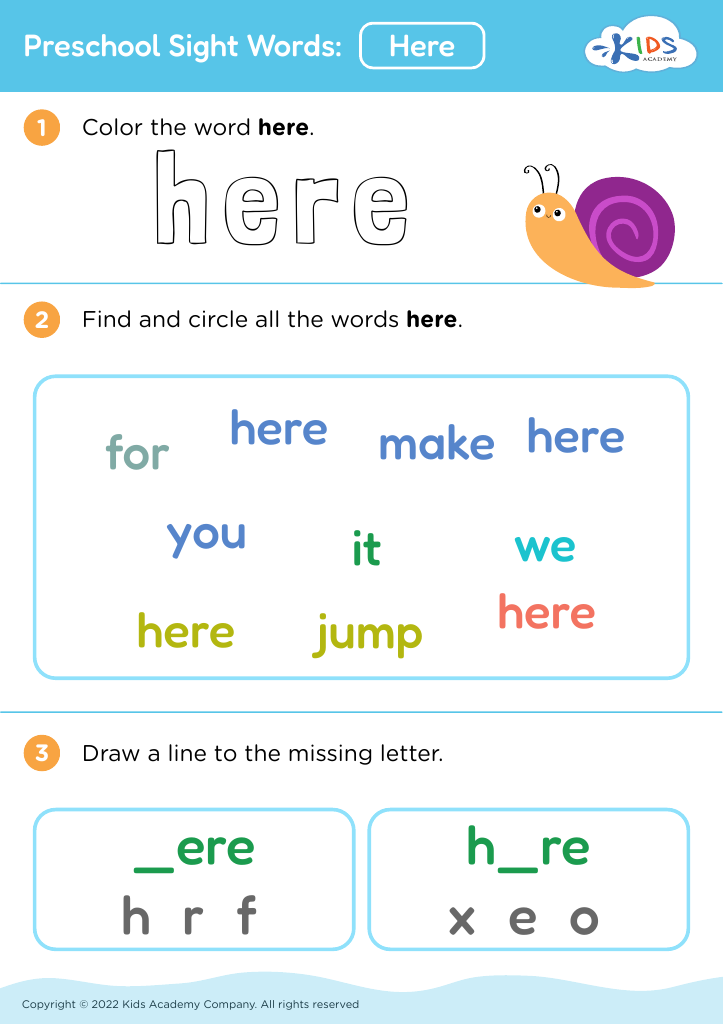
Preschool Sight Words: Here

Preschool Sight Words: Here

Preschool Sight Words: Here
Worksheet
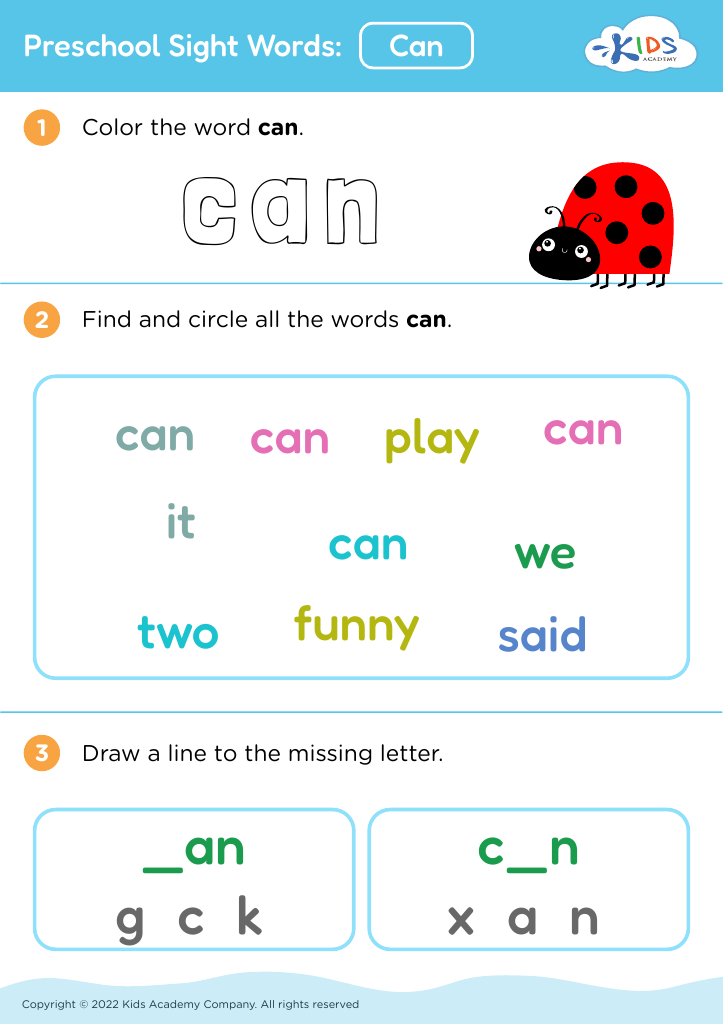
Preschool Sight Words: Can

Preschool Sight Words: Can

Preschool Sight Words: Can
Worksheet
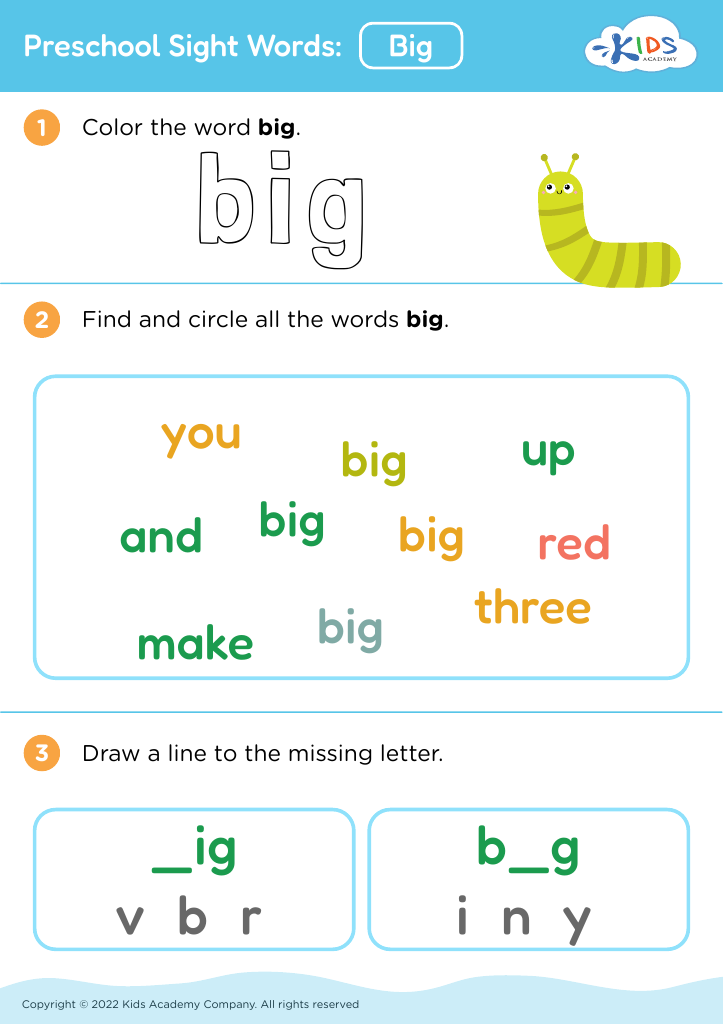
Preschool Sight Words: Big

Preschool Sight Words: Big

Preschool Sight Words: Big
Worksheet
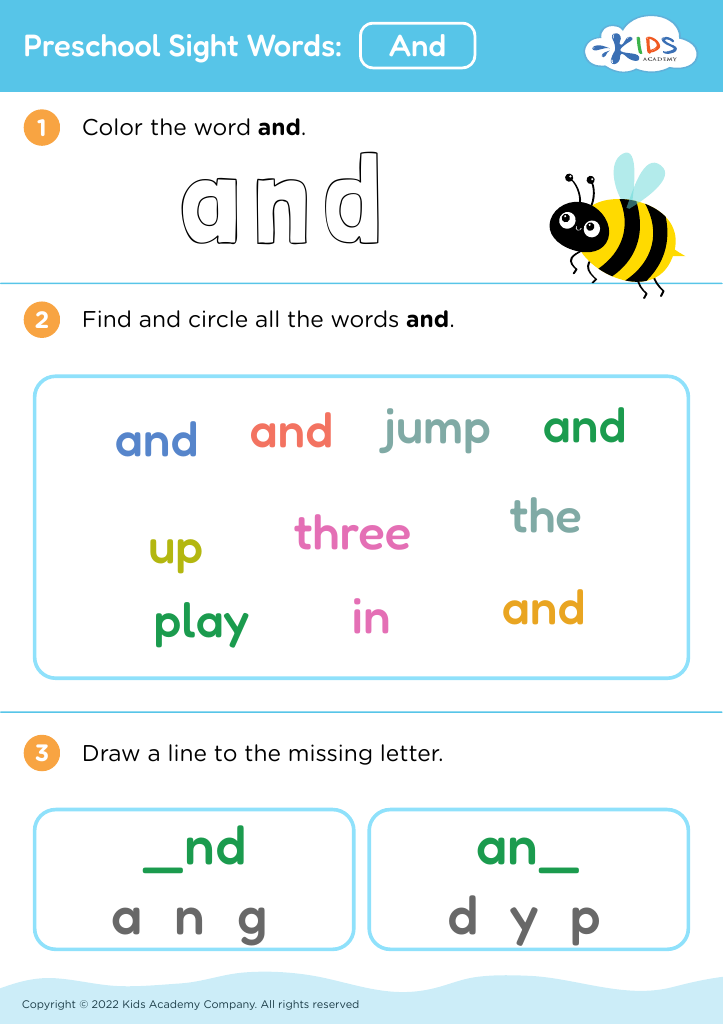
Preschool Sight Words: And

Preschool Sight Words: And

Preschool Sight Words: And
Worksheet
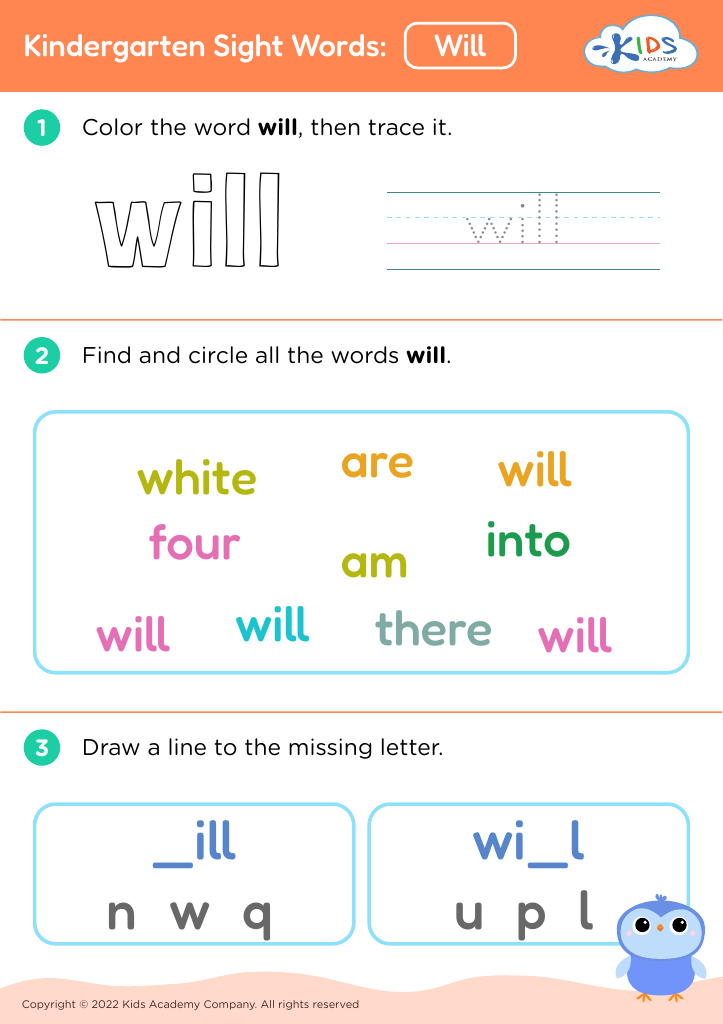
Kindergarten Sight Words: Will

Kindergarten Sight Words: Will

Kindergarten Sight Words: Will
Worksheet
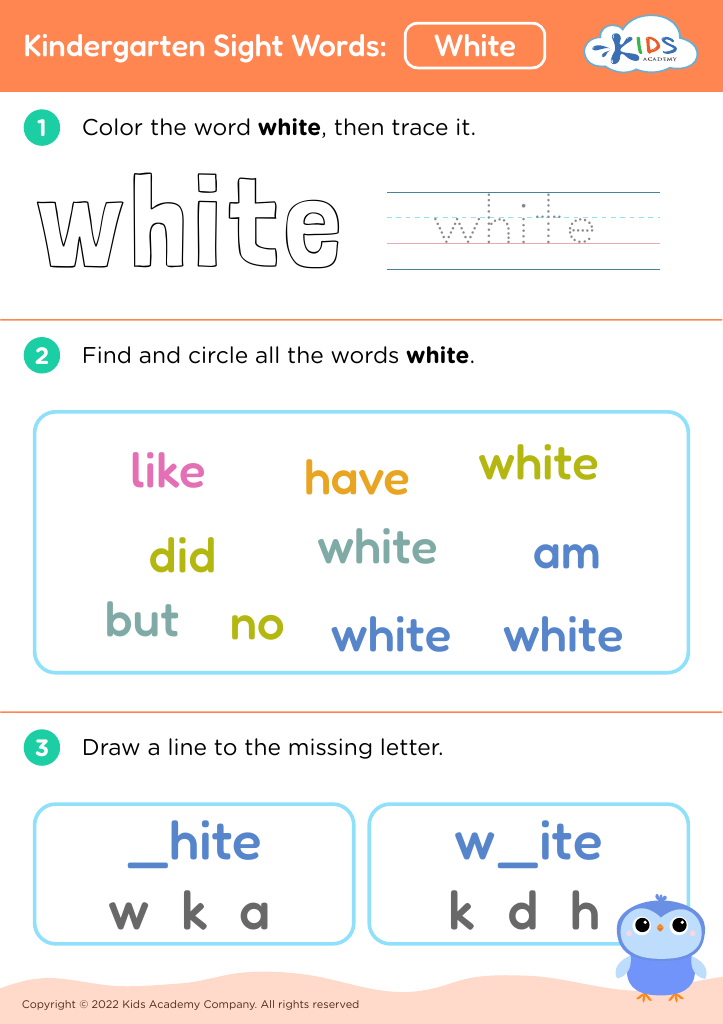
Kindergarten Sight Words: White

Kindergarten Sight Words: White

Kindergarten Sight Words: White
Worksheet
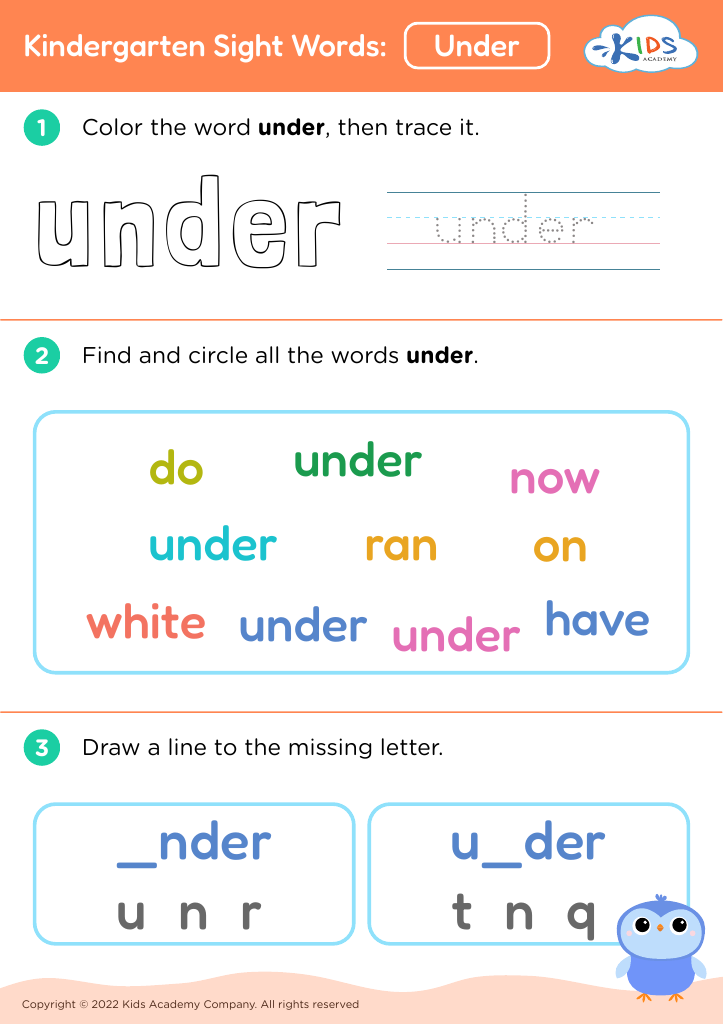
Kindergarten Sight Words: Under

Kindergarten Sight Words: Under

Kindergarten Sight Words: Under
Worksheet
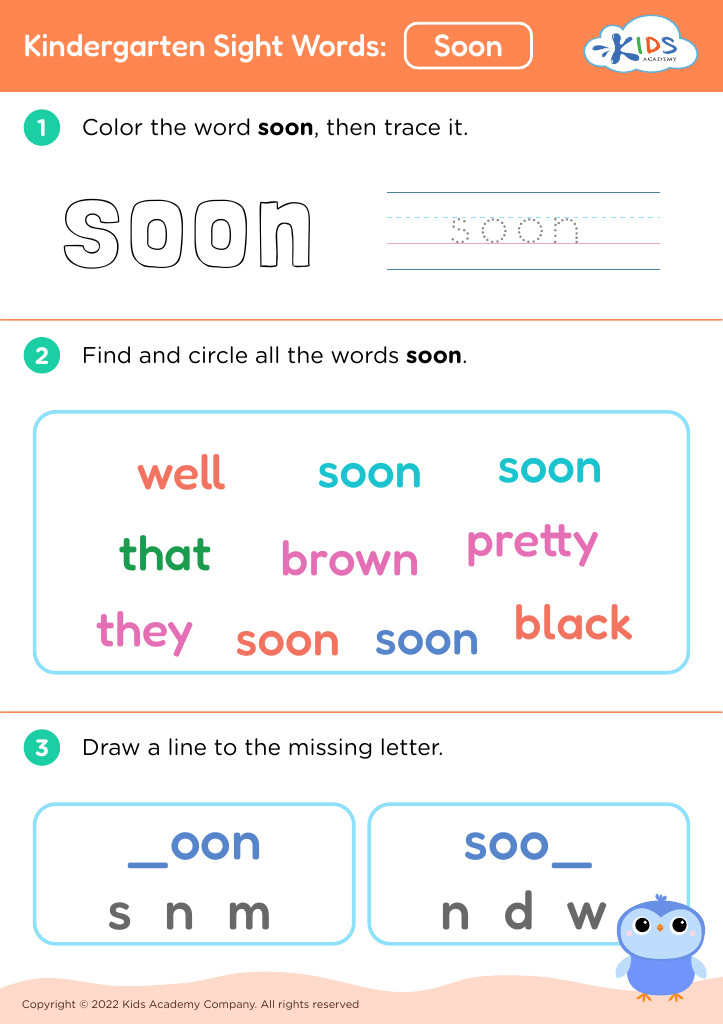
Kindergarten Sight Words: Soon

Kindergarten Sight Words: Soon

Kindergarten Sight Words: Soon
Worksheet
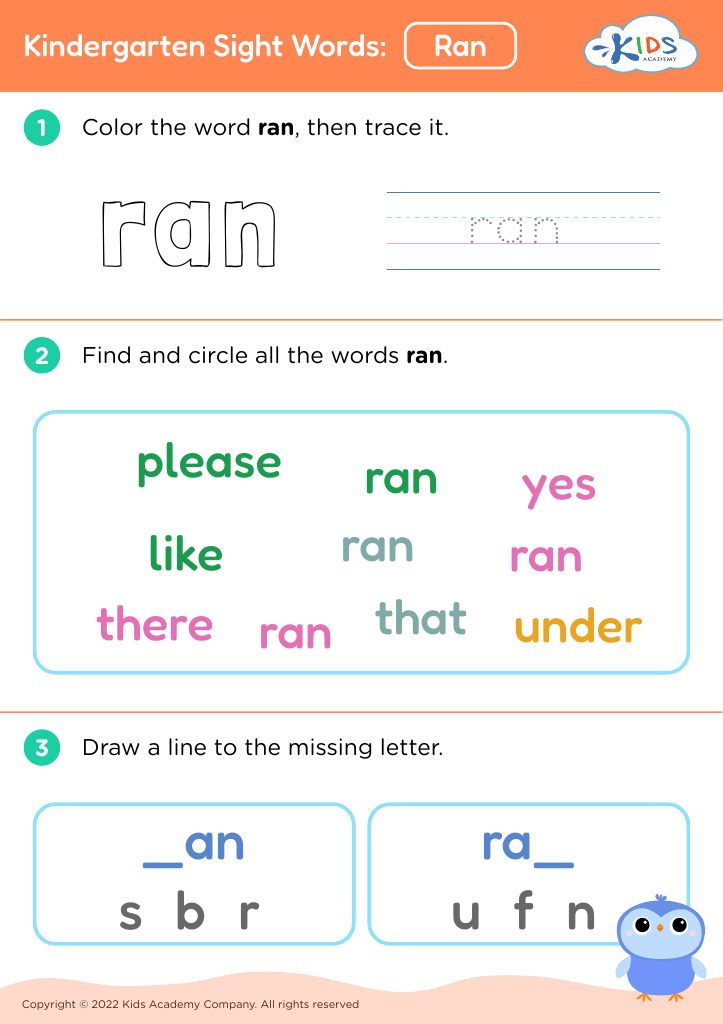
Kindergarten Sight Words: Ran

Kindergarten Sight Words: Ran

Kindergarten Sight Words: Ran
Worksheet
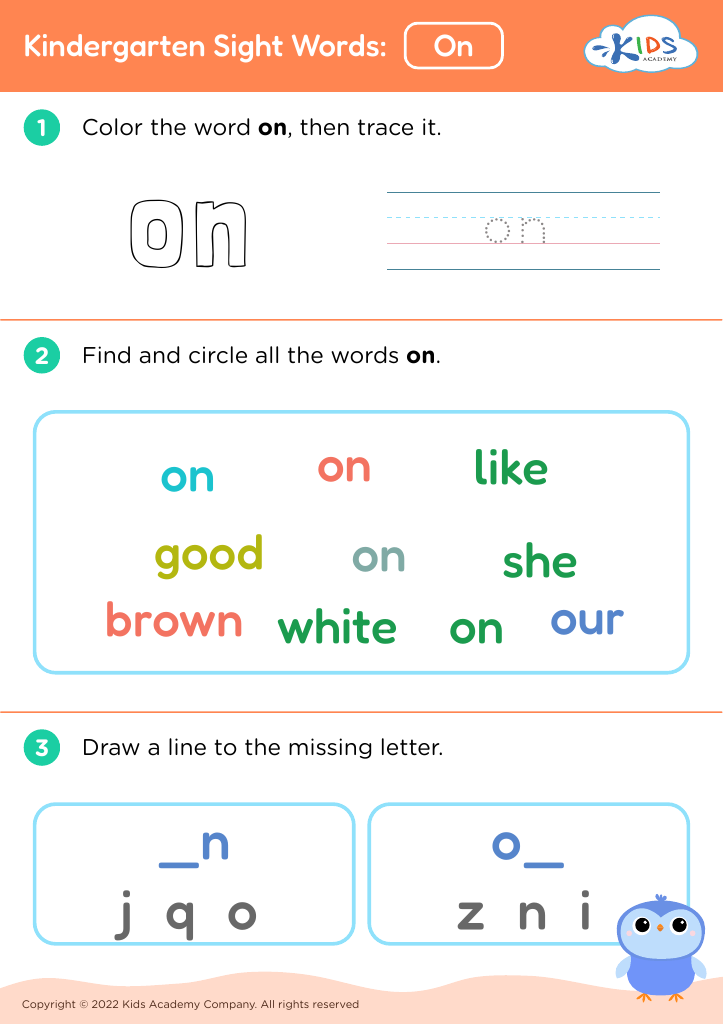
Kindergarten Sight Words: On

Kindergarten Sight Words: On

Kindergarten Sight Words: On
Worksheet
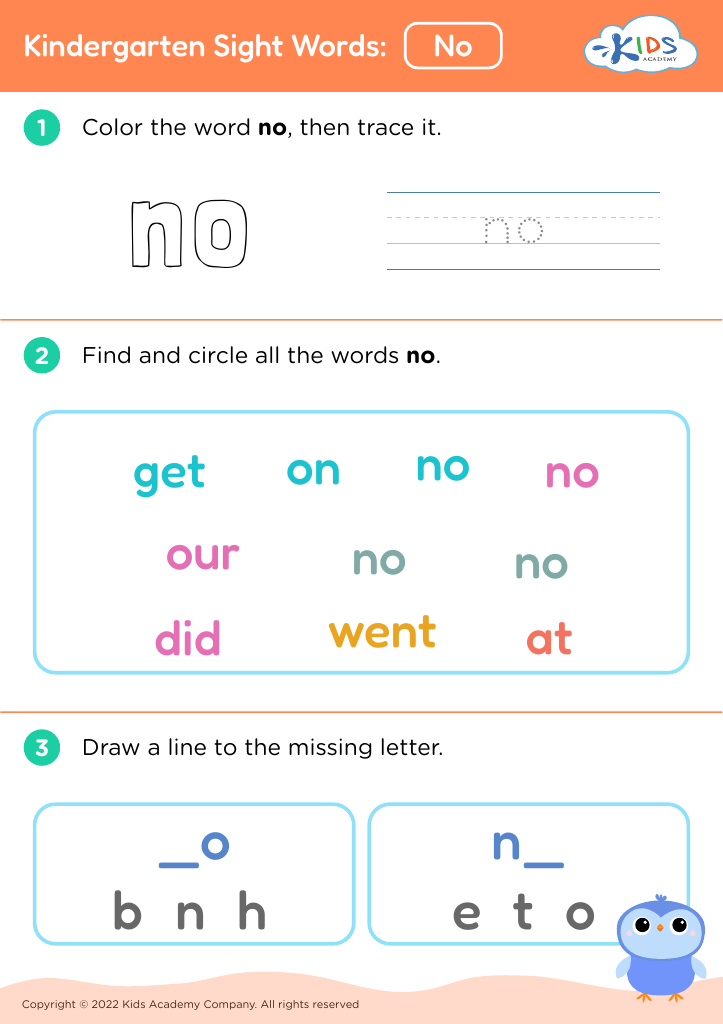
Kindergarten Sight Words: No

Kindergarten Sight Words: No

Kindergarten Sight Words: No
Worksheet
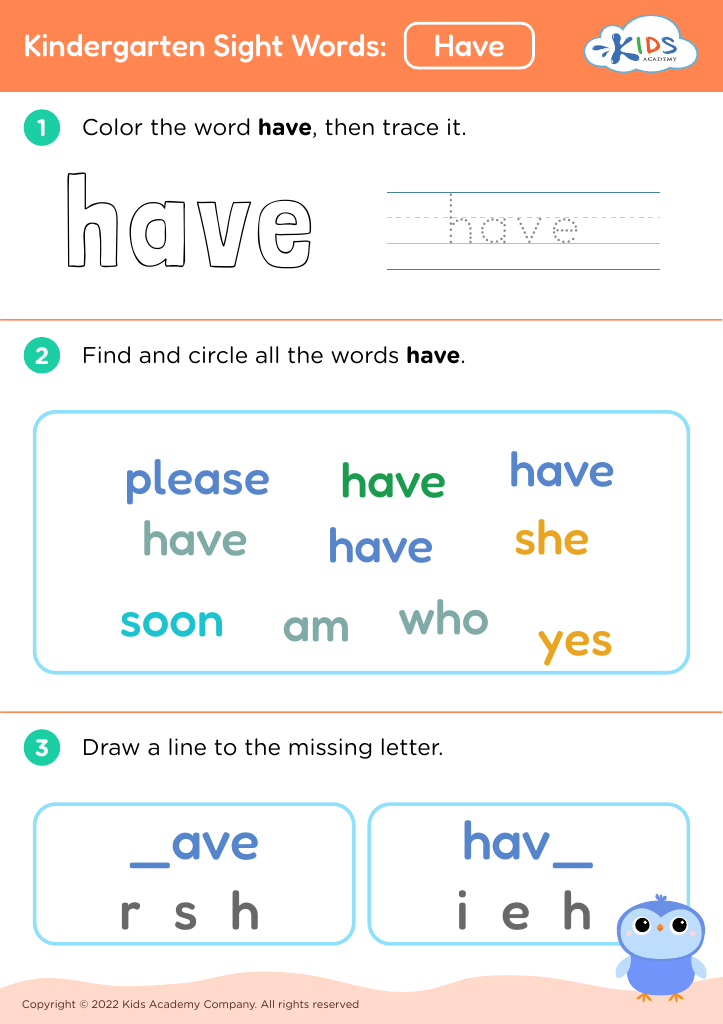
Kindergarten Sight Words: Have

Kindergarten Sight Words: Have

Kindergarten Sight Words: Have
Worksheet
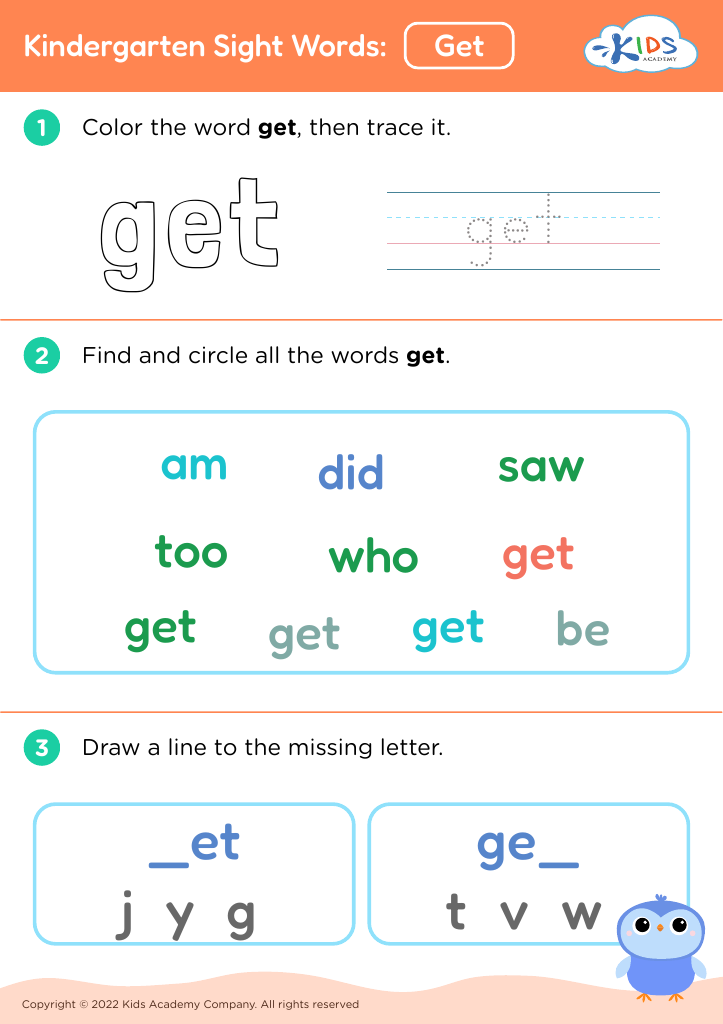
Kindergarten Sight Words: Get

Kindergarten Sight Words: Get

Kindergarten Sight Words: Get
Worksheet
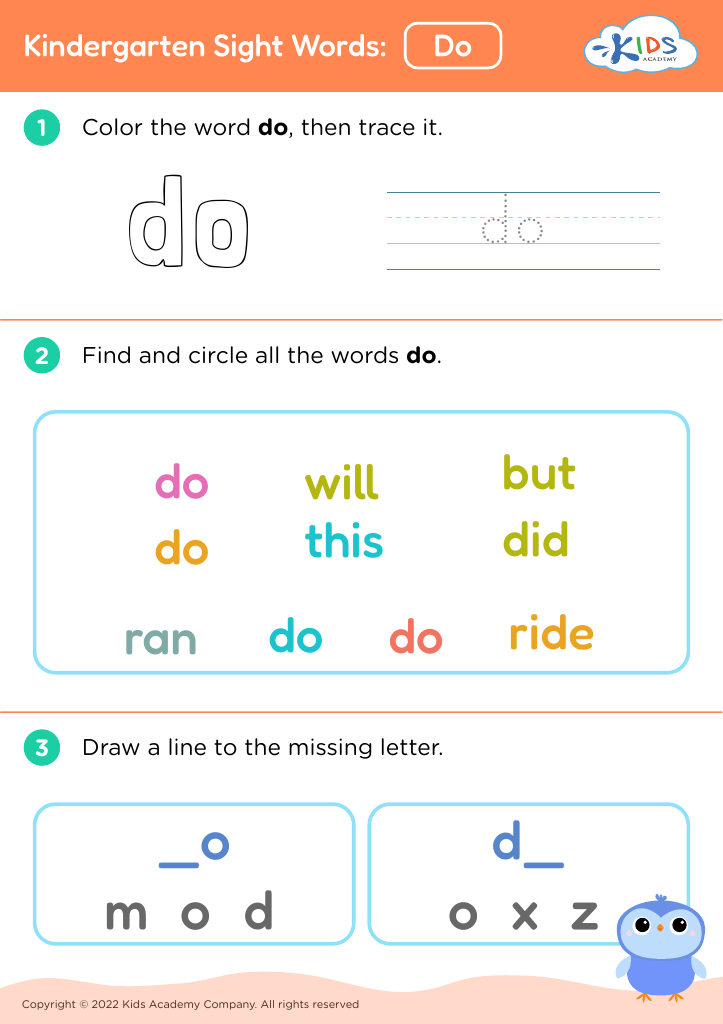
Kindergarten Sight Words: Do

Kindergarten Sight Words: Do

Kindergarten Sight Words: Do
Worksheet
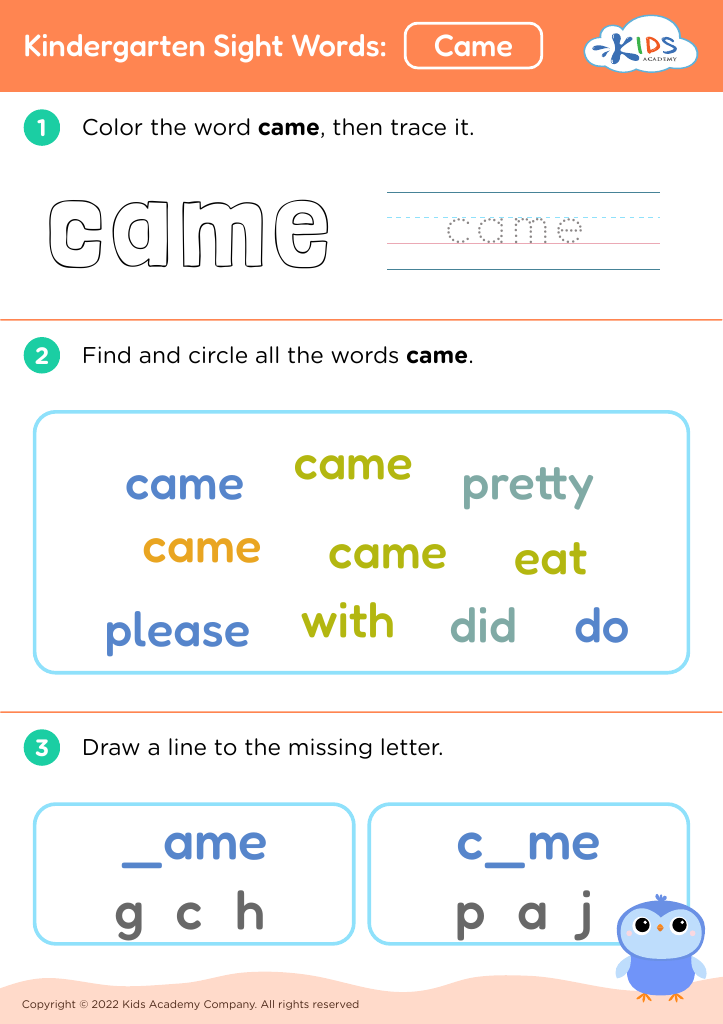
Kindergarten Sight Words: Came

Kindergarten Sight Words: Came

Kindergarten Sight Words: Came
Worksheet
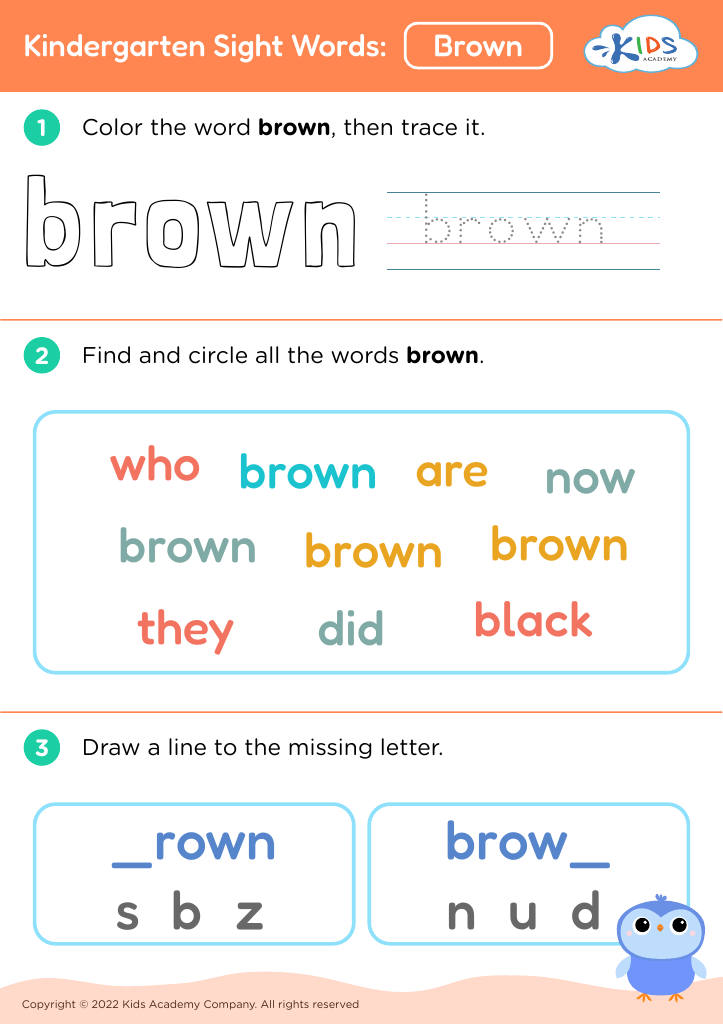
Kindergarten Sight Words: Brown

Kindergarten Sight Words: Brown

Kindergarten Sight Words: Brown
Worksheet
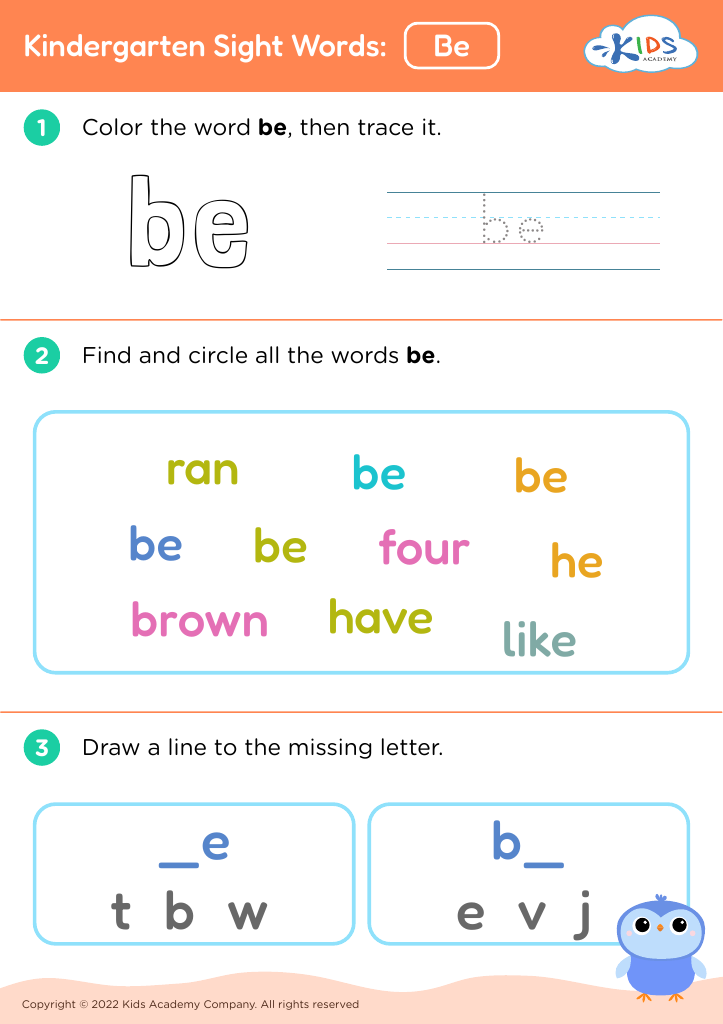
Kindergarten Sight Words: Be

Kindergarten Sight Words: Be

Kindergarten Sight Words: Be
Worksheet
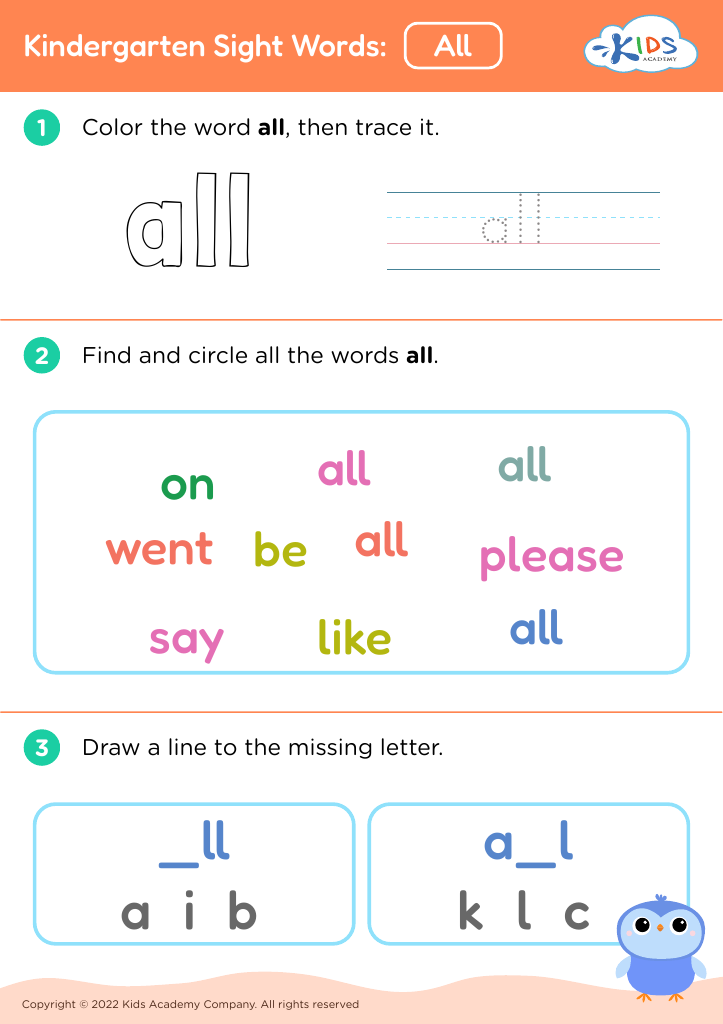
Kindergarten Sight Words: All

Kindergarten Sight Words: All

Kindergarten Sight Words: All
Worksheet


At the ages of 3-4, children are in the early stages of cognitive and language development, making it critical for both parents and teachers to introduce foundational concepts like fractions and sight words in an engaging and comprehensible manner. Understanding fractions, even at this young age, can start with simple ideas such as dividing snacks into halves or quarters, laying the groundwork for future mathematical learning and helping to develop their critical thinking. Counting and reasoning about parts of a whole enhances their numeracy skills and prepares them for more complex mathematical concepts.

Similarly, sight words are essential for early literacy because they account for a large percentage of the words young readers will encounter in texts. Sight words typically cannot be sounded out easily and are best learned through memorization and recognition. Being able to swiftly identify these words contributes significantly to reading fluency, which is a key component of reading comprehension. Enhancing both numeracy and literacy at this early age sets the stage for successful learning experiences in kindergarten and beyond. By fostering an understanding of these foundational skills, parents and teachers can support holistic development, ensuring that children are better prepared for future academic challenges.