
Vocabulary expansion Grammar Worksheets for Ages 3-4
21 filtered results
Difficulty Level
Grade
Age
-
From - To
Subject
Activity
Standards
Unlock your child's potential with our Vocabulary Expansion Grammar Worksheets for Ages 3-4! Designed for early learners, these engaging worksheets introduce basic grammar concepts and new vocabulary, enhancing early literacy skills. With colorful illustrations and fun activities, children can enjoy identifying words, practicing sentence formation, and learning the names of everyday objects. Encourage your child to explore language through play and interactive exercises. Perfect for both classroom and homeschooling environments, these worksheets are an ideal resource to support young students' language development and set the foundation for future learning success!
Favorites
With answer key
Interactive
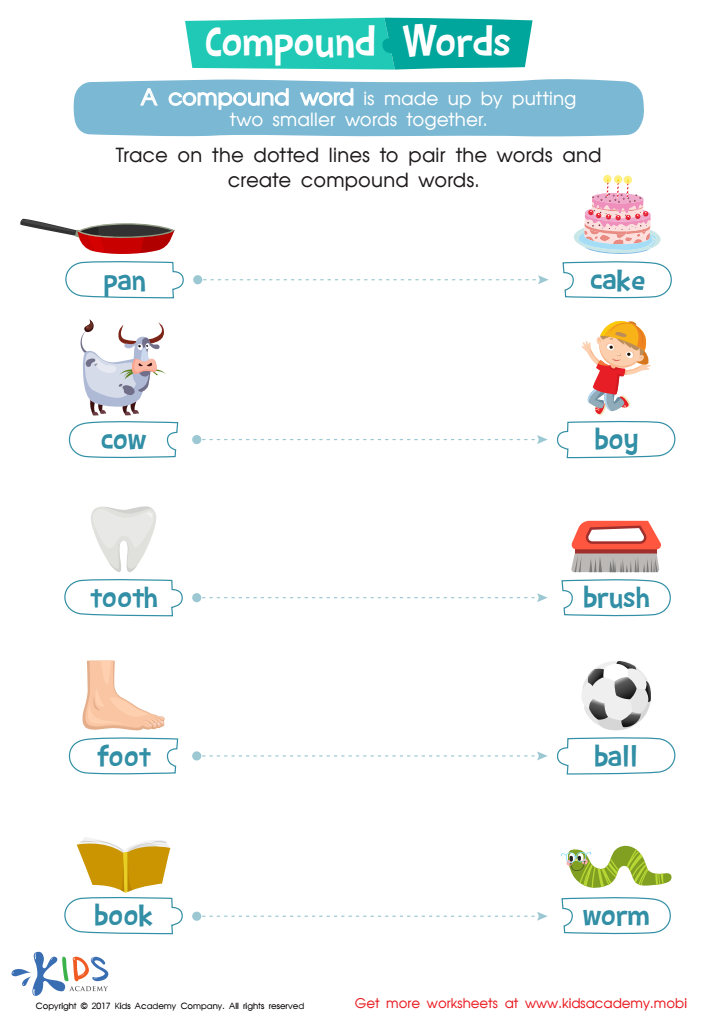
Compound Words Word Structure Worksheet
Studying compound words is a great way to improve reading and writing skills! Try this fun worksheet: Compound Words – trace the lines to make new words! It's an easy and enjoyable way to get better at English.
 Assign to My Students
Compound Words Word Structure Worksheet
Worksheet
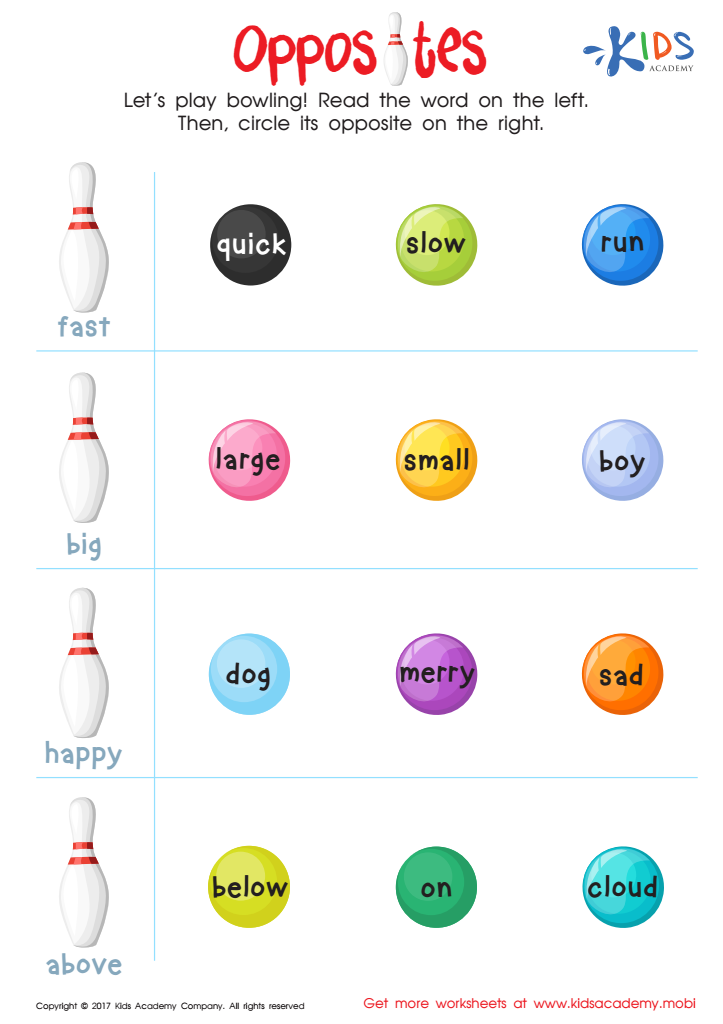
Opposites Worksheet
Have your students identify and circle the opposites of the words on the left. As a fun bowling-themed exercise, read the words and ask your kids if they know the opposites. Look through the options on the right and see if the answer is there; then, circle the correct answers.
Opposites Worksheet
Worksheet
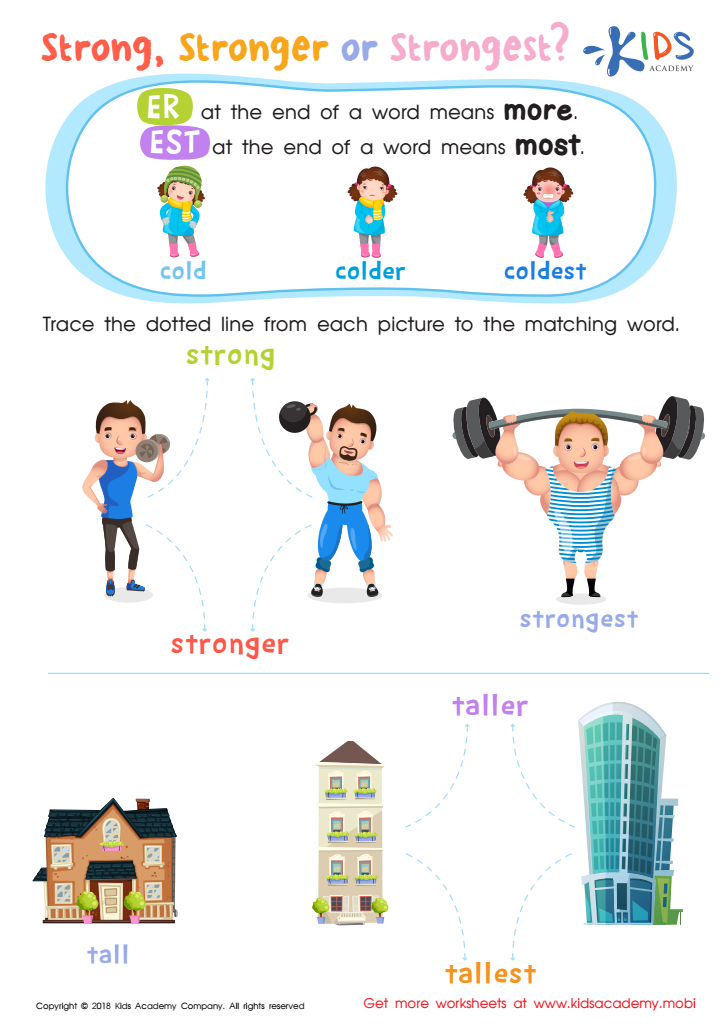
Strong or Stronger? Worksheet
Help your child understand the concept of size gradients with a fun worksheet. Explain to them that adding "-er" to words means "more" and "-est" means "most". Point to the pictures and have your little one trace the dotted line to the corresponding words to learn the concept of highest and lowest.
Strong or Stronger? Worksheet
Worksheet
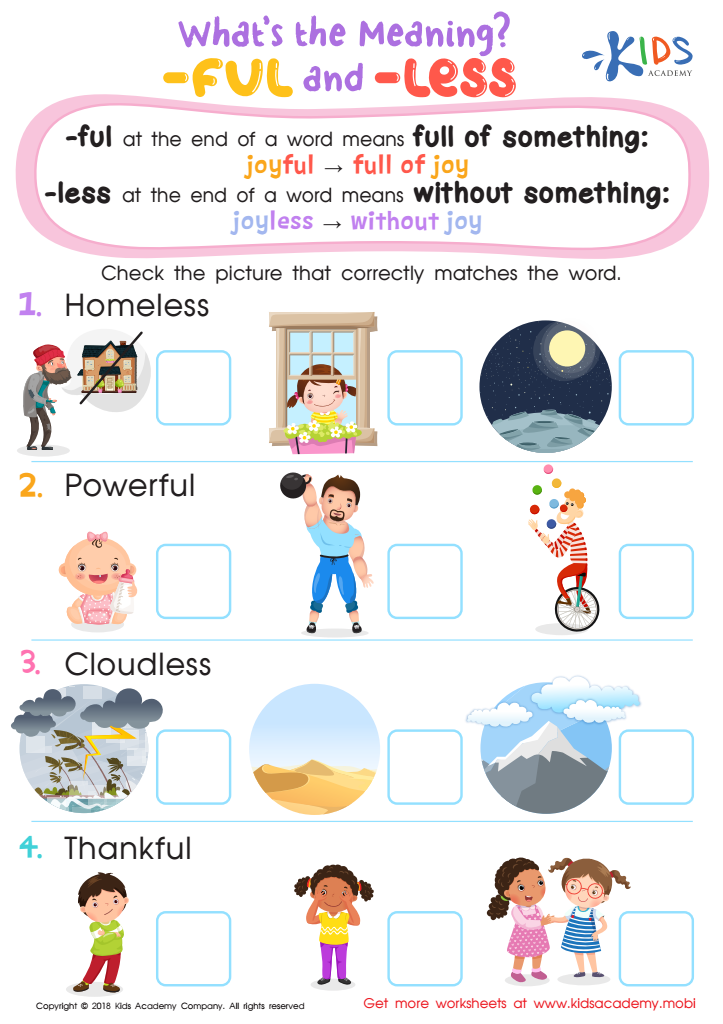
What's the Meaning? Worksheet
Look with your youngster through this colorful worksheet and match the pictures to the words at the top. These words have different meanings due to either a prefix or suffix being added, such as "ful" or "less".
What's the Meaning? Worksheet
Worksheet
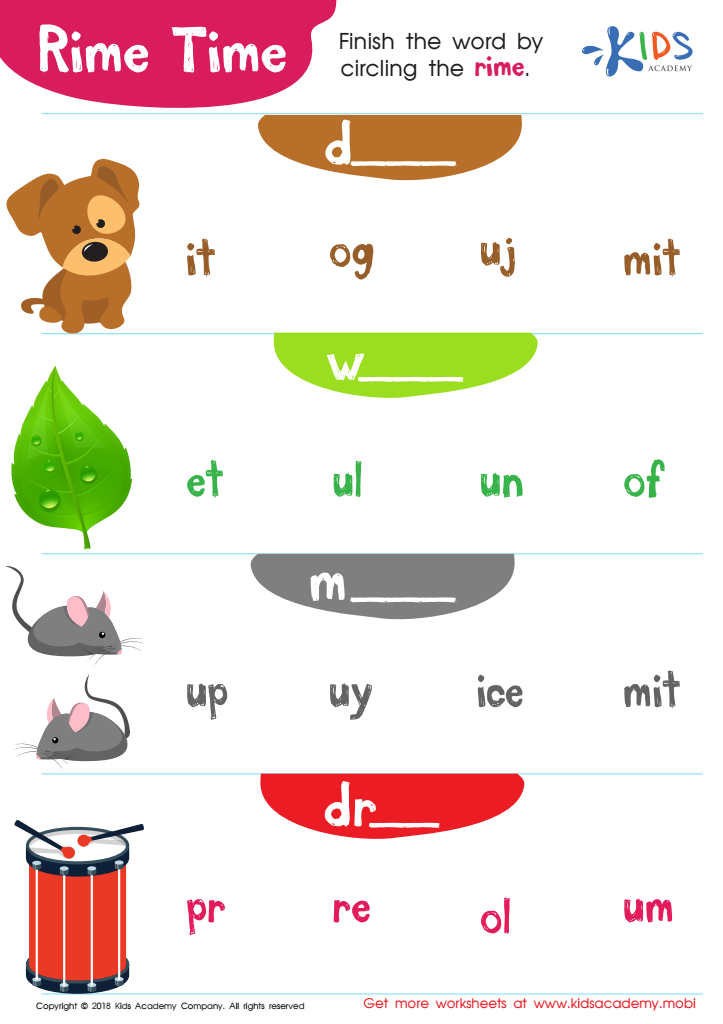
Rime Time Worksheet
This free PDF worksheet helps new and emerging readers identify rimes (the letters after initial consonants) and practice fine motor skills. Kids trace the correct rimes for each picture and increase their fluency and decoding skills with each one!
Rime Time Worksheet
Worksheet
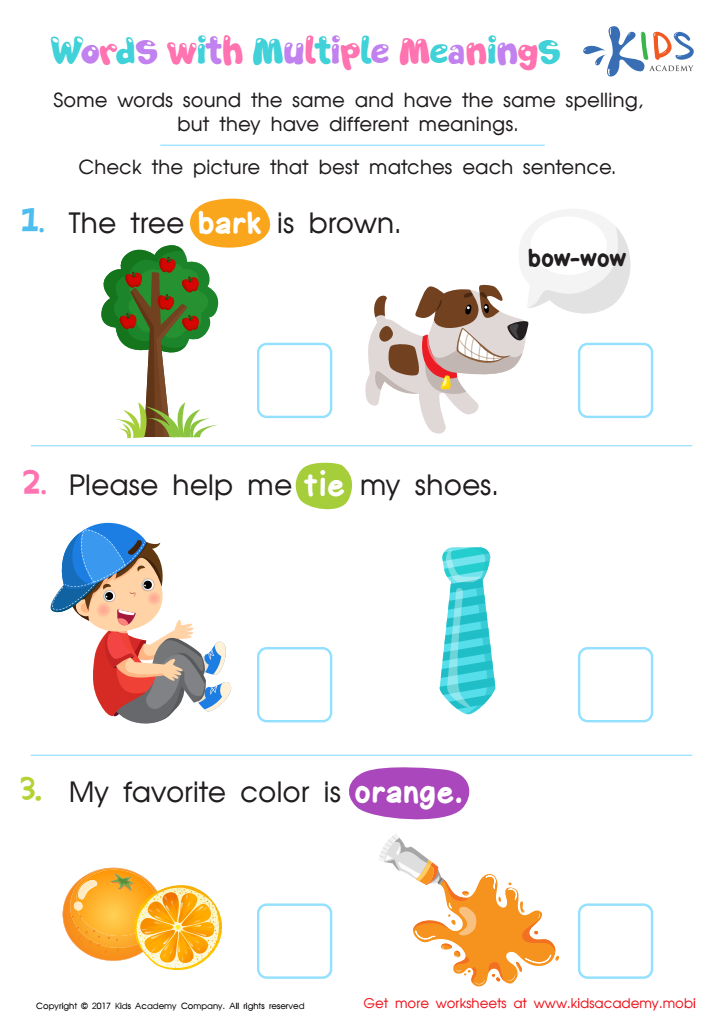
Words with Multiple Meanings Worksheet
Young authors can struggle with homographs – words that sound the same and have different meanings. This PDF worksheet uses pictures to help them easily differentiate homographs and contextualize their use. It's an engaging way to introduce them to homographs, helping them to navigate tricky words when writing.
Words with Multiple Meanings Worksheet
Worksheet
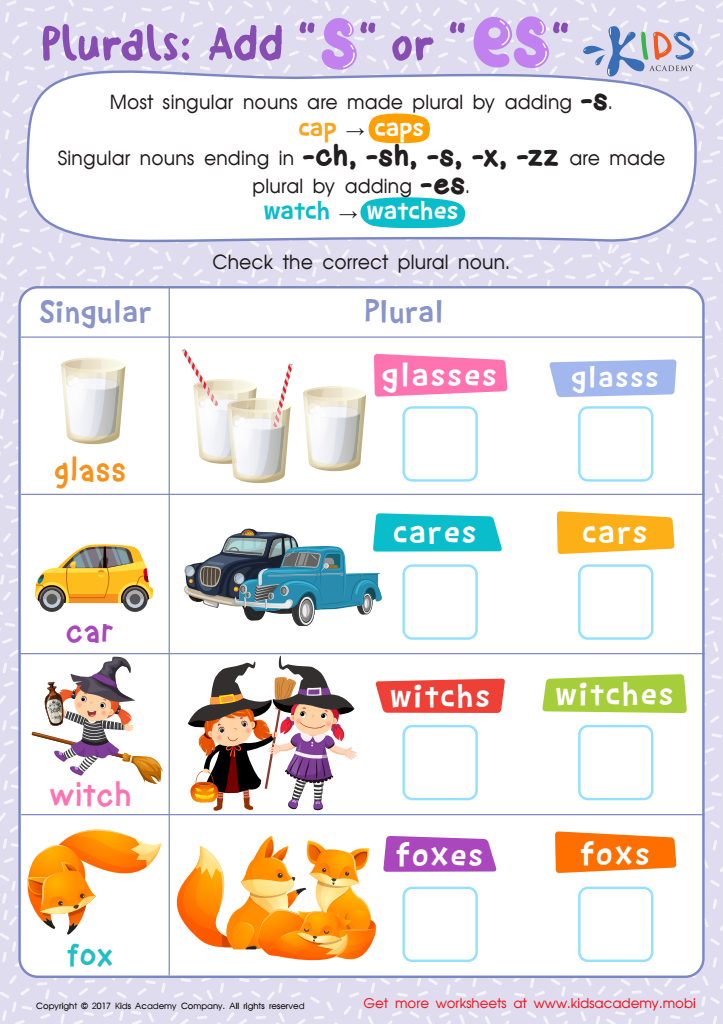
Plurals: "–es" or "–es"? Worksheet
Learning plural nouns can be tough for young readers. This worksheet shows them the difference between singular and plural spelling with cute images. Read each word and check the correct version. Remind them why the other ending can't be used.
Plurals: "–es" or "–es"? Worksheet
Worksheet
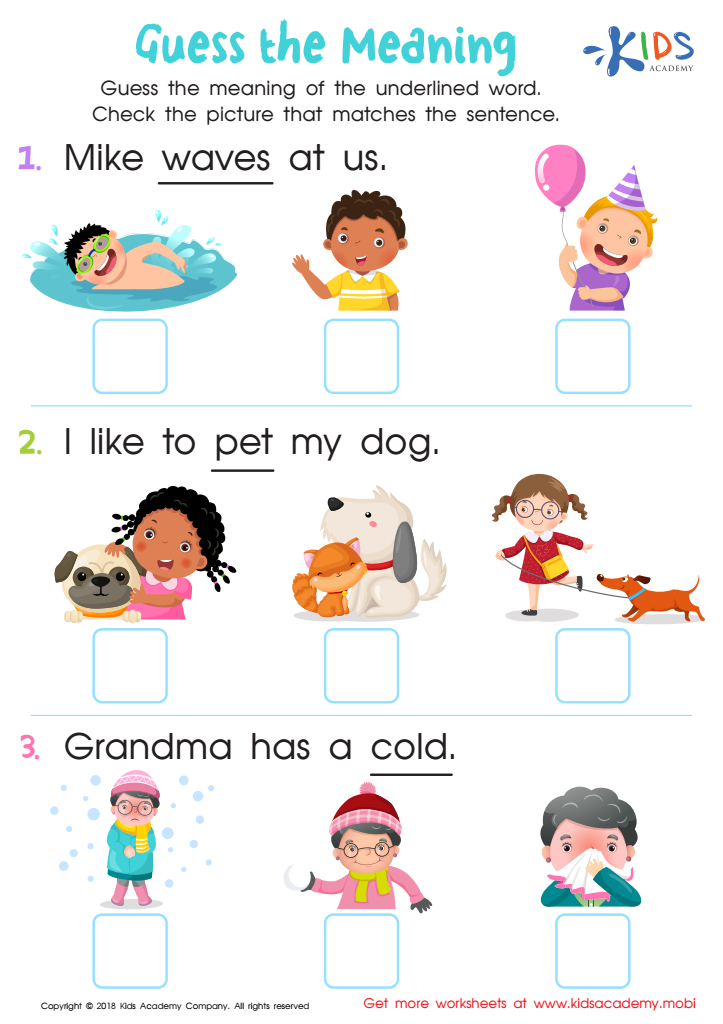
Guess the Meaning Worksheet
Help your child learn the meanings of words in different contexts by using this colourful, free worksheet. What is the meaning of the underlined words in each sentence? Look at the images and pick the one that accurately describes the word's context.
Guess the Meaning Worksheet
Worksheet
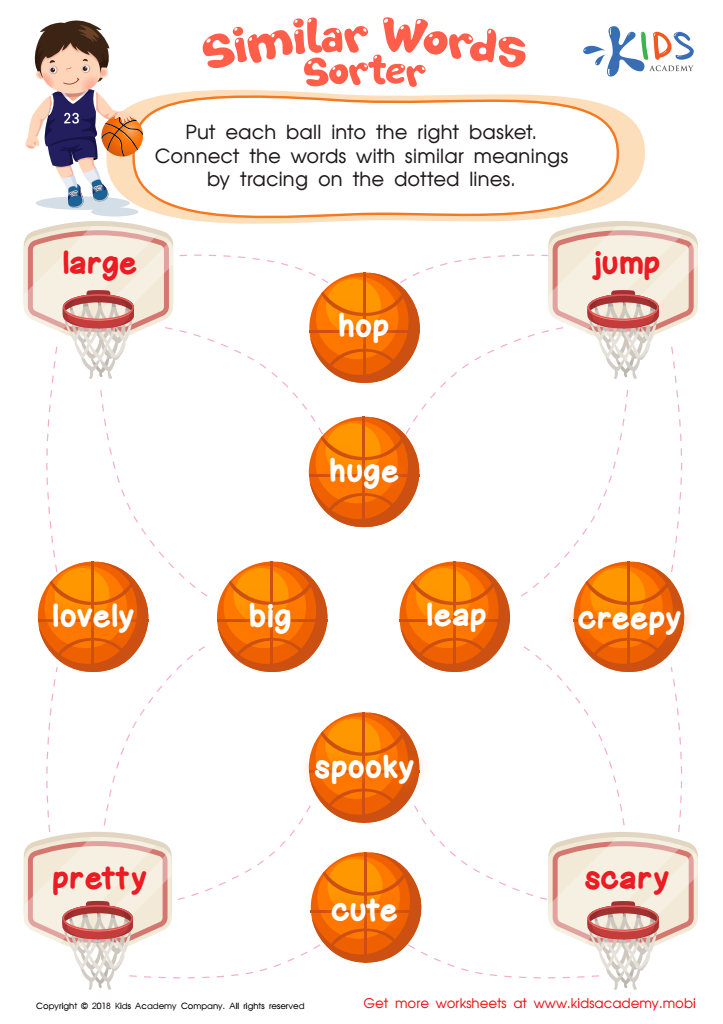
Similar Words Worksheet
Test your child's knowledge of synonyms by having them name five words for "up"! This tracing sheet is a fun way to do it: your child must trace the dotted lines to put each ball in its right basket. To do so, they must know the synonyms and trace them to the correct baskets.
Similar Words Worksheet
Worksheet
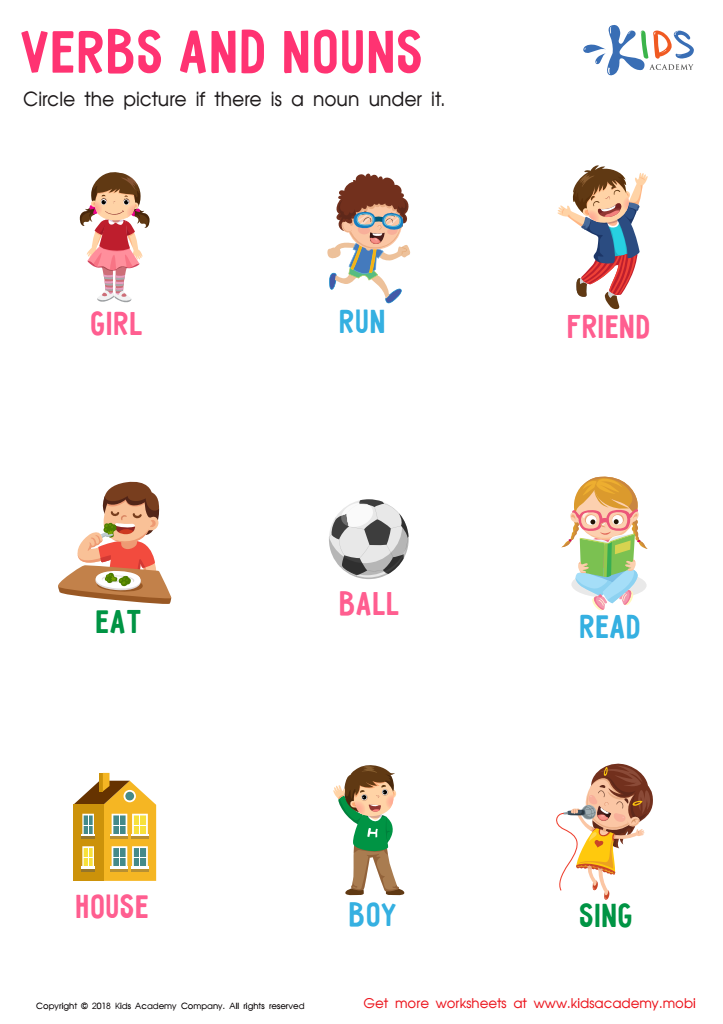
Verbs and Nouns Worksheet
Your child should have basic knowledge of verbs and nouns before starting this worksheet. Go through it with them and ask them to circle the pictures with nouns under them. This way, they'll become more familiar with parts of speech.
Verbs and Nouns Worksheet
Worksheet
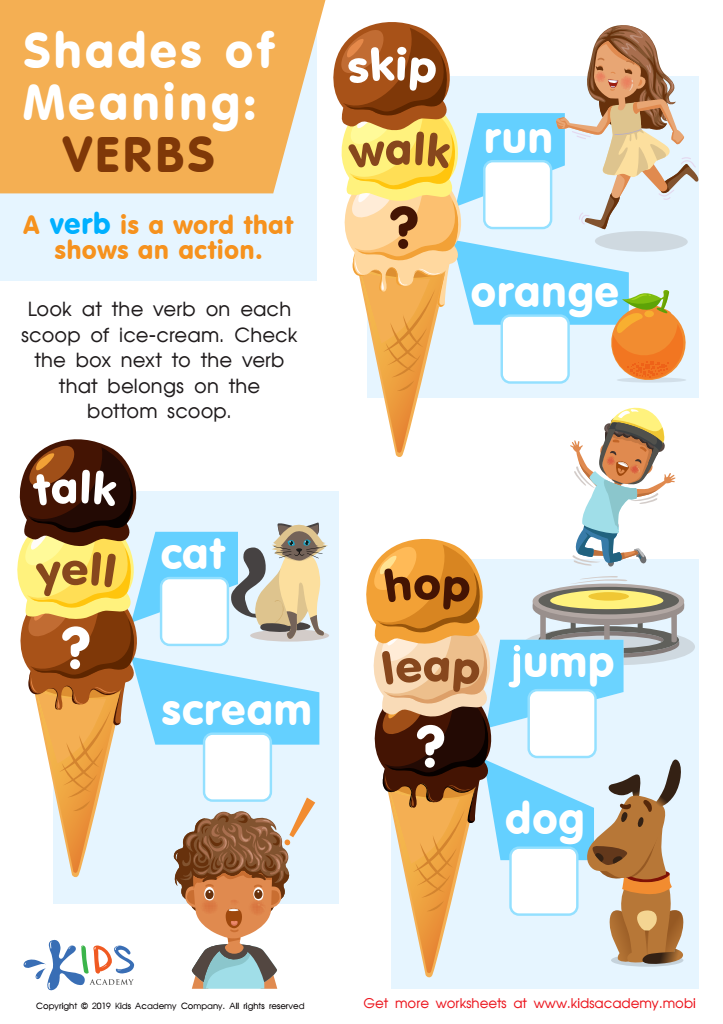
Shades of Meaning: Verbs Worksheet
Verbs are words that show action. Introduce kindergartners to verbs by having them check the box next to the verb that belongs on the bottom scoop in a worksheet. This is a great way to teach them this important part of speech and help them learn to write proper sentences and speak correctly.
Shades of Meaning: Verbs Worksheet
Worksheet
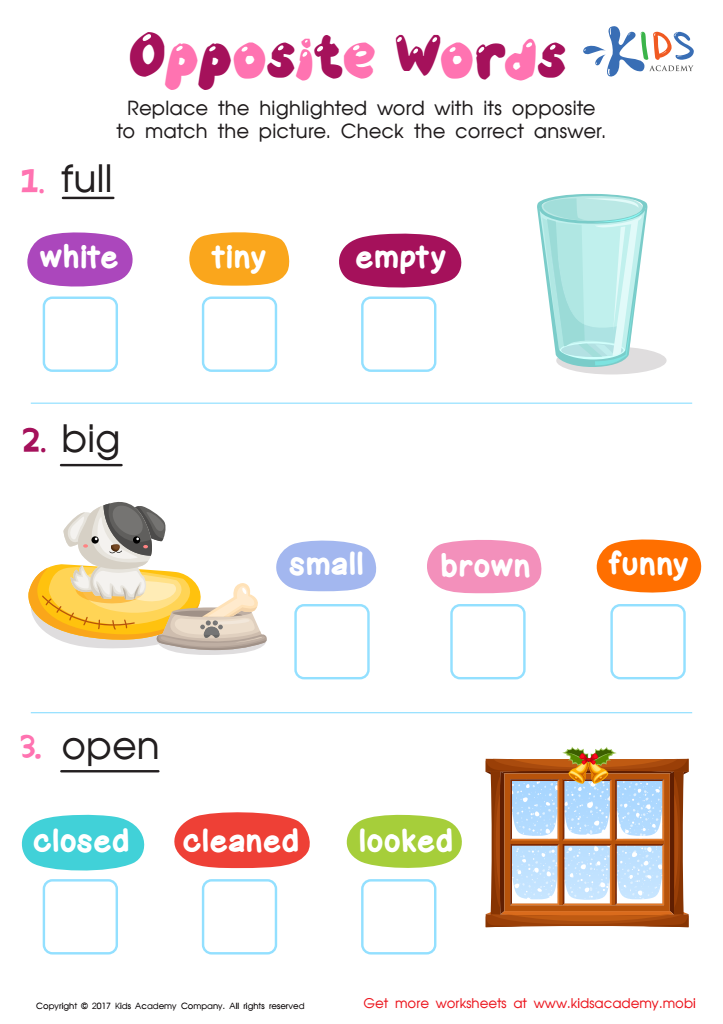
Opposite Words Worksheet
Help your child learn words and opposites. Look through a worksheet with them. Ask if they can read the underlined words. Then, ask which highlighted word is the opposite of the underlined word. The answer should match the picture.
Opposite Words Worksheet
Worksheet
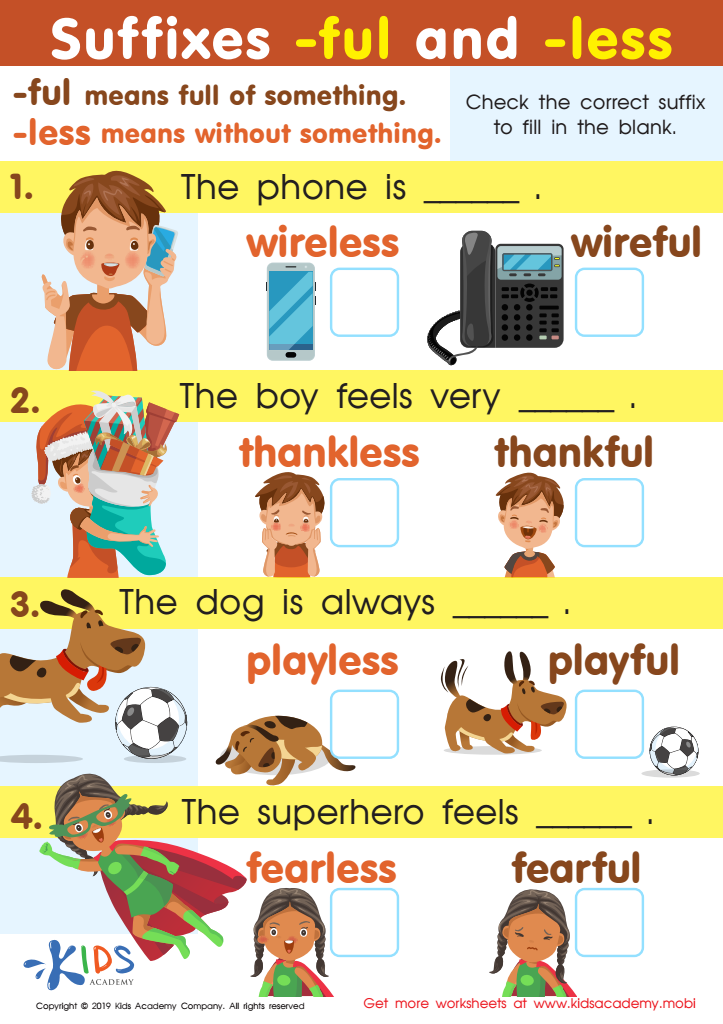
Suffixes –ful and –less Worksheet
Before you start this worksheet, make sure your kids know about suffixes. Explain that they're added to the end of words to change their meaning. In the worksheet, kids will learn about the suffixes –ful and –less. Look at the sentences in the picture with them, and help them to choose the right one for each blank.
Suffixes –ful and –less Worksheet
Worksheet
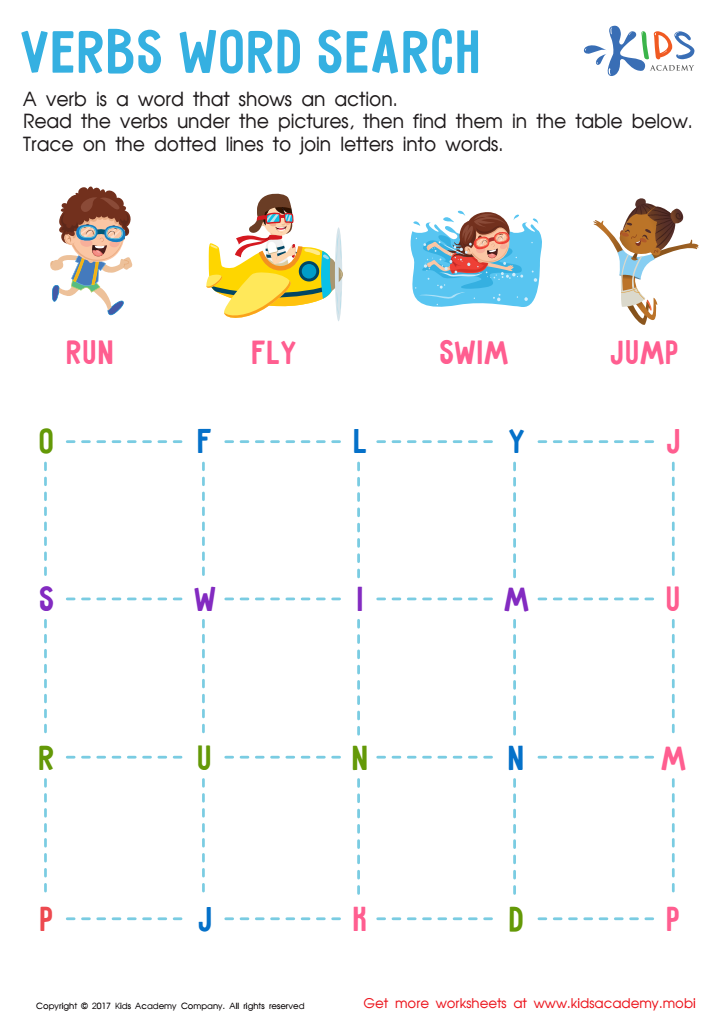
Verbs Word Search Worksheet
Ask your child if they understand the meaning of the word "verb". If not, explain that it's a word that shows an action. Give examples of familiar verbs. Then look at the pictures in the tracing sheet and read the words. Ask your child to follow the dotted lines to find the hidden words. Perfect tool to teach spot and use verbs!
Verbs Word Search Worksheet
Worksheet
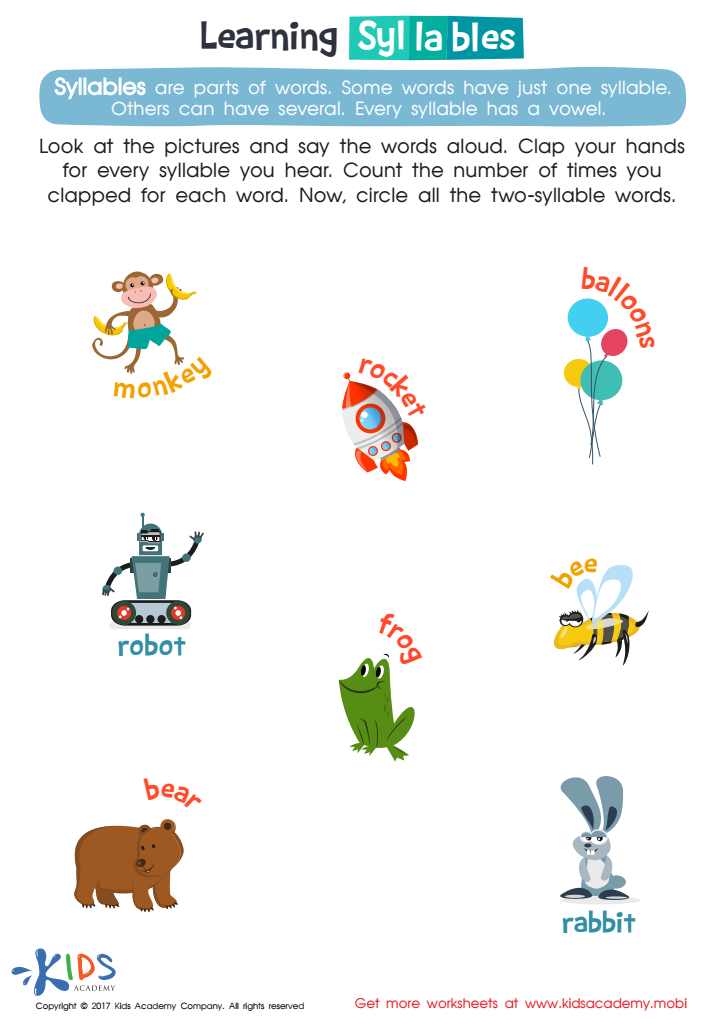
Learning Syllables Word Structure Worksheet
Teach kids to read and spell with our fun Learning Syllables worksheet. Kids will have a blast clapping and saying familiar words while counting syllables. Colorful and catchy, it's a great way to make learning enjoyable!
Learning Syllables Word Structure Worksheet
Worksheet
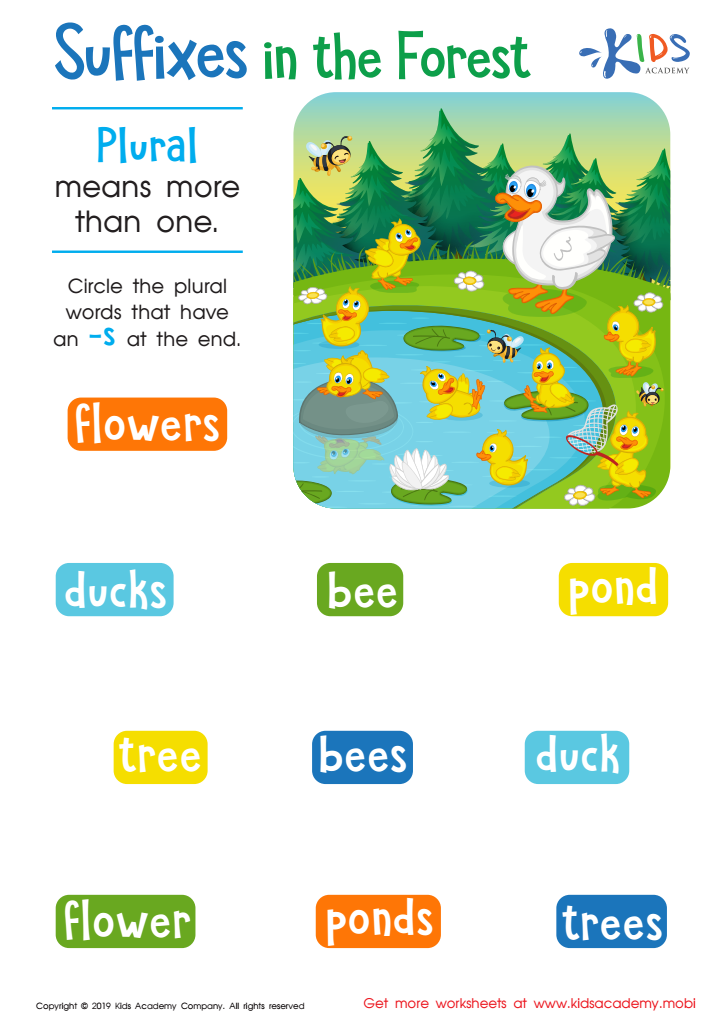
Suffixes in the Forest Worksheet
Suffixes are letters added to the end of words to form new words. These can be used to denote one who does something (e.g. reader) or more than one (e.g. adding -s). This worksheet helps kids practice pluralizing words they know by circling the plural words ending with -s.
Suffixes in the Forest Worksheet
Worksheet
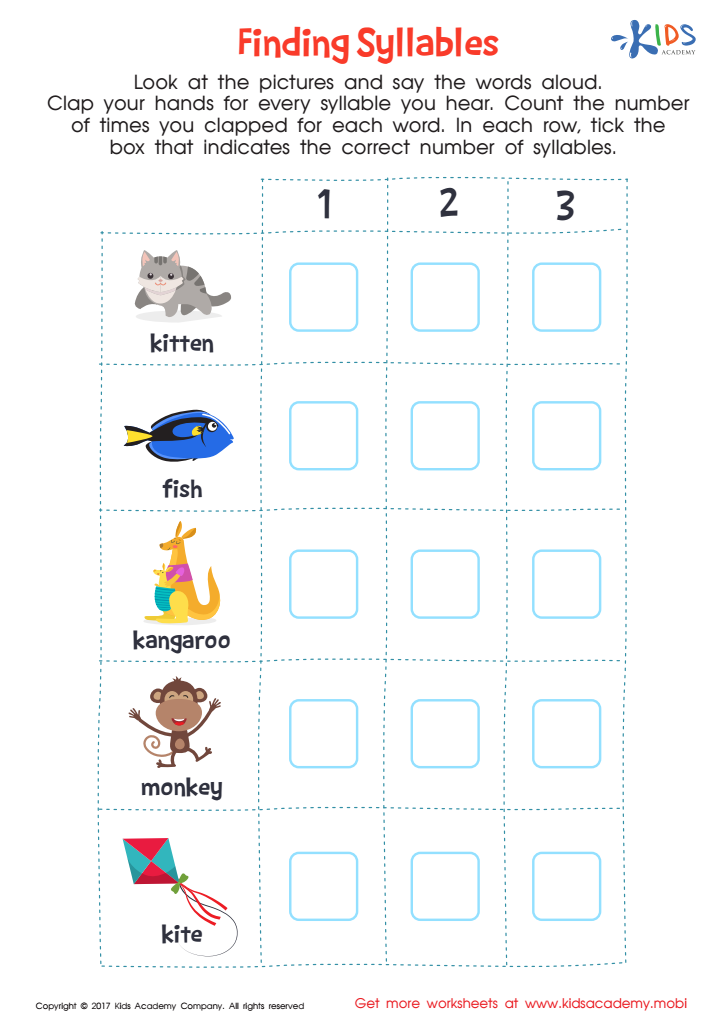
Finding Syllables Word Structure Worksheet
Have your kid clap and count syllables in words to improve their reading and spelling! Use this word structure worksheet for a fun activity - syllables!
Finding Syllables Word Structure Worksheet
Worksheet
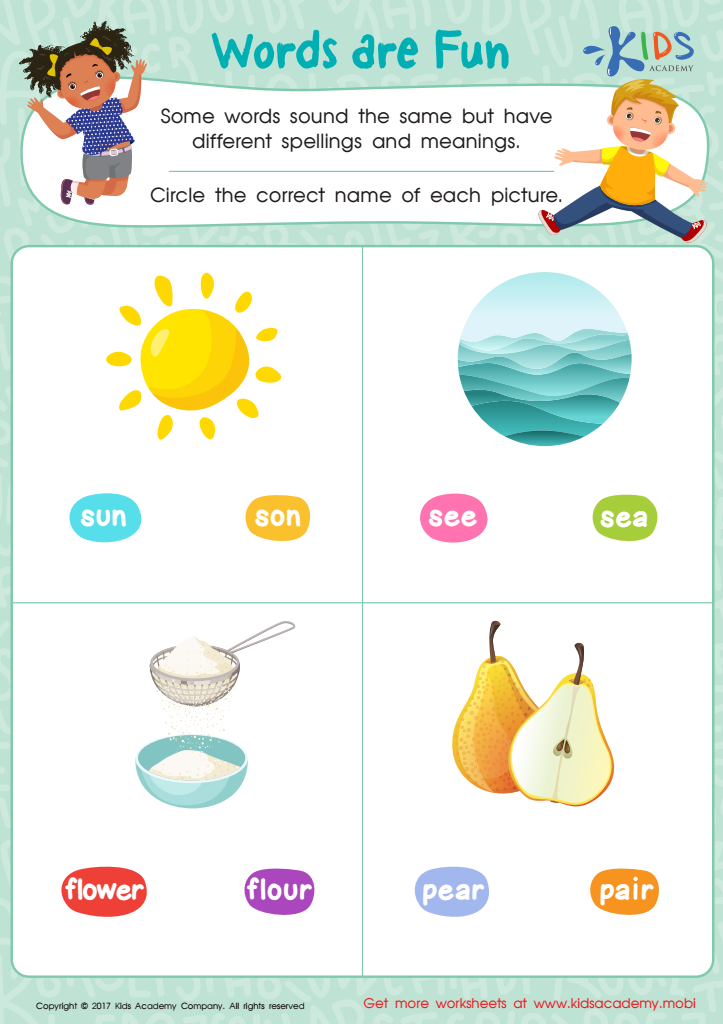
Words Are Fun Worksheet
Homonyms are words that sound the same but have different meaning and spelling. Young authors may get confused. This PDF worksheet helps them practice by matching the homonyms to pictures. They'll also build fine motor skills, important for legible writing.
Words Are Fun Worksheet
Worksheet
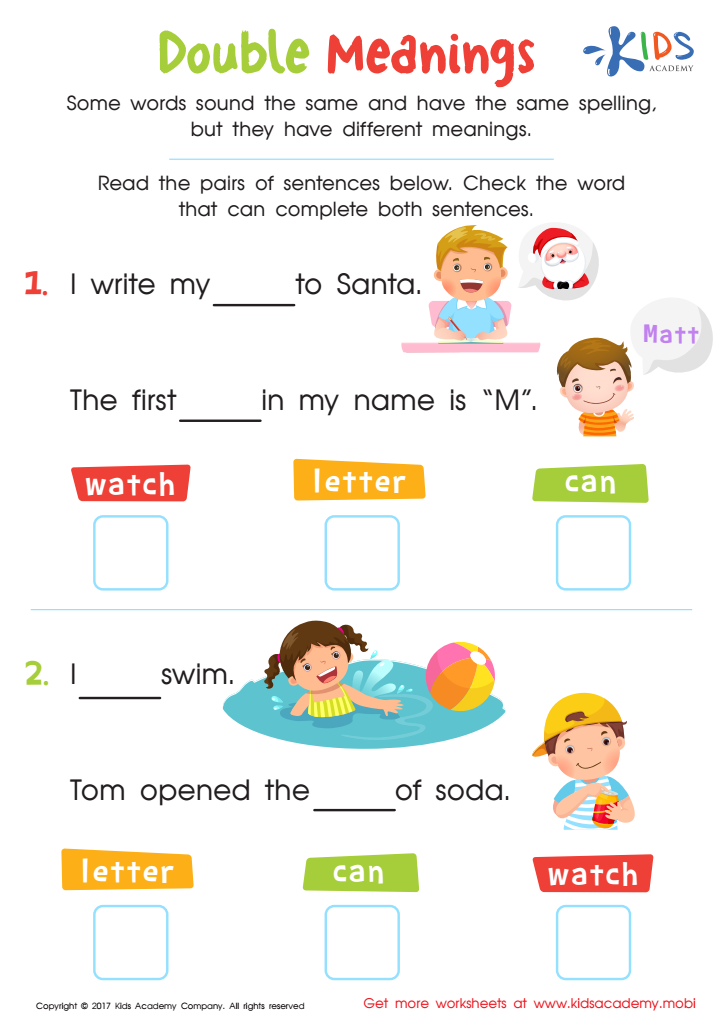
Double Meanings Worksheet
Homographs are words that look and sound the same, but have different meanings. This worksheet uses pictures to help young authors learn to use them correctly. Context and exposure to the words' meanings help them understand the difference.
Total: 80 words
Double Meanings Worksheet
Worksheet
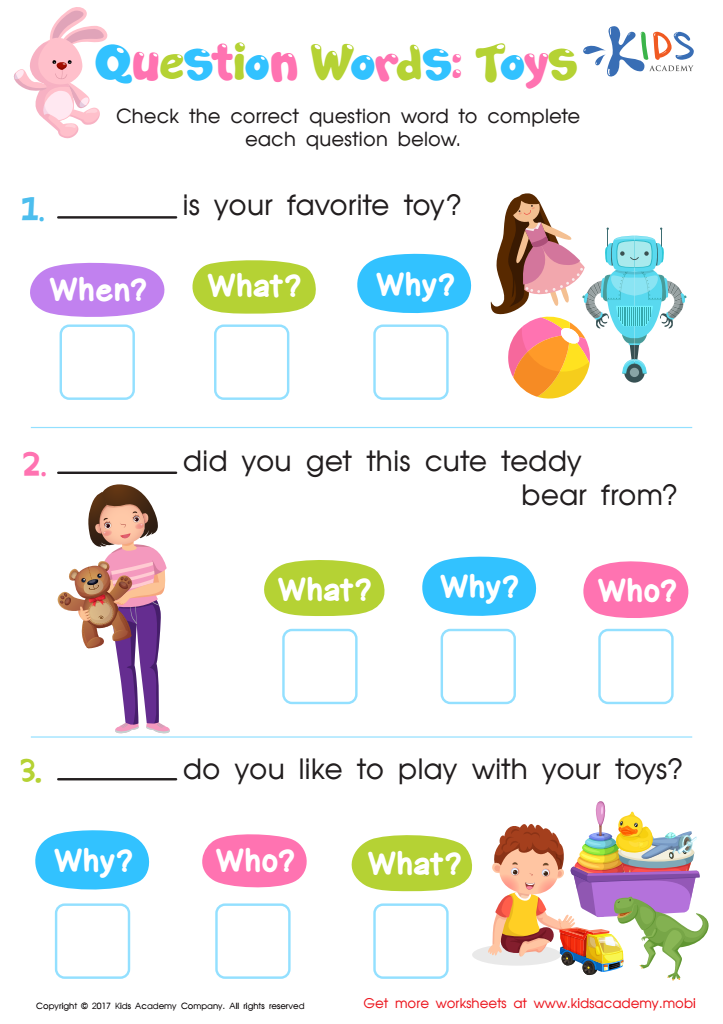
Question Words: Toys Worksheet
Let your kids enjoy learning to ask precise questions with this fun worksheet! Read each sentence fragment and look at the word bank, picking the correct word to complete the sentence. Check the box next to the correct word to use. It's that easy and lots of fun!
Question Words: Toys Worksheet
Worksheet
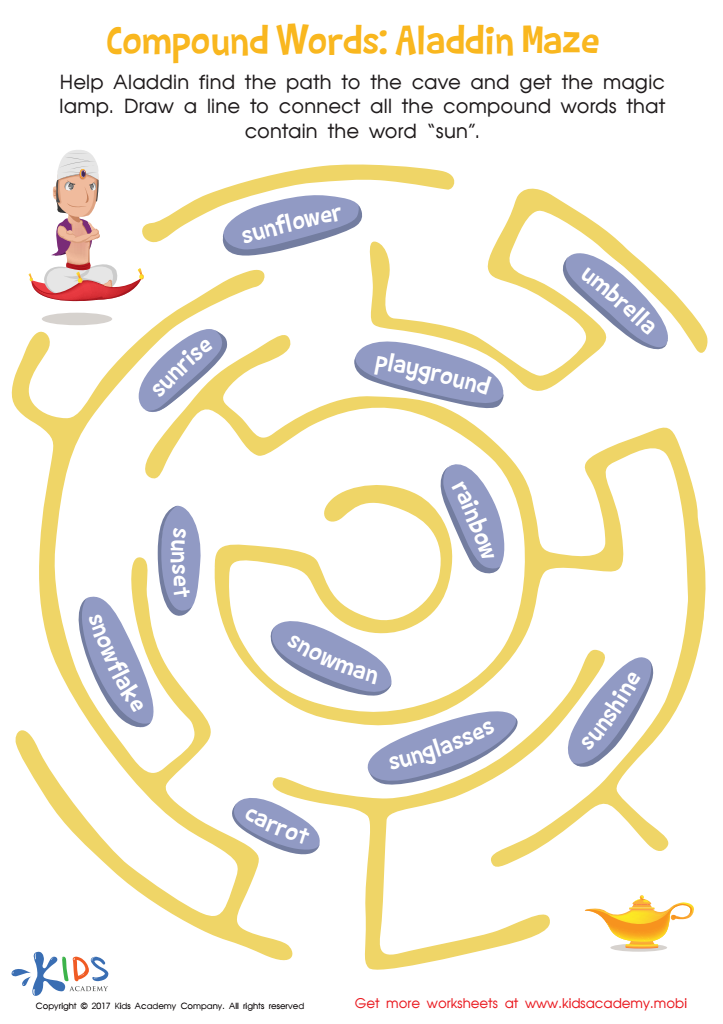
Compound Aladdin Maze Word Structure Worksheet
It's hard to keep track of all compound words! Help your child find sun-words with this fun worksheet featuring Aladdin! Your child will enjoy helping Aladdin find his way by finding the right words. It's a great way to learn compound words.
Compound Aladdin Maze Word Structure Worksheet
Worksheet
Join Kids Academy for Free
Who is primarily going to use this learning content?





Expanding vocabulary and developing grammar in children ages 3-4 is critical due to its influence on their overall cognitive, social, and academic growth. At this formative stage, children's brains are highly receptive to new information, making it the ideal period for language learning. A rich vocabulary enables them to better express their thoughts, needs, and emotions, which is essential for effective communication and reducing frustration.
Moreover, strong grammar skills help children comprehend and construct sentences correctly, laying a foundation for future reading and writing success. It also fosters critical thinking as they learn to organize their thoughts and understand complex concepts. With a wide vocabulary and good grammar, children are better equipped to engage in conversations, which boosts their social skills and confidence.
From an academic perspective, early language skills are linked to later achievements in reading comprehension and overall academic performance. Thus, parents and teachers have the pivotal role of integrating language-rich interactions, such as reading books, engaging in conversations, and teaching new words, into everyday activities.
In essence, investing time in building a child's vocabulary and grammar skills at ages 3-4 sets a robust foundation for their future learning, social interaction, and emotional development, ensuring they have the tools necessary to thrive both in school and in life.








