Sound recognition Consonants Worksheets for Ages 3-6
5 filtered results
-
From - To
Enhance your child's early phonics skills with our Sound Recognition Consonants Worksheets designed specifically for ages 3-6. These engaging activities focus on identifying and pronouncing consonant sounds, a critical step in early reading development. Each worksheet features fun and interactive exercises that help children match sounds to letters, boosting their auditory discrimination and phonetic awareness. Perfect for preschool and kindergarten learners, these resources support foundational literacy skills in a playful and effective manner. Download now to encourage confident and proficient readers right from the start!
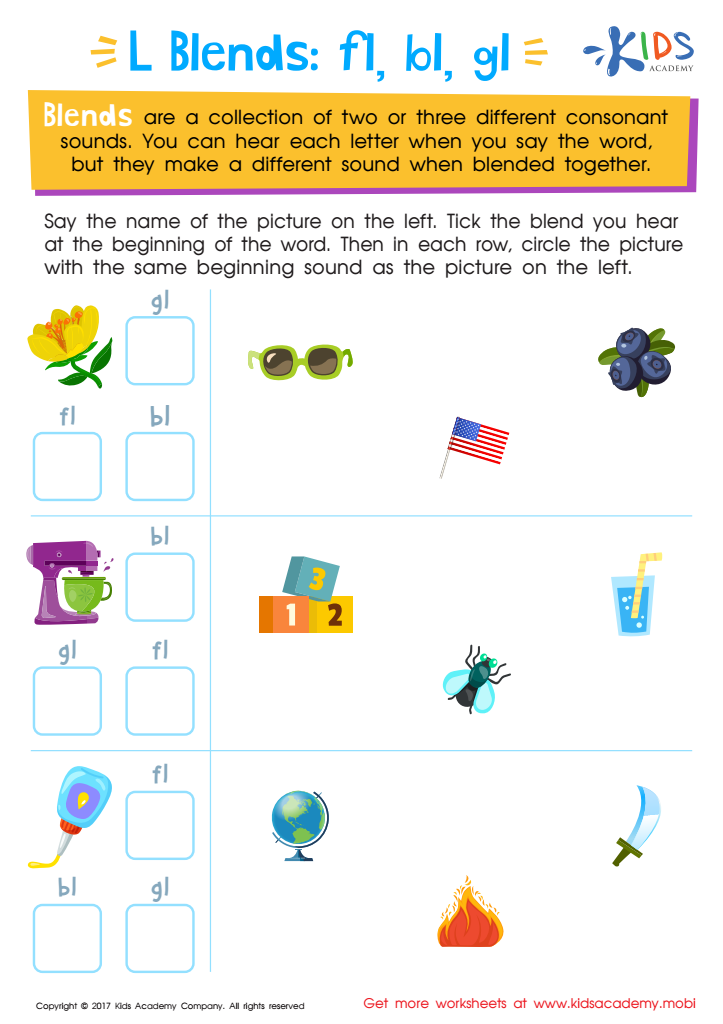
Blending Consonants: "Fl", "Bl" and "Gl" Printable
 Assign to My Students
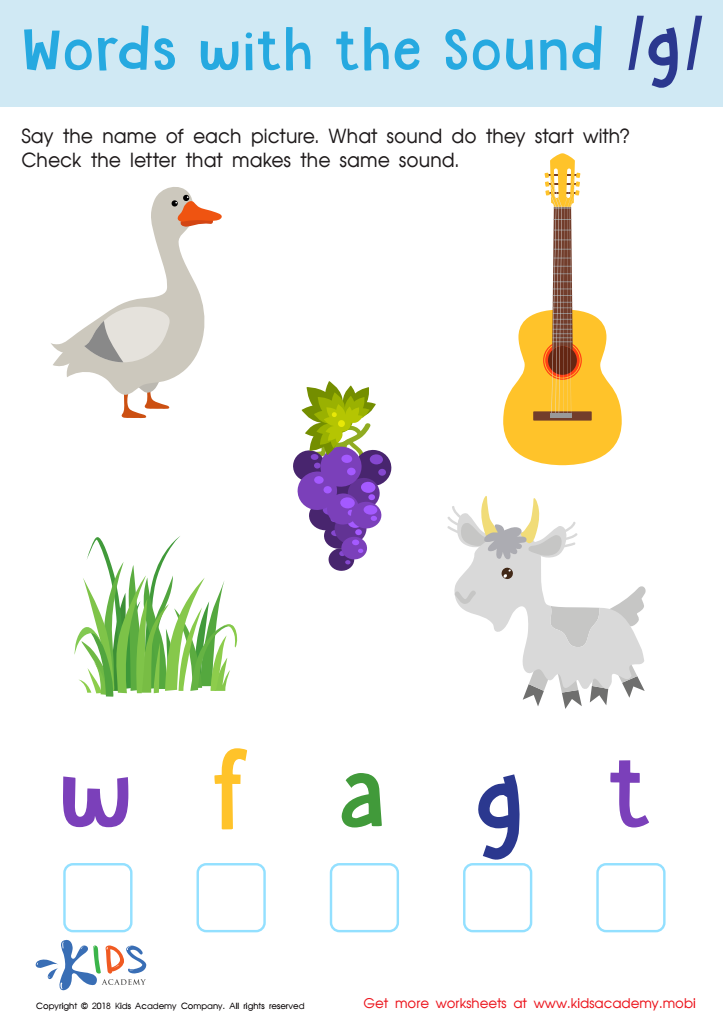
Words with sound g Reading Worksheet
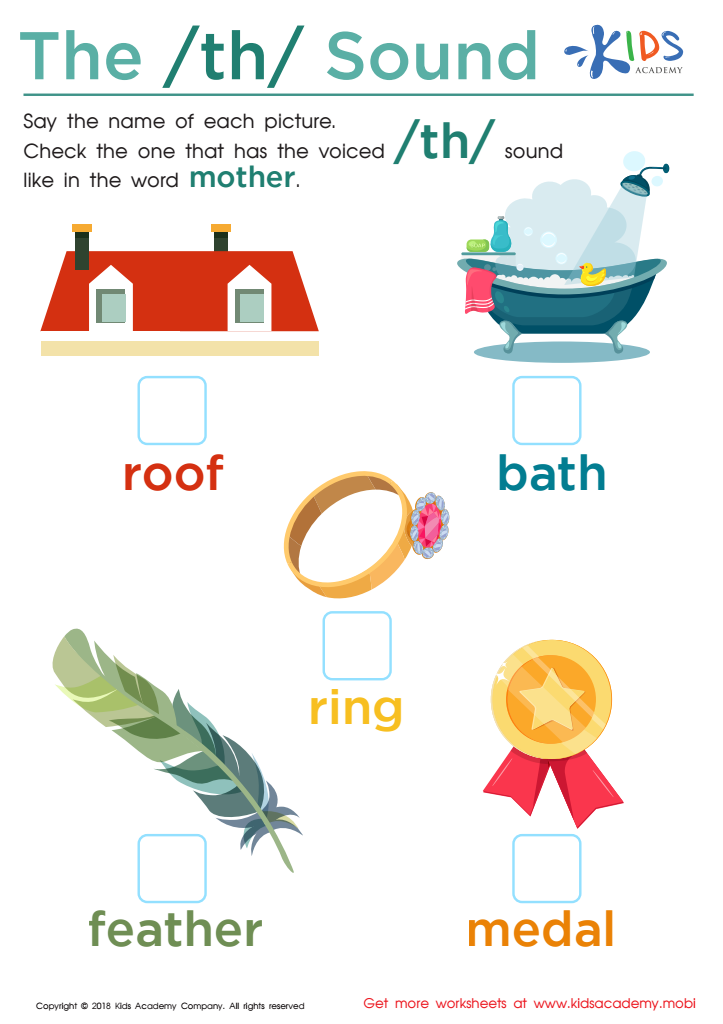
The /th/ Sound Worksheet
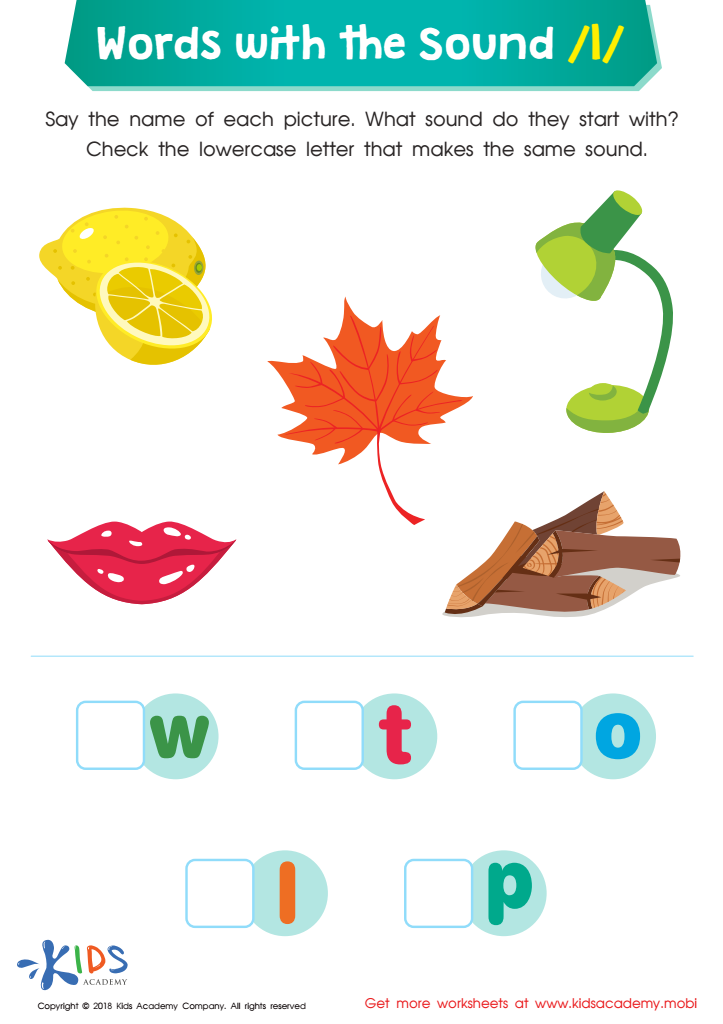
Words with Sound L Reading Worksheet
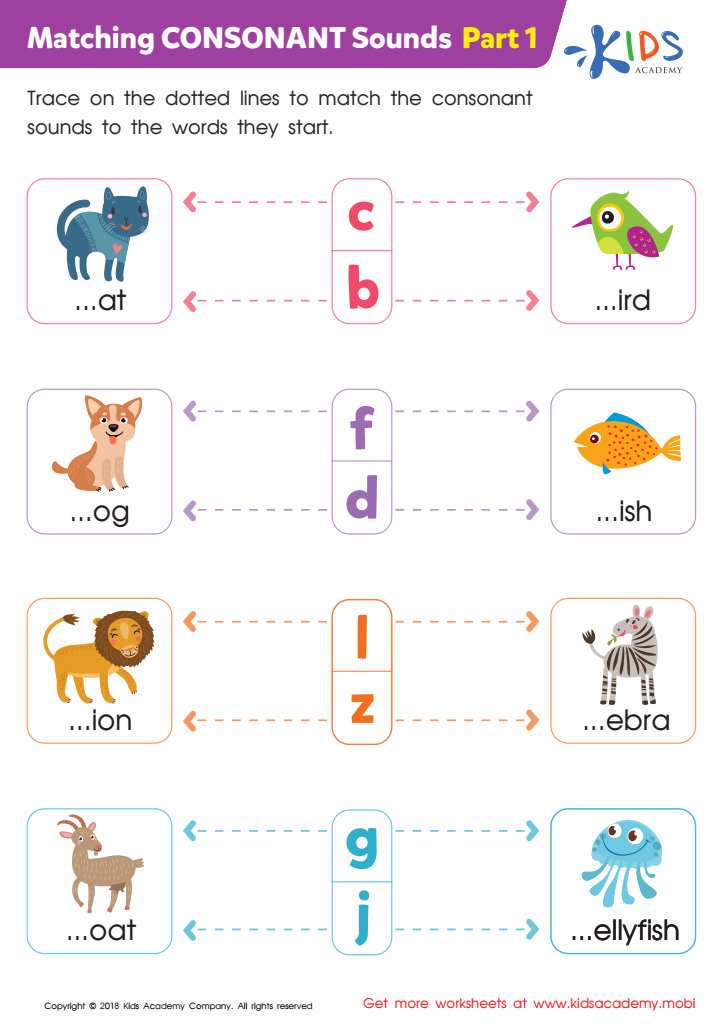
Matching Consonant Sounds: Part 1 Worksheet



Sound recognition of consonants for children aged 3-6 is a pivotal aspect of early literacy. During these formative years, mastering consonant sounds is crucial as they form the building blocks of language. Understanding and recognizing these sounds help children develop crucial phonemic awareness, the ability to hear, identify, and manipulate individual sounds in spoken words. This foundational skill significantly impacts a child's reading and writing abilities.
When parents and teachers support sound recognition of consonants, they enhance children's ability to decode new words, leading to better reading fluency and comprehension. Additionally, strong phonemic awareness bolsters spelling skills, allowing children to represent spoken sounds with written letters more accurately.
Engaging young learners in consonant sound activities also fosters their listening skills and attention to detail, both essential for academic success. Activities like singing songs, playing phonetic games, and reading aloud can make learning these sounds enjoyable and effective.
Moreover, early success in reading and writing instills confidence and a sense of accomplishment in children, encouraging a lifelong love for learning. Thus, prioritizing consonant sound recognition in early childhood education sets the stage for a smooth transition into more complex literacy skills, laying the groundwork for overall academic achievement.







