Filters

6 filtered results

Clear all filters
Favorites
With answer key
Interactive

6 filtered results

Difficulty Level

Grade


Enrich your child's vocabulary with our Vocabulary Expansion Consonants Worksheets designed for ages 3-6! These engaging, colorful, and interactive sheets provide various exercises that make learning consonants fun and effective. Your little ones will enhance their reading and speaking skills while identifying, pronouncing, and using words starting with different consonants. Perfect for parents and teachers, these worksheets align with early learning standards, ensuring a solid foundation in literacy. Facilitate rapid vocabulary growth and inspire a love for language with activities tailored to young minds. Download our worksheets and watch your child's word skills soar!

Check out this FREE Trial Lesson on Consonants for age 3-6!

Consonant Blends with l

Favorites
With answer key
Interactive
  • 3-6
  • Vocabulary expansion
  • Consonants
Consonant Blend Fl, Bl, and Gl Printable Worksheet

Blending Consonants: "Fl", "Bl" and "Gl" Printable

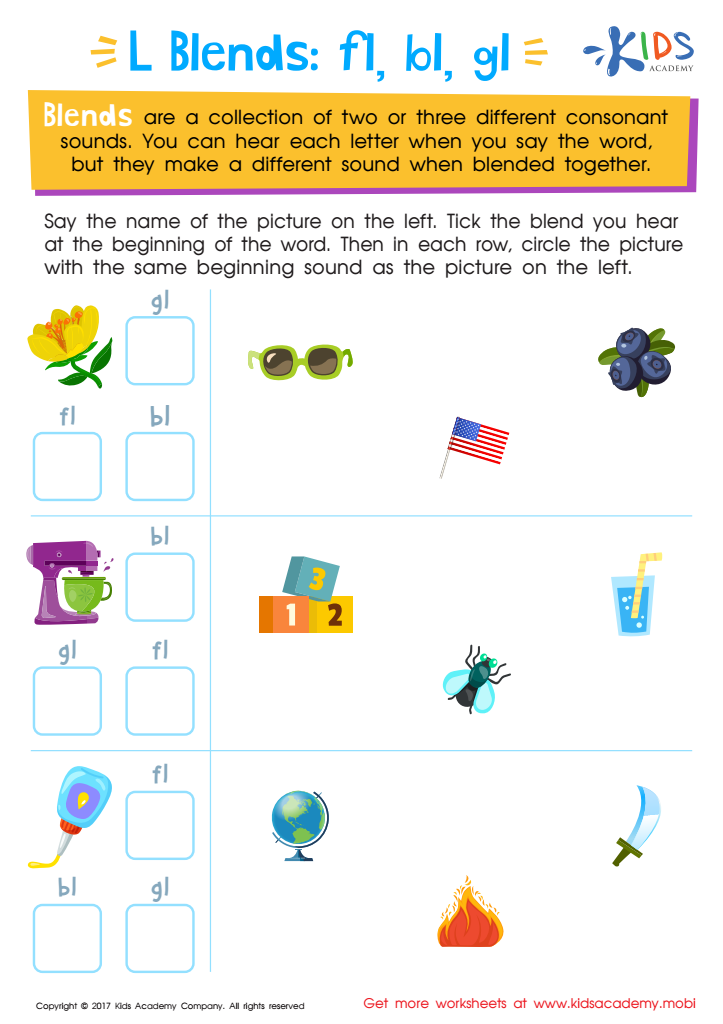
Help your child master consonant blends Fl, Bl, and Gl with this printable worksheet. Find words associated with the pictures and learn to better understand the difference between consonant blends. Vibrant images motivate and aid in learning. Download now for improved phonics success!
Blending Consonants: "Fl", "Bl" and "Gl" Printable
Worksheet
Words with sound h Reading Worksheet

Words with sound h Reading Worksheet

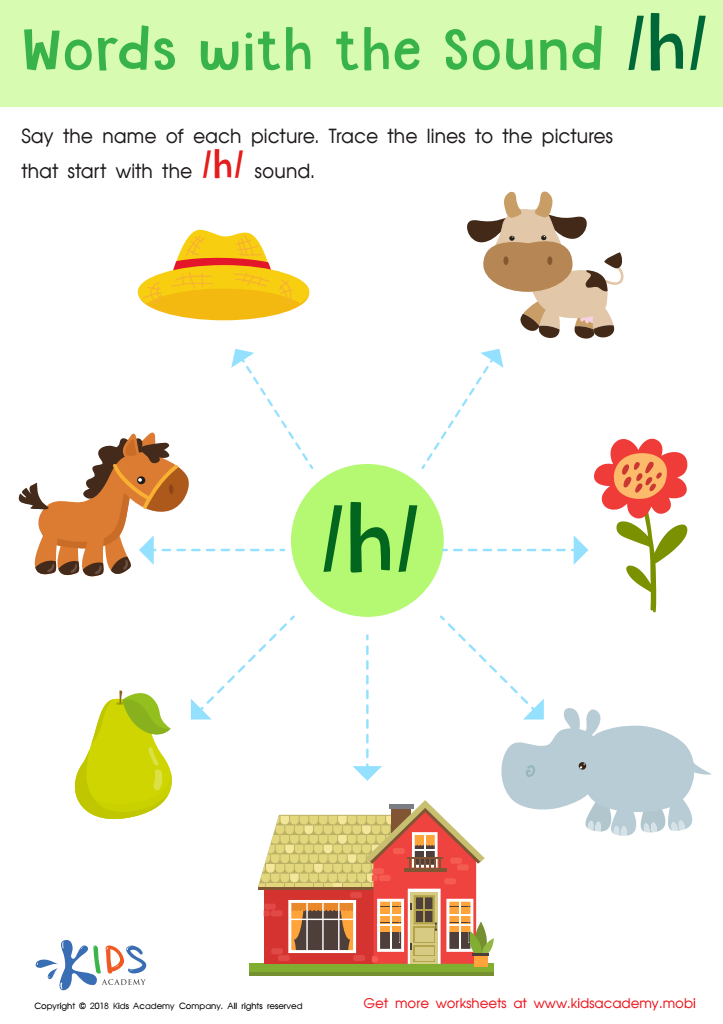
The letter H can often be heard in words! Check your child's knowledge with an engaging worksheet from Kids Academy. Ask them to go around a circle and name each image aloud. Listen for the starting sound and trace the line from the middle letter to the images with the sound. This is a great way to practice phonics!
Words with sound h Reading Worksheet
Worksheet
Words with sound j Reading Worksheet

Words with sound j Reading Worksheet

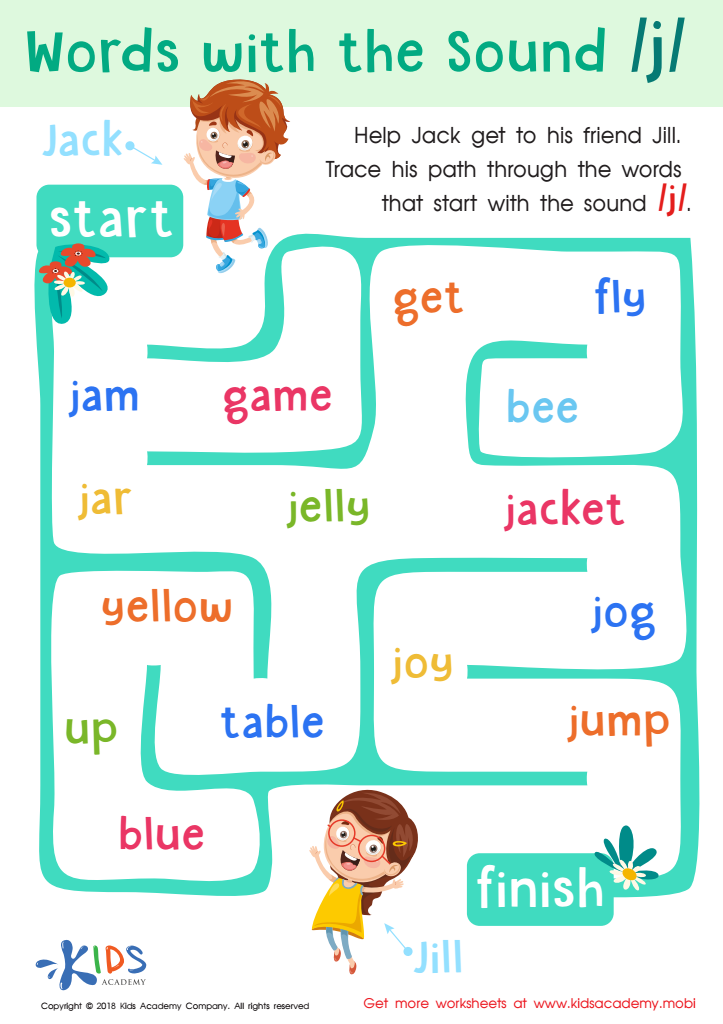
Don't be fooled: The letter J sounds like G in this letter sounds maze! Kids will enjoy helping Jack find Jill by listening to beginning sounds and tracing a path to the exit. Choose words that start with the letter J sound to complete the challenging maze!
Words with sound j Reading Worksheet
Worksheet
Words with Sound L Reading Worksheet

Words with Sound L Reading Worksheet

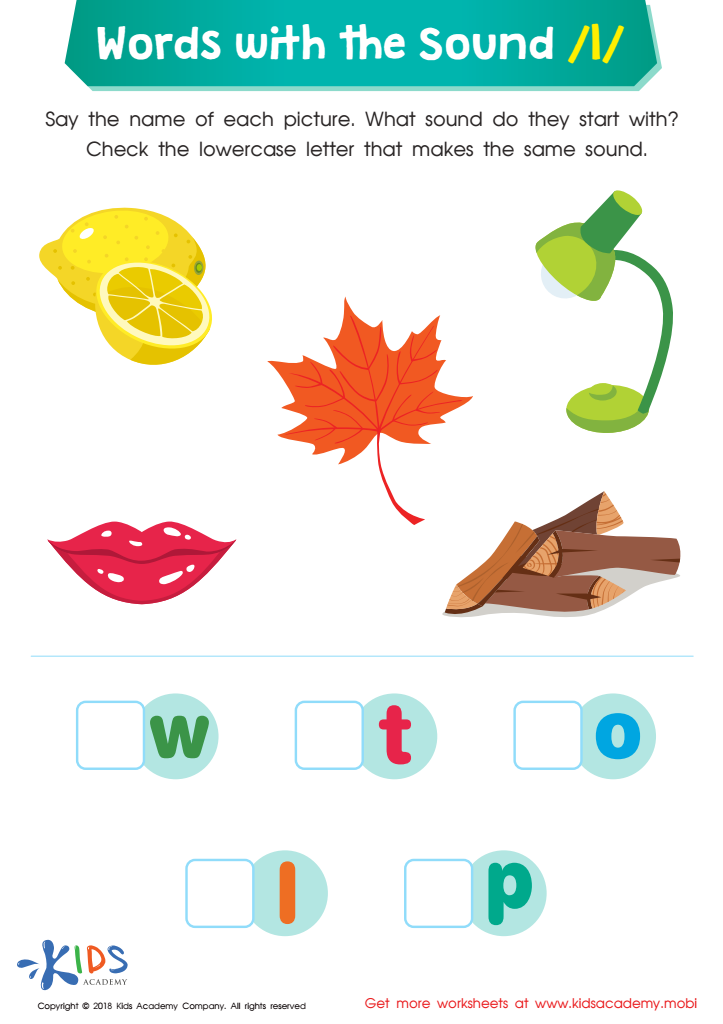
This PDF worksheet is great for helping emerging readers isolate initial sounds. Kids name familiar pictures, then identify the correct letter for the "l" sound. This worksheet strengthens fine motor skills, plus builds visual discernment. It's fun and colorful too!
Words with Sound L Reading Worksheet
Worksheet
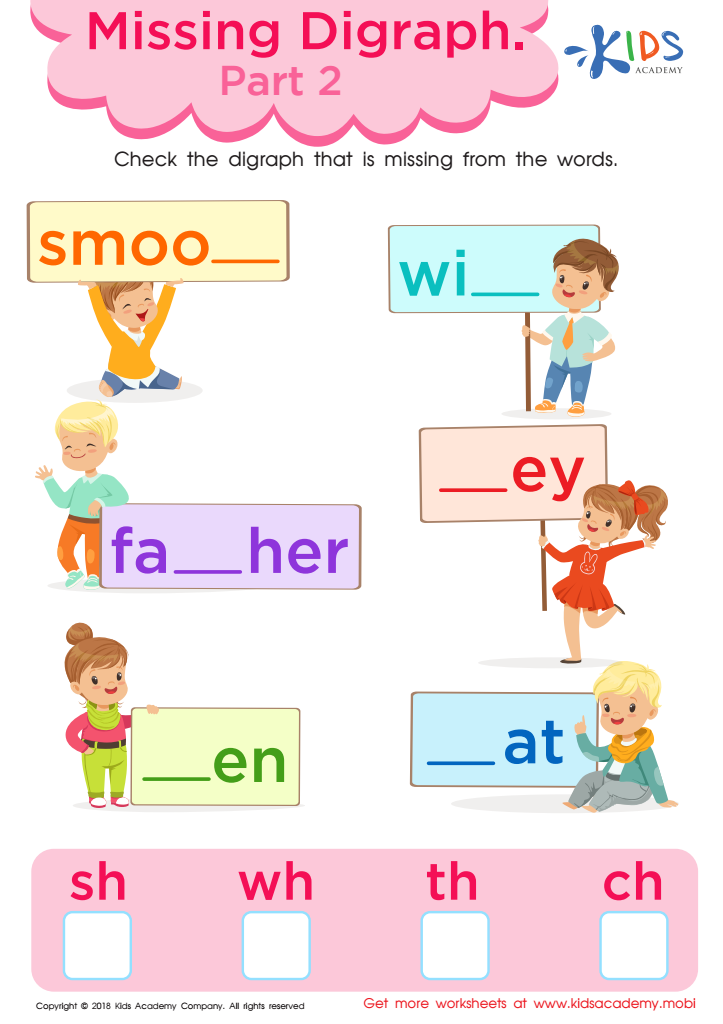
Missing Digraph: Part 2 Worksheet

Missing Digraph: Part 2 Worksheet

Practice the "th" digraph with this fun worksheet from Kids Academy! See how it appears at the beginning, middle, or end of words and help learners fill in the blanks. Check if they got it right by finding the th digraph at the bottom!
Missing Digraph: Part 2 Worksheet
Worksheet
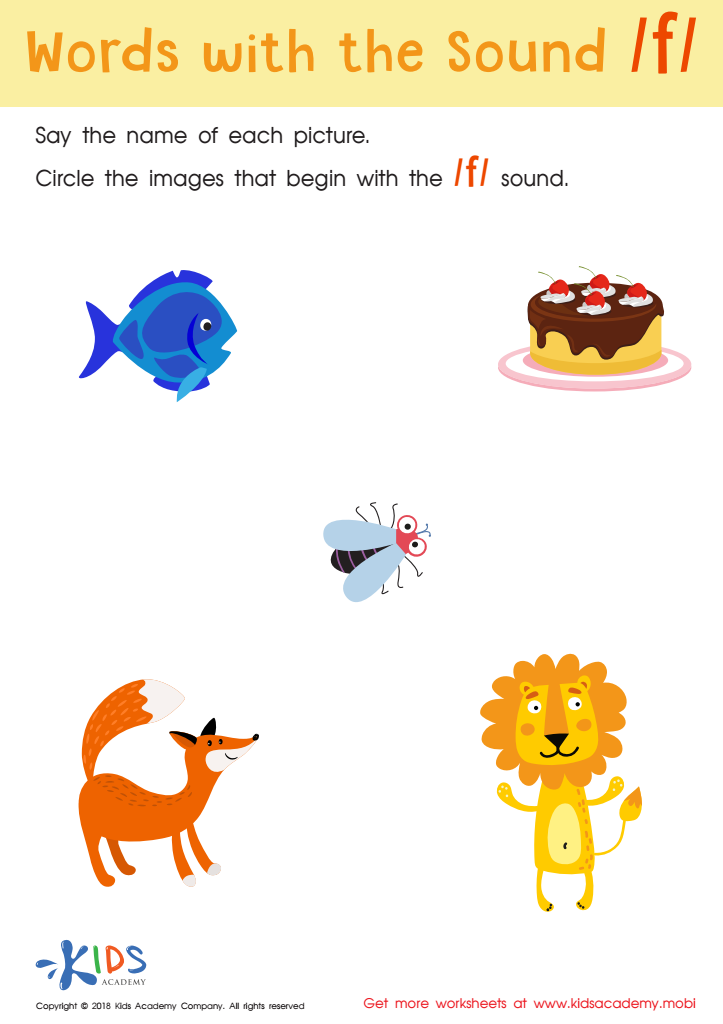
Words with sound f Reading Worksheet


Words with sound f Reading Worksheet

This illustrated phonics worksheet is ideal for preschool or kindergarten. It helps boost learners' literacy skills with a focus on the letter "f". Ask your child to name all the pictures, listening for that sound. Examples are fish, fox, lion, bug. When they can identify which words start with "f", have them circle the images. Congratulate them on a job well done!
Words with sound f Reading Worksheet
Worksheet


Vocabulary expansion is crucial for children aged 3-6 because it forms the foundation for all future learning and literacy skills. During these formative years, a rich vocabulary helps children express themselves clearly and understand others better, enabling smoother social interactions and emotional development.

Understanding consonants and their sounds is particularly important as it directly relates to phonemic awareness, a key skill in learning to read. When children can recognize and articulate different consonant sounds, they are better equipped to decode words when they begin reading. This early skill-building can prevent future struggles with reading and comprehension, boosting their confidence and academic performance.

Parents and teachers who actively engage with children through reading, conversing, and playful learning activities rich in new words and sounds will support this essential developmental milestone. These early linguistic experiences will not only make educational instruction more effective, but also foster a genuine love for learning in the child’s heart.

In essence, focusing on vocabulary and consonants during ages 3-6 sets a solid groundwork for future literacy and educational success, making it a fundamental aspect of early childhood development that parents and teachers should prioritize.