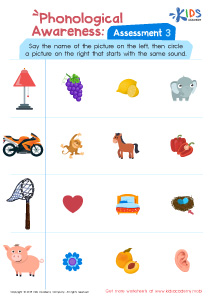
Phonics Skills Elementary Phonics Worksheets for Ages 3-6
3 filtered results
Difficulty Level
Grade
Age
-
From - To
Subject
Activity
Standards
Discover our engaging Phonics Skills worksheets designed specifically for children ages 3-6! These thoughtfully crafted resources introduce young learners to the foundational concepts of phonics. By exploring letter sounds, blending techniques, and phonemic awareness, children will build strong reading skills essential for their academic journey. Our interactive worksheets incorporate fun activities that promote engagement, enhancing your child's ability to recognize and use sounds in words. Perfect for home or classroom use, our elementary phonics worksheets support early literacy development, making learning to read an enjoyable experience. Start your child's phonics adventure today and watch them thrive as confident readers!
Favorites
With answer key
Interactive
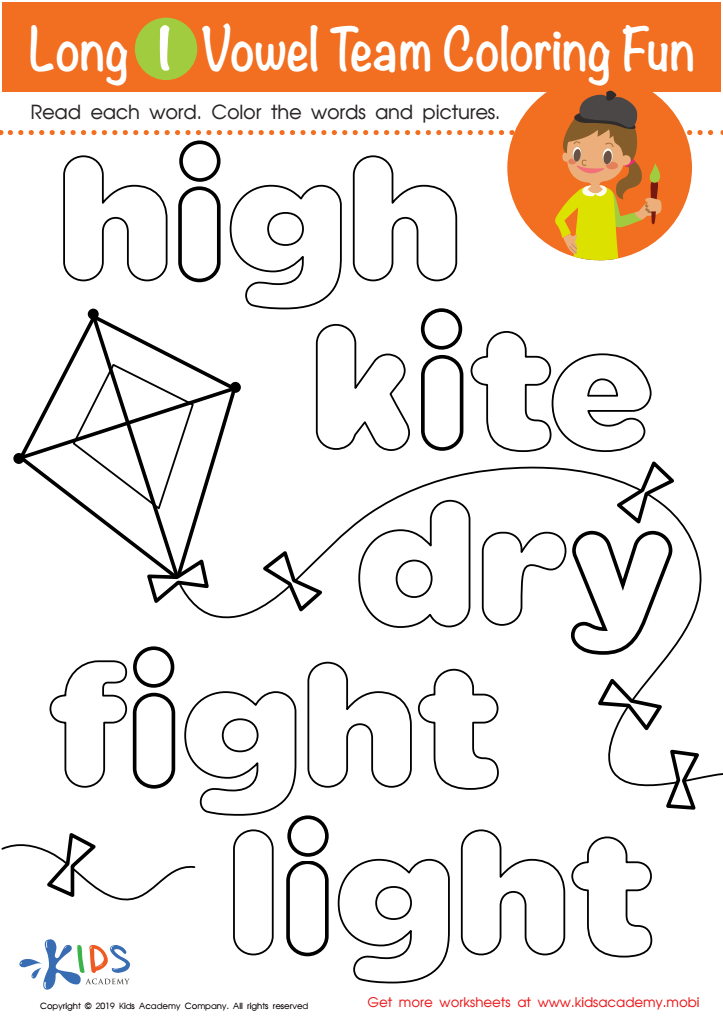
Long I Vowel Team Coloring Worksheet
This worksheet provides practice with letter combinations that make the long "i" sound while enhancing creativity and motor skills with a fun coloring activity. Unknowingly, new readers learn key phonics skills while having fun!
Download (PDF)
 Assign to My Students
Assign to My Students
Long I Vowel Team Coloring Worksheet
Worksheet

Long and Short E Worksheet
This fun printout makes learning phonics enjoyable for Grade 3 students. Get them to read the words “tree” and “bed” to recognize the different sounds of the letter “E”. After hearing the words they can color the words and the pictures to understand differences between long and short vowels.
Download (PDF)
Assign to My Students
Assign to My Students
Long and Short E Worksheet
Worksheet
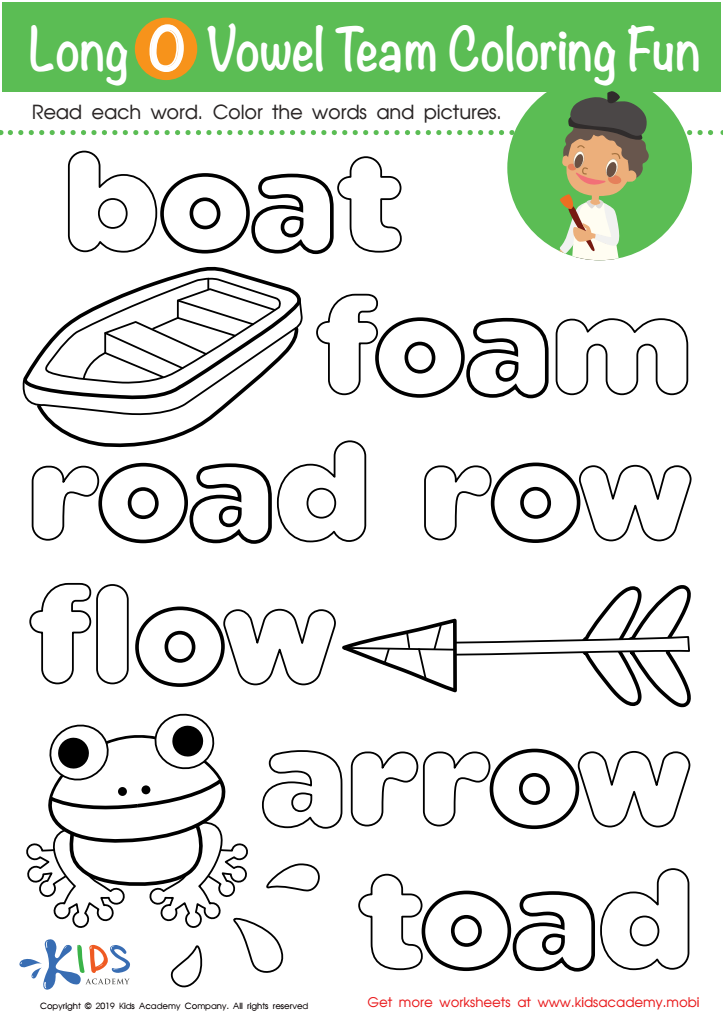
Long O Vowel Team Coloring Worksheet
Divide your class into teams and have them work together to identify and pronounce the long O sound in words like "boat" and "flow". As they read aloud, have the rest of the class listen attentively. Then let teams color in the words and matching pictures, reinforcing the lesson. This simple printout is perfect for phonics lessons and a fun way to energize your class.
Download (PDF)
Assign to My Students
Assign to My Students
Long O Vowel Team Coloring Worksheet
Worksheet
Join Kids Academy for Free
Who is primarily going to use this learning content?




Phonics skills are crucial for early literacy development in children aged 3-6, as they establish the foundation for reading and writing proficiency. Phonics instruction teaches children the relationship between letters and their corresponding sounds, enabling them to decode words independently. This skill is essential for developing strong reading abilities, which are fundamental to success across all subjects in school.
Parents and teachers should prioritize phonics because mastering these concepts fosters confidence in young learners, encouraging a love for reading. Children who develop phonics skills early are better equipped to tackle increasingly complex texts as they advance through their education. Furthermore, proficient readers tend to perform better in school overall, which can have positive long-term outcomes.
Incorporating phonics into daily activities enhances auditory discrimination and reinforces vocabulary, contributing to well-rounded language development. Engaging families in phonics learning reinforces these skills at home, creating a supportive environment that nurtures their child's educational journey. Ultimately, investing in phonics skills during these formative years not only empowers children intellectually but also lays the groundwork for lifelong learning, critical thinking, and effective communication. Parents and teachers, as key stakeholders in this process, have the power to make a significant impact on children's futures by emphasizing phonics.