Sound identification Elementary Phonics Worksheets for Ages 3-6
4 filtered results
-
From - To
Unlock the power of learning with our "Sound Identification Elementary Phonics Worksheets for Ages 3-6." These engaging printables help young learners recognize and match sounds, building a strong foundation for reading. Through fun activities like tracing, matching, and coloring, children develop essential phonemic awareness and early literacy skills. Perfect for both classroom and home settings, our worksheets make learning phonics enjoyable and effective. Equip your little ones with the confidence they need to succeed in their educational journey. Start today and watch their reading skills soar! Visit Kids Academy for your customized printable solutions.
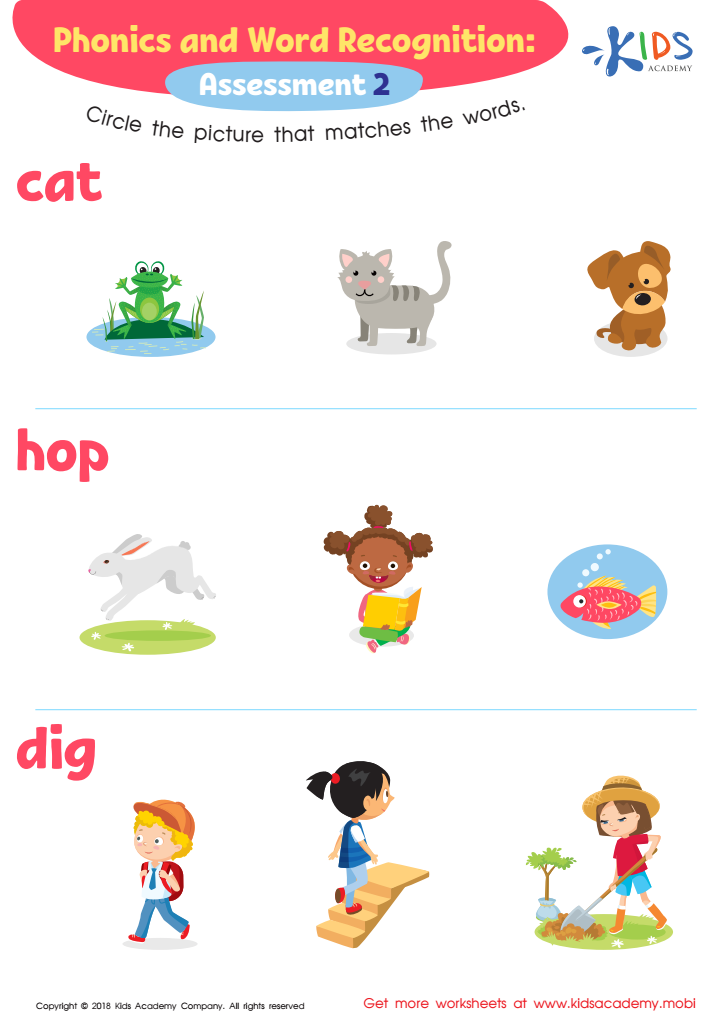
Phonological Awareness: Assessment 2 ELA Worksheet
 Assign to My Students
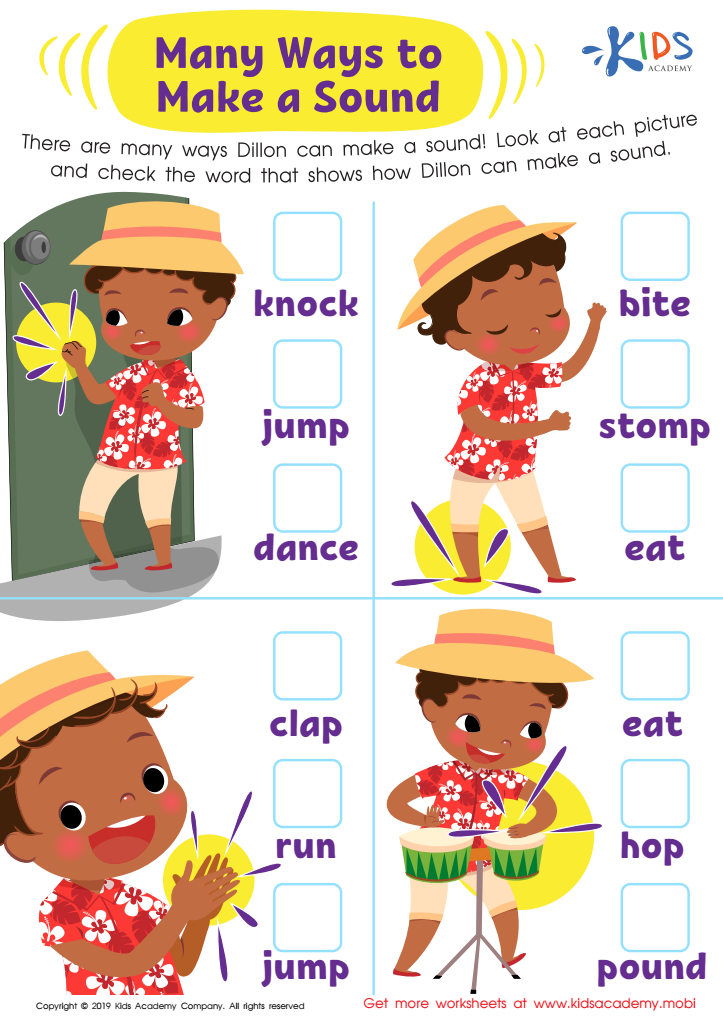
Many Ways to Make a Sound Worksheet
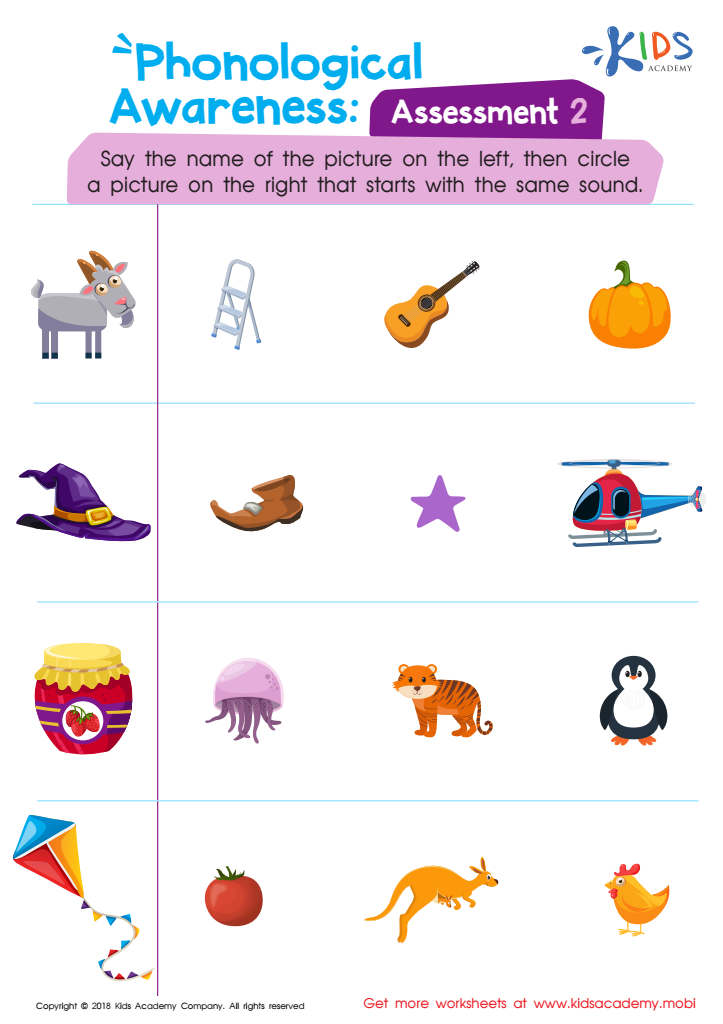
Phonological Awareness: Assessment 2 Worksheet
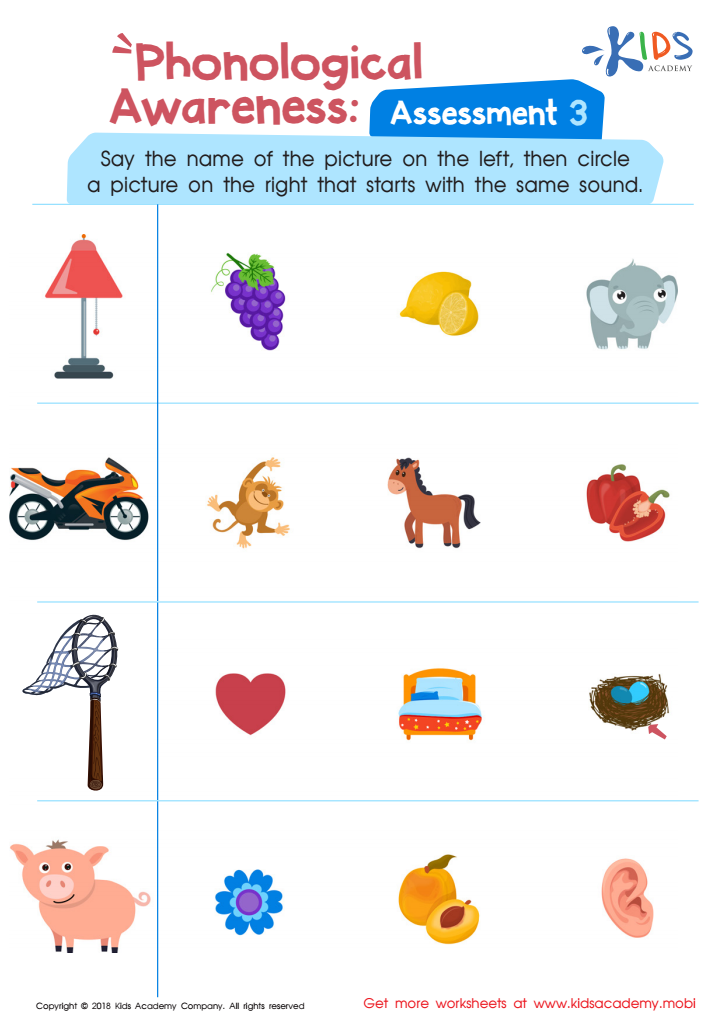
Phonological Awareness: Assessment 3 Worksheet




Sound identification and elementary phonics play a crucial role in early childhood education, particularly for ages 3-6. During these formative years, children undergo rapid development in their language and cognitive skills. Understanding phonics—the relationship between sounds and their corresponding letters—is foundational for learning to read and write effectively.
For parents and teachers, emphasizing sound identification helps children develop phonemic awareness, which is the ability to hear, identify, and manipulate individual sounds in words. This awareness is a critical predictor of later reading success. When children recognize the sounds that make up words, they can more easily decode new words they encounter, leading to better reading fluency and comprehension.
Encouraging sound identification at a young age fosters a love for reading and sets the stage for academic success. It enhances vocabulary development, improves spelling skills, and contributes to greater self-confidence in literacy activities. Moreover, early proficiency in phonics helps children avoid future struggles with reading and can reduce the likelihood of literacy-related academic delays.
Overall, investing time and resources in teaching sound identification and phonics to young children equips them with vital lifelong learning skills. It forms the bedrock of literacy, upon which all subsequent learning is built.







