Lowercase letter writing Alphabet Worksheets for Ages 3-6
3 filtered results
-
From - To
Introducing our Lowercase Letter Writing Alphabet Worksheets for ages 3-6! Specifically designed to cultivate early literacy skills, these engaging and educational worksheets guide young learners through the basics of lowercase letter formation. Packed with fun activities and colorful prompts, kids will practice letter recognition, proper pencil grip, and tracing techniques. Perfect for preschool and kindergarten classrooms, our worksheets foster fine motor skills, visual tracking, and fundamental writing skills, ensuring a strong start to a lifelong journey of reading and writing. Download now and watch your little ones excel while having lots of fun!
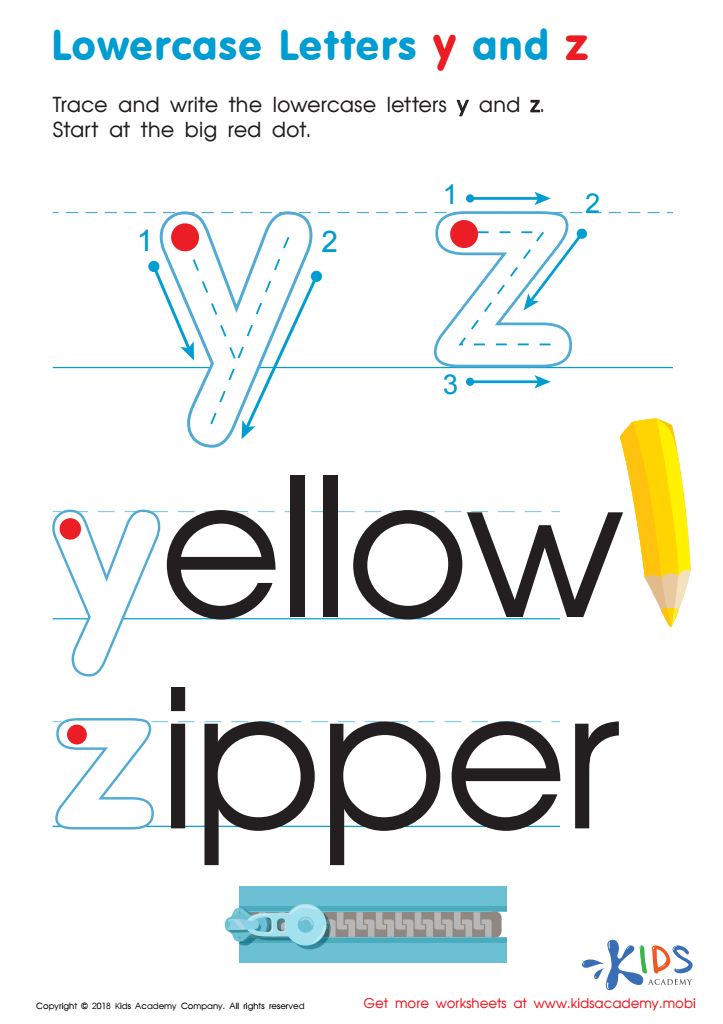
Lowercase Letters y z Worksheet
 Assign to My Students
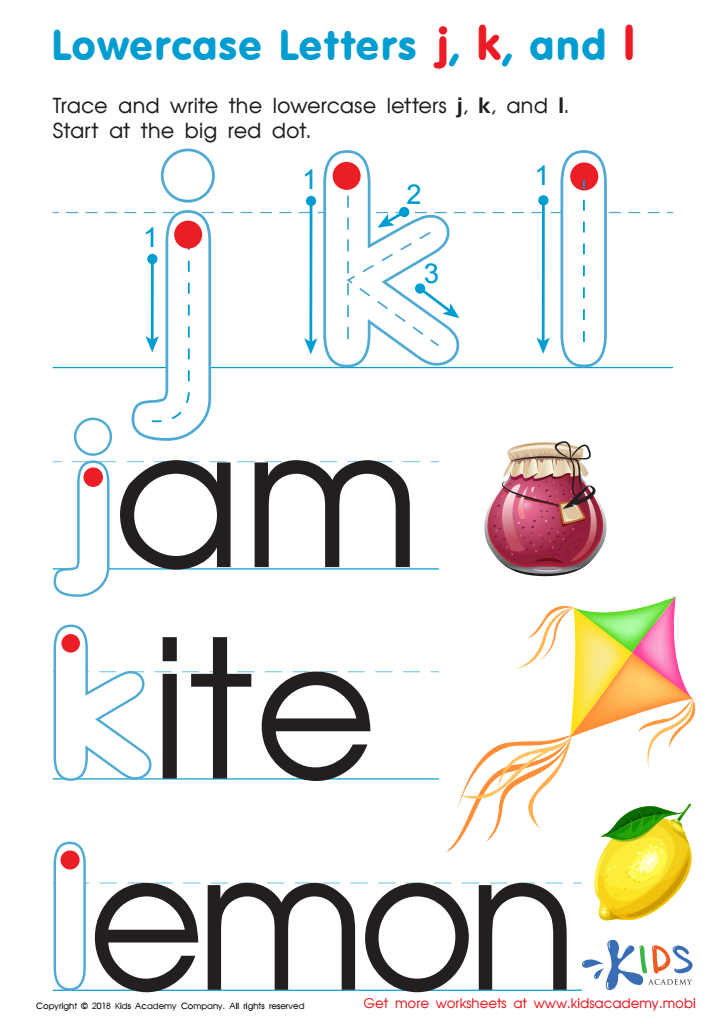
Lowercase Letters j k l Worksheet
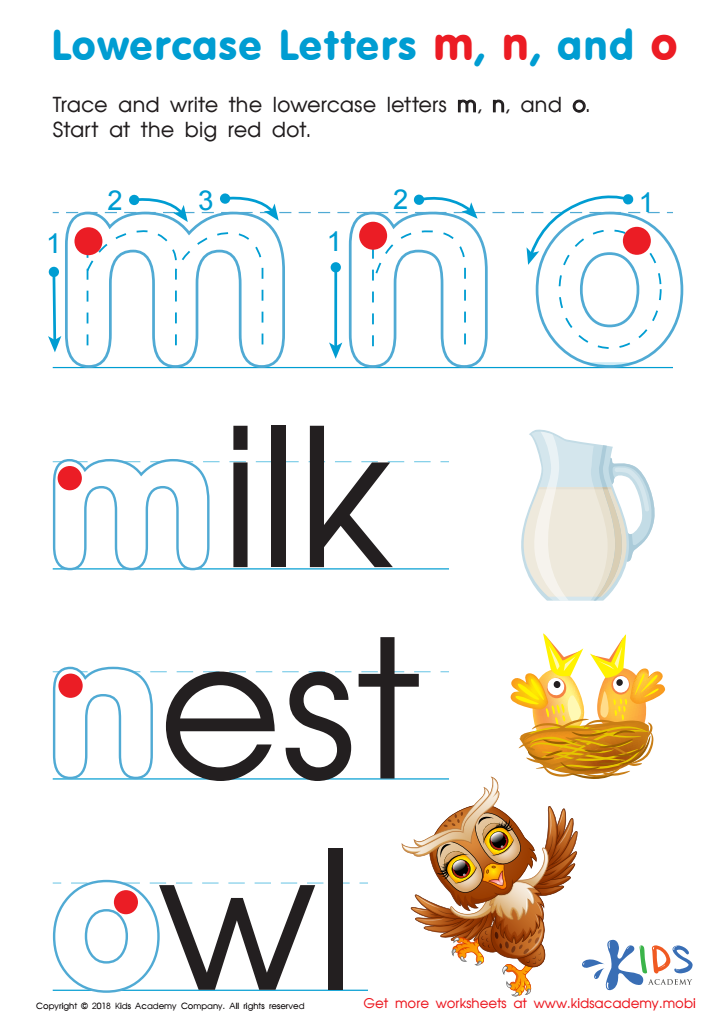
Lowercase Letters m n o Worksheet








Teaching lowercase letter writing to children ages 3-6 is crucial for several developmental and educational reasons. At this early age, a child's brain is highly receptive to learning and acquiring new skills. Introducing lowercase letters helps build foundational literacy skills that are essential for reading and writing. Unlike uppercase letters, which are typically easier to recognize and write, lowercase letters appear more frequently in written text, making familiarity with them key to a child's ability to read and comprehend stories, instructions, and everyday print materials.
Functional writing skills are another significant reason to focus on lowercase letter formation. Most written communication, including notes, letters, and even digital text, predominantly uses lowercase letters. Teaching children to write these letters correctly from an early age helps prevent future writing difficulties, promotes legible handwriting, and makes learning more advanced writing skills easier.
Moreover, mastering lowercase letters enhances fine motor skills and hand-eye coordination. The practice encourages precision, control, and attention to detail, all of which are indispensable for academic success and other daily activities requiring manual dexterity.
Parents and teachers who prioritize lowercase letter formation foster a child's confidence and enthusiasm for learning. Early successes in writing yield positive reinforcement, cultivating an enduring interest in education.







