Alphabet Recognition Letter J Worksheets for Ages 3-6
3 filtered results
Difficulty Level
Grade
Age
-
From - To
Subject
Activity
Standards
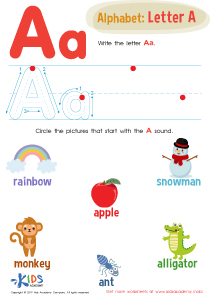
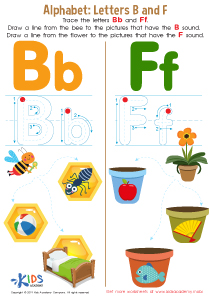
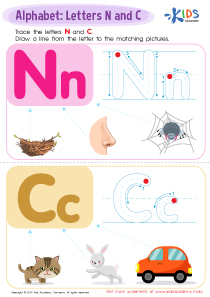
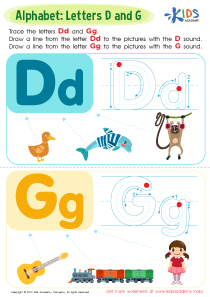
Unlock the joy of learning the letter J with our Alphabet Recognition Letter J Worksheets, designed for ages 3-6! These engaging worksheets from Kids Academy offer a variety of fun activities, including tracing, coloring, and matching exercises that help young learners recognize and understand the sound and appearance of the letter J. Perfect for preschool and kindergarten students, these worksheets are crafted to enhance fine motor skills, boost letter recognition, and encourage early literacy development. Through playful and interactive tasks, children will confidently build foundational skills that set the stage for reading success. Learn the letter J delightfully today!
Favorites
With answer key
Interactive
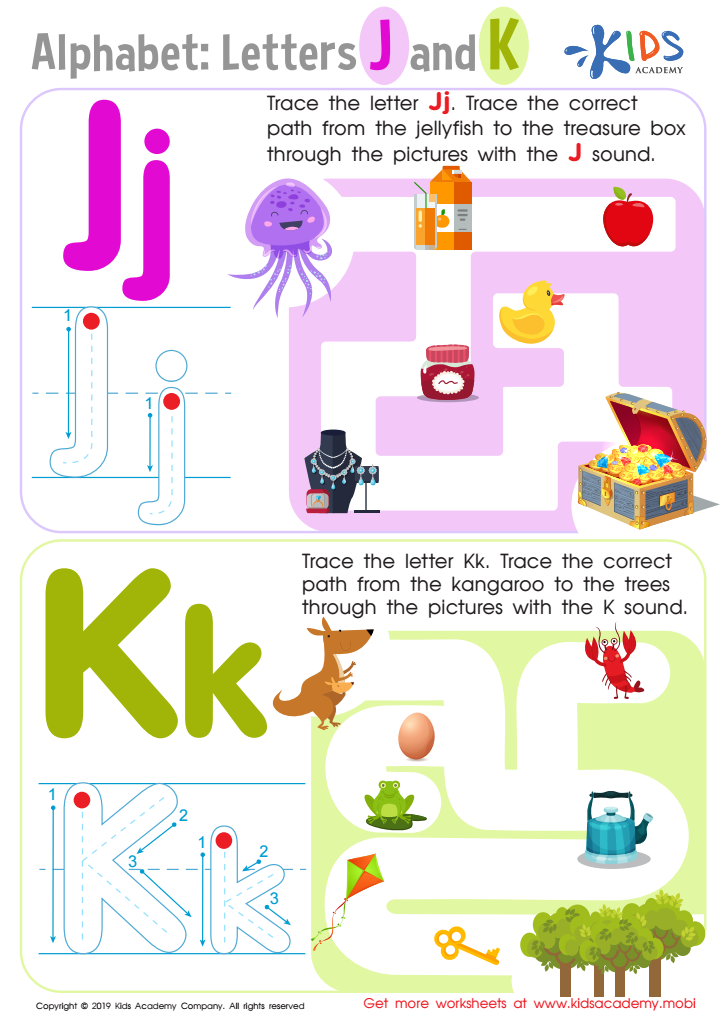
Letters J and K Tracing Worksheet
Tracing the letters «J» and «K» is the first step. Help the jellyfish find a path to the treasure chest with pictures of the «J» sound, and assist the kangaroo in finding a path to the trees with pics of «K». Fun, educational and enjoyable for children!
 Assign to My Students
Letters J and K Tracing Worksheet
Worksheet
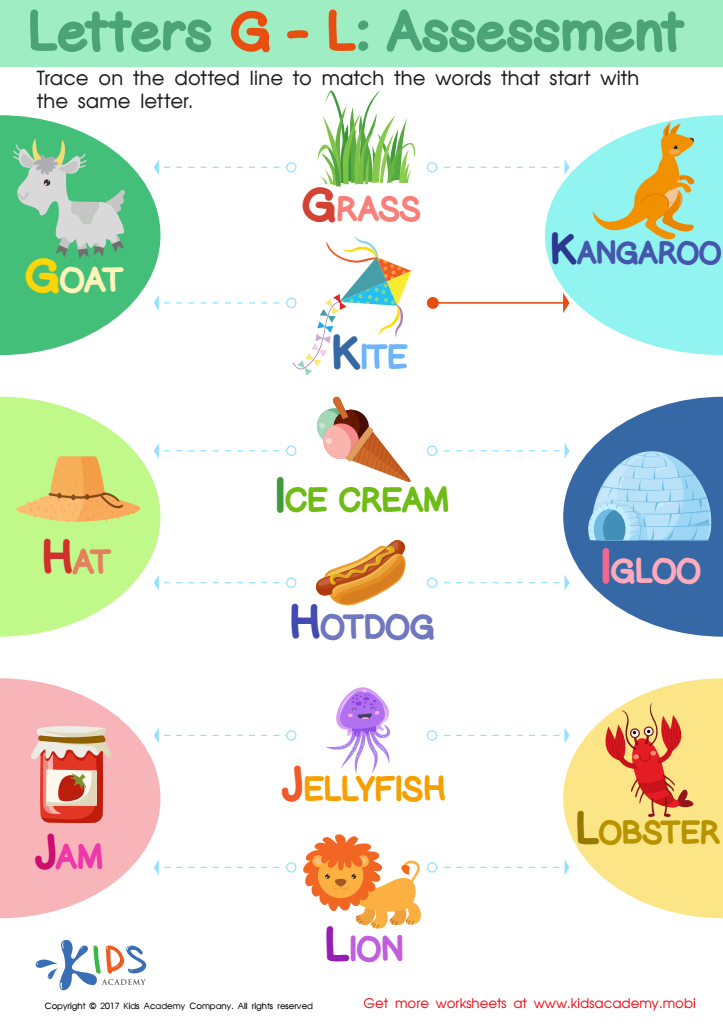
Letters G-L Worksheet
This fun worksheet helps preschoolers develop reading and phonics skills. It gets kids to match G-L words that start with the same letter, making it engaging and educational.
Letters G-L Worksheet
Worksheet
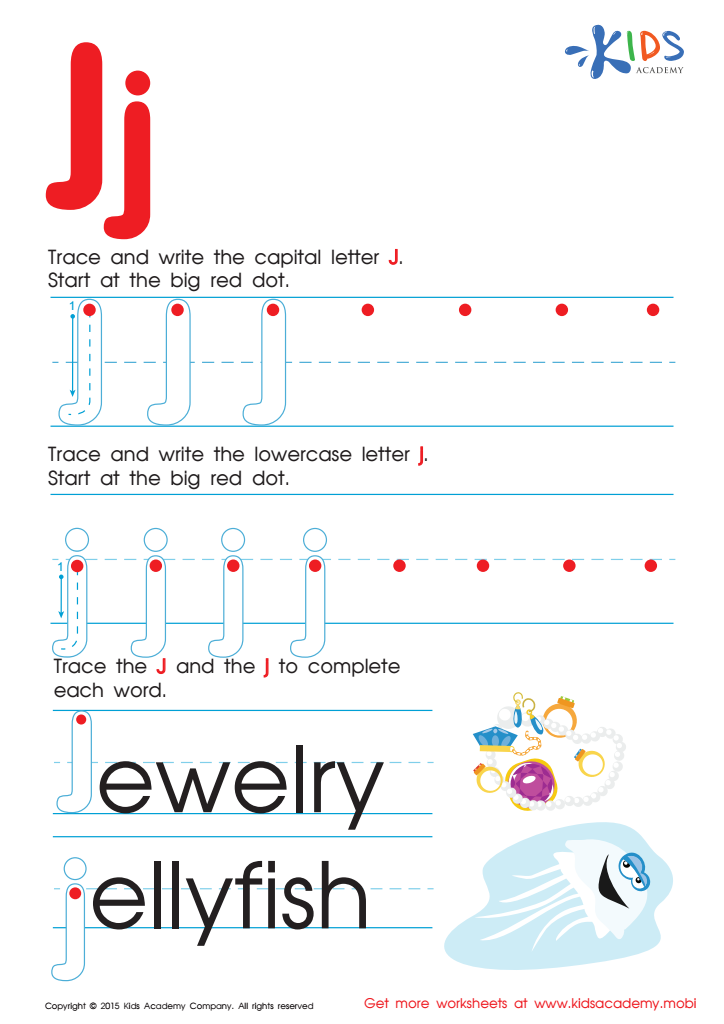
Letter J Tracing Page
Trace and write the letter "J" with our ABC worksheet - start at the big red dot! Have fun completing words like jewelry, jellyfish and more. Check out our kindergarten activities for more alphabet practice.
Letter J Tracing Page
Worksheet
Join Kids Academy for Free
Who is primarily going to use this learning content?




Alphabet recognition, including recognizing the letter J, is a foundational skill crucial for young children aged 3-6. This developmental milestone plays a significant role in early literacy, setting the stage for more advanced reading and writing skills. When children learn to recognize the letter J, they are not just learning a symbol but also making connections between letters and their sounds. This phonemic awareness is essential for developing decoding skills, which allow children to read fluently.
Teaching the letter J engages children in various cognitive processes, including visual and auditory discrimination, memory, and concentration. Activities revolving around alphabet recognition can also enhance fine motor skills through writing practice and creative arts involving letter crafts.
For teachers and parents, fostering an environment that emphasizes the importance of alphabet recognition helps to boost children’s confidence and enthusiasm for learning. It ensures that children are well-prepared for future academic challenges. When parents and educators actively participate in this learning process, they can tailor teaching methods to each child’s learning style, reinforcing and expanding on what is taught in the classroom.
In essence, recognizing the letter J signifies a child’s progress in a larger journey of literacy and cognitive development, forming the cornerstone for future educational success.