Alphabet Recognition Missing Letters Worksheets for Ages 3-6
3 filtered results
-
From - To
Help your child master the ABCs with our "Alphabet Recognition Missing Letters Worksheets" designed for ages 3-6. These engaging activities are crafted to enhance your child's letter identification and sequencing skills by filling in the blanks. Perfect for early learners, the worksheets promote critical thinking and confidence in recognizing and writing letters. Foster a love for learning as your child navigates through fun, educational challenges. Ideal for both at-home practice and classroom use, our printable materials support foundational literacy, preparing young minds for successful reading and writing adventures. Unlock their potential today!
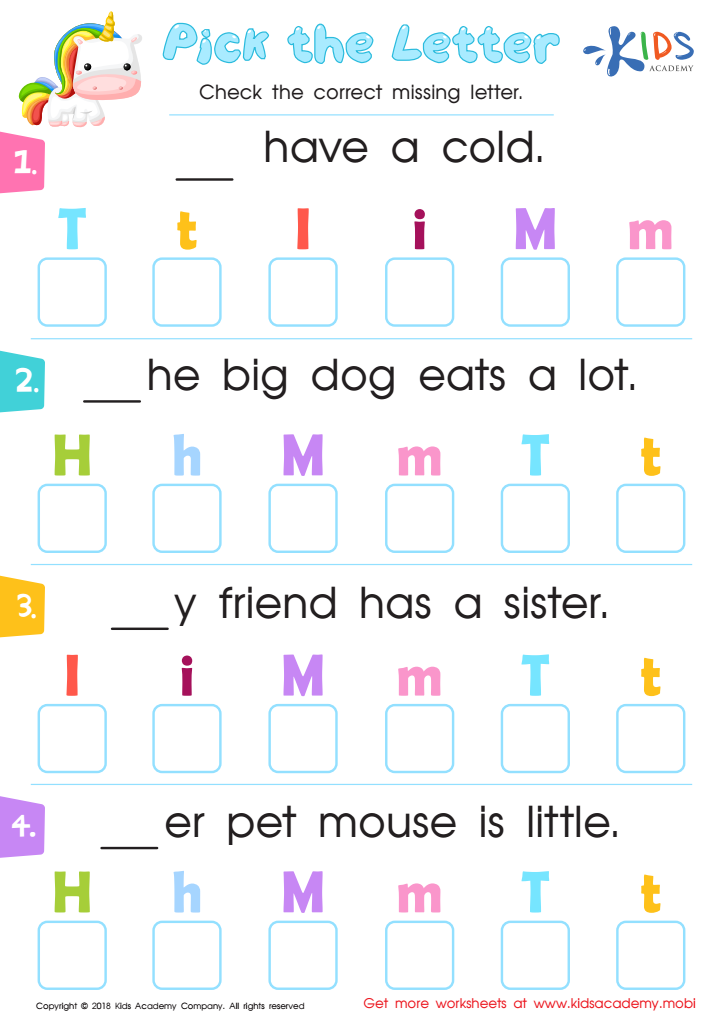
Pick the Letter Worksheet
 Assign to My Students
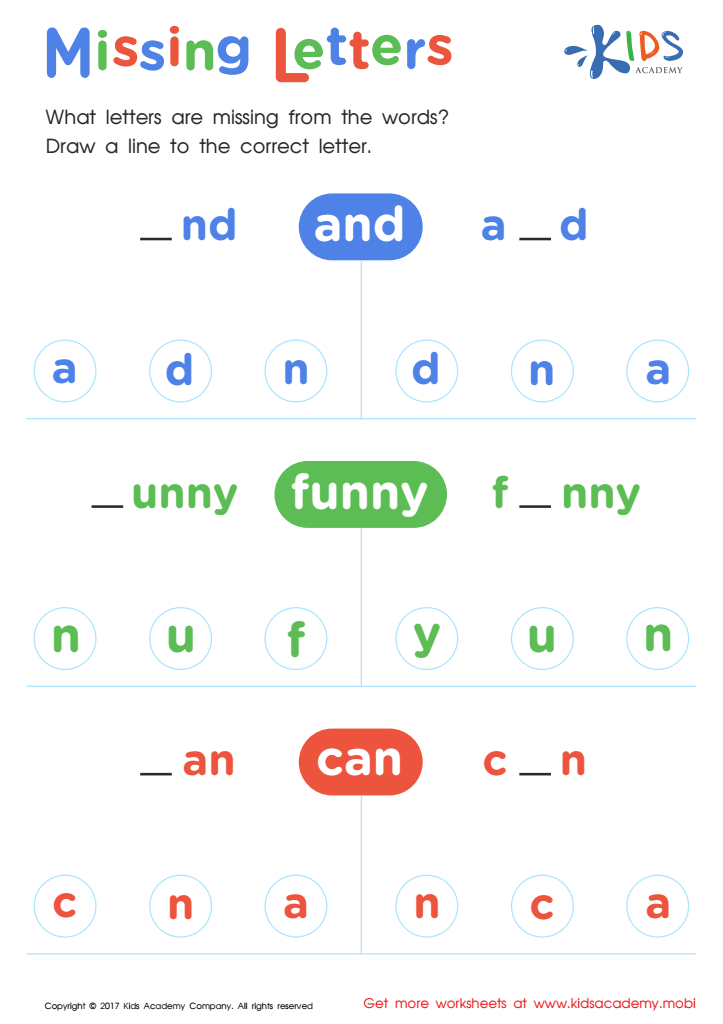
Missing Letters Worksheet
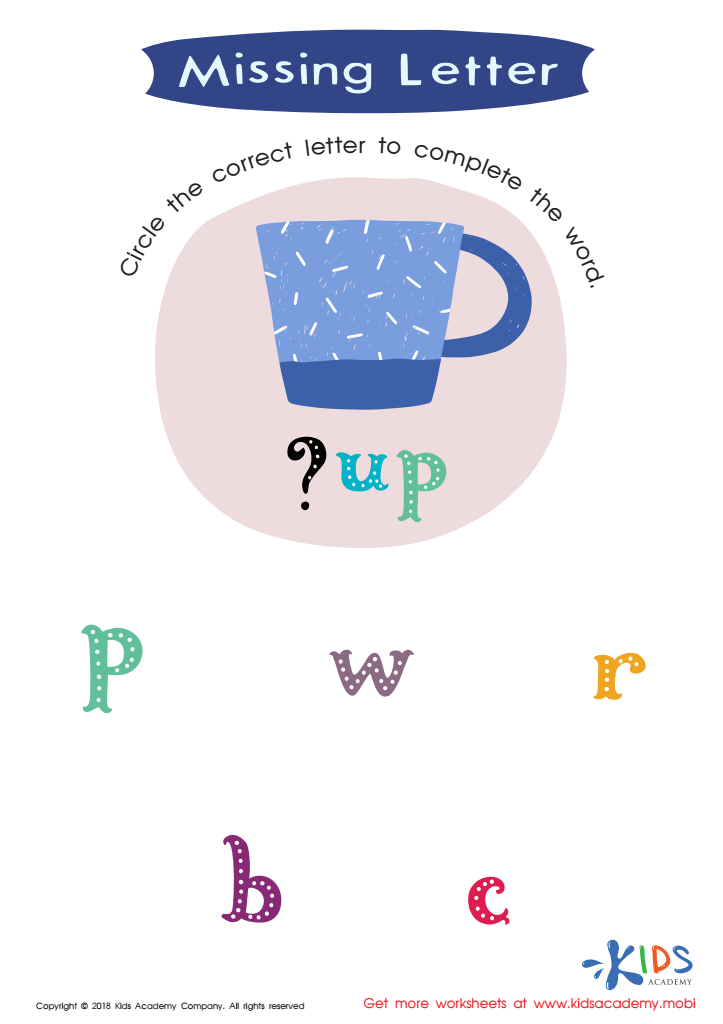
Missing Letter Worksheet



Alphabet Recognition Missing Letters is an essential learning tool for children aged 3-6, including pre-kindergarten and kindergarten students. At this developmental stage, young learners are beginning to build foundational literacy skills crucial for their long-term academic success. Alphabet recognition and the ability to sequence letters accurately enhance early reading and writing proficiencies.
When parents and teachers engage children in activities that involve filling in missing letters, they foster several key cognitive skills. Firstly, it promotes visual discrimination, enabling children to differentiate between letter shapes. Secondly, it strengthens memory and recall abilities as children learn to remember the sequence of the alphabet. Thirdly, it develops problem-solving skills, as kids deduce which letters are absent from the sequence.
Additionally, recognizing and puzzling out missing letters often reinforces phonemic awareness—the understanding that letters correspond to specific sounds, which is a prelude to reading. Early exposure to these activities can also make learning engaging and fun, igniting a lifelong love of learning and literacy.
Parents and teachers investing time in such exercises not only support the immediate academic needs of children but also give them the tools to succeed in more advanced reading and writing tasks in the future. This kind of active involvement nurtures confidence and enthusiasm in young learners, setting the stage for sustained educational development.







