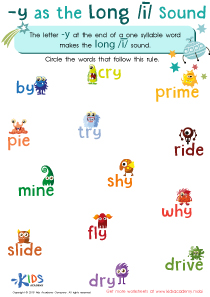
Spelling practice Missing Vowels Worksheets for Ages 3-6
4 filtered results
Difficulty Level
Grade
Age
-
From - To
Subject
Activity
Standards
Boost your child’s early literacy with our "Spelling Practice Missing Vowels Worksheets for Ages 3-6." These engaging worksheets are designed to help young learners identify and fill in missing vowels in simple words, thereby enhancing their spelling skills and phonemic awareness. Perfect for preschoolers and kindergarteners, our activities offer playful and educational practice, turning learning into a fun adventure. From familiar objects to colorful illustrations, each worksheet captivates young minds and facilitates collaborative learning. Download and print today to support your child’s journey toward reading proficiency and a love for learning.
Favorites
With answer key
Interactive
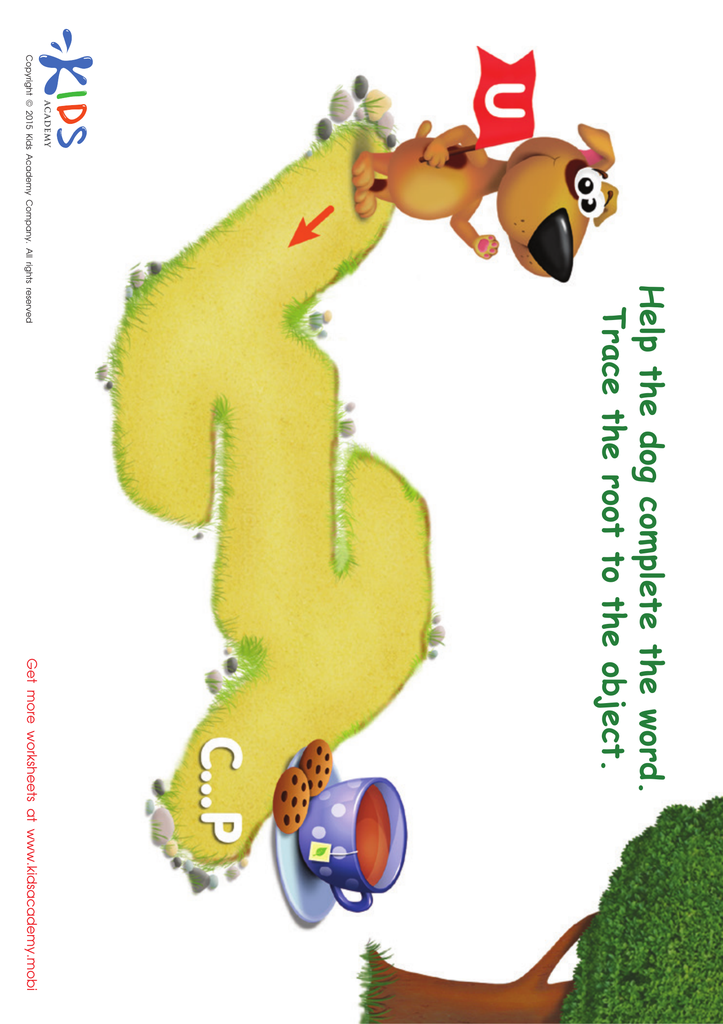
Short Vowel Sound U Worksheet Worksheet
Help your early reader join the adorable dog on his way to the cup of tea with cookies. This traceable worksheet reinforces the short -u sound and strengthens fine motor skills. Kids don't realize they are practicing reading skills while having fun!
Short Vowel Sound U Worksheet Worksheet
Worksheet
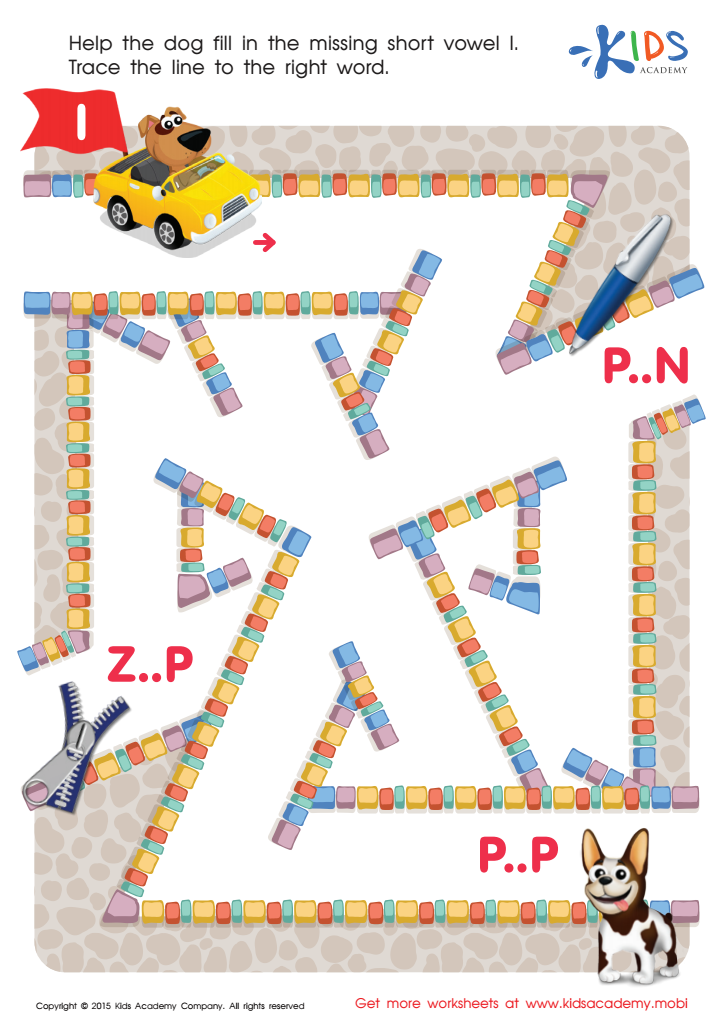
Short Vowel Sound I Worksheet
This free printable phonics worksheet will get your kid prepped for reading! It's a maze to help the dog complete the word “zip” with the missing letter I. Have your kid say the word aloud to learn the I sound. It's a great way to practice reading, writing and spelling skills. Check out here for more phonics worksheets!
 Assign to My Students
Short Vowel Sound I Worksheet
Worksheet
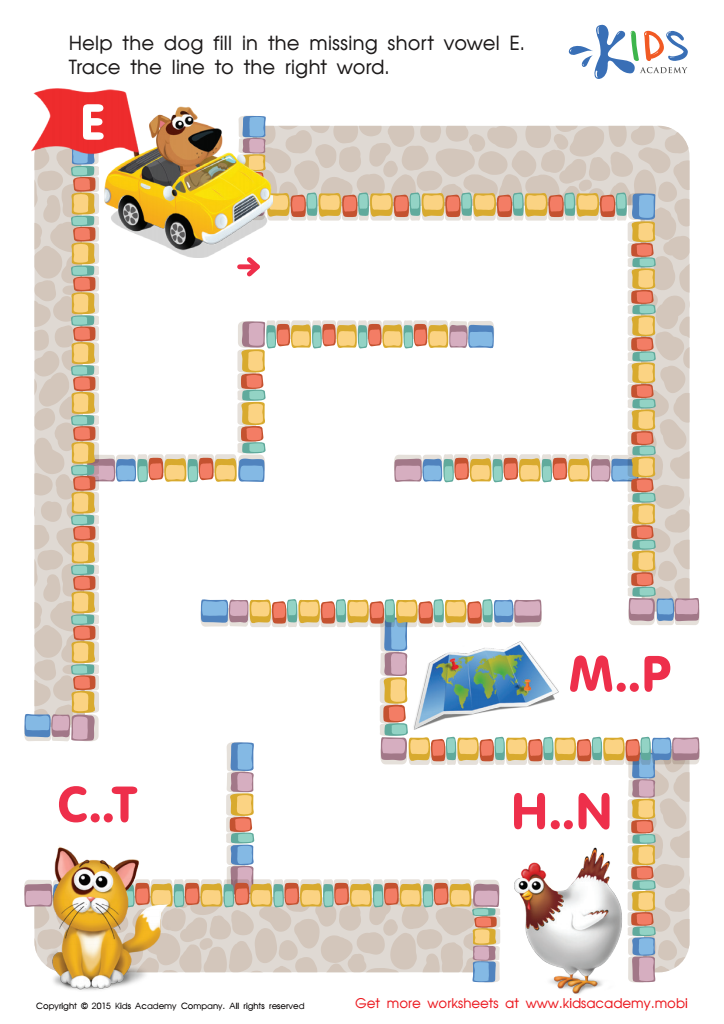
Short Vowel Sound E Worksheet
This free printable phonics worksheet helps kids learn the short vowel sound E. Kids need to help the dog complete the word “hen” by finding their way through a maze. It teaches kids to see the connection between letters and sounds and also strengthens their writing and spelling skills. Fun and educational, this phonics worksheet is great for kids. Want more? Check out here.
Short Vowel Sound E Worksheet
Worksheet
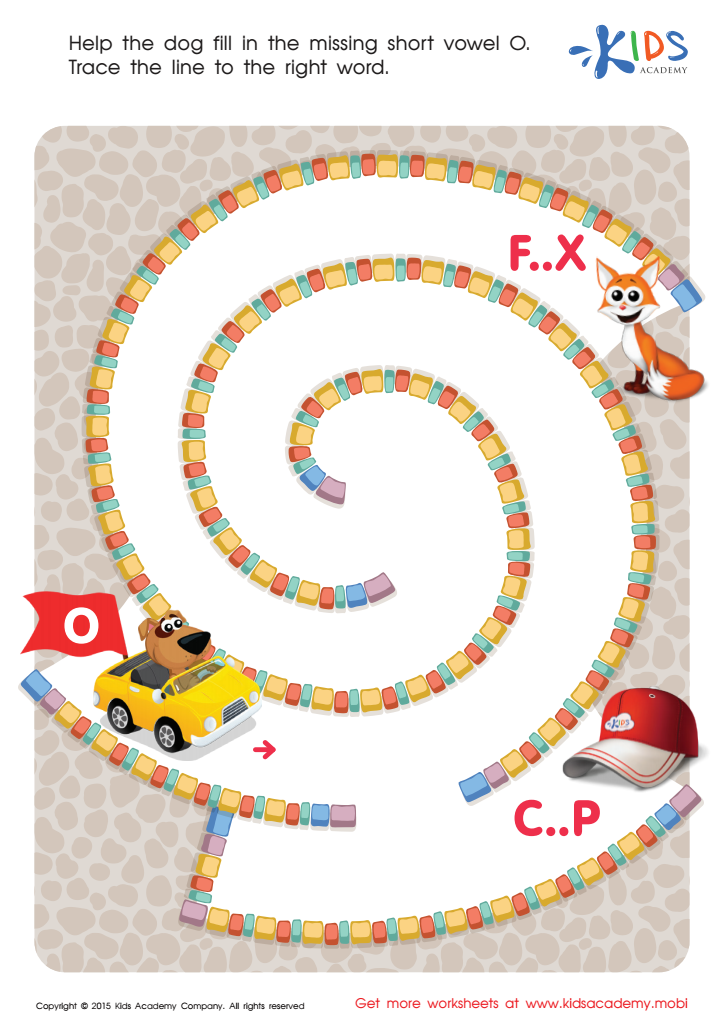
Short Vowel Sound O Worksheet
Help your child learn the short vowel sound O with this fun and free printable phonics worksheet! They'll need to complete the maze to help the dog finish the word "fox" with the missing letter O. Engage their fine motor muscles while they color or trace the maze with crayon or pencil. This educational activity is sure to bring a smile to your little learner's face! For more phonics worksheets, check here.
Short Vowel Sound O Worksheet
Worksheet
Join Kids Academy for Free
Who is primarily going to use this learning content?


Spelling practice focusing on missing vowels for ages 3-6 is a foundational component of early literacy development, essential for both parents and teachers to prioritize. At this formative stage, children are beginning to grasp the basic structures of language and phonemic awareness, which is the ability to hear, identify, and manipulate phonemes, the smallest units of sound in speech. Missing vowels exercises engage young learners in identifying and placing the correct vowels within words, reinforcing their understanding of letter-sound relationships.
Engaging with these exercises significantly impacts a child's reading and writing skills. It helps them recognize spelling patterns, which is a key step toward reading fluency. Mastering vowels is crucial because they often dictate the word's pronunciation and meaning. By practicing spelling with missing vowels, children develop their vocabulary, improve their ability to decode unfamiliar words, and build a solid foundation for future spelling and verbal communication skills.
For parents and teachers, integrating such practices creates an interactive and enjoyable learning experience. When children see learning as fun, it encourages ongoing engagement and reduces the likelihood of literacy challenges down the line. Ensuring consistent practice of these spelling exercises fosters confidence and a positive attitude toward learning, preparing children for more complex literacy tasks as they progress in their educational journey.