
Color Identification Phonics Worksheets for Ages 3-6
4 filtered results
Difficulty Level
Grade
Age
-
From - To
Subject
Activity
Standards
Discover our engaging Color Identification Phonics Worksheets designed specifically for children aged 3-6! These interactive worksheets help young learners explore and familiarize themselves with colors while simultaneously developing their phonics skills. Brightly illustrated activities encourage children to recognize colors and associate them with corresponding words, enhancing both vocabulary and cognitive development. Perfect for parents and educators, these worksheets promote playful learning experiences. Make learning fun with colorful visuals and exciting tasks that capture children's imaginations! Download your printable worksheets today and support your child’s early literacy journey while nurturing their love for learning. Unlock the joy of phonics and color recognition!
Favorites
With answer key
Interactive
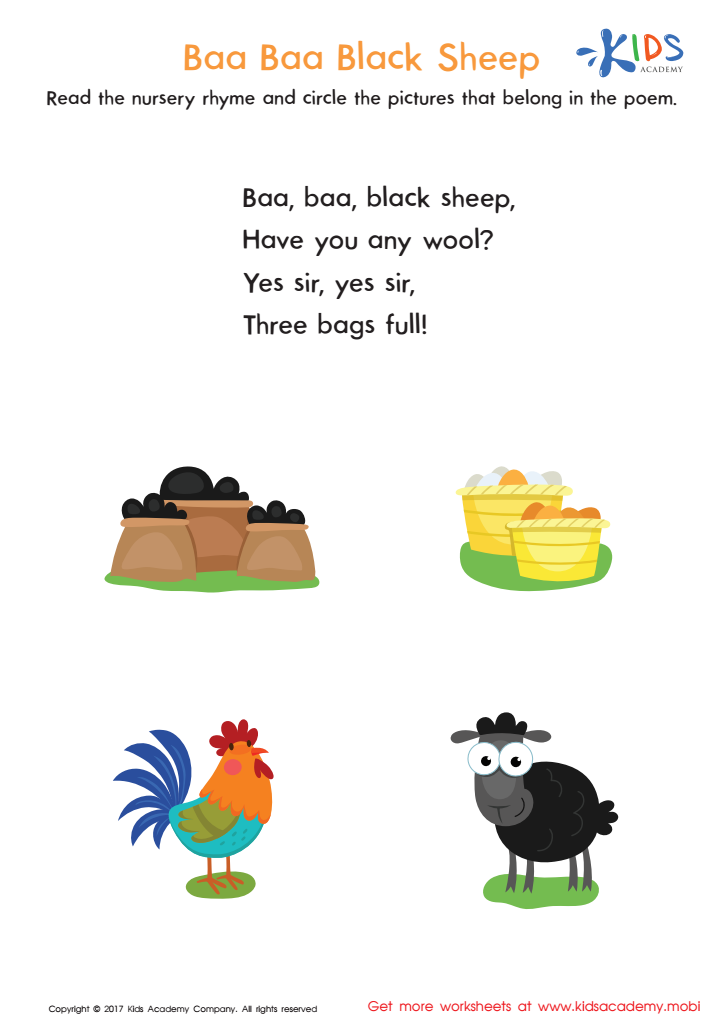
Baa Baa Black Sheep Printable
Jumpstart your child's reading skills with this printable Baa Baa Black Sheep worksheet! Recite the lines with them, then have them select the pictures associated with the poem to test comprehension. Fun and educational!
Baa Baa Black Sheep Printable
Worksheet
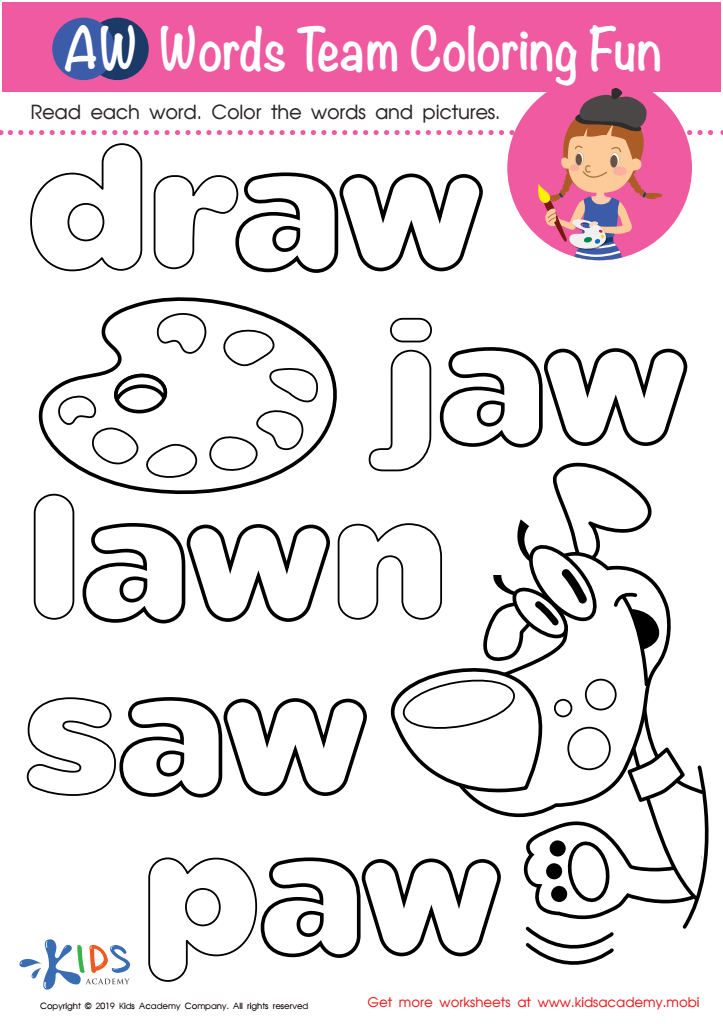
AW Words Team Coloring Fun Worksheet
Coloring words they can read is a blast for little learners! This worksheet offers emerging readers the chance to practice and gain confidence in reading words from the -aw family, while also improving fine-motor and creativity skills. Without knowing it, they'll learn about phonetic teams along the way!
Download (PDF)
 Assign to My Students
Assign to My Students
AW Words Team Coloring Fun Worksheet
Worksheet
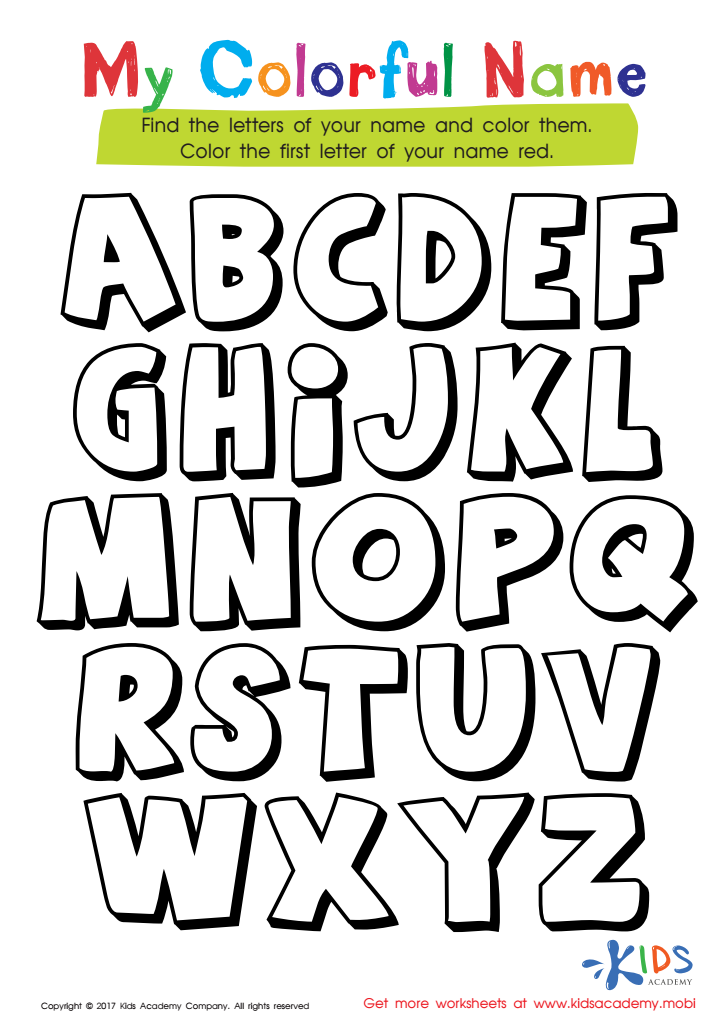
My Colorful Name Worksheet
Writing their names is a milestone for children. With this worksheet, they recall the letters in their name and color the letters one at a time. Spelling and alphabet order are reinforced as they find each letter. Use this fun printable to help kids learn to write their names!
Download (PDF)
Assign to My Students
Assign to My Students
My Colorful Name Worksheet
Worksheet
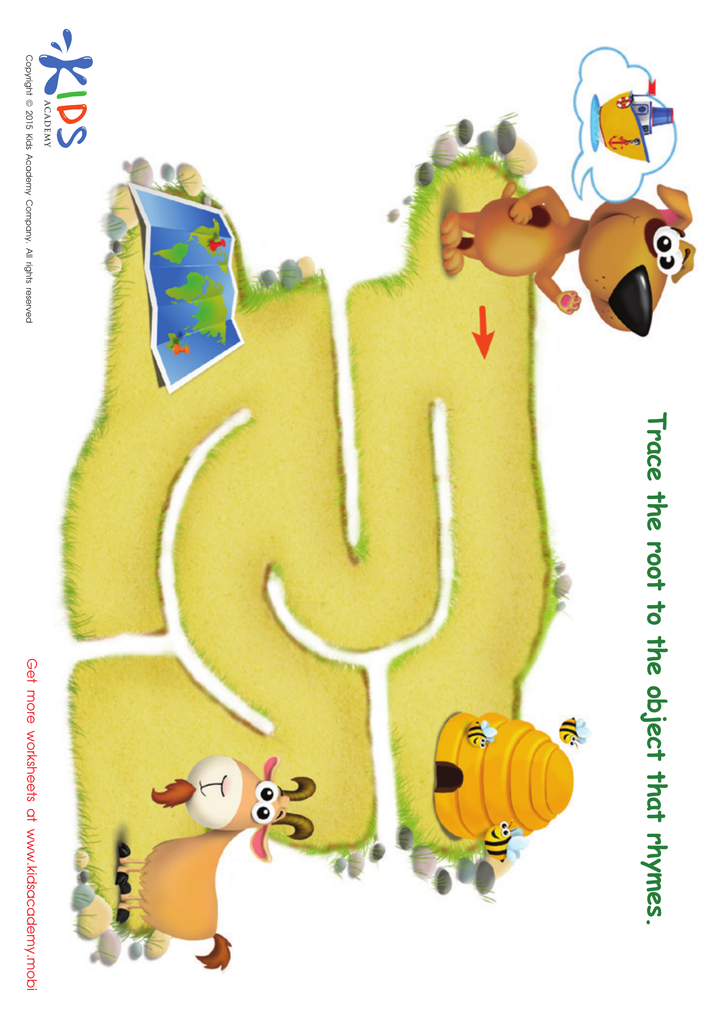
Boat Rhyming Words Worksheet
Help your preschooler complete the maze and rhyme with their favorite pooch! Draw a line from the dog to the matching item - is it a hive, a map or a goat? This fun activity lets them name the root words of pictures, and listen for rhymes to help them with phonics and reading.
Boat Rhyming Words Worksheet
Worksheet
Join Kids Academy for Free
Who is primarily going to use this learning content?








Parents and teachers should care about Color Identification Phonics for children ages 3-6 because these foundational skills play a crucial role in early literacy development. During these formative years, children are at a prime age for language acquisition, and the integration of colors with phonics can make learning both engaging and effective.
Color identification enhances children's cognitive abilities by improving memory and attention. By associating colors with specific sounds and letters, children can form stronger neuroconnections, thus facilitating better retention of phonetic sounds. This multisensory approach caters to various learning styles and keeps young learners motivated and excited.
Moreover, understanding colors is critical in a child’s language development and helps with vocabulary expansion. As children identify objects by color while practicing phonics, they become more adept at communicating and expressing themselves.
Additionally, early mastery of phonics and color recognition sets the stage for more advanced reading skills, leading to increased academic achievement. Engaging in activities that blend color identification with phonics also fosters creativity and critical thinking, essential skills for lifelong learning. Ultimately, promoting these skills can help build a solid foundation for children as they embark on their educational journeys.







