
Handwriting practice Phonics Worksheets for Ages 3-6
5 filtered results
Difficulty Level
Grade
Age
-
From - To
Subject
Activity
Standards
Unlock your child's potential with our Handwriting Practice Phonics Worksheets, perfect for ages 3-6! These engaging and educational worksheets combine the essential skills of handwriting and phonics, setting a solid foundation for early literacy. Each worksheet features fun activities that guide youngsters through letter formation, phonetic sounds, and word recognition, making learning an enjoyable experience. Encourage your little ones to trace, write, and say each letter, helping them build fine motor skills and confidence. Ideal for preschool and kindergarten children, our worksheets ensure your child is well-prepared for reading and writing success. Explore today and watch their skills soar!
Favorites
With answer key
Interactive
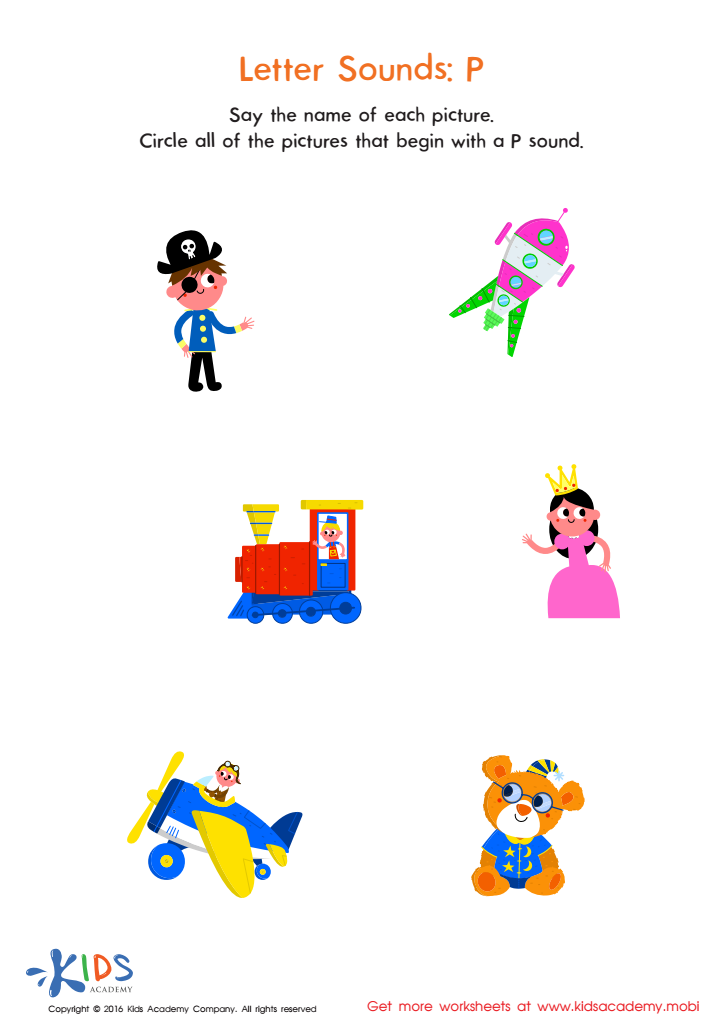
Letter P Sound Worksheet
Think P! Kids practice phonics with this fun letter P worksheet. With delightful illustrations, they'll sound out simple words and get closer to reading.
Letter P Sound Worksheet
Worksheet
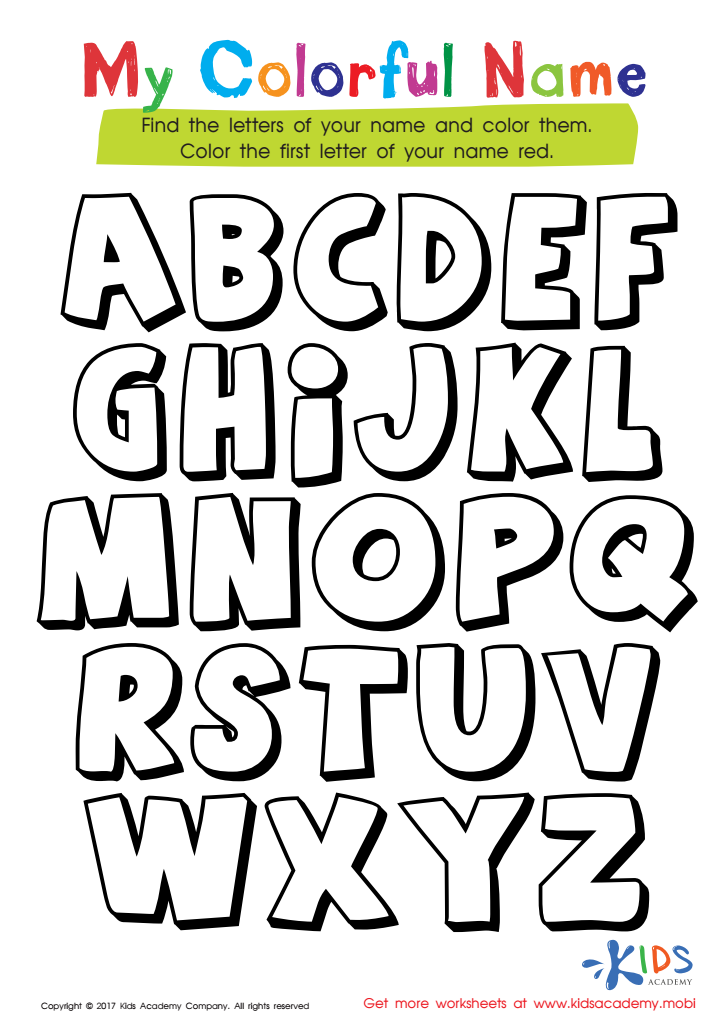
My Colorful Name Worksheet
Writing their names is a milestone for children. With this worksheet, they recall the letters in their name and color the letters one at a time. Spelling and alphabet order are reinforced as they find each letter. Use this fun printable to help kids learn to write their names!
Download (PDF)
 Assign to My Students
Assign to My Students
My Colorful Name Worksheet
Worksheet
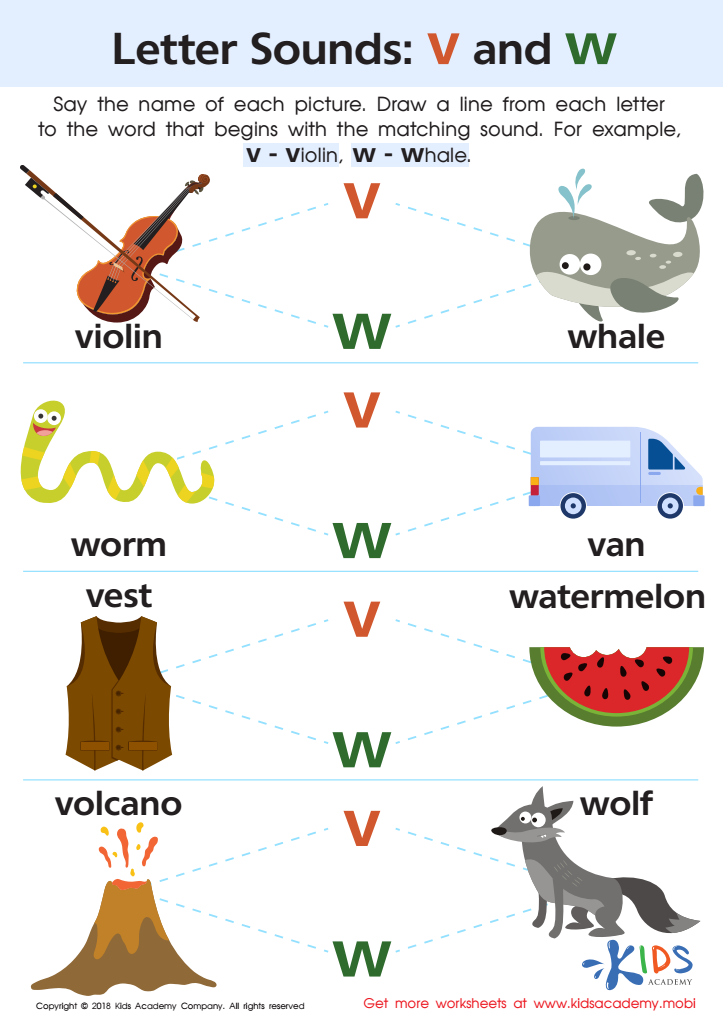
Letter V and W Sounds Worksheet
Help your child master the sounds of W & V while completing this fun phonics worksheet. Have them trace the dotted line from letter to picture while saying words like "worm", "violin" and "van" aloud to notice how each word begins with either W or V. Listen and pay attention to the pronunciation to complete the practice.
Letter V and W Sounds Worksheet
Worksheet
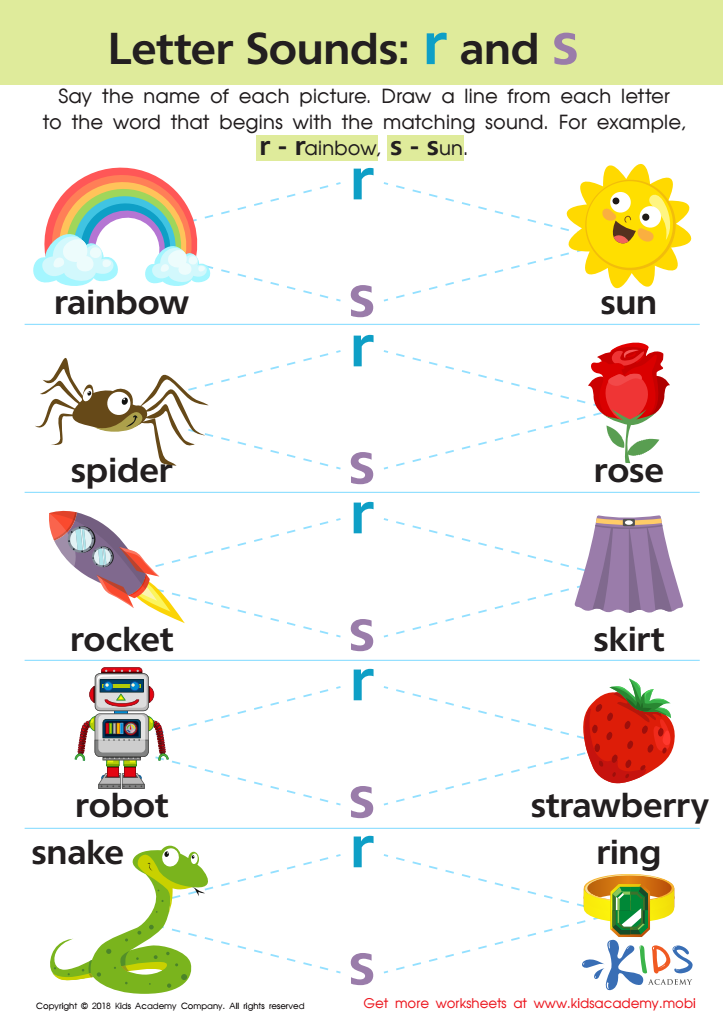
Letter R and S Sounds Worksheet
Kids Academy's phonics worksheet is full of fun and color! Help your child name the pictures and read the words under each one. Does it begin with an R or S? Then, use a pencil to trace the dotted line from the letter to its image. It's a great way to practice phonics skills!
Letter R and S Sounds Worksheet
Worksheet
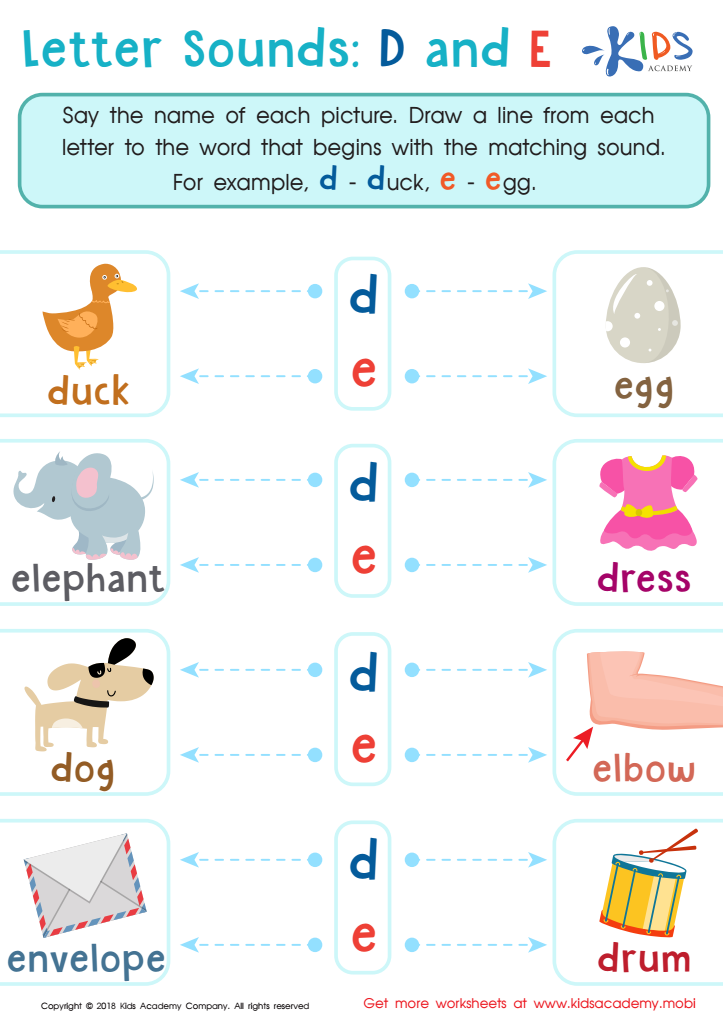
Letter D and E Sounds Worksheet
Kids can use picture clues and visual discrimination to name cheerful pics and isolate the beginning sound. This free PDF worksheet will help them develop phonological awareness, differentiate between "D" and "E", and hone fine-motor skills. It'll also boost their confidence as they become readers.
Letter D and E Sounds Worksheet
Worksheet
Join Kids Academy for Free
Who is primarily going to use this learning content?








Handwriting practice and phonics education for children aged 3-6 are crucial components of early childhood development, laying the foundation for literacy and cognitive skills. For parents and teachers, fostering these skills is of utmost importance.
Handwriting practice not only improves fine motor skills but also enhances hand-eye coordination and concentration. When young children engage in handwriting, they are learning how to control their movements, which can help improve their overall dexterity. Additionally, forming letters and words by hand encourages visual memory and reinforces the connection between written and spoken language.
Phonics, on the other hand, teaches children the relationship between letters and sounds. This fundamental understanding is vital for decoding new words, improving reading accuracy, and building vocabulary. When children grasp phonics, they become more capable readers and writers, which boosts their confidence and academic success.
Combining handwriting with phonics allows children to practice connecting sounds to symbols, reinforcing their learning in both areas. For parents and teachers, supporting children in these practices can enhance their cognitive development, foster a love for reading and writing, and set them on a path to academic achievement and lifelong learning. Consequently, taking an active role in these aspects of early education can have long-lasting, positive effects on a child's intellectual growth.







