Letter identification Phonics Worksheets for Ages 3-6
3 filtered results
-
From - To
Discover our engaging Letter Identification Phonics Worksheets designed specifically for children ages 3-6. These worksheets provide a fun and interactive way for young learners to master letter recognition and enhance their phonics skills. Featuring colorful illustrations and playful activities, each worksheet encourages kids to identify letters, match them with corresponding images, and practice writing. Our age-appropriate resources not only support literacy development but also foster creativity and critical thinking. Ideal for both classroom and at-home learning, these worksheets make letter identification an enjoyable experience. Start nurturing a love for letters in your child today with our thoughtfully crafted phonics worksheets!
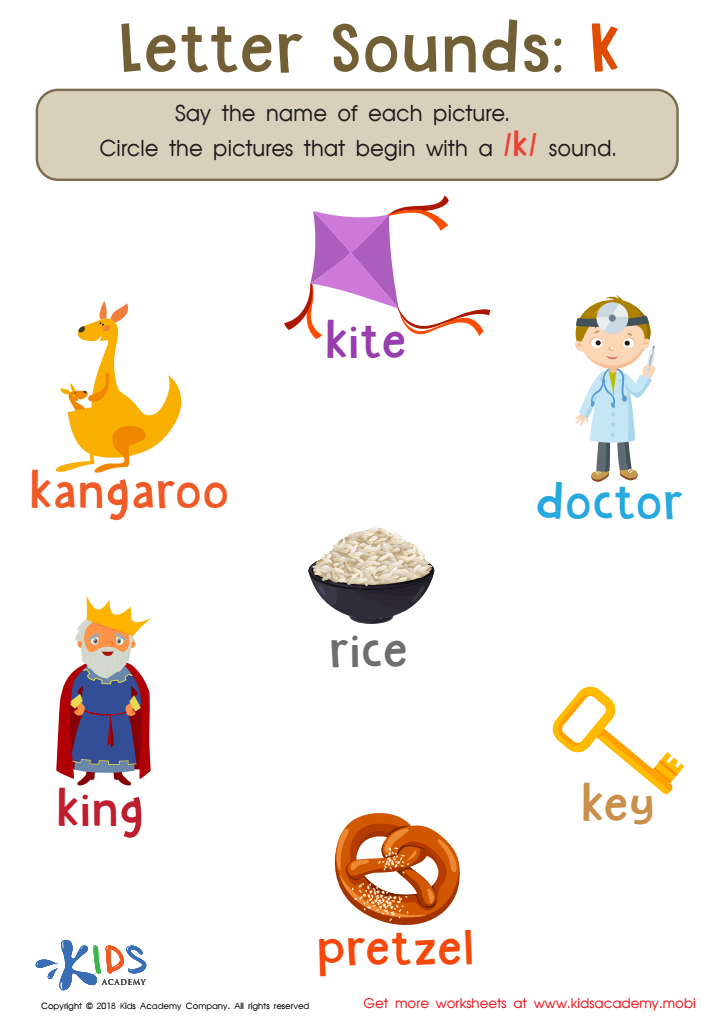
Letter K Sounds Worksheet
 Assign to My Students
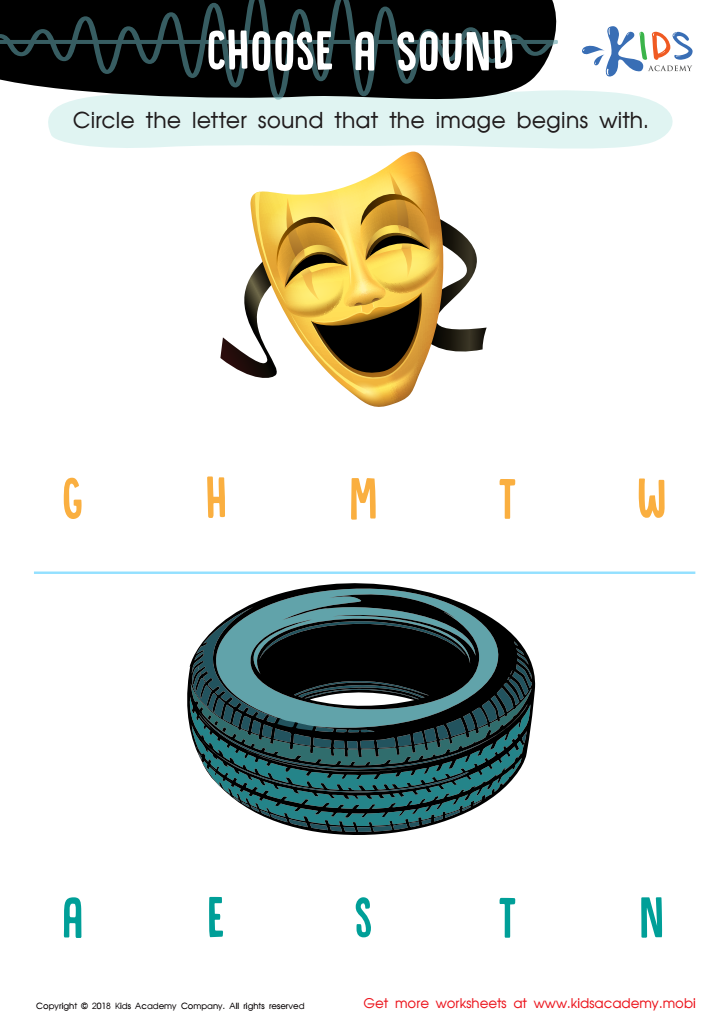
Choose a Sound Worksheet
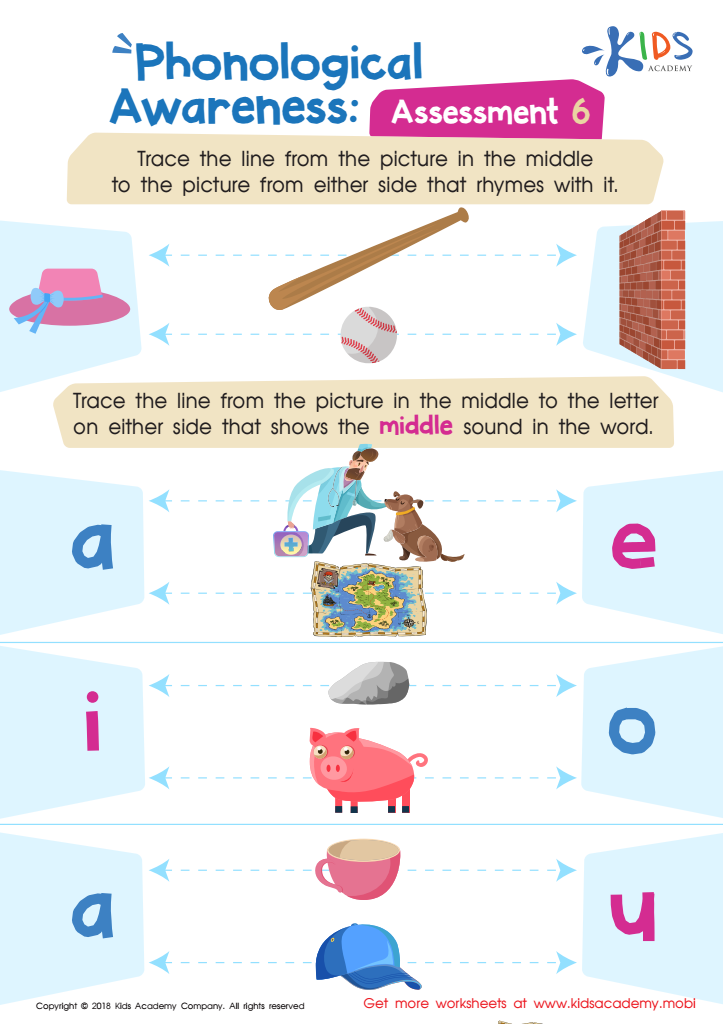
Phonological Awareness: Assessment 6 Worksheet








Letter identification and phonics are foundational skills critical to early literacy development for children aged 3-6. Understanding letters and their sounds not only serves as a springboard for reading but also enhances overall language development and communication skills. When parents and teachers focus on these skills, they foster a love for reading and empower children to decode words independently, which is essential for academic success.
Strong letter identification skills enable children to recognize letters in different contexts, such as books, labels, and everyday signage. Phonics teaches them the relationship between letters and sounds, paving the way for effective decoding of new words. This understanding bolsters self-confidence and encourages a sense of agency in learning.
Moreover, engaging children in letter identification and phonics through fun, age-appropriate activities promotes cognitive and motor skills. It nurtures critical thinking, pattern recognition, and auditory processing, laying a holistic foundation for future learning. Ultimately, parents and teachers’ commitment to fostering these skills can lead to improved literacy outcomes, less frustration with reading tasks, and a lifelong enjoyment of books and learning. Prioritizing letter identification and phonics during these formative years is an investment that yields lifelong benefits for children.







