
Reading skills development Phonics Worksheets for Ages 3-6
5 filtered results
Difficulty Level
Grade
Age
-
From - To
Subject
Activity
Standards
Unlock your child's reading potential with our engaging Phonics Worksheets specially designed for ages 3-6. These interactive resources focus on developing essential reading skills through fun activities that promote phonemic awareness and letter recognition. Each worksheet is tailored to enhance your child's understanding of sounds and their corresponding letters, making reading a joyful and foundational experience. Perfect for parents and educators alike, our phonics worksheets combine play and learning, helping young learners build confidence as they embark on their reading journey. Explore our diverse collection today and give your child the tools they need to thrive in reading and literacy!
Favorites
With answer key
Interactive
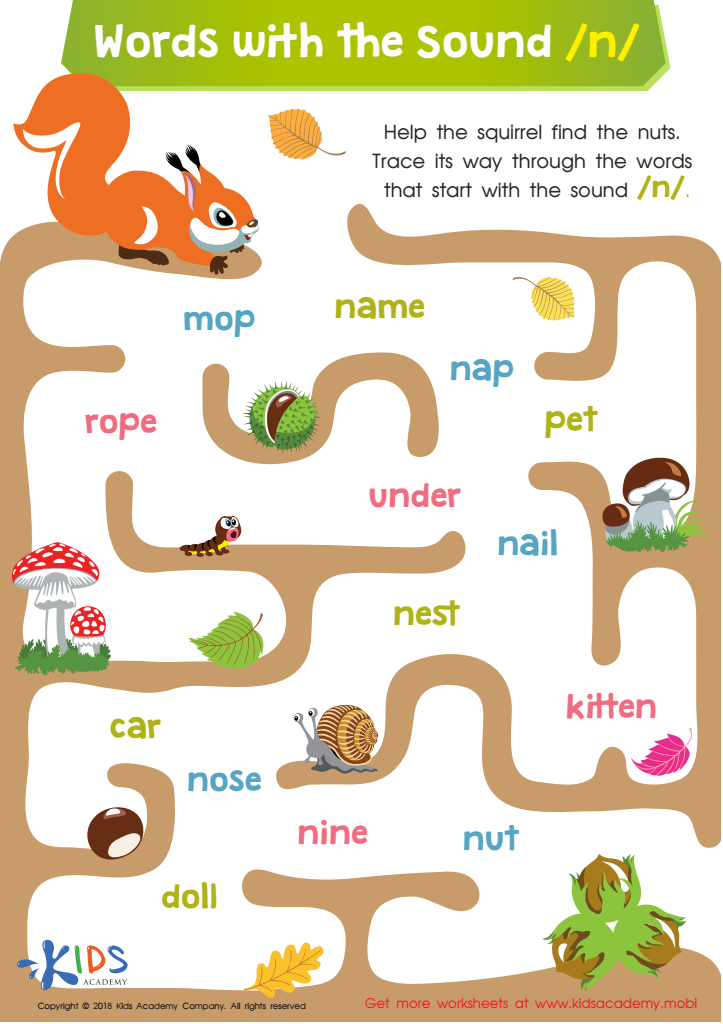
Words with Sound N Reading Worksheet
Young readers will love the colourful pictures and simple sight words on this download worksheet. They can trace their way through the maze as they help the cute squirrel reach his acorns, finding words with the sound "n" as they go. It's a fun way to work on reading skills - they won't even realise they're learning!
 Assign to My Students
Words with Sound N Reading Worksheet
Worksheet
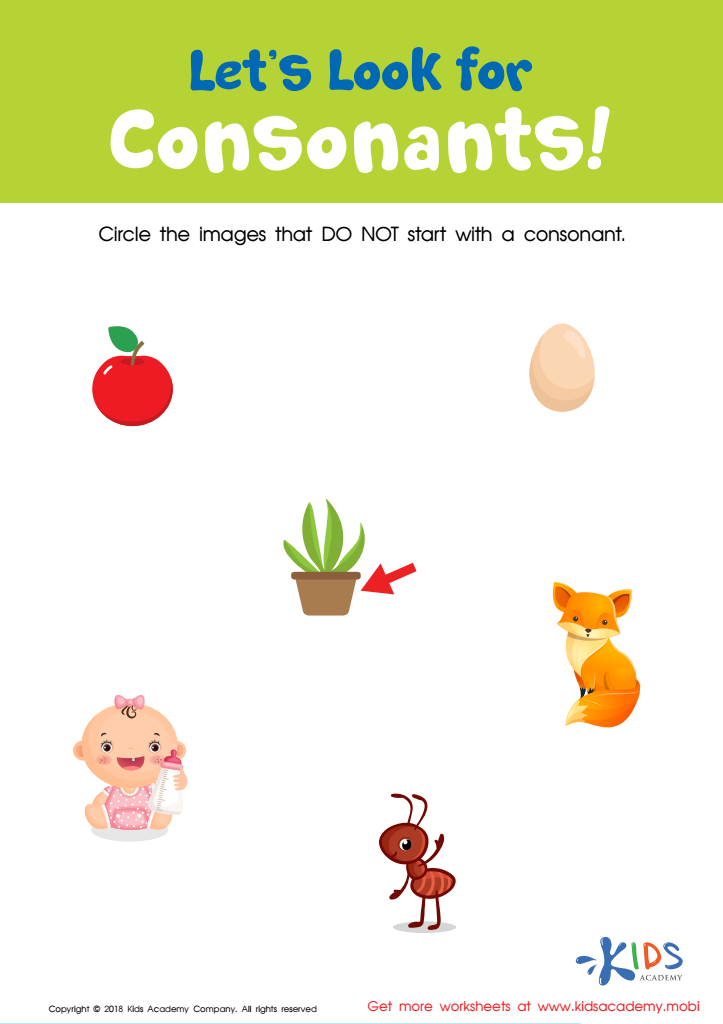
Let's Look for Consonants Worksheet
Help kids learn consonants and words that start with them. Ask them to recite the alphabet, then explain consonants are all letters but the 5 vowels. Use the worksheet to ask them to circle items without a consonant. Emphasize that's 21 consonants.
Let's Look for Consonants Worksheet
Worksheet
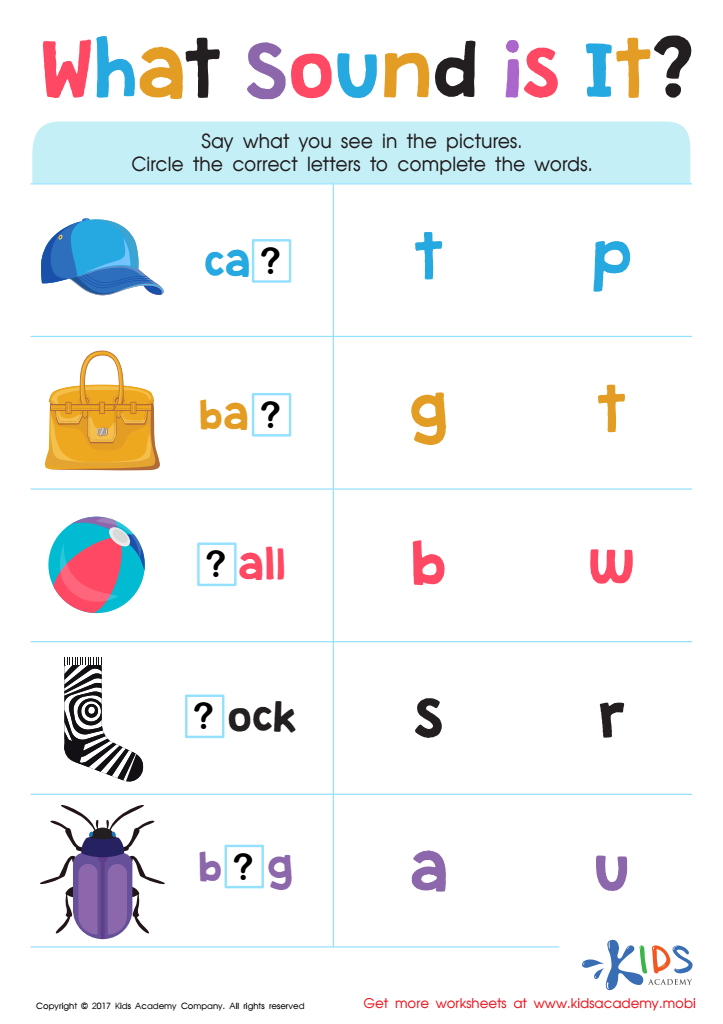
What Sound Is it? Worksheet
Have your child say the words for the pictures on this fun worksheet. As he or she sounds out the word, your child will use the provided letter choices to complete it, building reading and phonics skills. Visual cues make it easier to identify the correct beginning, middle, or end sound.
What Sound Is it? Worksheet
Worksheet
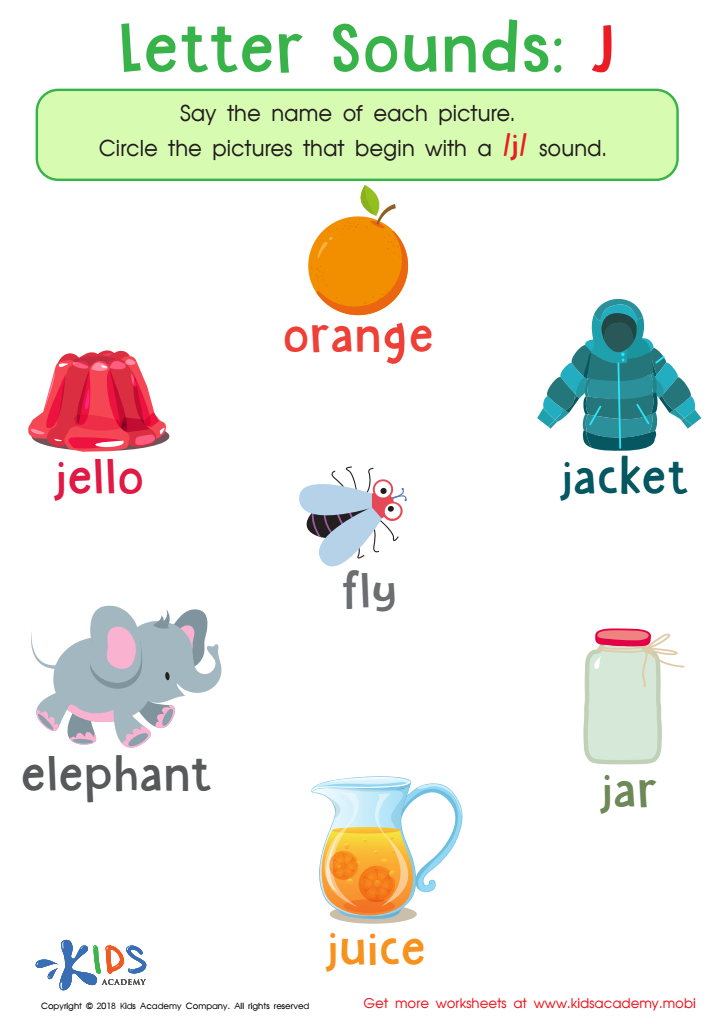
Letter Sounds: J Printable Worksheet
Preschoolers can learn to identify letter sounds by focusing on beginning sounds. This cute and colorful worksheet reviews the hard “j” sound. Kids can point it out by naming the words and circling only those starting with the “j” sound. Read the text out loud and listen closely!
Letter Sounds: J Printable Worksheet
Worksheet
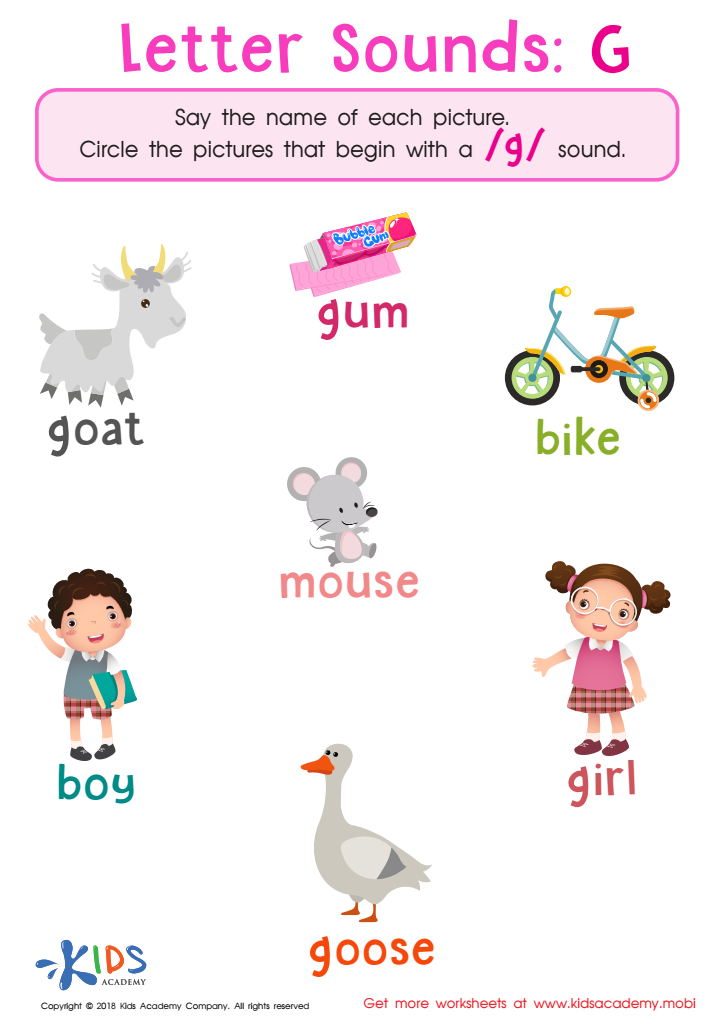
Letter G Sounds Worksheet
Help emerging readers build confidence by giving them practice identifying hard "G" with this free PDF worksheet. They'll use picture clues to name the words, and practice fine-motor skills tracing circles around the corresponding pics. It's a great way to introduce or reinforce hard "G" words.
Letter G Sounds Worksheet
Worksheet
Join Kids Academy for Free
Who is primarily going to use this learning content?








Developing reading skills through phonics is crucial for children aged 3-6 for several reasons. First, this stage is fundamental in shaping a child's literacy foundation; phonics teaches children the relationship between letters and sounds, enabling them to decode words. This skill is essential for independent reading, unlocking a world of knowledge and imagination.
Phonics supports overall communication development. As children learn to read, they also enhance their writing and vocabulary skills, facilitating clearer expression of their thoughts and ideas. Furthermore, early reading proficiency is linked to later academic success, fluency in other subjects, and improved self-esteem.
Promoting phonics development also fosters a love for reading. When children are equipped with the skills to read, they are more likely to engage with books, derive pleasure from stories, and explore various genres. This enthusiasm nurtures a lifelong love of learning.
Lastly, awareness and intervention from parents and teachers are vital. By actively involving themselves in phonics activities, caregivers can create a supportive learning environment that emphasizes the importance of literacy. Ultimately, fostering phonics skills equips children with the tools they need not only for reading but for thriving in an ever-evolving educational landscape.







