Rhyme recognition Phonics Worksheets for Ages 3-6
4 filtered results
-
From - To
Discover our engaging Rhyme Recognition Phonics Worksheets designed specifically for children aged 3-6. These worksheets offer a playful approach to phonics, helping young learners develop essential literacy skills through the fun of rhyme. Each activity encourages kids to identify rhyming words, enhance their vocabulary, and improve phonemic awareness. With colorful illustrations and age-appropriate tasks, these printable resources make learning enjoyable and effective. Perfect for homeschooling, classroom activities, or extra practice at home, our rhyme recognition worksheets are a fantastic way to spark a love for language in your little ones. Unlock their potential in reading and writing with our carefully crafted materials!
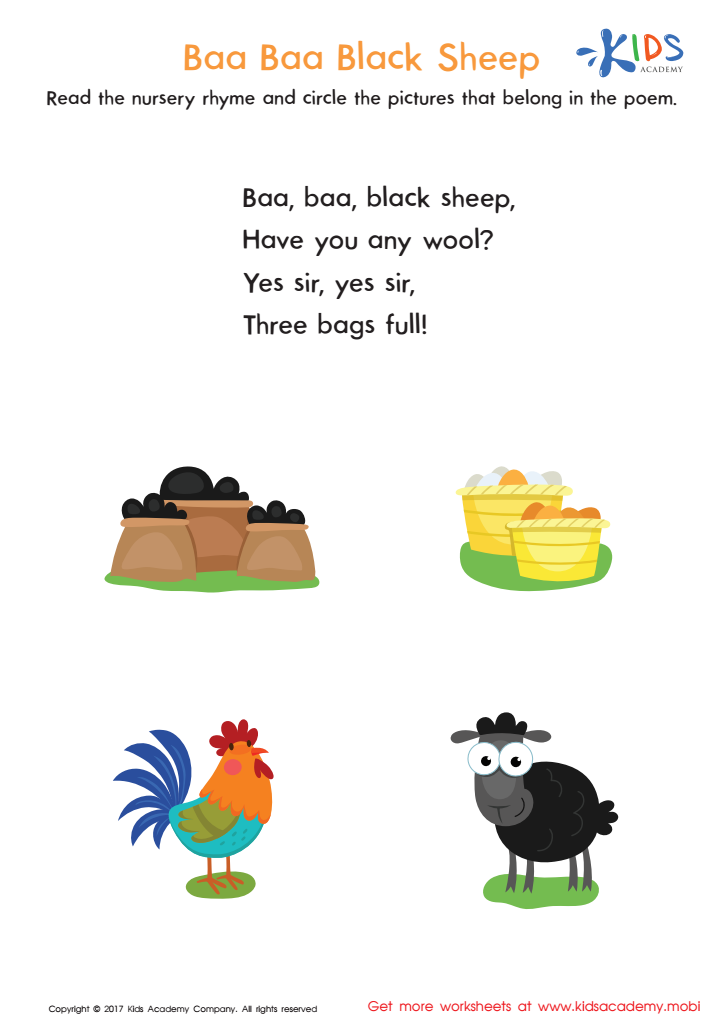
Baa Baa Black Sheep Printable
 Assign to My Students
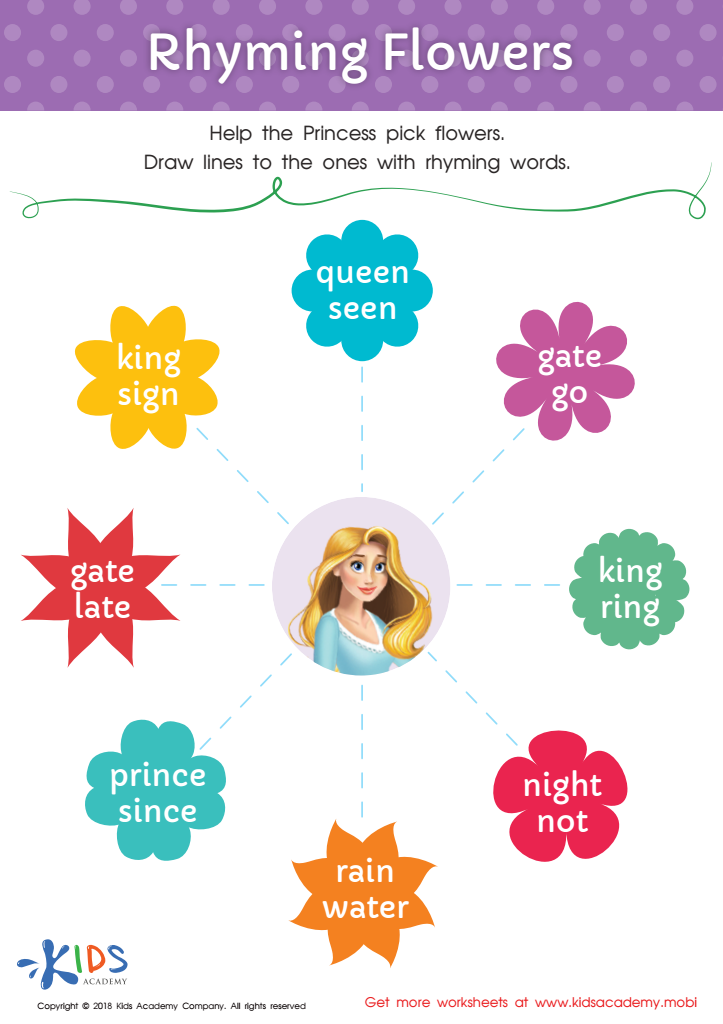
Rhyming Flowers Worksheet
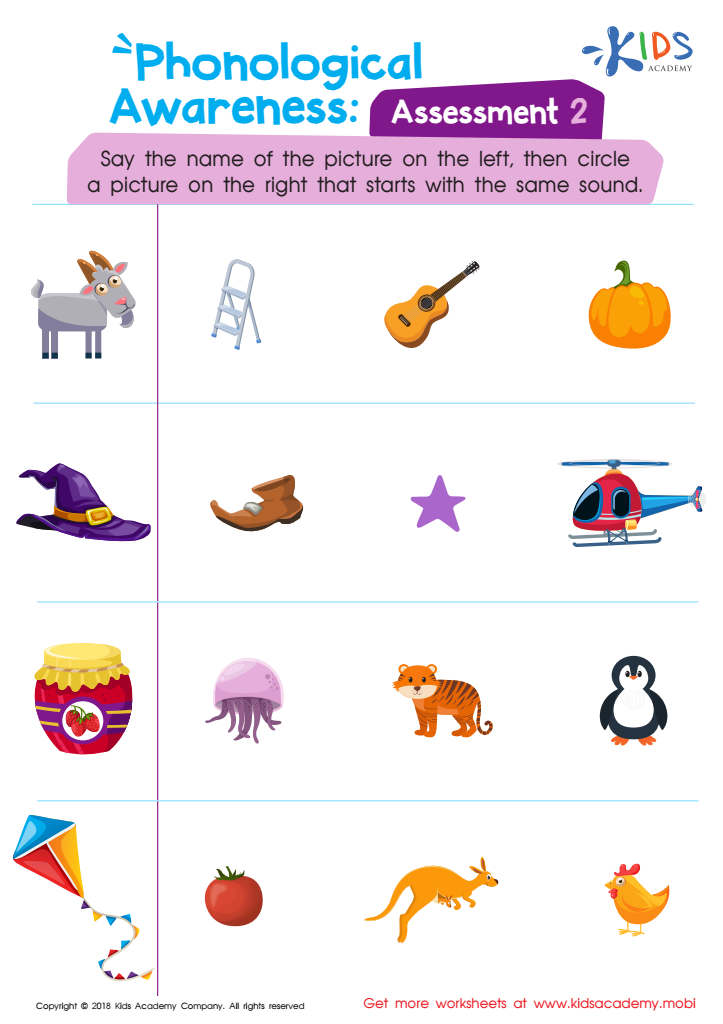
Phonological Awareness: Assessment 2 Worksheet
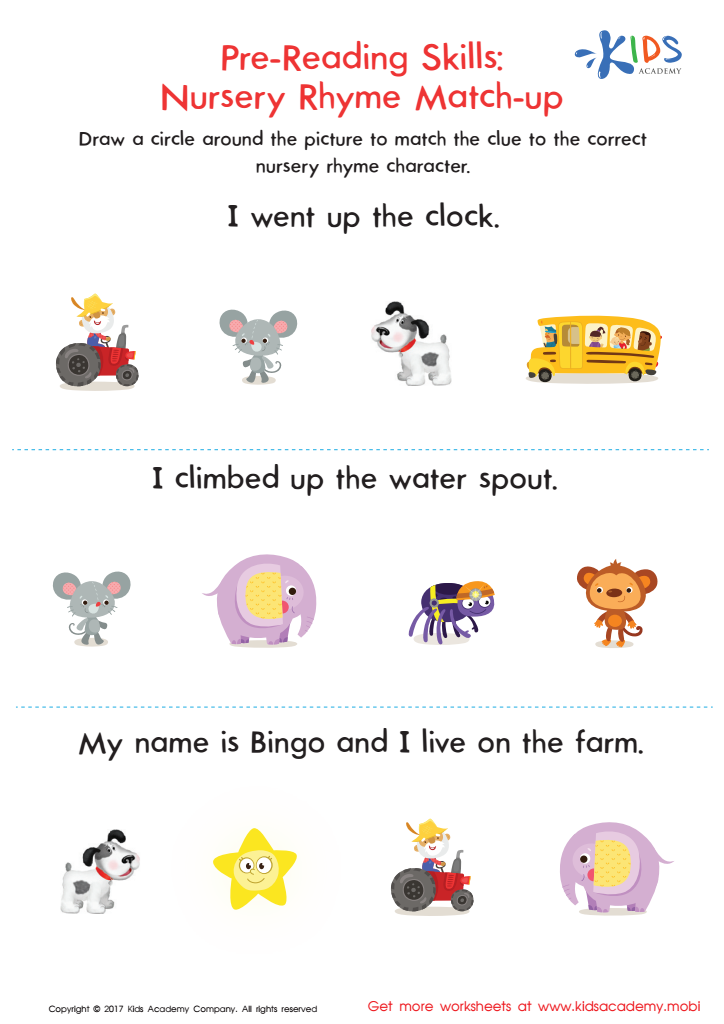
Nursery Rhyme Match–Up Worksheet








Rhyme recognition and phonics are essential components of early literacy development for children aged 3 to 6. Parents and teachers should prioritize these skills as they significantly contribute to a child’s reading readiness and overall language acquisition.
Rhyme recognition helps children develop phonological awareness, which is the ability to hear and manipulate the sounds within words. Recognizing rhyming patterns enhances their ability to decode words, understand sound-letter relationships, and build vocabulary. For young learners, engaging with rhymes and rhythm in songs and stories can make learning enjoyable, fostering a love for reading from an early age.
Phonics instruction teaches kids how letters correspond to sounds, enabling them to sound out words independently. Mastering phonics is crucial for new readers, as it builds their confidence in tackling unfamiliar texts. Rhymes can reinforce phonics principles by highlighting similar sounds and syllables, tying auditory and visual learning together.
Early exposure to rhyme recognition and phonics supports children in developing necessary skills for literacy, writing, and language comprehension. By investing time and resources in these areas, parents and teachers can lay a strong foundation for lifelong learning, helping children become proficient readers and communicators.







